Precious metal-doped ZnO nanoscale particles and use of the precious metal-doped ZnO nanoscale particles as photocatalyst for unsymmetrical dimethylhydrazine wastewater degradation

A nanoparticle, unsymmetrical dimethylhydrazine technology, applied in metal/metal oxide/metal hydroxide catalyst, physical/chemical process catalyst, energy and wastewater treatment, etc., can solve the problem of large amount of rare earth photocatalyst, complex preparation technology, etc. The problem of high cost is to achieve the effect of complete degradation, simple preparation process and good appearance.

CN102626625AActive Publication Date: 2012-08-08PLA SECOND ARTILLERY ENGINEERING UNIVERSITY
3 Cites 21 Cited by

Patent Information

Authority / Receiving Office
CN · China
Patent Type
Applications(China)
Current Assignee / Owner
Publication Date
2012-08-08

Smart Images

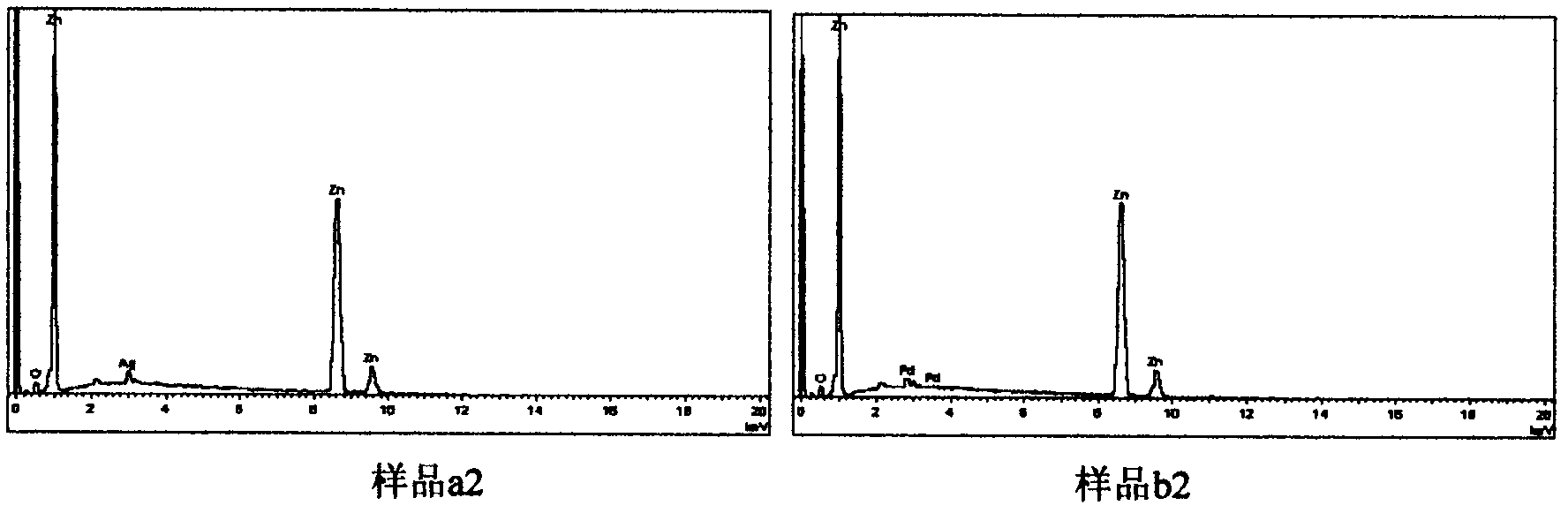
  • Figure 1
    Figure 1
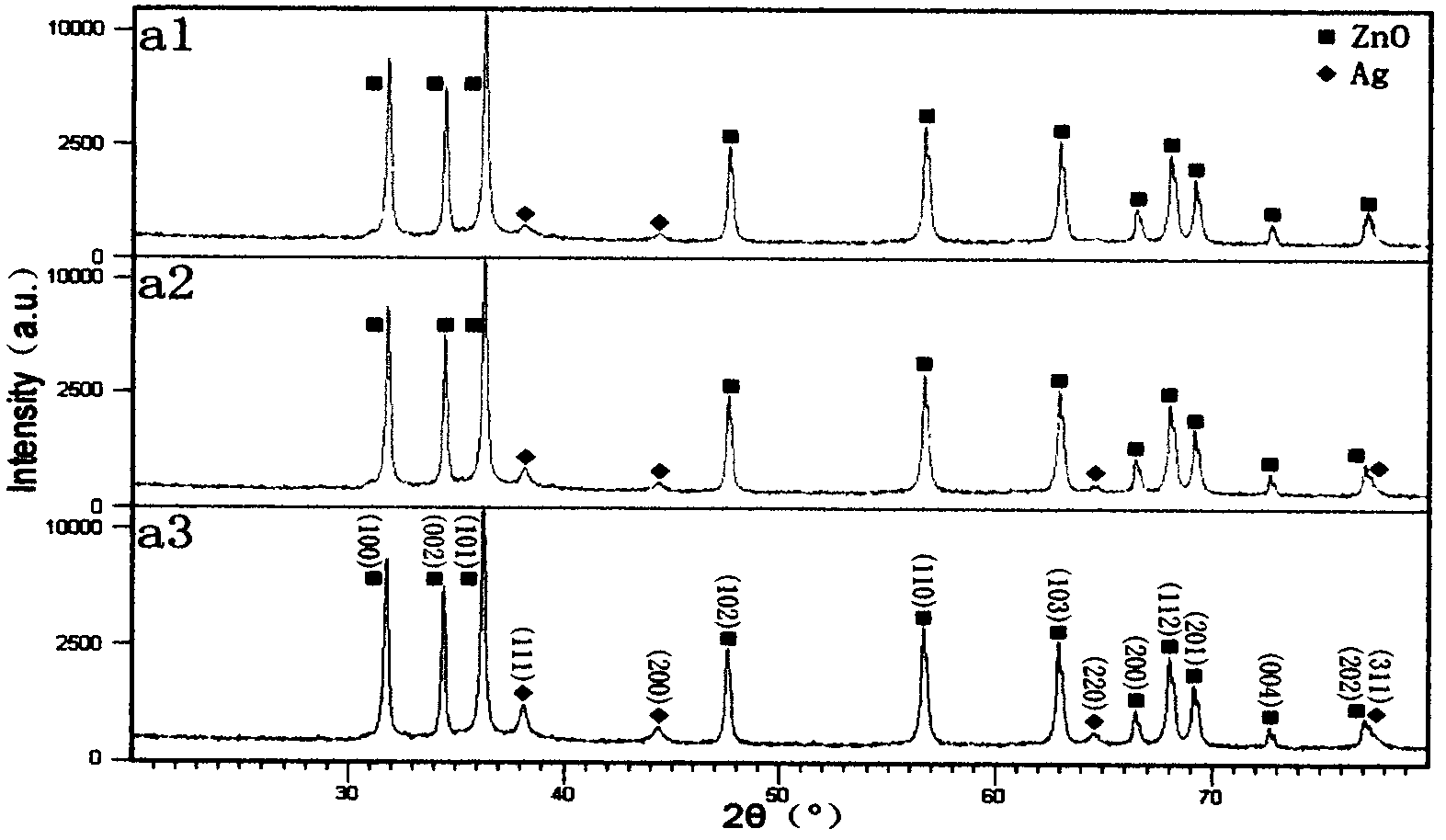
  • Figure 2
    Figure 2
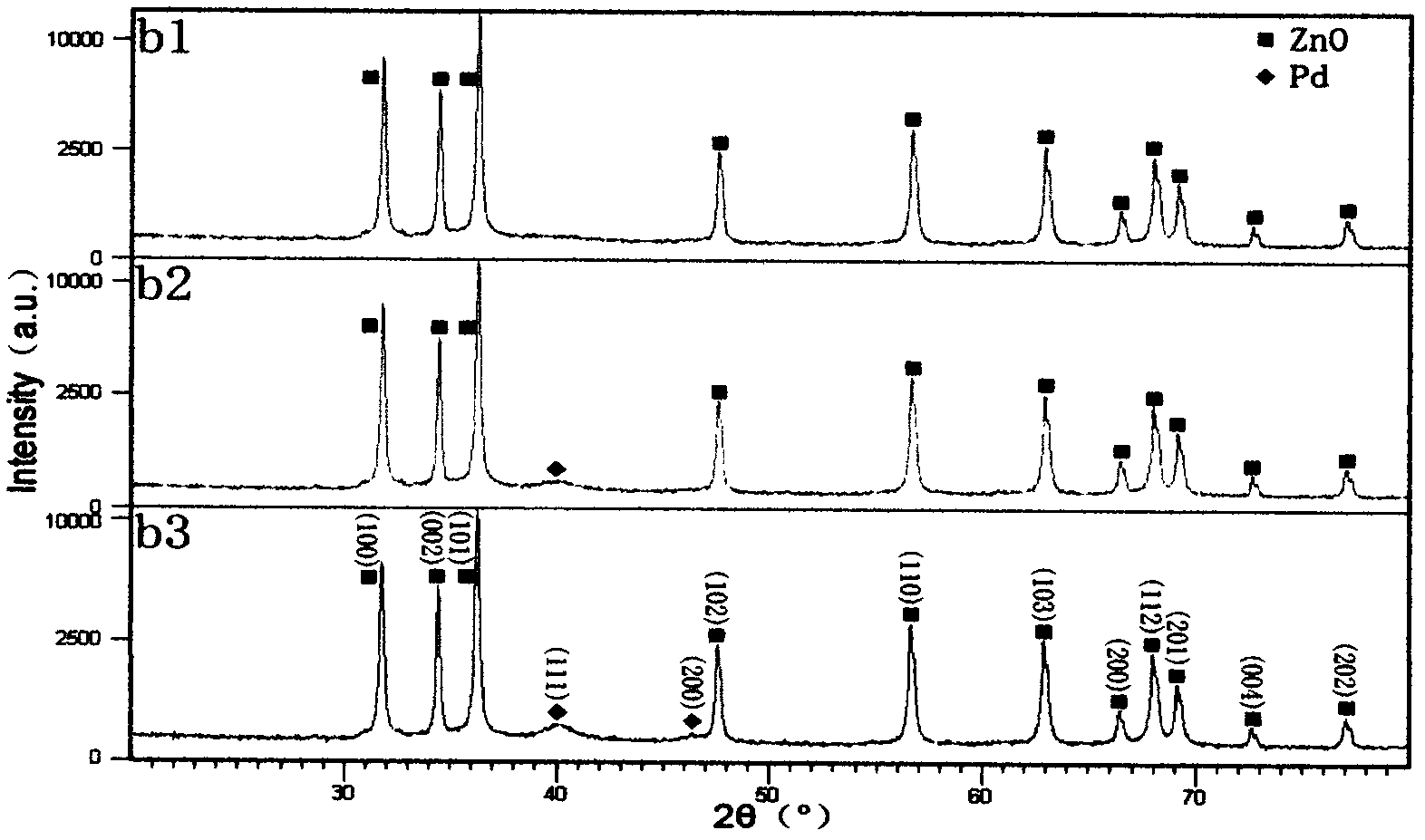
  • Figure 3
    Figure 3
Patent Text Reader

Abstract

The invention relates to precious metal-doped ZnO nanoscale particles and a use thereof. The precious metal-doped ZnO nanoscale particles are ZnO / Ag and ZnO / Pd nanoscale particles which are prepared from zinc acetate, sodium hydroxide, silver nitrate and palladium chloride by an ethanol auxiliary hydrothermal method, wherein the diffraction peak of ZnO belongs to a hexagonal wurtzite structure; a space crystal group of ZnO belongs to P63mc(186); a point lattice constant a of ZnO is equal to a point lattice constant b of ZnO and is equal to 0.3249nm; a point lattice constant c of ZnO is equal to 0.5205nm; the diffraction peak of Ag is in accordance with a standard map JCPDF:87-0717; a space crystal group of Ag belongs to Fm-3m(225); a point lattice constant a of Ag is equal to a point lattice constant b of Ag, is equal to a point lattice constant c of Ag and is equal to 4.086nm; the diffraction peak of Pd is in accordance with a standard map JCPDF:88-2335; a space crystal group of Pd belongs to Fm-3m(225); and a point lattice constant a of Pd is equal to a point lattice constant b of Pd, is equal to a point lattice constant c of Pd and is equal to 3.900nm. The use of the precious metal-doped ZnO nanoscale particles comprises that the precious metal-doped ZnO nanoscale particles are utilized as a photocatalyst for unsymmetrical dimethylhydrazine wastewater degradation. Compared with the prior art, the precious metal-doped ZnO nanoscale particles have good morphology and a high degree of crystallization; a preparation method of the precious metal-doped ZnO nanoscale particles is simple and has good repeatability; a result of a test shows that the precious metal-doped ZnO nanoscale particles can be degraded faster and more thoroughly under sunlight; and the precious metal-doped ZnO nanoscale particles have a lower production cost, better energy-saving effects and a certain referential meaning for industrial application.
Need to check novelty before this filing date? Find Prior Art

Description

technical field

[0001] The invention belongs to the technical field of wastewater treatment, and relates to a precious metal-doped ZnO nano particle material and its application, in particular to using the material as a photocatalyst for photocatalytic degradation of unsymmetrical dimethylhydrazine wastewater under sunlight irradiation. Background technique

[0002] Nano-ZnO is a composite of nano-materials and semiconductors, which has excellent photocatalytic properties. However, ZnO has a narrow spectral response range and can only utilize 5% of the ultraviolet light in sunlight. The use of noble metals to modify semiconductor photocatalysts can not only expand the spectral response range of ZnO, but also effectively capture excited electrons and improve its photocatalytic activity. The deposition of noble metals on the surface of semiconductors generally forms nano-scale atomic clusters. The deposited noble metals are in contact with the semiconductors, which is conduci...

Examples

Embodiment 1

[0030] Embodiment 1: Preparation of noble metal doped ZnO nanoparticles ZnO / Ag

[0031] 1. Accurately weigh 0.2mmol of AgNO 3 Put it into a 20mL volumetric flask and dilute to the mark with distilled water to obtain 0.01mol / L AgNO 3 solution.

[0032] 2. Add 30mL of absolute ethanol to each of the three Teflon liners, and then add: a.2.5mL of 0.01mol / L AgNO 3 solution and 7.5mL distilled water; b.5mL0.01mol / L AgNO 3 solution and 5mL distilled water; c.10mL0.01mol / L AgNO 3 solution. Weigh 0.005mol of Zn(Ac) 2 2H 2 O is added to each liner to make the Zn in the solution 2+ and Ag+ The molar ratios are 100:0.5, 100:1, 100:2, respectively. Place the liner on a magnetic stirrer and stir for 10 minutes to make the Zn(Ac) 2 2H 2 O is completely dissolved, then add 0.05mol NaOH respectively, and continue to stir for 10min.

[0033] 3. Seal the Teflon liner in a high-pressure reactor, place it in a constant temperature drying oven, and react at 160°C for 12 hours.

[0034] ...

Embodiment 2

[0035] Embodiment 2: Preparation of noble metal doped ZnO nanoparticles ZnO / Pd

[0036] Due to PdCl 2 Insoluble in water, the experiment is to prepare 0.01mol / L PdCl 2 solution, using ammonia water complexation method to make PdCl 2 Form Pd(NH) with ammonia water 2 Cl 2 The complex forms a pale yellow solution in a water bath environment.

[0037] 1. Weigh 0.2mmol of PbCl 2 Add to a 20mL volumetric flask, add 0.3mL ammonia water, and dilute to the mark with distilled water. Place in a water bath at 70°C for 10 minutes to PdCl 2 Dissolve to get 0.01mol / L PdCl 2 solution.

[0038] Steps 2, 3, and 4 are the same as the preparation process of ZnO / Ag, and the final products are denoted as b1, b2, and b3.

[0039] Different from the previous photocatalytic experiments, considering that ZnO / Ag and ZnO / Pd also have strong absorption in the visible light region, their photocatalytic properties were studied by ultraviolet lamp irradiation and sunlight irradiation, respectively....