Check patentability & draft patents in minutes with Patsnap Eureka AI!

A kind of preparation method of negative electrode material of lithium ion battery

A technology for lithium-ion batteries and negative electrode materials, which can be applied to battery electrodes, circuits, electrical components, etc., and can solve problems such as lithium dendrite formation safety hazards

Inactive Publication Date: 2016-01-13
TIANJIN UNIV
View PDF4 Cites 0 Cited by
  • Summary
  • Abstract
  • Description
  • Claims
  • Application Information

AI Technical Summary

Problems solved by technology

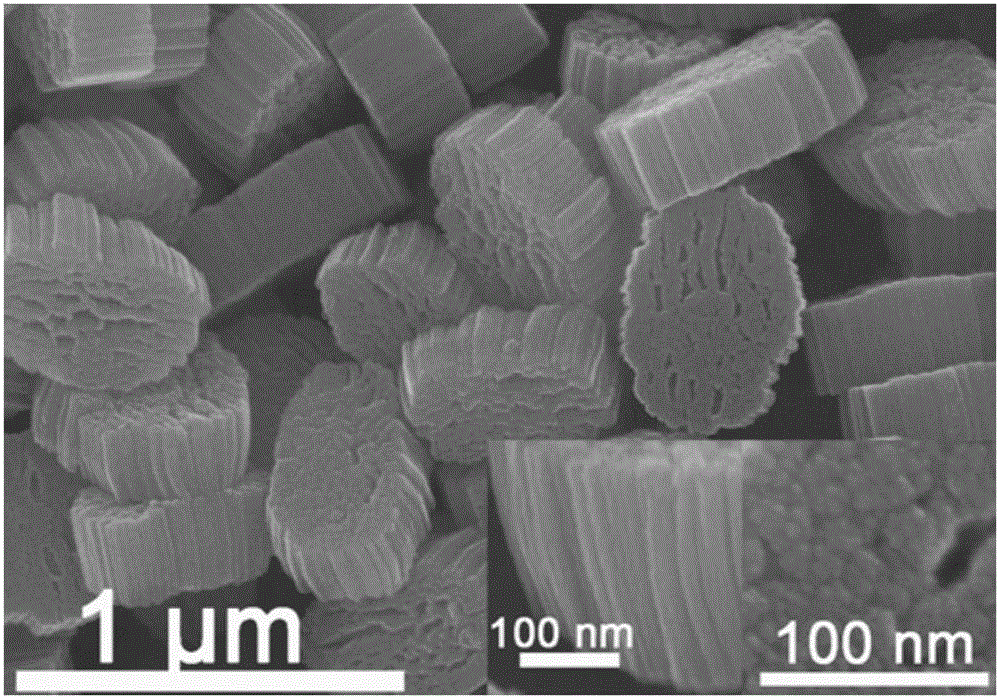
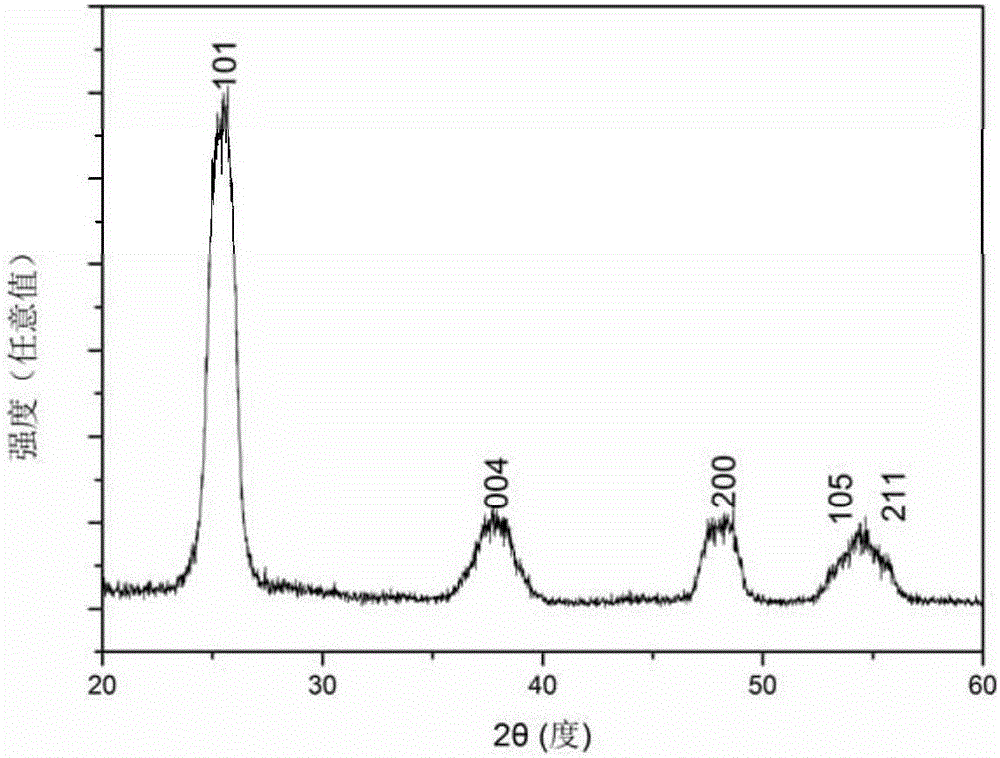
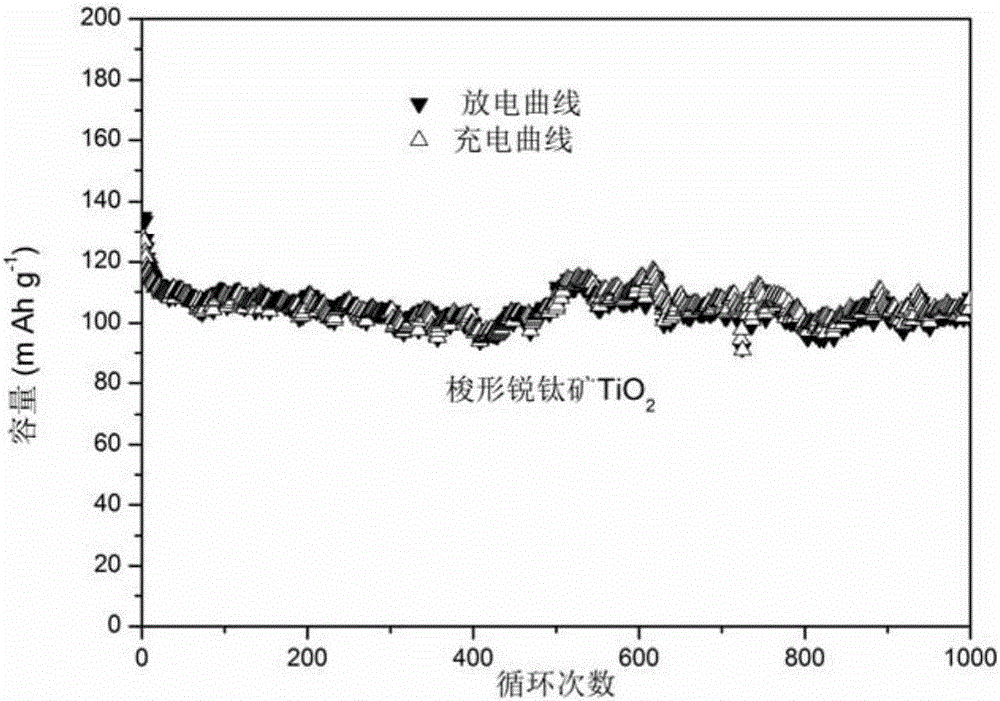
[0004] The purpose of the present invention is to overcome the defects that the existing lithium ion battery negative electrode materials will form lithium dendrites and have major safety hazards during the charge and discharge process, and provide a shuttle-shaped anatase TiO 2 As a lithium-ion battery negative electrode material, the battery still has an 80% retention rate after 1000 cycles

Method used

the structure of the environmentally friendly knitted fabric provided by the present invention; figure 2 Flow chart of the yarn wrapping machine for environmentally friendly knitted fabrics and storage devices; image 3 Is the parameter map of the yarn covering machine
View more

Image

Smart Image Click on the blue labels to locate them in the text.
Viewing Examples
Smart Image
  • A kind of preparation method of negative electrode material of lithium ion battery
  • A kind of preparation method of negative electrode material of lithium ion battery
  • A kind of preparation method of negative electrode material of lithium ion battery

Examples

Experimental program
Comparison scheme
Effect test

Embodiment 1

[0018] (1) Add 0.5ml of tetrabutyl titanate to 30ml of methanol, stir at room temperature for 12h, transfer the reaction solution to an autoclave, and react at 160°C for 6h. (2) After the autoclave is cooled to room temperature, a white precipitate is obtained by centrifugation and washing, and then the white precipitate is dried.

[0019] (3) Calcining the dried white precipitate at 500°C for 2 hours to prepare a lithium ion battery negative electrode material.

Embodiment 2

[0021] (1) Add 0.5ml of tetrabutyl titanate to 30ml of methanol, stir at room temperature for 12h, transfer the reaction solution to an autoclave, and react at 160°C for 12h.

[0022] (2) After the autoclave is cooled to room temperature, a white precipitate is obtained by centrifugation and alcohol washing. Dry the white precipitate.

[0023] (3) Calcining the dried white precipitate at 500°C for 2 hours to prepare a lithium ion battery negative electrode material.

Embodiment 3

[0025] (1) Add 1ml of tetrabutyl titanate to 30ml of 1,3-propanediol, stir at room temperature for 12h, transfer the reaction solution to an autoclave, and react at 160°C for 24h.

[0026] (2) After the autoclave is cooled to room temperature, a white precipitate is obtained by centrifugation and washing. Dry the white precipitate.

[0027] (3) Calcining the dried white precipitate at 500°C for 2 hours to prepare a lithium ion battery negative electrode material.

the structure of the environmentally friendly knitted fabric provided by the present invention; figure 2 Flow chart of the yarn wrapping machine for environmentally friendly knitted fabrics and storage devices; image 3 Is the parameter map of the yarn covering machine
Login to View More

PUM

No PUM Login to View More

Abstract

The invention discloses a preparation method of a lithium ion battery anode material, which comprises the following steps: adding tetrabutyl titanate into methanol or 1,3-propanediol or glycerol in a volume ratio of 1:1-1:60, stirring at room temperature for 12-48 hours, transferring the reaction solution into a high-pressure reaction kettle, and reacting at 160-240 DEG C for 1 hour-7 days; and after the reaction kettle is cooled to room temperature, centrifugating and washing to obtain a white precipitate, drying the white precipitate, and calcining at 500 DEG C for 2 hours to obtain the lithium ion battery anode material. When the synthesized uniform shuttle-shaped anatase TiO2 is used in the lithium ion battery anode, after the lithium ion battery is subjected to charging-discharging circulation 1000 times under the current density of 170 mA / g, the capacity retentivity is higher than 80%.

Description

Technical field [0001] The invention relates to a lithium ion battery, in particular to a method for preparing a long-life negative electrode material for a lithium ion battery. Background technique [0002] TiO since the beginning of the 20th century 2 Since commercialization, it has been widely used in pigments, sunscreens, paints and toothpastes. Fujishima and Honda discovered TiO in 1972 2 It can photocatalytically decompose water under the irradiation of ultraviolet rays. Since then, TiO 2 Become one of the research hotspots. Applications range from photovoltaics, photocatalysis to photo / electrochromism, sensors. These applications can be roughly divided into: energy and environment. TiO 2 The application of TiO is closely related to its own size, morphology, crystal type and surface characteristics, so it is planned to synthesize TiO with different morphologies, sizes and crystal types. 2 To meet its different applications. [0003] With the development of economy and soc...

Claims

the structure of the environmentally friendly knitted fabric provided by the present invention; figure 2 Flow chart of the yarn wrapping machine for environmentally friendly knitted fabrics and storage devices; image 3 Is the parameter map of the yarn covering machine
Login to View More

Application Information

Patent Timeline
no application Login to View More
Patent Type & Authority Patents(China)
IPC IPC(8): C01G23/053H01M4/48
CPCY02E60/10
Inventor 单忠强朱坤磊田建华
Owner TIANJIN UNIV
Features
  • R&D
  • Intellectual Property
  • Life Sciences
  • Materials
  • Tech Scout
Why Patsnap Eureka
  • Unparalleled Data Quality
  • Higher Quality Content
  • 60% Fewer Hallucinations
Social media
Patsnap Eureka Blog
Learn More