
Graphene-based composite electrode material and preparation method thereof
A composite electrode, graphene-based technology, used in hybrid capacitor electrodes, hybrid/electric double layer capacitor manufacturing and other directions, can solve the problem of no ion transport channel, low mass specific capacity, two-dimensional layered material electrode thickness can not be thick, etc. problem, to achieve a good electron transport network and ion transport channels, the effect of increased thickness
- Summary
- Abstract
- Description
- Claims
- Application Information
AI Technical Summary
Problems solved by technology
Method used
Image

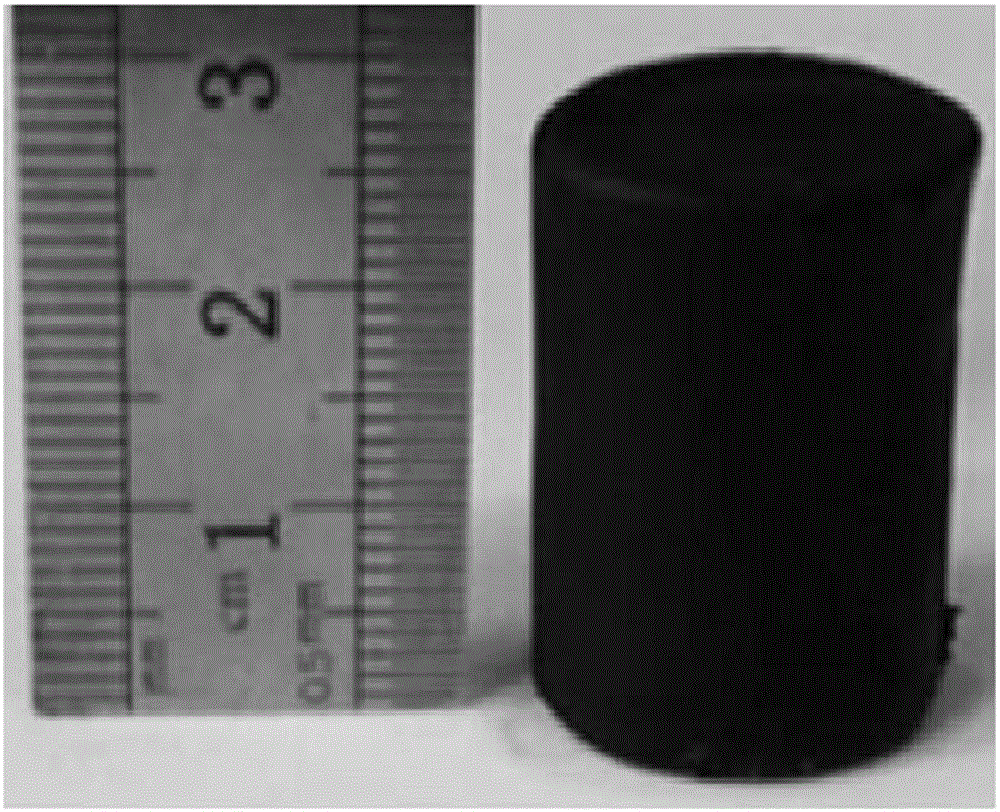
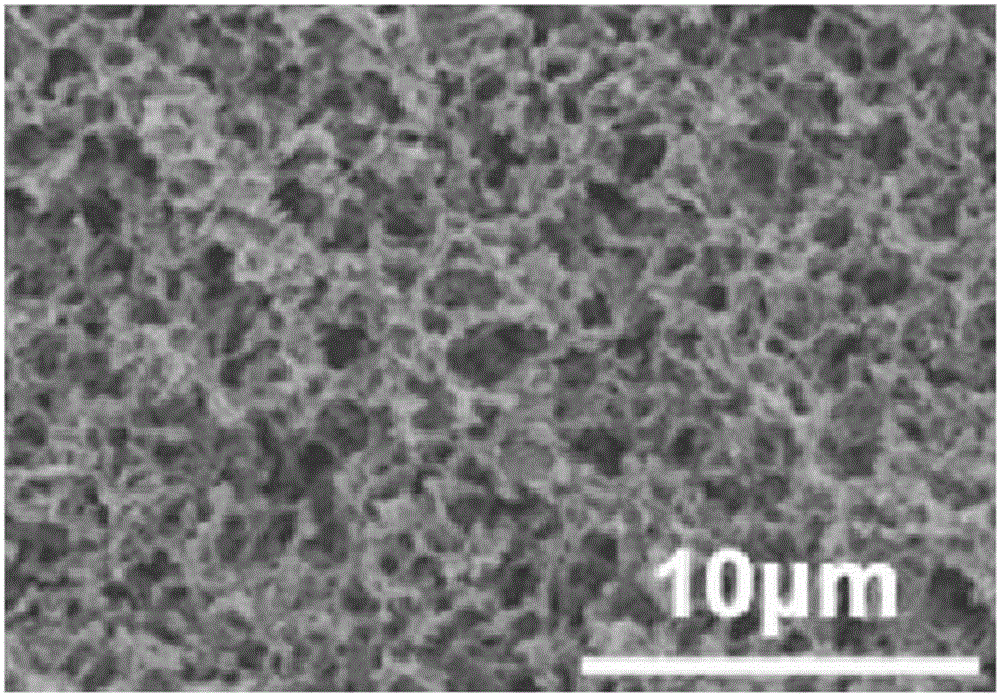
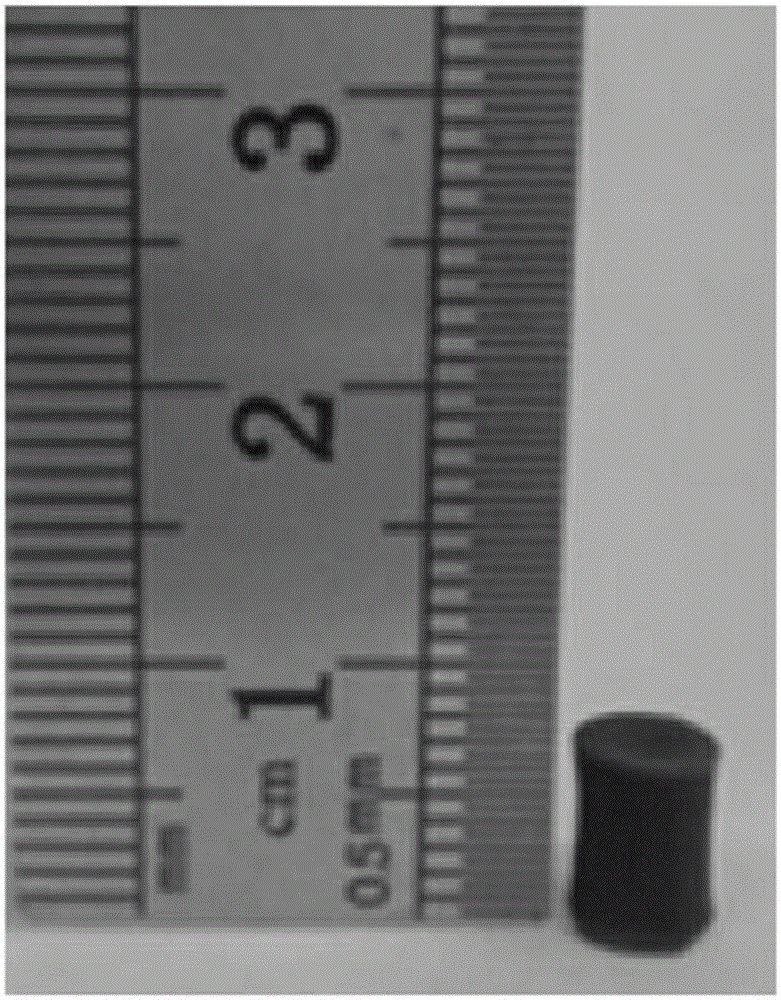
Examples
preparation example Construction
[0022] The preparation method of graphene composite electrode material of the present invention, it comprises the steps:
[0023] (1) Preparation of graphene matrix.
[0024] The graphite derivative was added into deionized water, and ultrasonically dispersed in an ice-water bath to obtain a graphene derivative solution.
[0025] Preferably, the graphene derivative is selected from graphene oxide.
[0026] The ultrasonically dispersed graphene derivative solution is placed in a hydrothermal kettle for hydrothermal treatment to obtain a graphene matrix with a three-dimensional porous structure.
[0027] Those skilled in the art can understand that hydrothermal treatment is conducive to the self-assembly of the sheet structure of graphene derivatives to form a three-dimensional porous network structure, and the graphene matrix thus obtained has a higher specific surface area and a large amount of oxygen. Functional groups, so it is beneficial for the polymer component to adsor...
Embodiment 1
[0059] (1) Preparation of three-dimensional porous graphene matrix.
[0060] Weighed 170 mg of graphite oxide and added it to 85 mL of deionized water, and ultrasonically dispersed in an ice-water bath to obtain a 2 mg / mL graphene oxide solution. The uniformly dispersed graphene oxide aqueous solution prepared above was placed in a 100 mL hydrothermal reaction kettle, and then the hydrothermal reaction kettle was placed in a muffle furnace at a temperature of 180° C. for 6 hours to obtain a three-dimensional porous graphene matrix.
[0061] (2) Preparation of graphene / polyaniline composites.
[0062] The graphene substrate prepared by the above reaction was soaked in 20 mL of 1 mol / L hydrochloric acid solution in which aniline monomer was dissolved for 12 hours, and the concentration of the aniline monomer was 0.16 mol / L. Then soak the graphene matrix adsorbed with aniline monomer in a hydrochloric acid solution dissolved with ammonium persulfate and react for 2 hours to obta...
Embodiment 2
[0067] (1) Preparation of three-dimensional porous graphene matrix.
[0068] Weighed 170 mg of graphite oxide and added it to 85 mL of deionized water, and ultrasonically dispersed in an ice-water bath to obtain a 2 mg / mL graphene oxide solution. The homogeneously dispersed graphene oxide aqueous solution prepared above was placed in a 100 mL hydrothermal reaction kettle, and then the hydrothermal reaction kettle was placed in a muffle furnace at a temperature of 180° C. for 6 hours to obtain a three-dimensional graphene matrix.
[0069] (2) Preparation of graphene / polyaniline composites.
[0070] The graphene substrate prepared by the above reaction was soaked in 1mol / L hydrochloric acid solution dissolved with aniline monomer for 12h, and the concentration of the aniline monomer was 0.013mol / L. Then soak the graphene matrix adsorbed with aniline monomer in a hydrochloric acid solution dissolved with ammonium persulfate and react for 2 hours to obtain a graphene / polyaniline ...
PUM
| Property | Measurement | Unit |
|---|---|---|
| thickness | aaaaa | aaaaa |
| density | aaaaa | aaaaa |
| thickness | aaaaa | aaaaa |
Abstract
Description
Claims
Application Information
 Login to View More