
Preparation method of nano-diamond colloid and nano-diamond secondary dispersion method
A nano-diamond and secondary dispersion technology, which is applied in the field of nano-diamond secondary dispersion and nano-diamond colloid preparation, can solve the problems that have not mentioned the nano-diamond secondary dispersion, so as to achieve easy realization of large-scale production, enhanced practicability, Handle simple effects
- Summary
- Abstract
- Description
- Claims
- Application Information
AI Technical Summary
Problems solved by technology
Method used
Image

Examples
Embodiment 1
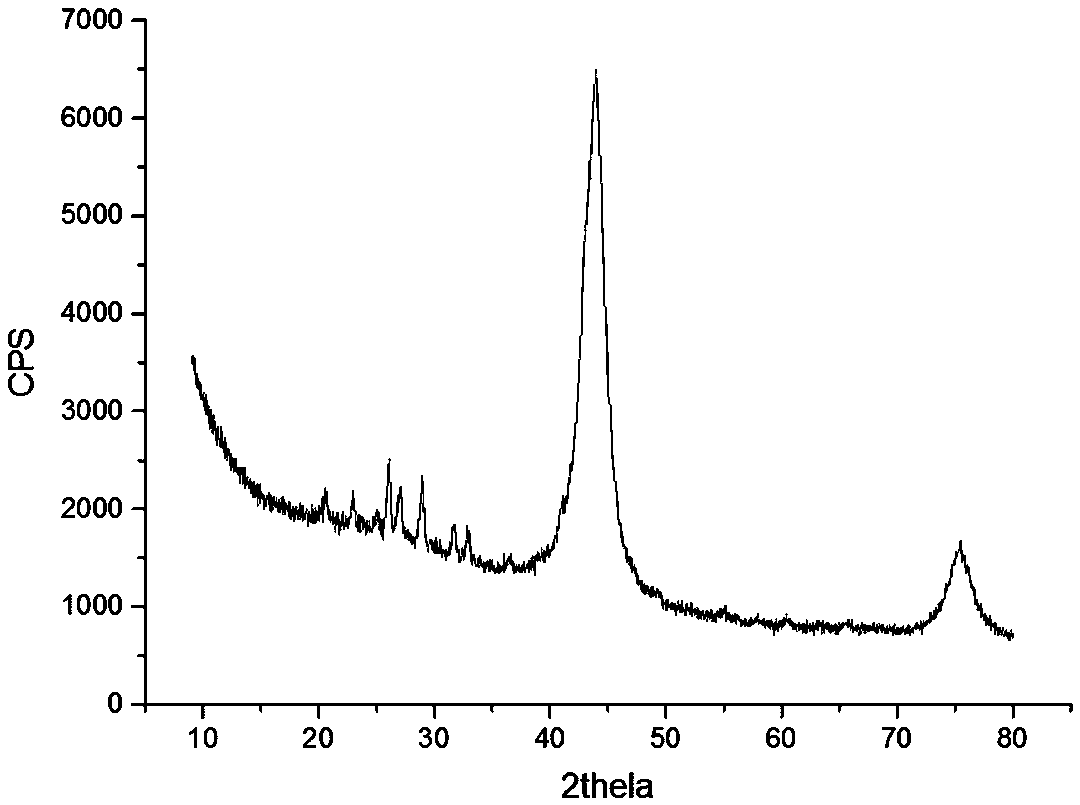
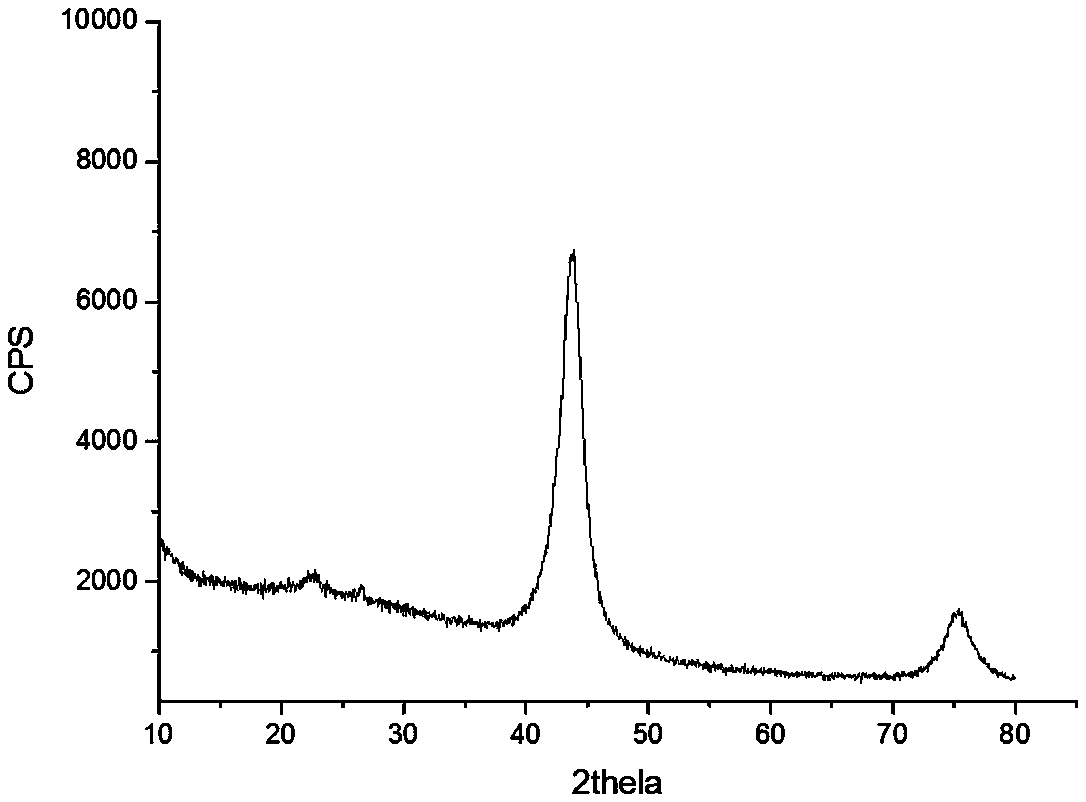
[0034] a. Add 2g of nano-diamond raw material obtained by detonation method (from Hebei Satellite Chemical Co., Ltd.) into a high-temperature reactor, and add 40mL of concentrated HN0 3 React at 200°C for 4 hours. After the reaction, the nano-diamonds are taken out and washed repeatedly with deionized water until neutral to obtain acidified nano-diamonds. X-ray diffraction tests were carried out on nano-diamond raw materials and acidified nano-diamonds respectively, and the results are as follows: figure 1 and figure 2 As shown, it can be seen from the figure that compared with the nano-diamond raw material, the graphite and amorphous carbon content in the acidified nano-diamond is reduced.
[0035] b. Take 400g of ball milling / grinding beads with a diameter of 0.08-0.1mm (the " / " here means "or", the same below) into a ball milling / grinding jar with a volume of 100mL, and then add 0.5g of acidification treatment After the nano-diamond and 50 g n-octane, 0.5 g oleic acid, ...
Embodiment 2
[0039] a. Add the nano-diamond raw material obtained by 2g detonation method into the high-temperature reaction kettle, and add 40mL concentrated HN0 3, reacted at 200°C for 4h, and after the reaction, the nano-diamonds were taken out and washed repeatedly with deionized water until neutral to obtain acidified nano-diamonds.
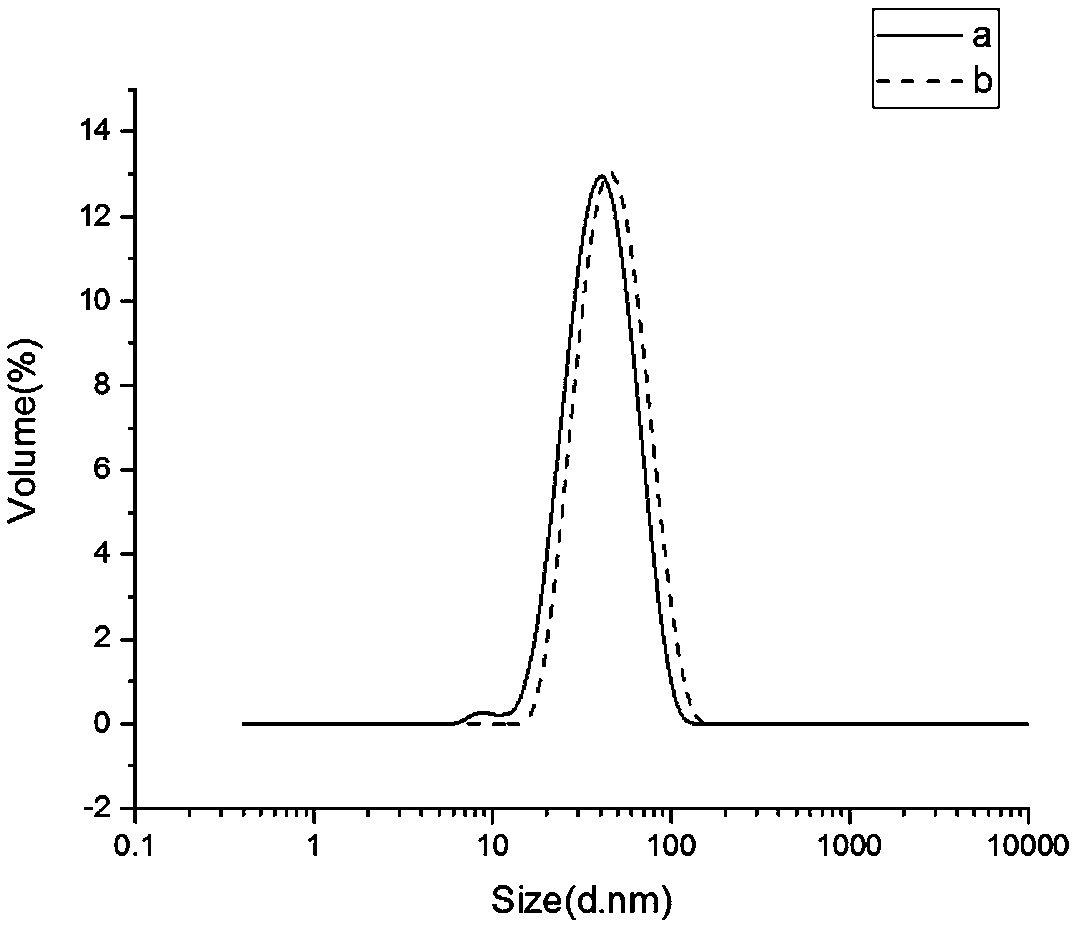
[0040] b. Take 400g of ball milling / grinding beads with a diameter of 0.08-0.1mm and put them into a ball milling / grinding jar with a volume of 100mL, add 0.5g of acidified nano-diamond, 50g of n-octane, 0.5g of oleic acid, set The rotating speed of the ball mill / mill is 580r / min, the ball mill / grinding time is 4h, and a clear and transparent black colloidal solution is obtained, which is characterized by dynamic light scattering, and the obtained results are as follows Figure 4 Shown in curve a.
[0041] c. Use a rotary evaporator to remove excess n-octane solvent from the obtained clear and transparent nano-diamond black colloid solution, set the tem...
Embodiment 3
[0044] a. Add the nano-diamond raw material obtained by 2g detonation method into the high-temperature reaction kettle, and add 40mL concentrated HN0 3 React at 200°C for 4 hours. After the reaction, the nano-diamonds are taken out and washed repeatedly with deionized water until neutral to obtain acidified nano-diamonds.
[0045] b. Put 400g of ball milling / grinding beads with a diameter of 0.08-0.1mm into a ball milling / grinding jar with a volume of 100mL, add 2.0g of acidified nano-diamond, 50g of n-octane, 2.0g of oleic acid, and set The rotating speed of the ball mill / mill is 580r / min, the ball mill / grinding time is 2h, and a clear and transparent black colloidal solution is obtained, which is characterized by dynamic light scattering, and the obtained results are as follows Figure 5 Shown in curve a.
[0046] c. Use a rotary evaporator to remove excess n-octane solvent from the obtained clear and transparent nano-diamond black colloid solution, set the temperature of t...
PUM
| Property | Measurement | Unit |
|---|---|---|
| particle size | aaaaa | aaaaa |
| particle diameter | aaaaa | aaaaa |
| particle diameter | aaaaa | aaaaa |
Abstract
Description
Claims
Application Information
 Login to View More