
Method for preparing injectable chitosan hydrogen for tissue engineering
A tissue engineering and injectable technology, applied in medical science, prosthesis, coating, etc., can solve problems affecting cell activity, histocompatibility, structural instability, etc., and achieve the effect of mild implementation conditions and simple operation process
- Summary
- Abstract
- Description
- Claims
- Application Information
AI Technical Summary
Problems solved by technology
Method used
Image

Examples
example 1
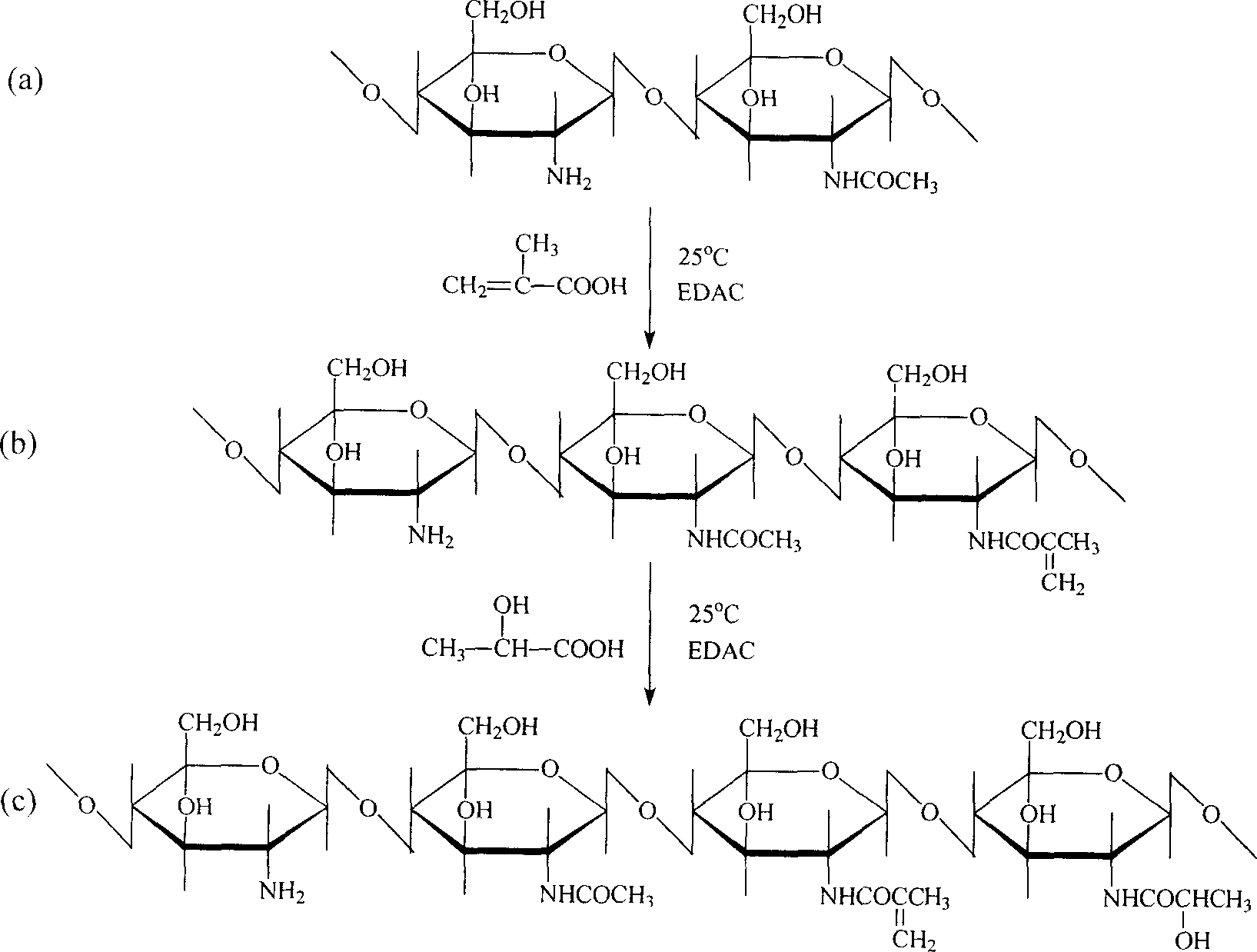
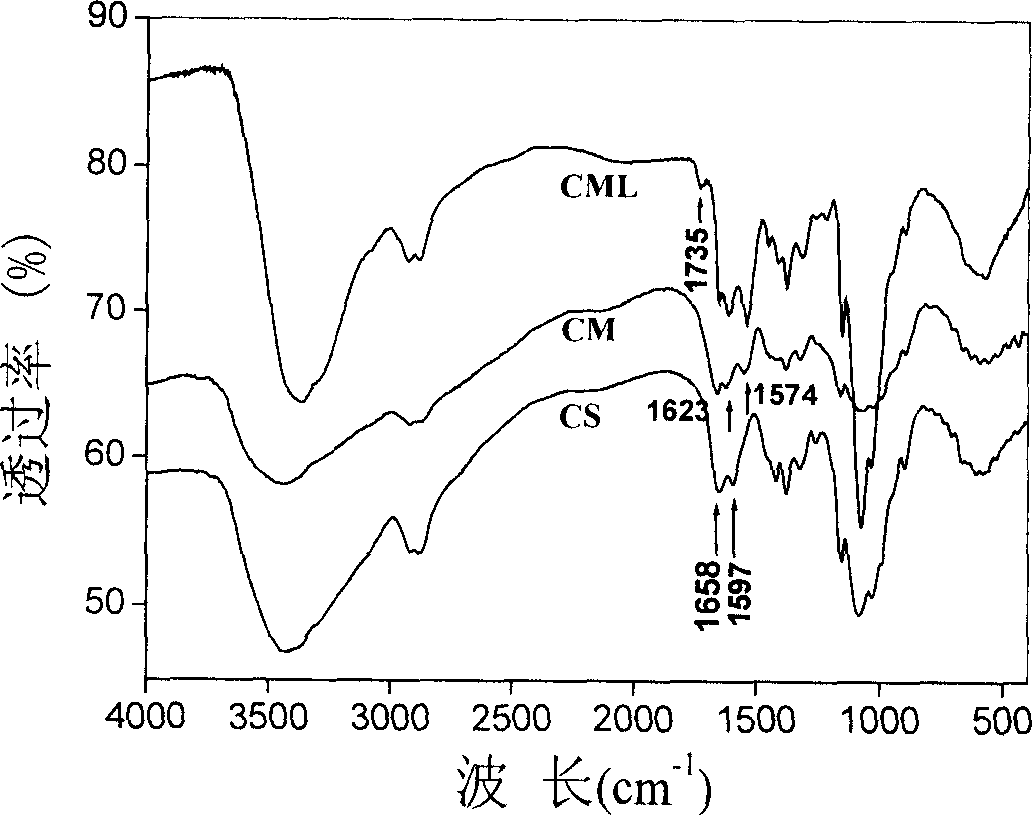
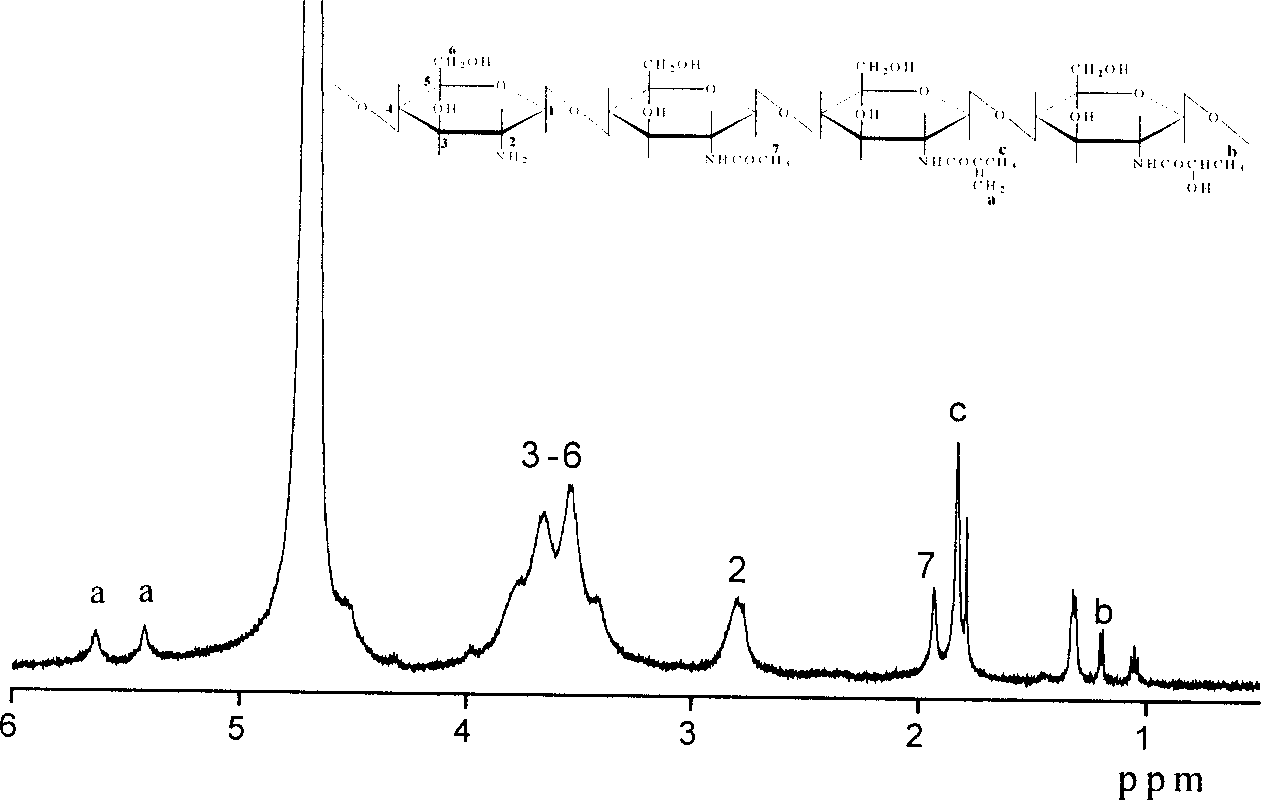
[0025] Example 1: Weigh 800 mg of chitosan and place it in a 250 ml Erlenmeyer flask, add 100 ml triple distilled water and 420 μl MA (0.48 mmol), after the CS is completely dissolved, add 930 mg EDAC (0.48 mmol), then stir the reaction at room temperature 24h. In order to remove unreacted MA and other small molecular products, the mixed solution was placed in a dialysis bag with a cut-off molecular weight of 10,000 Da, dialyzed in a large amount of triple-distilled water at room temperature for 3 days, and the triple-distilled water was changed 2 to 3 times a day. Finally, the liquid was frozen and freeze-dried to obtain MA-grafted chitosan (CM). The CM yields are all greater than 90%, and the structural changes are shown in figure 2 ; MA grafting amount is about 23%, see Figure 4 ; Swellable in water. The above 400mg of CM was dissolved in 50ml of three-distilled water containing 210μl of LA (0.2mmol), and after complete dissolution, 460mg of EDAC (0.24mmol) was added. ...
example 2
[0026] Example 2: Weigh chitosan 800mg and place it in a 250ml Erlenmeyer flask, add 100ml three-distilled water and 420μl MA (0.48mmol), after CS is completely dissolved, add 232.5mg EDAC (0.12mmol), then at room temperature, stir Reaction 24h. In order to remove unreacted MA and other small molecular products, the mixed solution was placed in a dialysis bag with a cut-off molecular weight of 10,000 Da, dialyzed in a large amount of triple-distilled water at room temperature for 3 days, and the triple-distilled water was changed 2 to 3 times a day. Finally, the liquid was frozen and freeze-dried to obtain MA-grafted chitosan (CM). The CM yields are all greater than 90%, and the MA grafting amount is about 11.74%, see Figure 4 .
example 3
[0027] Example 3: Dissolve 400mg CM with about 23% MA grafting in 50ml triple-distilled water containing 210μl LA (0.2mmol), and add 115mg EDAC (0.06mmol) after complete dissolution. After the mixture was stirred at room temperature for 24 hours, the mixture was placed in a dialysis bag with a cut-off molecular weight of 10,000 Da, dialyzed in a large amount of triple-distilled water at room temperature for 3 days, and the triple-distilled water was changed 2 to 3 times a day. Finally, the liquid was frozen and freeze-dried to obtain MA and LA grafted chitosan (CML). The yield of CML is greater than 90%, and the amount of LA grafting is about 43.2%, see Figure 5 .
PUM
| Property | Measurement | Unit |
|---|---|---|
| grafting amount | aaaaa | aaaaa |
| grafting amount | aaaaa | aaaaa |
| grafting amount | aaaaa | aaaaa |
Abstract
Description
Claims
Application Information
 Login to View More