The use of the magnetic-
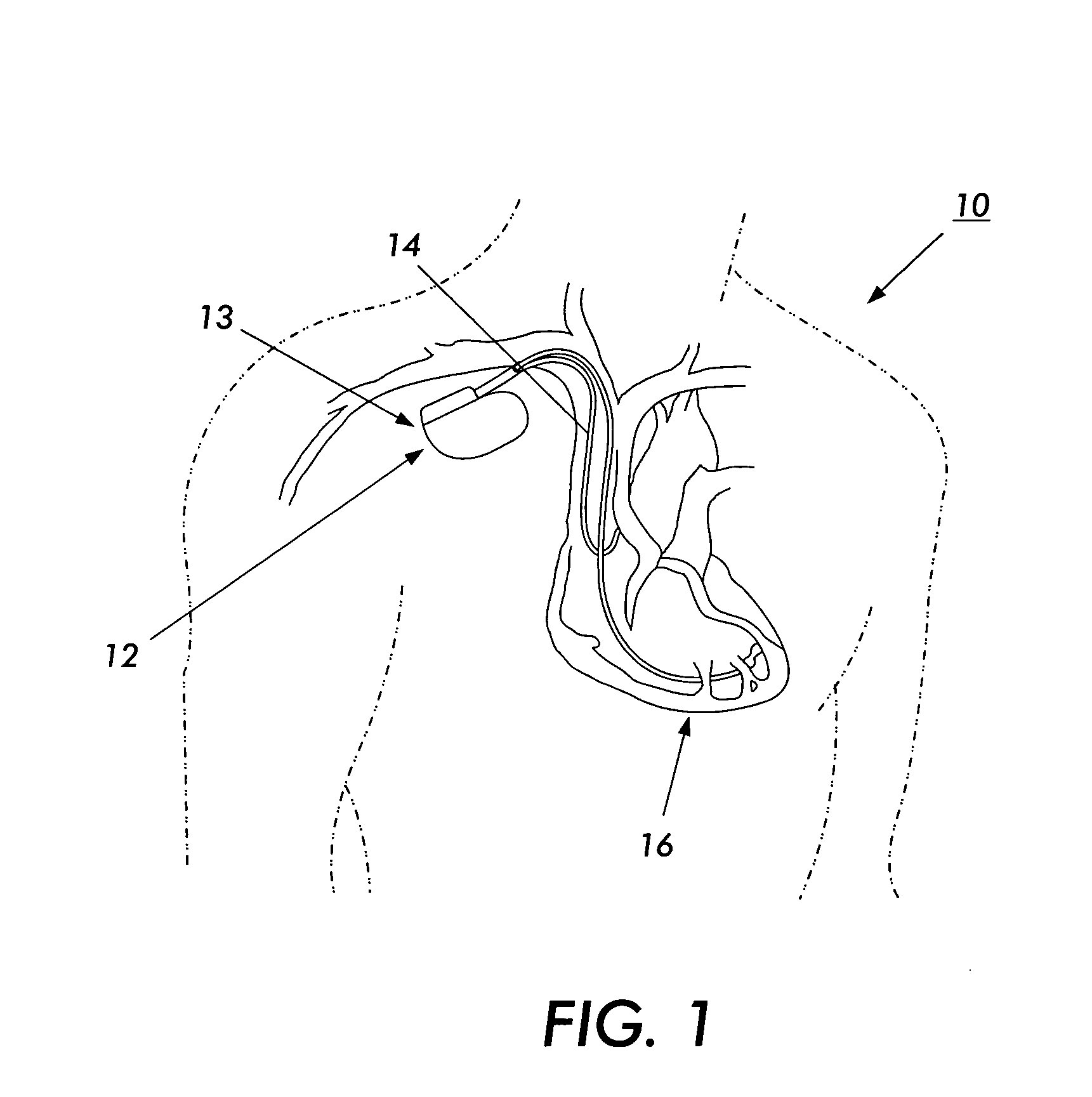
resonance imaging process with patients who have implanted or non-implanted medical assist devices; such as, but not limited to,
cardiac assist devices, implanted
insulin pumps,
catheter guide wires, leads for
neurostimulation probes, intraluminal coils, guided catheters, temporary cardiac pacemakers, temporary esophageal pacemakers; often presents problems.
Since the sensing systems and conductive elements of these medical assist devices are responsive to changes in local electromagnetic fields, the medical assist devices are vulnerable to external sources of severe
electromagnetic noise, and in particular, to electromagnetic fields emitted during the magnetic-resonance imaging (magnetic-resonance imaging) procedure.
A common implantable pacemaker can, under some circumstances, be susceptible to electrical interference such that the desired functionality of the pacemaker is impaired.
Such electrical interference can damage the circuitry of the
cardiac assist systems or cause interference in the proper operation or functionality of the
cardiac assist systems.
For example, damage may occur due to high voltages or excessive currents introduced into the cardiac assist
system by voltages or currents induced in the cardiac assist
system circuitry or on the wire leads leading to and from the cardiac assist
system circuitry.
Therefore, it is required that such voltages and currents be limited at the input of such cardiac assist systems, e.g., at the interface.
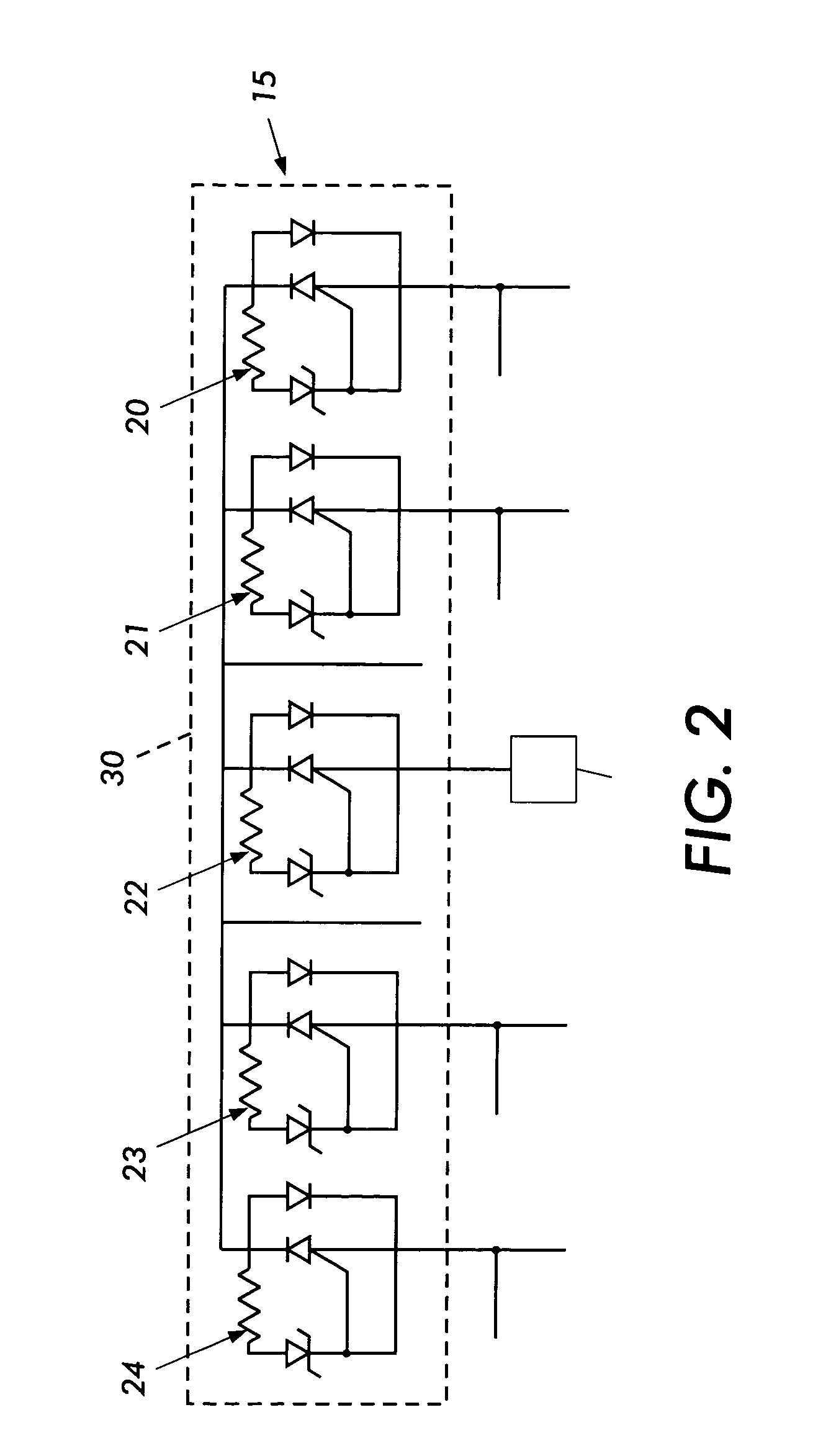
However, such protection, provided by zener diodes and capacitors placed at the input of the
medical device, increases the congestion of the
medical device circuits, at least one
zener diode and one
capacitor per input / output connection or interface.
This is contrary to the desire for increased
miniaturization of implantable medical devices.
Further, when such protection is provided, interconnect wire length for connecting such protection circuitry and pins of the interfaces to the
medical device circuitry that performs desired functions for the medical device tends to be undesirably long.
The excessive wire length may lead to
signal loss and undesirable inductive effects.
Additionally, the
radio frequency (radio-frequency) energy that is inductively coupled into the wire causes intense heating along the length of the wire, and at the electrodes that are attached to the
heart wall.
A further result of this
ablation and scarring is that the sensitive node that the
electrode is intended to pace with
low voltage signals becomes desensitized, so that pacing the patient's heart becomes less reliable, and in some cases fails altogether.
Additionally, the switching of the gradient magnetic fields may also induce unwanted voltages causing problems with the circuitry and potential pacing of the heart.
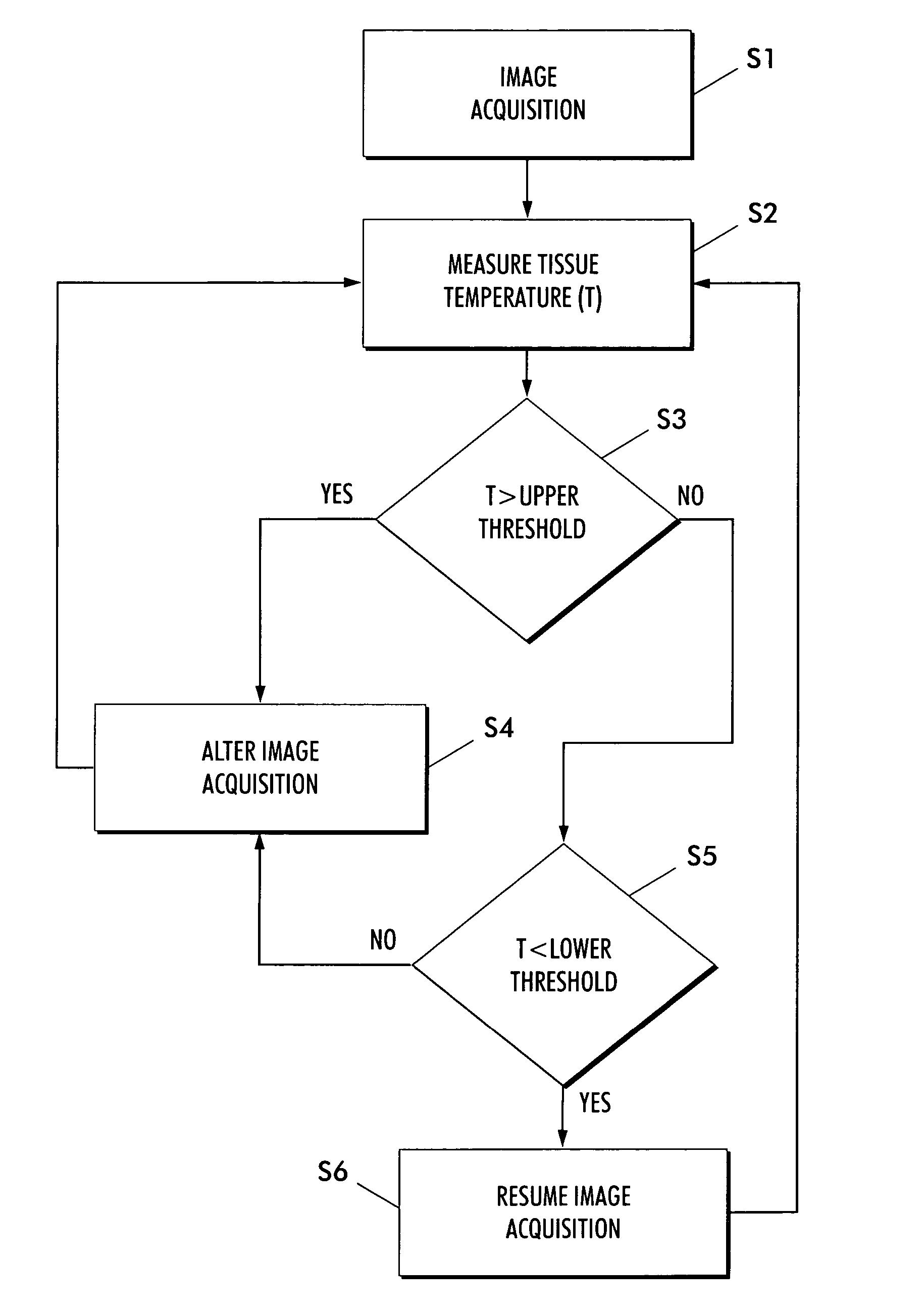
Another problem associated with magnetic-resonance imaging is the temperature change in tissue regions caused by using conventional magnetic-resonance imaging techniques.
The constant changing of alignment of the magnetic moments of the
spins in the tissue causes the tissue's temperature to increase, thereby exposing the tissue to possible magnetic-resonance imaging induced
thermal damage.
Although, conventional medical assist devices provide some means for protection against
electromagnetic interference, these conventional medical assist devices require much circuitry and fail to provide fail-safe protection against
radiation produced by magnetic-resonance
imaging procedures.
Moreover, the conventional medical assist devices fail to address the possible damage that can be done at the tissue interface due to radio-frequency-induced heating.
Furthermore, the conventional medical assist devices fail to address the unwanted tissue region stimulation that may result from radio-frequency-induced electrical currents.
Lastly, conventional magnetic-resonance imaging processes fail to provide a proper safeguard against potential magnetic-resonance imaging induced
thermal damage due to the tissue's
exposure to the switching
magnetic field gradients and the circularly polarized
Radio Frequency Field of the magnetic-resonance imaging process.



 Login to View More
  Login to View More