[0009] The present invention facilitates integration of an
anode and a
cathode in a
single pellet configuration for use with an electrochemical
battery cell of any type or format utilizing one or more
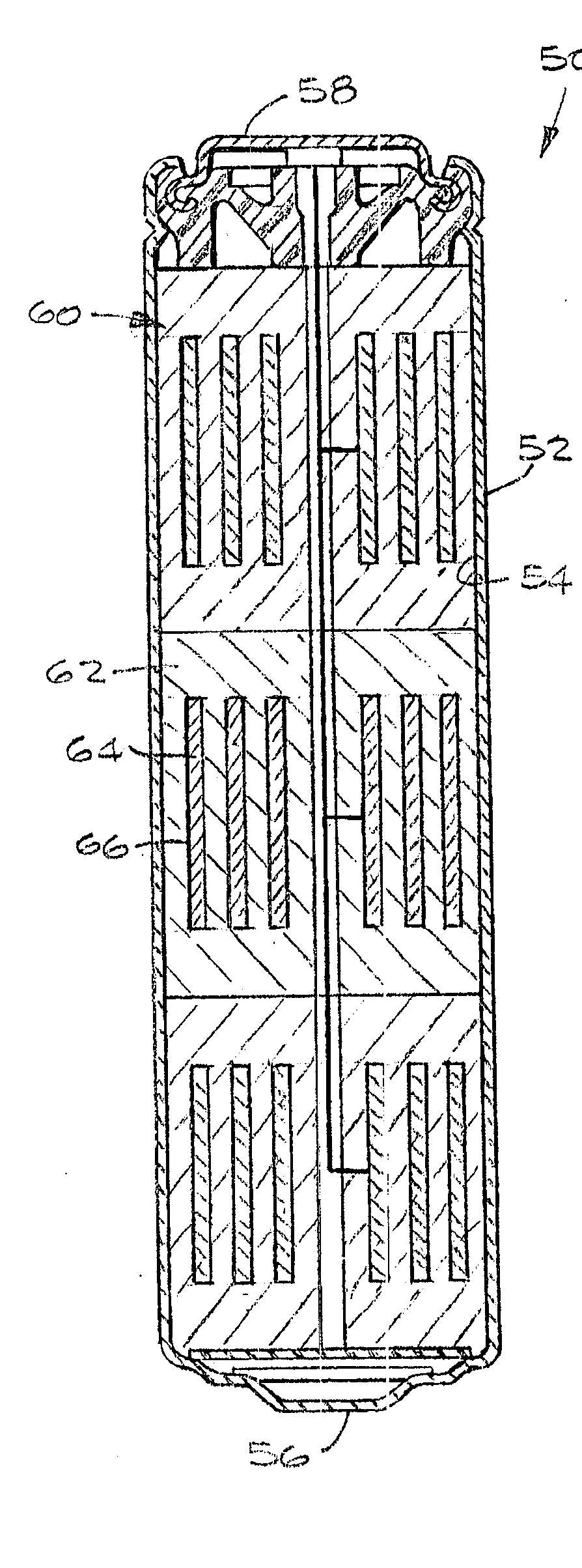
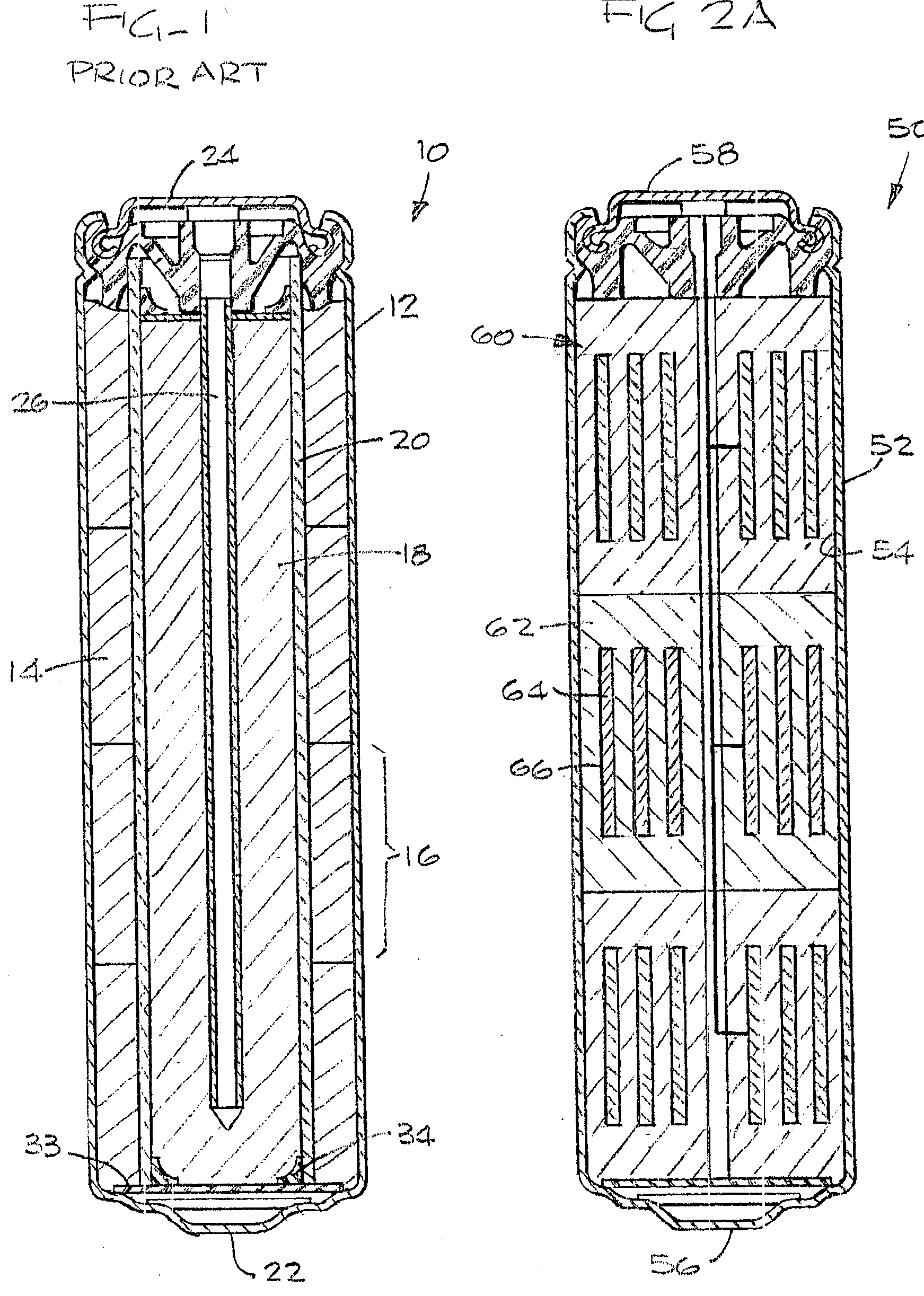
pellets. In accordance with the principles of the present invention as embodied and described herein, one particular characterization of the present invention comprises an electrochemical battery cell comprising a cell housing defining an inner space, a first terminal and a second terminal; and at least one pre-formed pellet disposed within the inner space of the cell housing. The pellet includes an outer electrode portion formed from a material to geometrically define the pellet in a
solid form. The outer electrode portion is in electrical communication with the first terminal of the cell housing. The pellet also includes an inner electrode encapsulated by a separator and embedded within the material of the outer electrode portion. The inner electrode is in electrical communication with the second terminal of the cell housing and electrically insulated from the outer electrode portion.
[0023] The present invention facilitates integration of an inner electrode, preferably an anode, and an outer electrode, preferably a cathode, into a
single pellet configuration for use with an electrochemical battery cell in any type of format utilizing one or more electrode
pellets. The pellet configuration can be utilized in any number of battery cell
electrochemistry formats, such as, for example,
nickel metal hydride (NiMH),
lithium ion (Li-
ion),
nickel cadmium (NiCd), and alkaline cells. Further, the pellet configuration is applicable to any type of battery cell format utilizing one or more pellets, such as, for example,
bobbin type cylindrical cells,
coin cells or flat plate cells. The integration of the inner and outer electrodes into a
single pellet structure that can be inserted into a cell housing or casing, rather than being separately assembled as discrete component materials, facilitates lowers costs, a more
robust design and ease of manufacturability, as well as other benefits. Multiple pellets may be used in a single battery cell to achieve a desired cell capacity. The integration of the electrodes in accordance with the principles of the present invention does not adversely affect the performance characteristics of the battery cell.
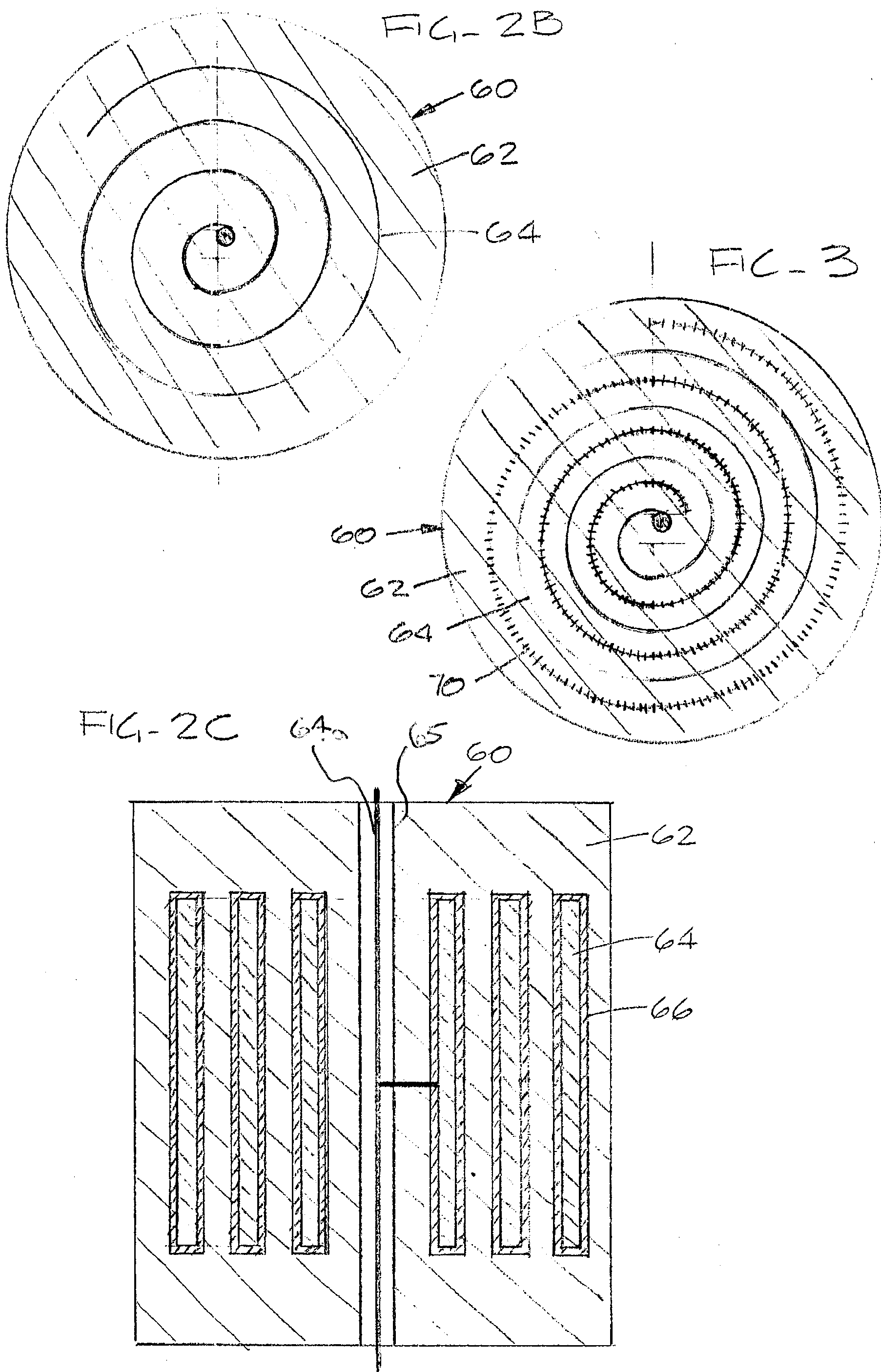
[0027] In addition to the embedded anode 64, a coiled
current collector 70 may be embedded into the cathode portion of the pellet, as shown in FIG. 3. The
current collector 70 facilitates additional current collection for the cathode portion 62. Preferably, the
current collector 70 is a nickel mesh-like material and is incorporated into the cathode portion 62 of the pellet 60.
[0038] In this example, an alkaline
manganese dioxide cell incorporating a relatively
high surface area anode structure is embedded within the
cathode material of the cathode portion when it is formed to geometrically define the pellet. The anode structure is flexible so that it may be coiled within the pellet mold prior to pressing and may be deformed during pressing without breaking. In this embodiment, the anode structure consists of a composite mixture of
zinc powder and or
fiber,
polymer binders, absorbers and other additives overlaying a
thin metal foil or mesh current collector, which may be
copper or
brass. The anode structure is coated with a separator layer that is also flexible so that it does not crack or tear away from the anode surface in the pellet molding process. The separator
coating is suitably microporous to allow good ion transport between the anode and cathode while not permitting
short circuit contact between the two electrodes either before or subsequent to the pressing operation. A parallel cathode current collector may also be embedded in the pellet to improve
electron transfer to the cathode. A wire, lead, or tab connection can be bonded to the anode structure prior to pellet formation and brought outside the pellet during or after formation. The wire, lead or tab connection facilitates connection to the negative contact of the can or cell housing. By thus increasing the anode to cathode interfacial area and
thinning the anode structure relative to a conventional
bobbin cell design, better material utilization is realized and the cell can deliver more runtime at higher drain rates.


 Login to View More