According to the principles of the present invention, a system and method are provided for control of a
navigation system for deploying a
catheter or
medical device within the body in a manner such that a physician can input a target destination, and the
navigation system will guide the
catheter device within a
short distance of the target and determine an orientation for the catheter tip that is within a predetermined error before advancing the catheter tip to the target destination. The present system and method provide a means for determining a predicted length and orientation, navigating the
catheter device to an
intermediate point less than the predicted length, determining an error between the projected destination and actual target destination, and successively updating a predicted value of a
control variable to yield an orientation within a predetermined
distance error before advancing the
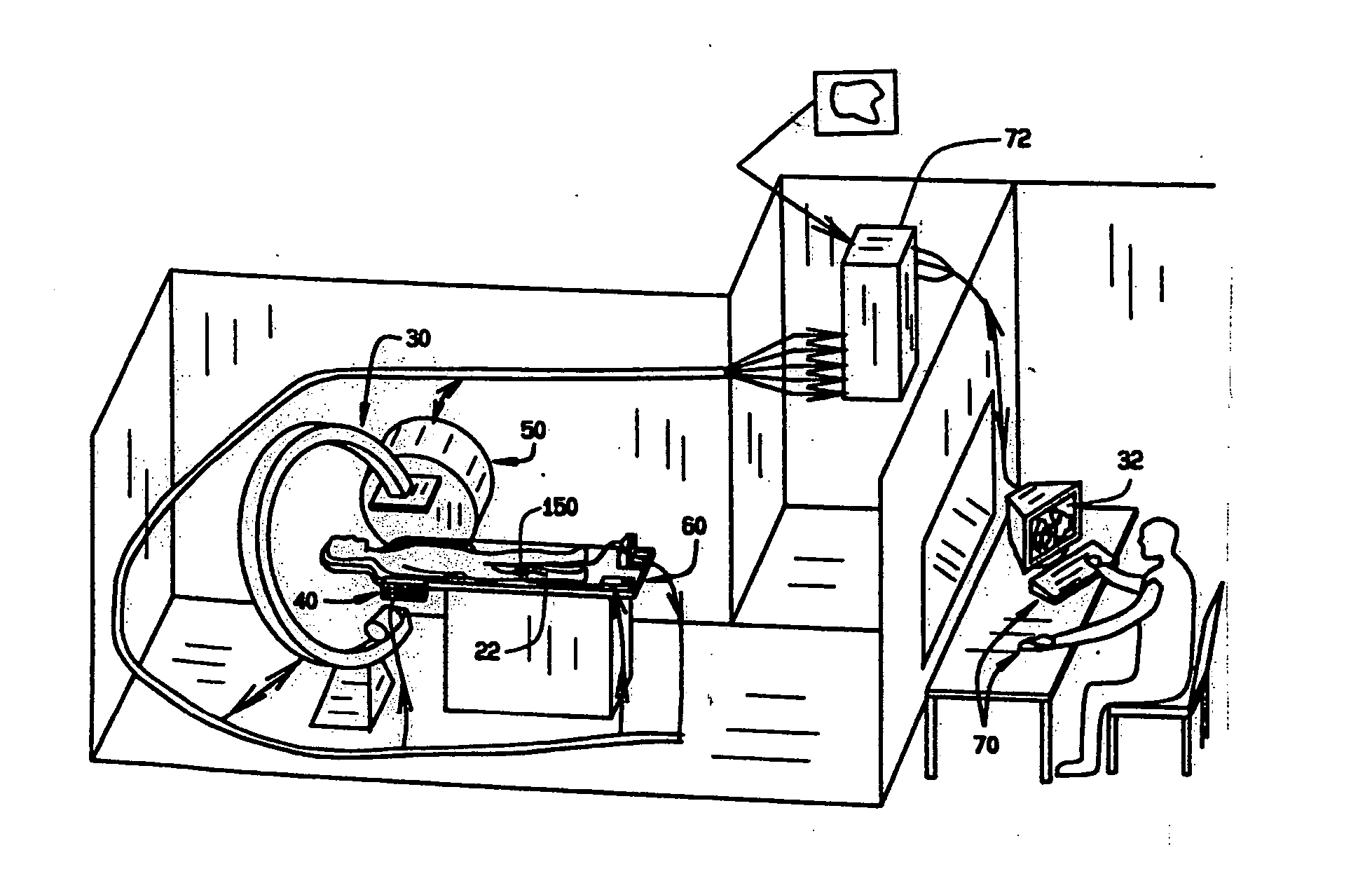
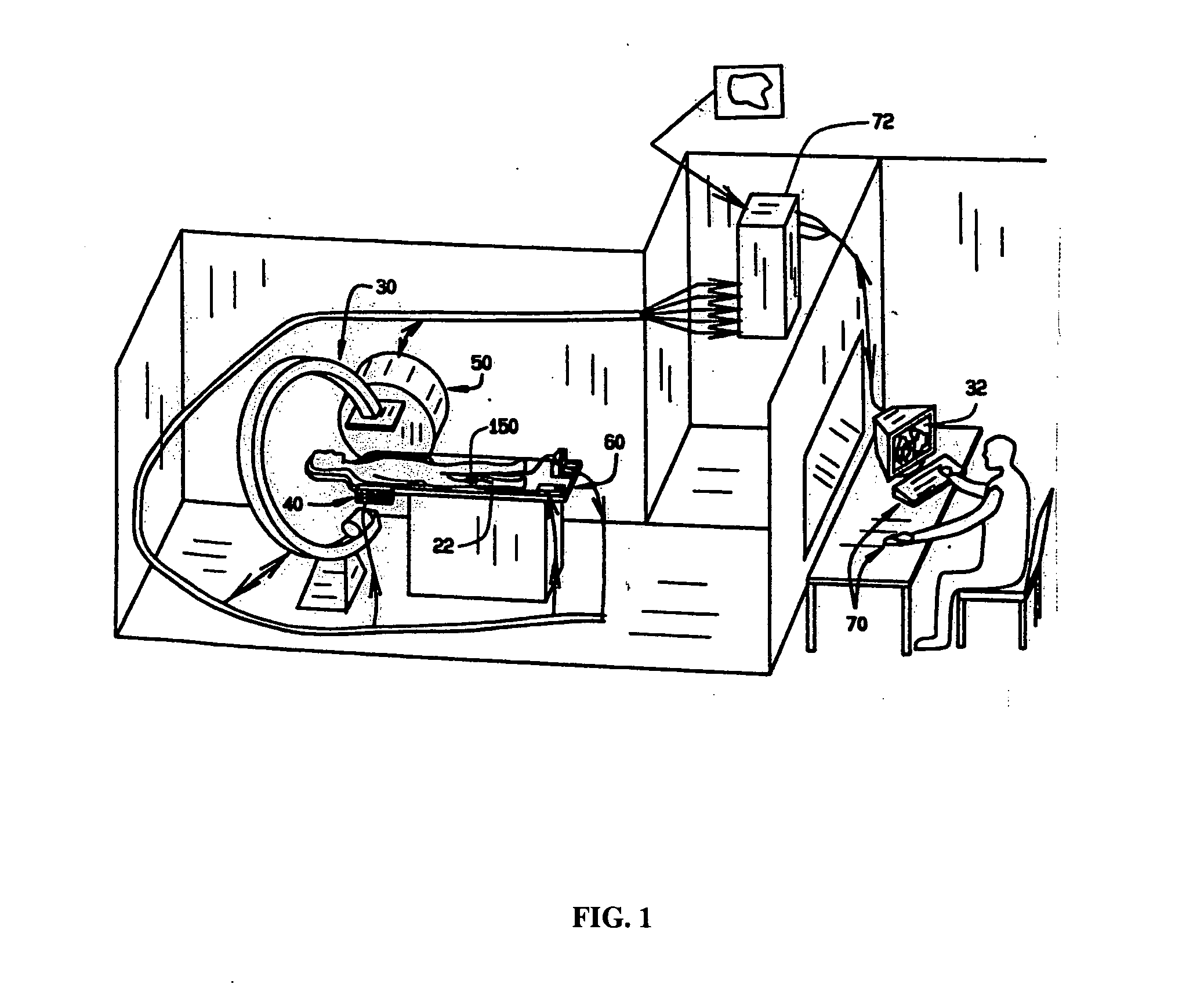
catheter device the remaining distance to the destination. A preferred embodiment of the present invention utilizes a magnetic
navigation system that orients the distal end of a medical device in a selected direction through the interaction of magnetic fields associated with the medical device and one or more
external source magnets outside the patient's body. The magnetic navigation system utilizes a
field angle control variable for controlling the orientation direction of the medical device. The navigation system applies a
magnetic field in a specific direction based on the
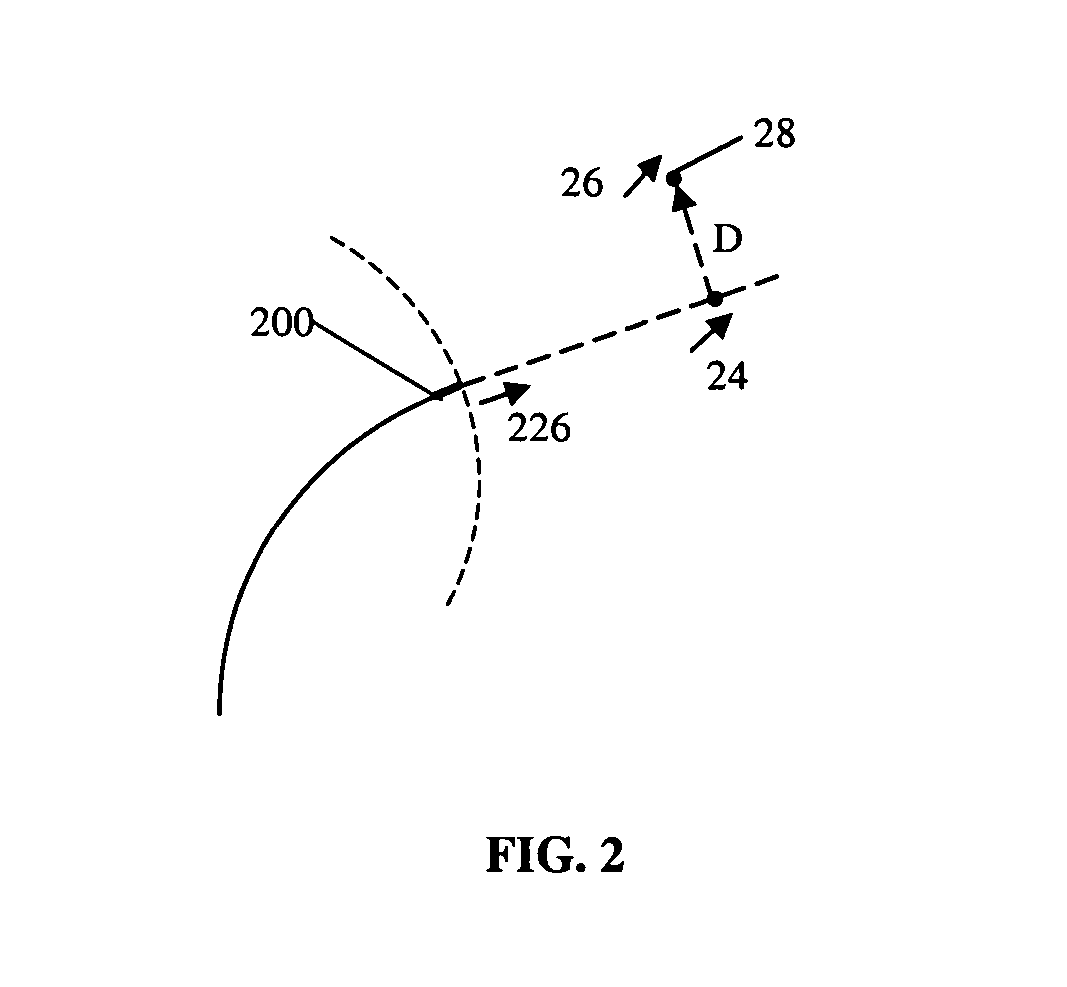
field angle to orient the distal end of the medical device in the patent's body. An error of the predicted orientation and the actual orientation is determined by estimating the distance between a projected destination of the medical device if advanced in its current orientation and the desired target destination. The predicted orientation is iteratively updated and evaluated using a cost function until the
distance error is within a predetermined minimum, to yield an optimum
field angle that is applied to the catheter tip before advancing the catheter the remaining distance to the target destination. An
estimation of the model response of predicted orientation relative to the field angle control variable may also be utilized to determine an updated field angle that will provide correction for variation in field direction, and will bring the actual orientation closer to the target destination. An updated field angle is determined and then applied, after which a new error and updated field angle are determined. This iterative process may be used to further correct the optimum angle to compensate for
magnetic field variations, prior to advancing the catheter device to the intended target destination. The use of this method would provide the physician with the capability of verifying the medical device will be accurately guided to the target destination with only minimal or without any
trial and error, to thereby reduce damage of the surrounding tissue.


 Login to View More
  Login to View More