[0007] Among metals as a material of a metal resistance heating element, Kanthal wire (Kanthal A1 wire, Kanthal APM wire, etc.), a material which bears high temperature, or its substitute is preferred; and moreover, Kanthal APM wire or its substitute is particularly preferred. As for geometry of the metal resistance heating element, either of a
thin wire bent to a sinuous shape (light gauge overbent) and a thick wire formed to a
helical coil (heavy gauge
helical coil) is preferred; and, a light gauge metal heating element is more preferred in that it is light weight and allows for fast heat-up and cool-down. Further, as stated above, since the only differences between the light gauge and the heavy gauge heating elements are energy saving character and heat response character other than the wire weight (resources saving character), it is desired to use either or both of the gauges properly, depending on the specifications of the
processing equipment where the heater is employed, or the specifications of the heater power supply, etc.
[0008] As a non-metal resistance heating element, either of ceramics such as
molybdenum-di-
silicide (MoSi2),
graphite, and
silicon carbide is preferred, and
molybdenum-di-
silicide is particularly preferred in that it suffers little degradation in the
atmospheric air. When
graphite or
silicon carbide is employed as a non-metal resistance heating element, it is desired to enclose the heating element in a heating element container kept under vacuum. The maximum surface load of
molybdenum-di-
silicide is 20W / cm2, whereas that of Kanthal wire which is a metal wire of iron / chrome / aluminum
system is 2 to 3.5W / cm2; therefore, employing molybdenum-di-silicide can render 10 times as greater
heat generation at maximum as compared with a metal wire.
Molybdenum-di-silicide can be used at high temperature range of up to 1800 degrees Celsius; and moreover, since it undertakes no
aging effect, it requires no care about its life-time, providing another
advantage.
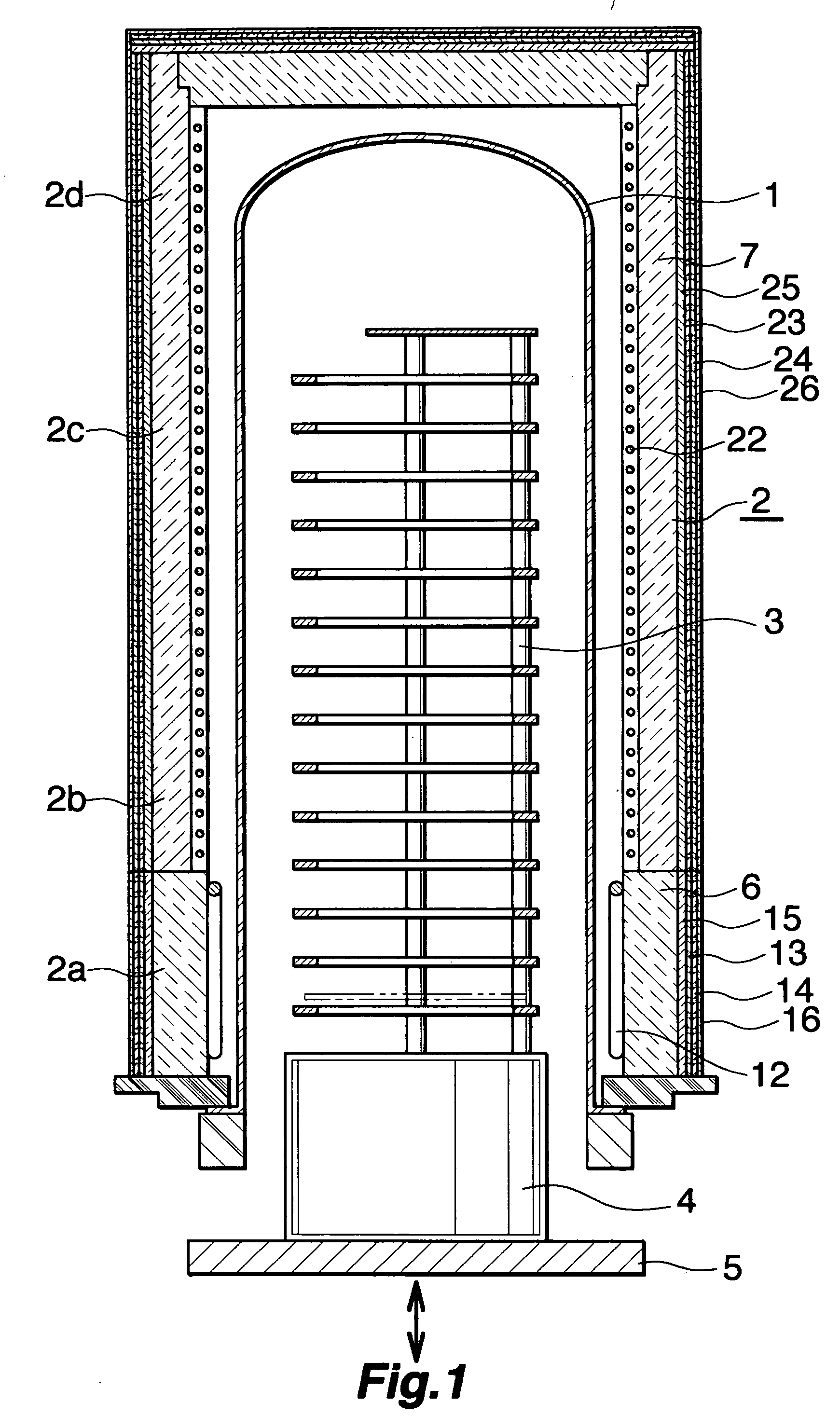
[0010] Because, with an electric heater for a semiconductor
processing equipment according to the present invention, among the multiple zones is at least one zone which is subject to
high loading and of which heating element is non-metal, risk of failure of the heating element by overheat in the said zone which is subject to
high loading is eliminated; this allows for an operation of the heater even at high temperature without causing problems; and since the heating elements in the rest of the zones are metal, its cost can be reduced, and risk of their failure by mechanical shock can be reduced as well. Thus, an electric heater is available which, in view of
heat resistant temperature, bears comparison with an electric heater employing only non-metal resistance heating elements in all zones, and moreover, is inexpensive and easy to
handle. The electric heater is suitably employed for high temperature thermal processes such as
CMOS process and / or SOI process.
[0011] Usually, the zone which is subject to high loading can be either the zone into which a
mass of heating capacity is introduced from outside or the end zone on one or both sides with an opening from which a large amount of heat escapes outwards. Therefore, employing non-metal heating elements in such zones can yield ease of
temperature control at the time of semi-conductor processing.
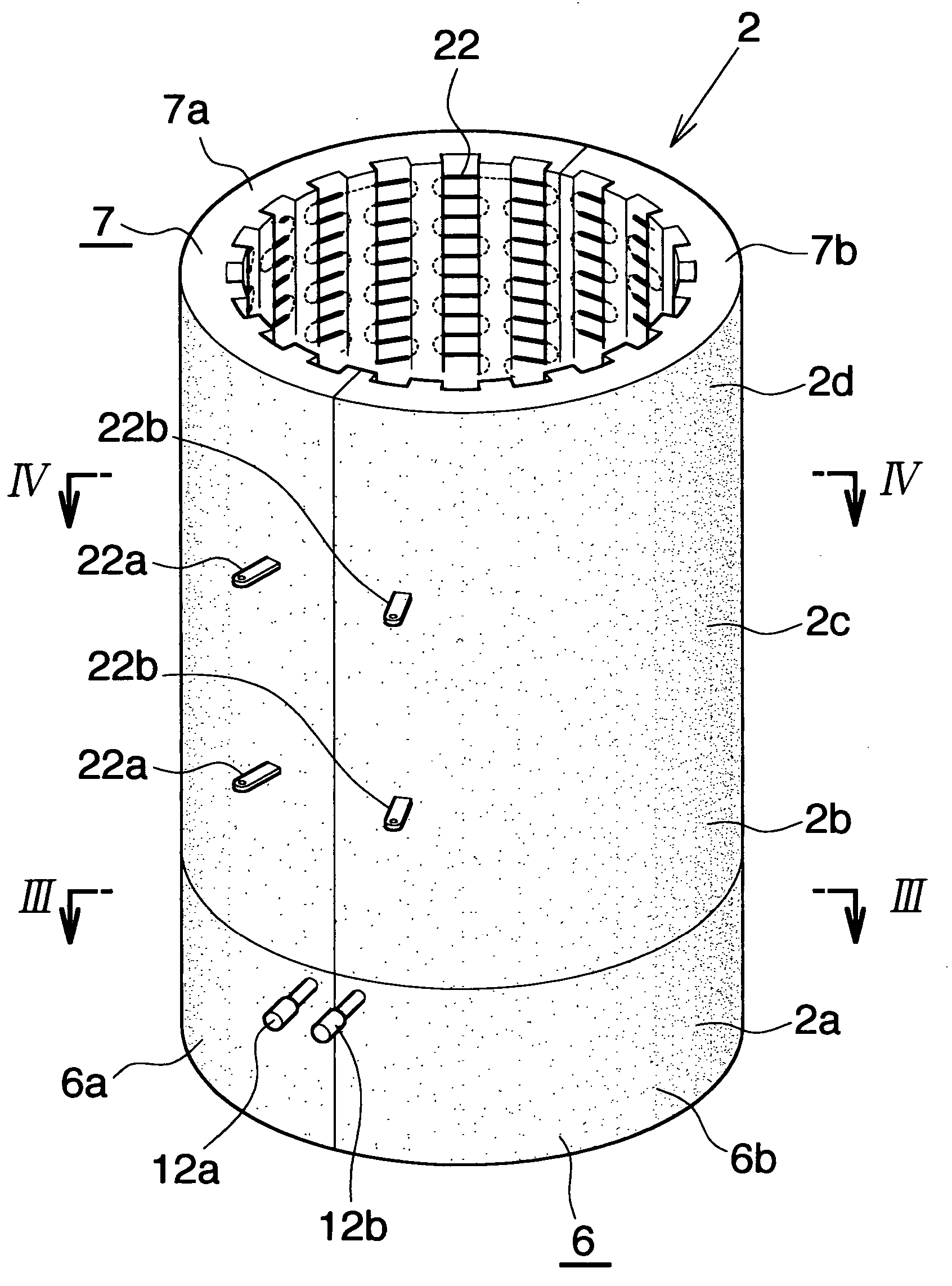
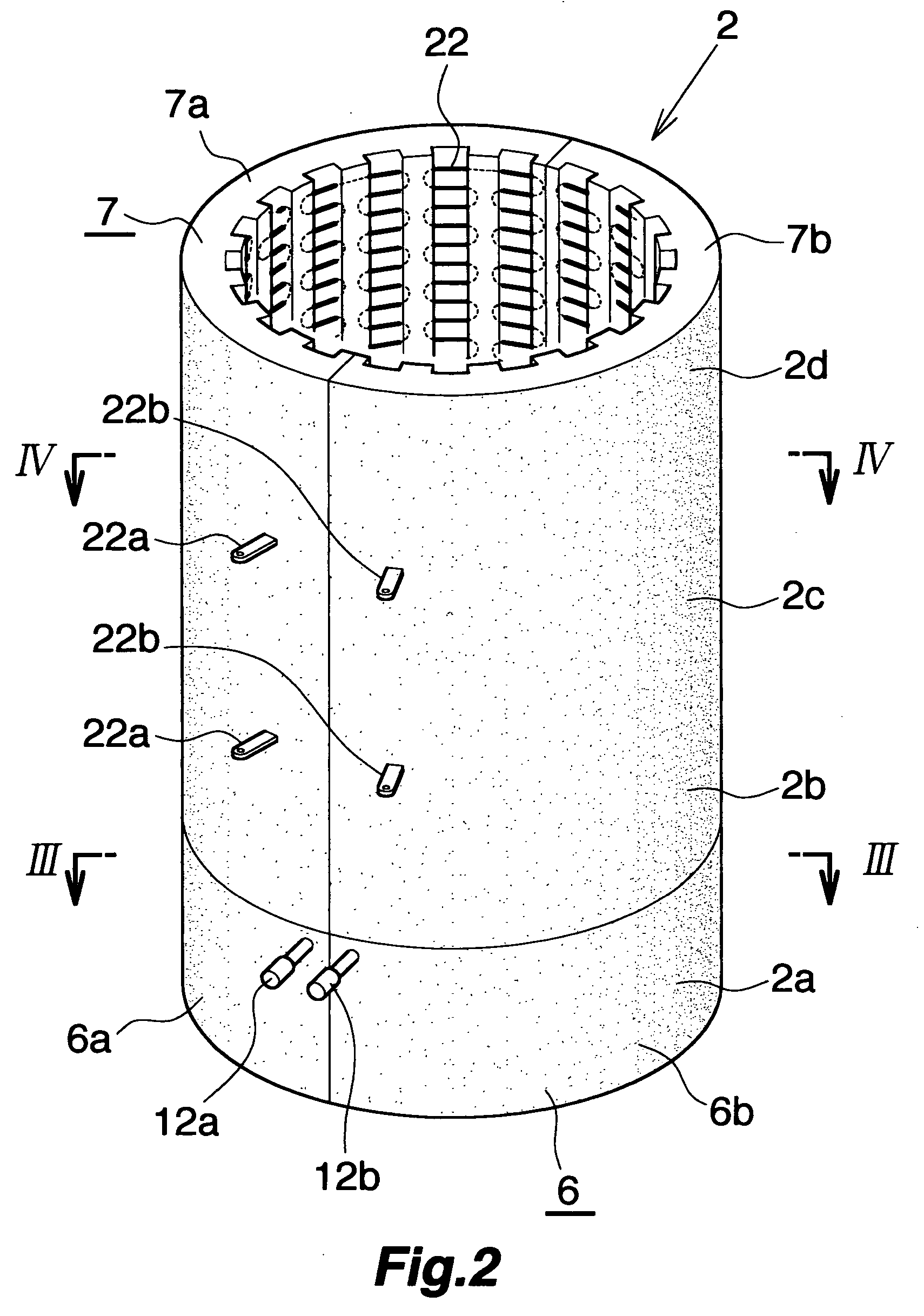
[0012] It is preferred that each zone consists of one or a plurality of blocks each of which comprises a heating element and
thermal insulation body holding the heating element so that replacement can be made by the block. In the case of a vertical furnace where a plurality of zones consist of a bottom zone, a
middle zone, and a top zone, the bottom zone corresponds to the end zone on the said one side. For example, the bottom zone may be formed by a pair of half cylinder blocks put together facing one another, and the
middle zone and the top zone may be formed by a pair of half cylinder blocks put together facing one another. The bottom zone may be formed simply by a
cylinder block, and the middle zone and the top zone may also be formed altogether by a
cylinder block. In this case, when a heating element breaks down at any of the blocks, it is physically possible to replace merely the block including faulty part; moreover, in case where reuse of the
thermal insulation body is allowed, then replacing the heating element alone is possible, thus enabling repair of the electric heater at a minimal additional cost.



 Login to View More