

High temperature denitrification catalyst and method for preparation thereof
- Summary
- Abstract
- Description
- Claims
- Application Information
AI Technical Summary
Benefits of technology
Problems solved by technology
Method used
Image

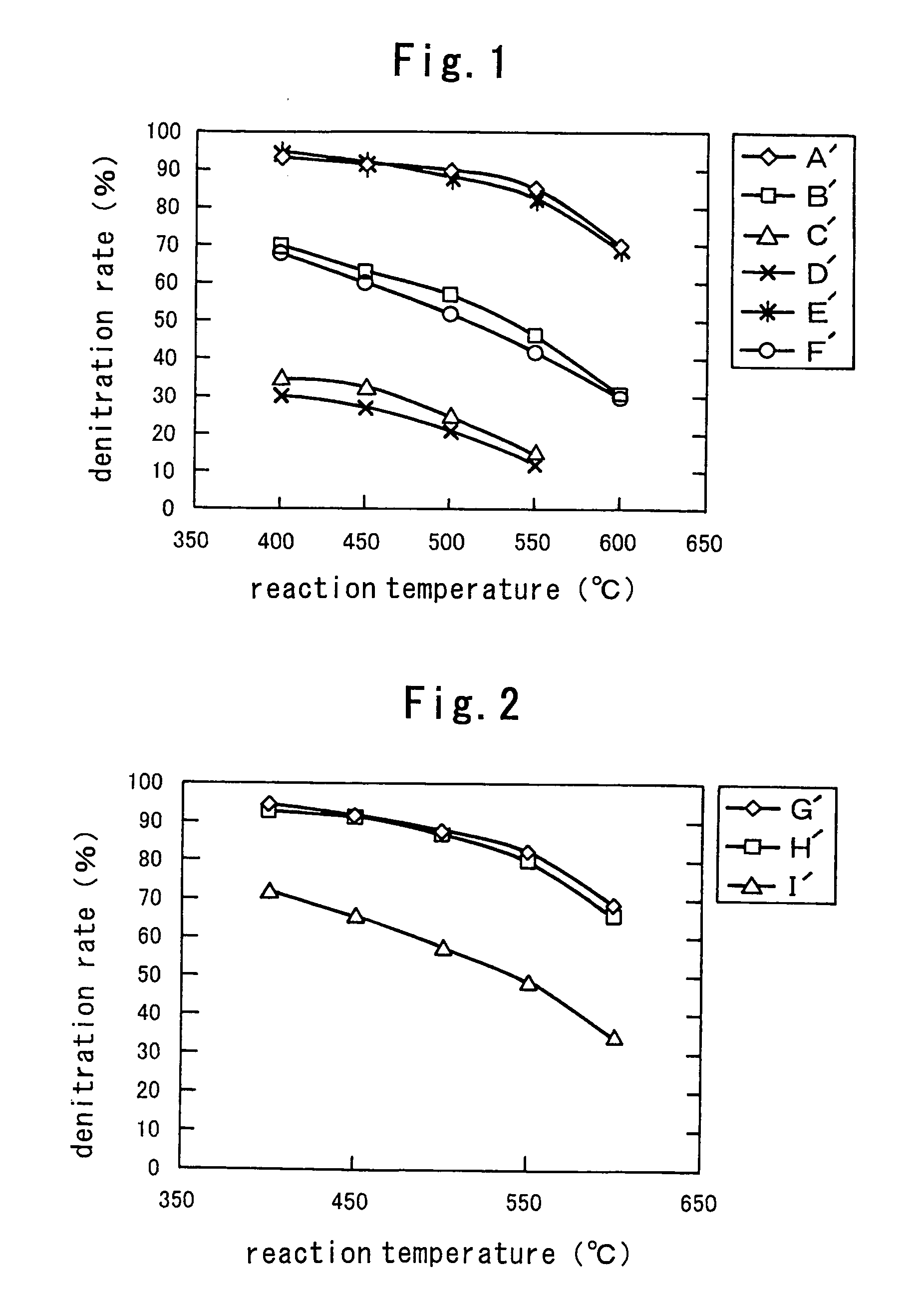
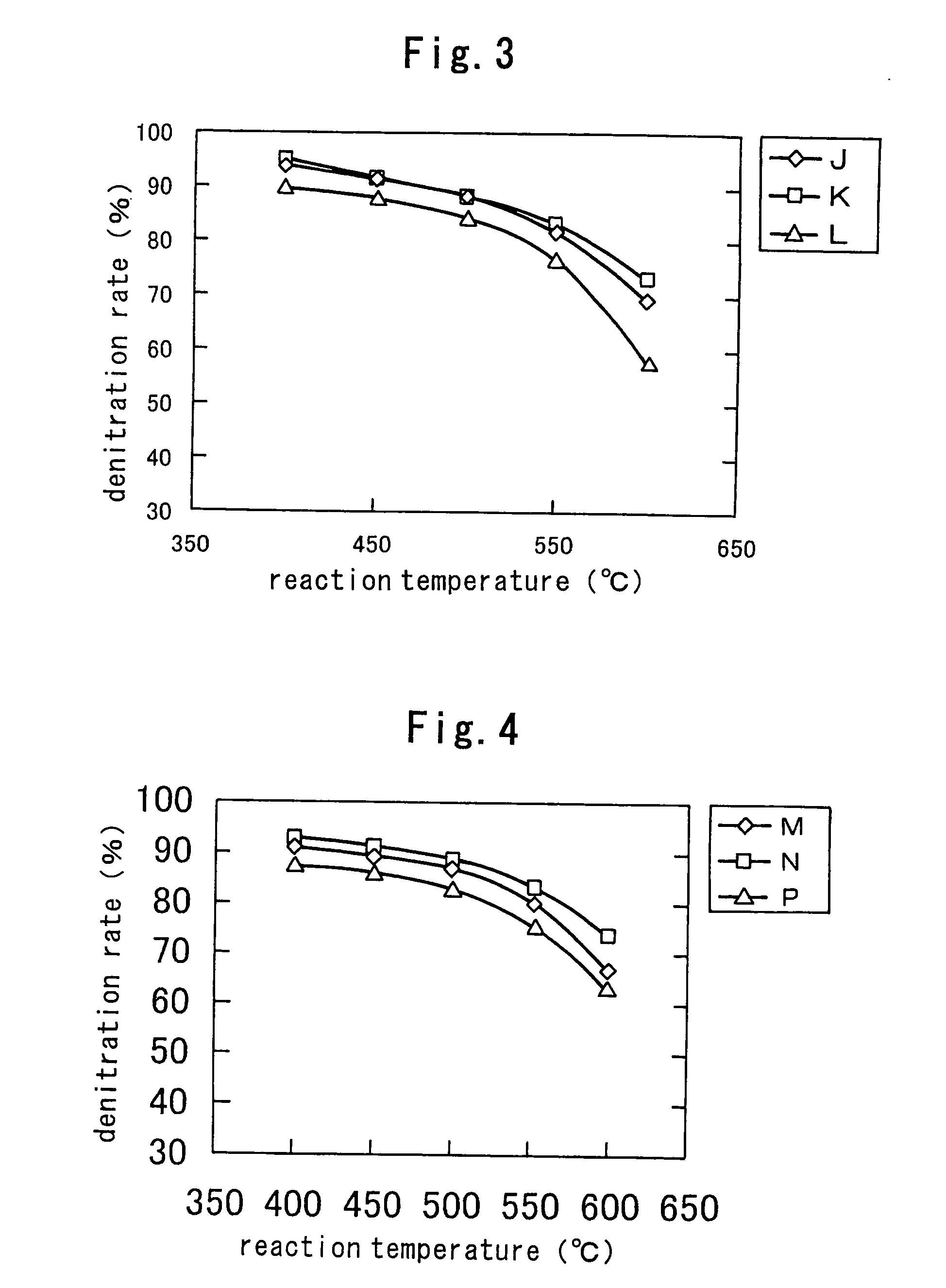
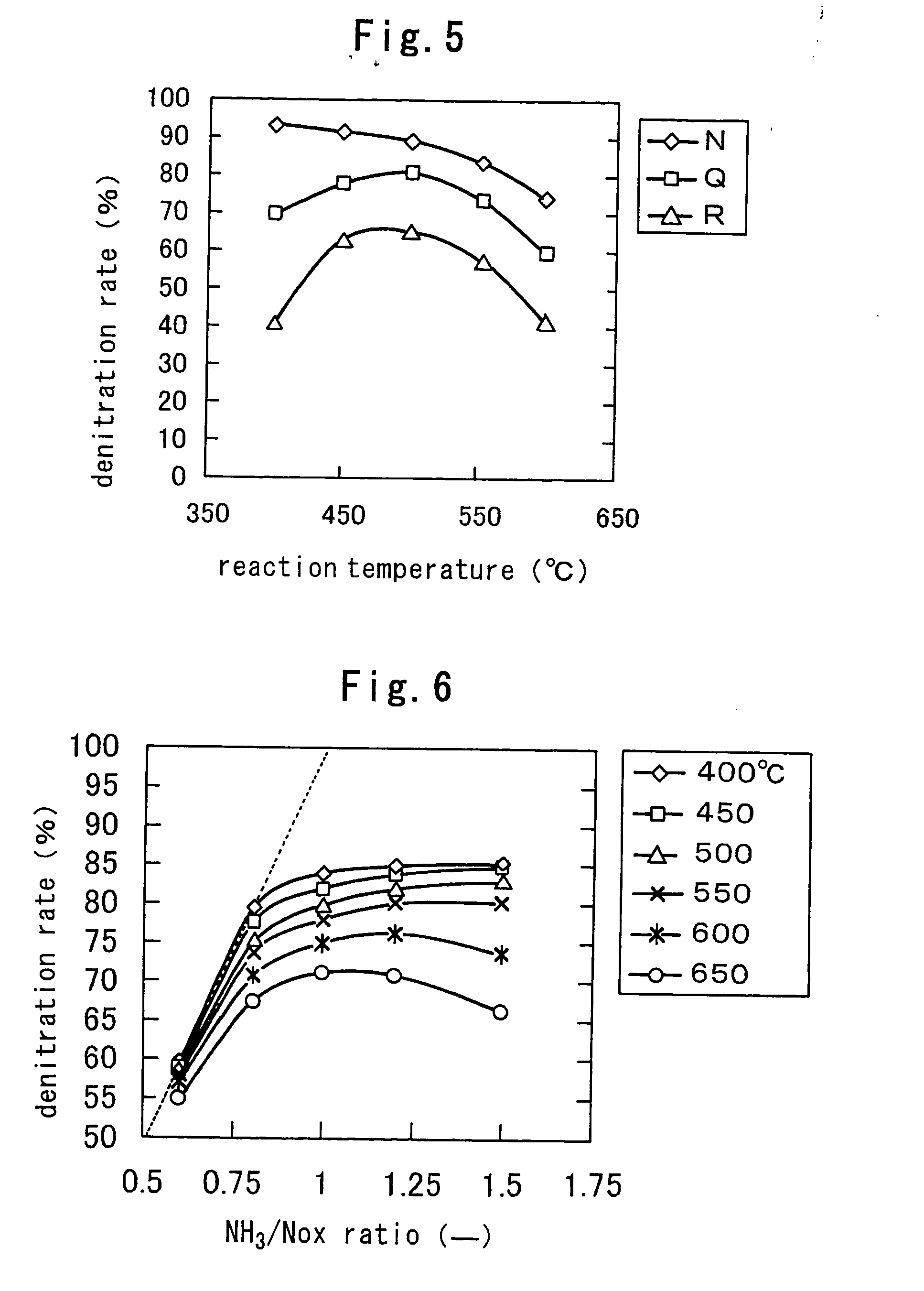
Examples
example 1
(1) Selection of Titania
[0073] Various titanium compound samples A to F shown in Table 1 were used as raw materials of superacid catalysts.
TABLE 1(Various titania)SampleProcess for preparing titaniaRemarksAA solution of titanium isopropoxide in 20% ethanol / water was added dropwise toSA: 260 m2 / gpure water. The resulting precipitates were filtered off, washed with water, driedAnatasein air at 120° C. under air flow for six hours and ground into 100 mesh or less.Purity: 99% or higherBCommercially available titania sol (CSN manufactured by Ishihara Industry Co.,SA: 185 m2 / gLtd.) was dried at 120° C. under air flow for 16 hours. The dried product was groundAnataseinto 100 mesh or less, washed with water three times and dried.Purity: 85% or higherCParticulate titania, which is a reference substance of Catalyst Society, was groundSA: 95 m2 / ginto 100 mesh or less, washed with water three times and dried.AnatasePurity: 85% or higherDA commercially available titania slurry was dried at 1...
example 2
(1) Preparation of Zirconium Hydroxide
[0098] Each zirconium salt shown in Table 7 was dissolved in ten-fold volume of a 0.01 N acidic sulfuric acid solution, 1.0 N NH3 water was added dropwise to the mixture, and the resulting white precipitates were filtered off, washed with water once and dried at 120° C. The dry product was ground into powder of 100 mesh or less, and it was used as a raw material of a superacid catalyst.
TABLE 7Specific surface areaZirconium saltof resulting powderAZirconium oxychloride octahydrateSA: 230 m2 / gZrCl2O.8H2OBZirconium sulfateSA: 125 m2 / g(EAKO CHEMICAL)CZirconium nitrate dihydrateSA: 98 m2 / gZrO(NO3)2.2H2O
(2) Appearance of Superacid Points
[0099] Powder of each zirconium hydroxide shown in Table 7 was dried in air at 120° C. under air flow again and rapidly added to a 1 mol / l aqueous ammonium sulfate solution without cooling, and the liquid was heated to evaporate it to dryness. Then an amount of the aqueous ammonium sulfate solution was adjusted s...
PUM
| Property | Measurement | Unit |
|---|---|---|
| Temperature | aaaaa | aaaaa |
| Temperature | aaaaa | aaaaa |
| Temperature | aaaaa | aaaaa |
Abstract
Description
Claims
Application Information
 Login to View More