Systems and methods for detecting effort events

a technology of effort events and detection methods, applied in the field of patient monitoring, can solve the problems of reducing the ability of the thermocouple used to detect airflow, reducing the ability to detect hypopnea events or an increase in respiratory effort, and reducing the sensitivity. , to achieve the effect of reducing the sensitivity, increasing the respiratory effort, and increasing the level of effor

US20100331715A1Inactive Publication Date: 2010-12-30NELLCOR PURITAN BENNETT IRELAND
104 Cites 59 Cited by

Patent Information

Authority / Receiving Office
US · United States
Patent Type
Applications(United States)
Current Assignee / Owner
Publication Date
2010-12-30
Estimated Expiration
Not applicable · inactive patent

Smart Images

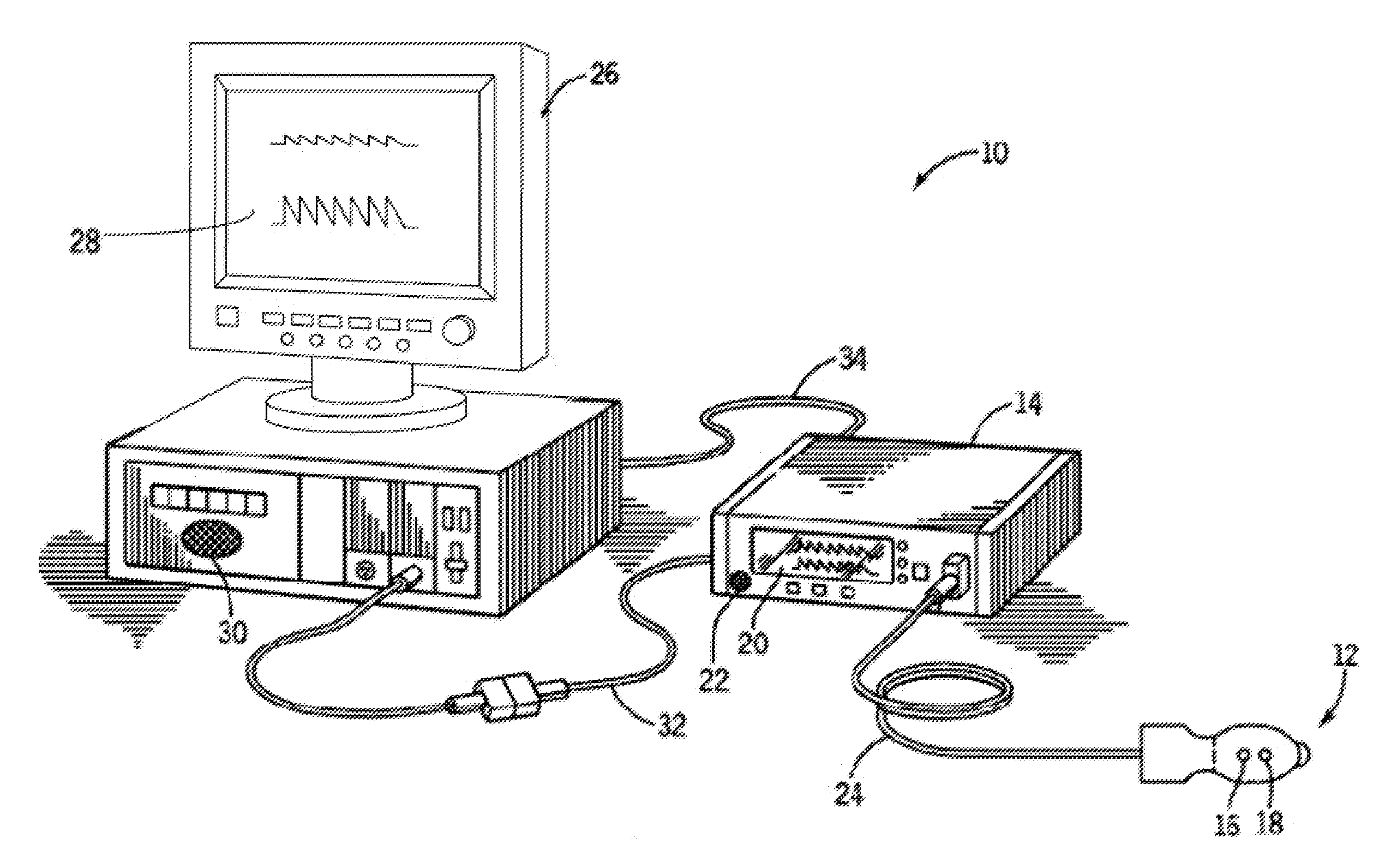
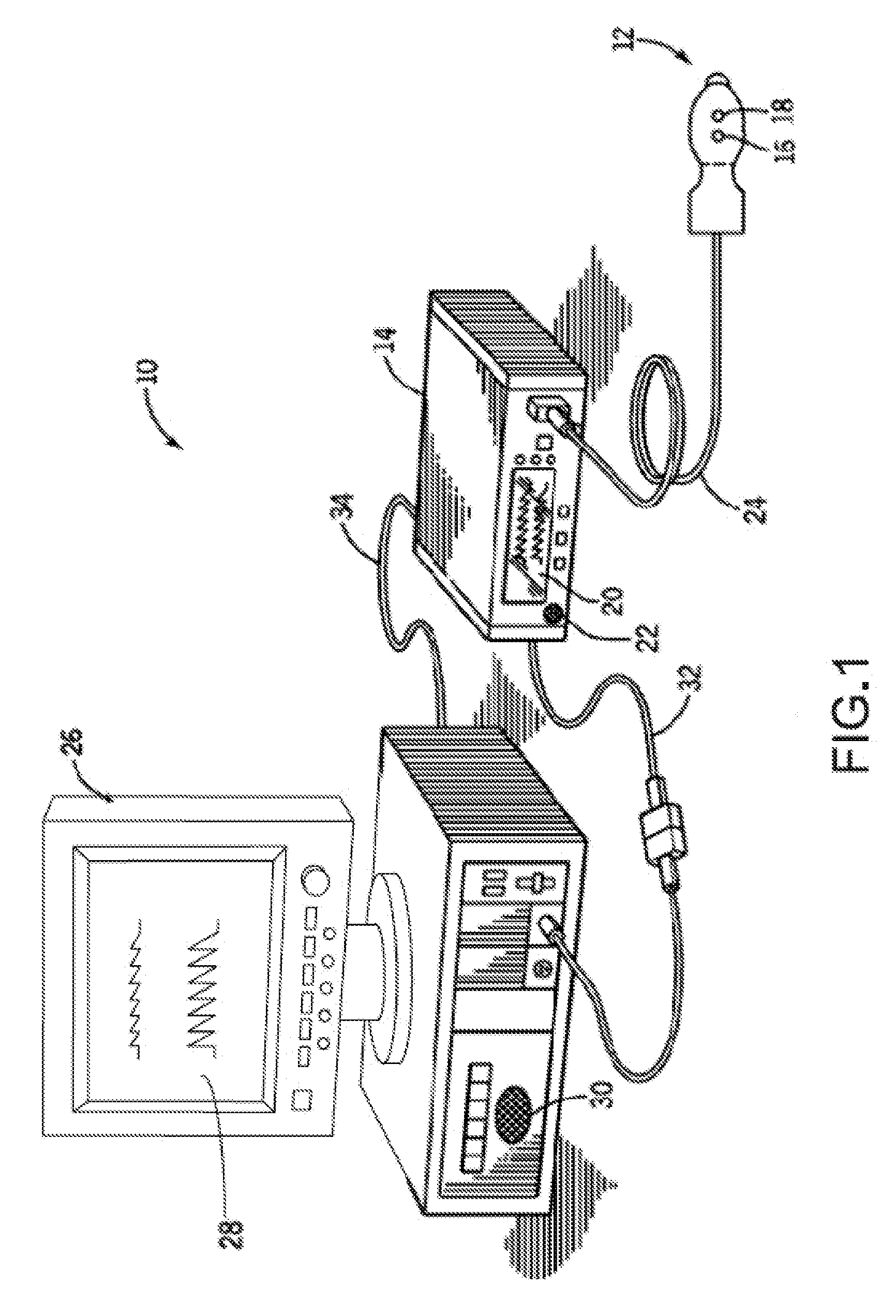
  • Figure 1
    Figure 1
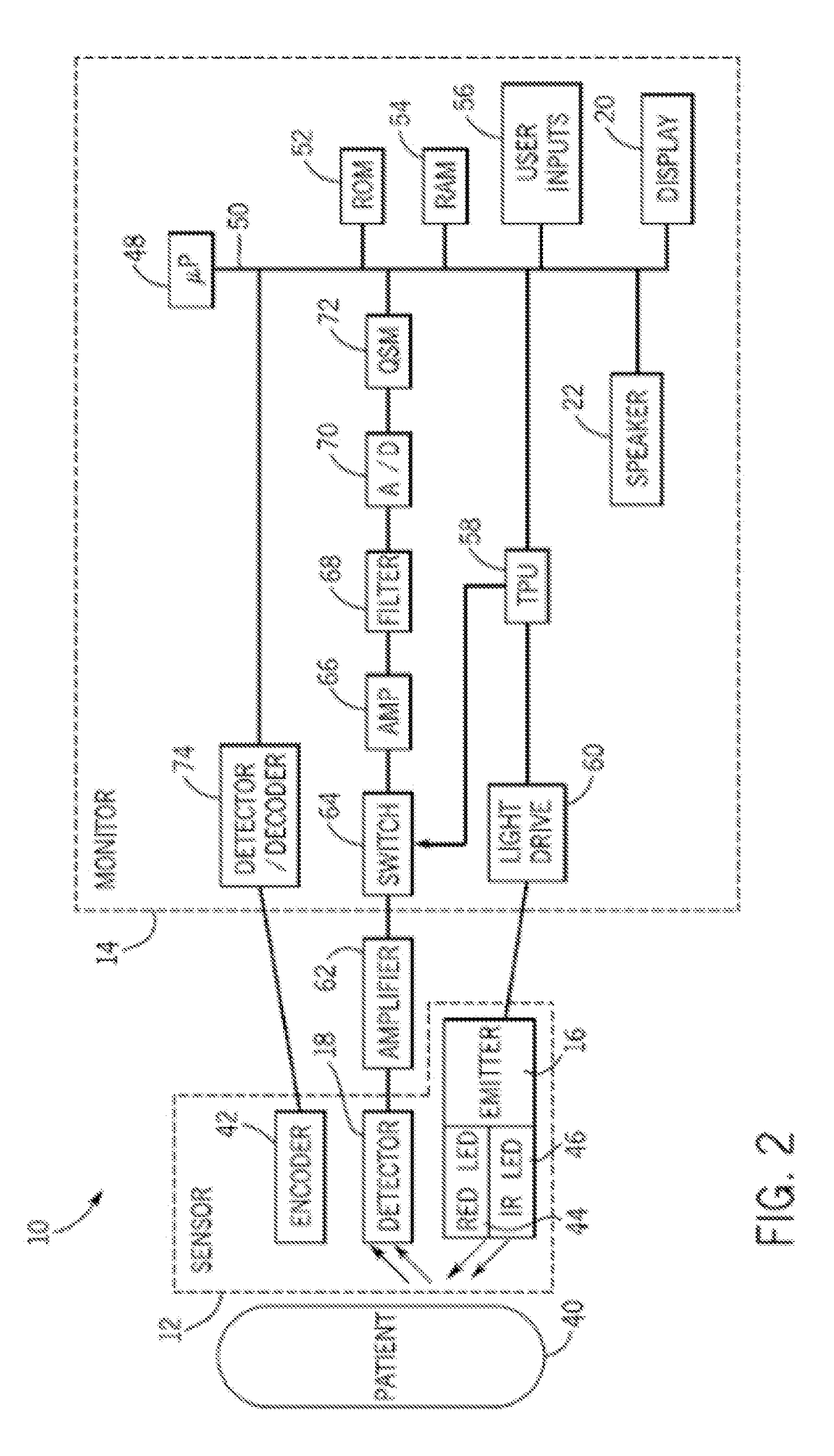
  • Figure 2
    Figure 2
  • Figure 3
    Figure 3
Patent Text Reader

Abstract

A method and system for detecting effort events is disclosed. Effort may be determined through feature analysis of the signal as transformed by a continuous wavelet transform, which may be compared against a reference effort measure to trigger an effort event flag that signals the onset and / or severity of an effort event. For example, a respiratory effort measure may be determined based at least in part on a wavelet transform of a photoplethysmograph (PP G) signal and features of the transformed signal. A respiratory reference effort measure may be based at least in part on past values of the respiratory effort measure, and a threshold test may be used to trigger an effort event flag, which may indicate a marked change in respiratory effort exerted by a patient.
Need to check novelty before this filing date? Find Prior Art

Description

SUMMARY OF THE DISCLOSURE

[0001] The present disclosure relates to patient monitoring and, more particularly, the present disclosure relates to using physiological effort signals, such as those derived from a continuous wavelet transform of a photoplethysmograph (PPG) signal, to detect physiological effort events.

[0002] A physiological effort event may be any significant status or change in status of the physiological exertion of a patient. When a patient is undergoing physiological monitoring, effort events may be manifest in characteristics of the monitored signals that indicate a decrease or increase in effort. For example, the cessation of normal breathing activity (e.g., an apneic event) may be identified by detecting an irregularity in one or more of a number of physiological signals, including the rise and fall of a patients chest during respiration as measured by a transducer attached to a chest or abdominal strap; temperature changes in a patients nasal or oral cavities as mea...

Examples

Embodiment Construction

[0023]An oximeter is a medical device that may determine the oxygen saturation of the blood. One common type of oximeter is a pulse oximeter, which may indirectly measure the oxygen saturation of a patient's blood (as opposed to measuring oxygen saturation directly by analyzing a blood sample taken from the patient) and changes in blood volume in the skin. Ancillary to the blood oxygen saturation measurement, pulse oximeters may also be used to measure the pulse rate of the patient. Pulse oximeters typically measure and display various blood flow characteristics including, but not limited to, the oxygen saturation of hemoglobin in arterial blood. Pulse oximeters may also be used to determine respiratory effort in accordance with the present disclosure.

[0024]An oximeter may include a light sensor that is placed at a site on a patient, typically a fingertip, toe, forehead or earlobe, or in the case of a neonate, across a foot. The oximeter may pass light using a light source through b...