
System and Method for Magnetically Concentrating and Detecting Biomarkers
- Summary
- Abstract
- Description
- Claims
- Application Information
AI Technical Summary
Benefits of technology
Problems solved by technology
Method used
Image

Examples
example 1
Preparation and Characterization of Representative Magnetic and Non-Magnetic Particles and Their Use in a Representative Method of the Invention
[0171]In this example, the preparation and characterization of representative magnetic and non-magnetic particles useful in the methods of the invention are described. The use of these particles in a representative method of the invention is also described.
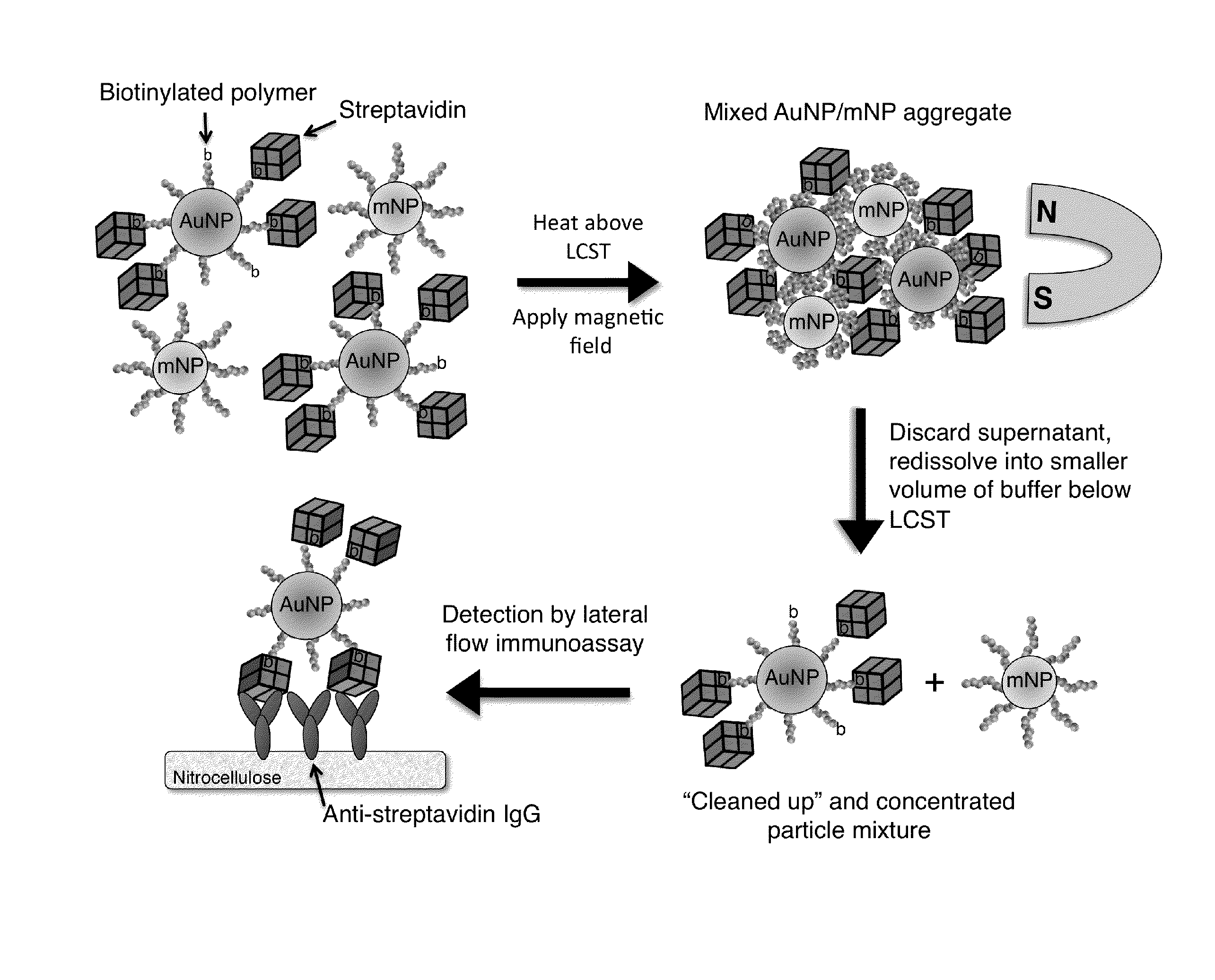
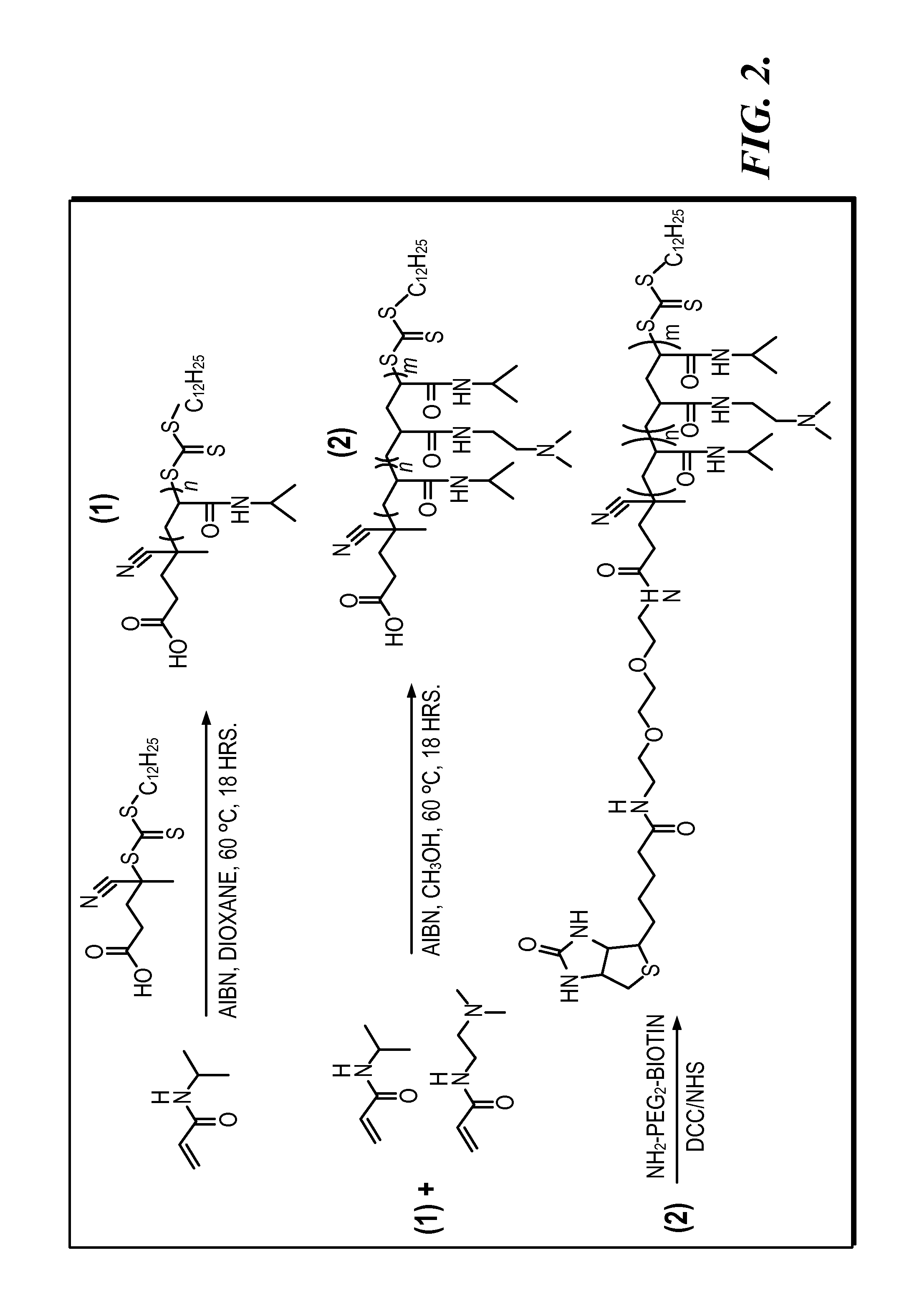
[0172]System Design. The bioseparation / enrichment system consists of a mixture of magnetic and gold nanoparticles, each with a “smart” polymer coating. Gold nanoparticles (about 25 nm diameter) were modified with a biotinylated amine-containing diblock copolymer, and magnetic nanoparticles (about 10 nm diameter) were synthesized directly with a homo-pNIPAAm polymer surface coating. When mixtures of these two particle types were heated above the polymer LCST, the particles co-aggregated driven by hydrophobic interactions between the collapsed polymers. 8 kDa homo-pNIPAAm (2 mg / mL) was added...
example 2
Preparation and Characterization of Representative Magnetic and Non-Magnetic Particles and Their Use in a Representative Multiplexed Method of the Invention
[0196]In this example, the preparation and characterization of representative magnetic and non-magnetic particles useful in the methods of the invention are described. The use of these particles in a representative multiplexed method of the invention is also described.
[0197]FIG. 9 is a schematic illustration of a representative non-magnetic particle useful in the practice of the methods of the invention for capturing a biomarker. This universal bioconjugate design allowed for facile multiplexing by simply adding multiple different biotinylated antibodies to the sample before addition of the universal streptavidin-gold reagent. FIG. 10 is a schematic representation of a representative method of the invention, a magnetic enrichment lateral flow immunoassay, utilizing the universal streptavidin-gold reagent.
[0198]Polymer Synthesis. ...
PUM
 Login to View More
 Abstract
Description
Claims
Application Information
 Login to View More