It is an object of the invention to provide a blood pressure measurement device with improved operational characteristics. More particularly, it is an object of the invention to provide a blood pressure measurement device having improved accuracy.
It is found to be advantageous to provide a
buffer gas volume upstream the control valve, for example directly prior to the control valve in the gas conduit between the control valve and a suitable
gas supply unit. This feature is based on the following insights. For situations when pressure in the first conduit is to be rapidly increased for rapidly increasing pressure in the inflatable body, the control valve has to be set open so that an input pressure from the
gas supply unit may substantially be fully applied to the inflatable body. Such arrangement may cause a substantial
distortion of flow patterns in the second portion of the gas conduit leading to a temporary reduction in pressure in the second portion of the gas conduit. In order to prevent such
distortion of flow patterns, the
buffer gas volume, preferably provided directly prior to the control valve in the second portion of the gas conduit, is provided. It is found that due to provision of the
buffer gas volume the measurement accuracy of the blood pressure measurement device substantially improves. Preferably, the
system for measuring a
signal representative of the blood pressured comprises a photoplethysmograph.
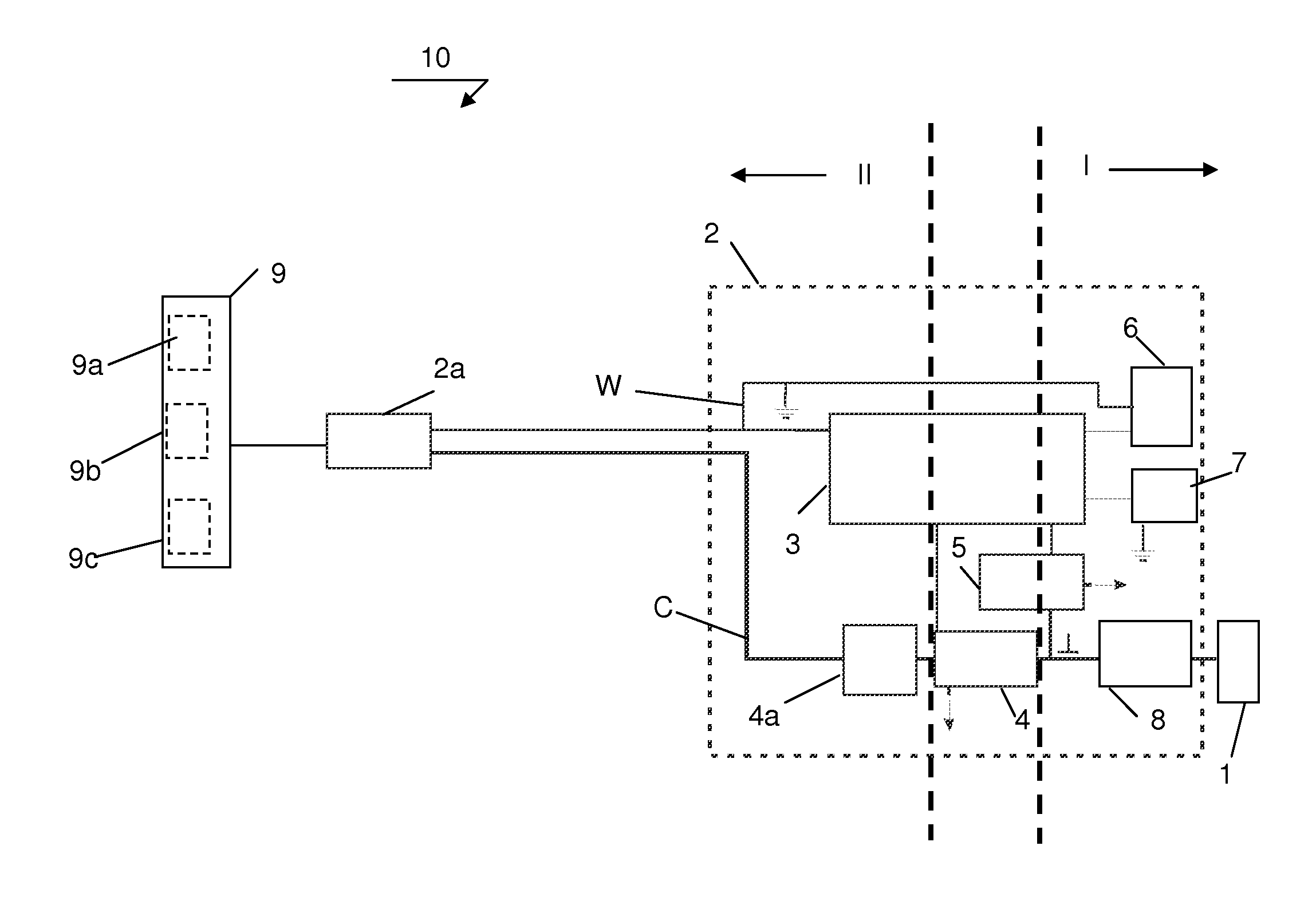
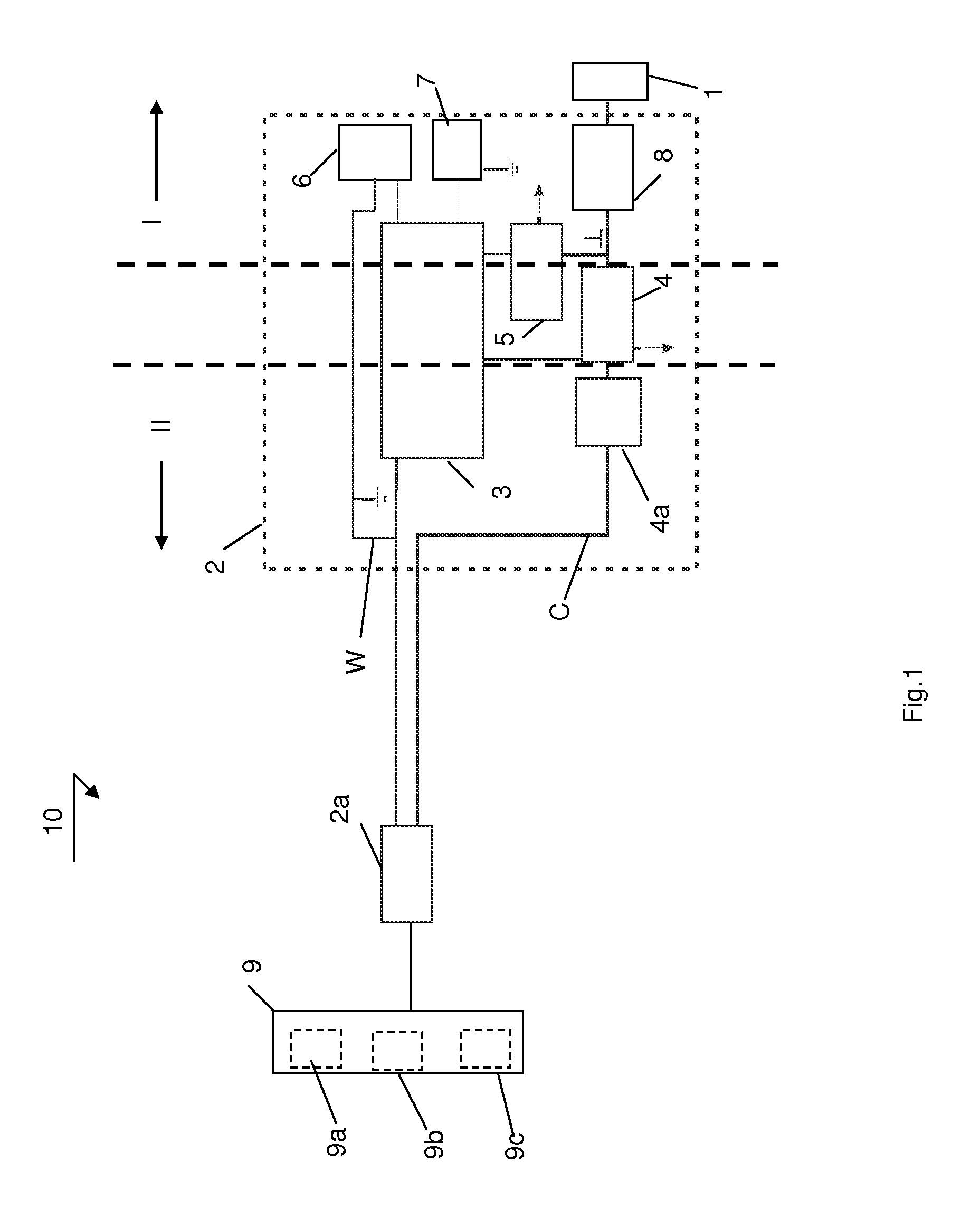
In an embodiment of the blood pressure measurement device according to the invention, the frontend is accommodated in a housing, the
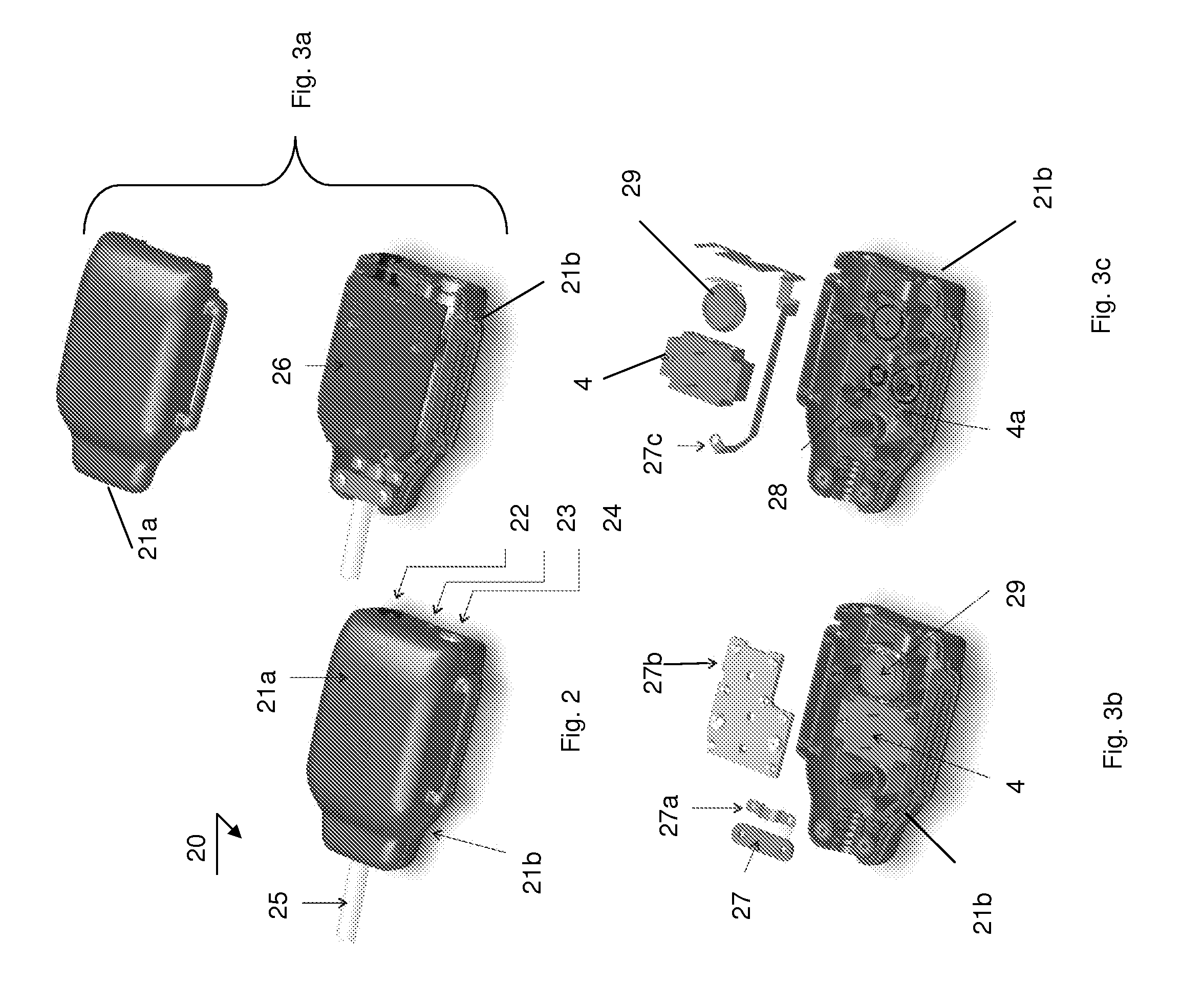
air chamber preferably forming a part of the housing. Due to this feature the number of constructive parts of the frontend may substantially be reduced leading to a better cost-efficiency of the manufacturing process of the frontend. Preferably, the housing is substantially made of plastic, which may be injection molded. Other manufacturing processes may be applied. Preferably, the housing comprises or consists of a cover portion and a bottom portion.
This embodiment relates to the volume clamp loop which represents an actual blood pressure measurement. During the volume clamp loop the pressure in the inflatable body may also be controlled with the control valve, but in this case the
control system is arranged to be responsive to the electrical (or light)
signal and not necessarily to the
pressure sensor. The object of this
control system is to maintain the measured electrical (or light)
signal stable at the pre-determined volume clamp
setpoint by rapidly changing the pressure inside the inflatable body. As a result the pressure inside the inflatable body accurately mimics the sought blood pressure. By measuring the pressure inside the inflatable body, using the
pressure sensor, the blood pressure is determined. If the actual received signal (or light) is lower than the volume clamp
setpoint then the control valve is operated to increase the pressure in the inflatable body. This results in an increase in the received light in the photoplethysmograph and vice versa.
As has been described above, the processor may determine (based on the measured pressure in pressure loop and based on the measured signal in volume clamp loop) whether the pressure inside the inflatable body has to increase, decrease or to remain unchanged. To accomplish this, the
control system may be implemented in the
software conceived to be run on the processor. For this purpose a
control algorithm comprising suitable implementations and / or controllers may be chosen. For example, a PID (
Proportional Integral Differential) controller, a PI controller, a Feedforward controller or a
State Space controller. These controllers are per se known to the person skilled in the art and will not be explained in detail. In a suitable embodiment of the device according to the invention a
PID controller may be selected for the volume clamp loop and a PI controller may be selected for the pressure loop. It has been found that this combination provides reliable blood pressure measurement results.


 Login to View More
  Login to View More