Adaptive Antenna Tuning System for Improving Cellular Call Reception in Mobile Devices

US20190296789A1Active Publication Date: 2019-09-26APPLE INC
0 Cites 12 Cited by

Patent Information

Authority / Receiving Office
US · United States
Current Assignee / Owner
Publication Date
2019-09-26

Smart Images

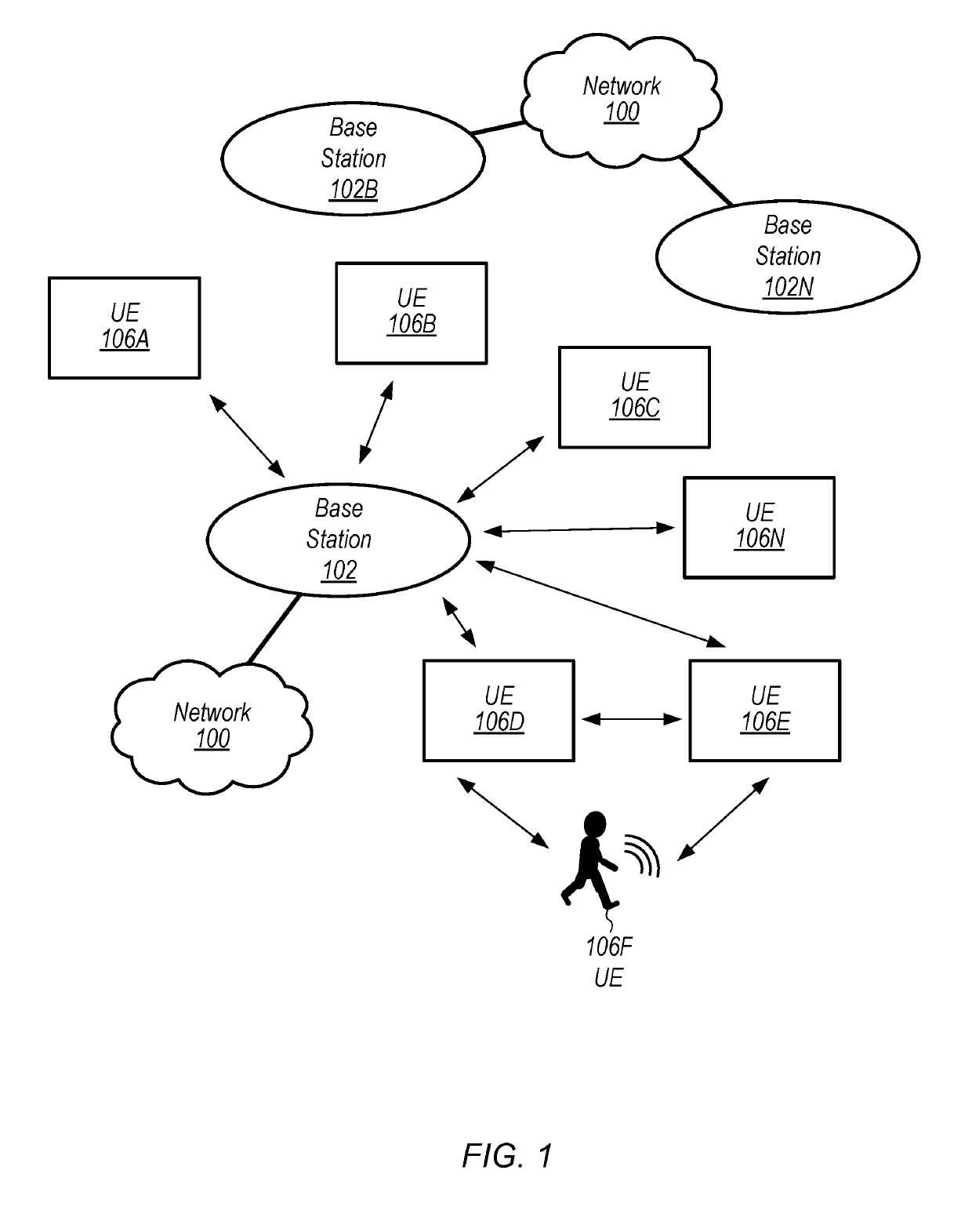
  • Figure 1
    Figure 1
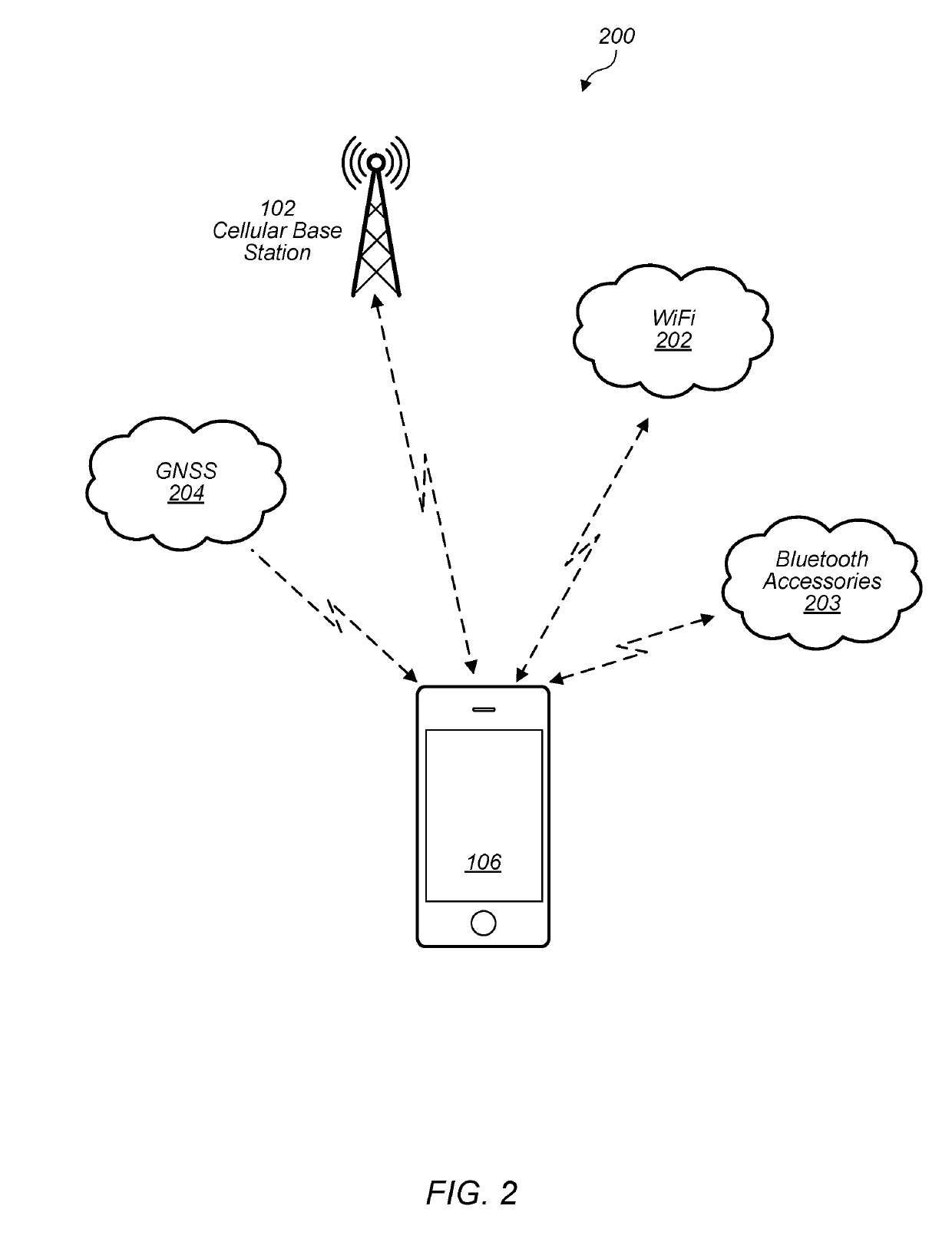
  • Figure 2
    Figure 2
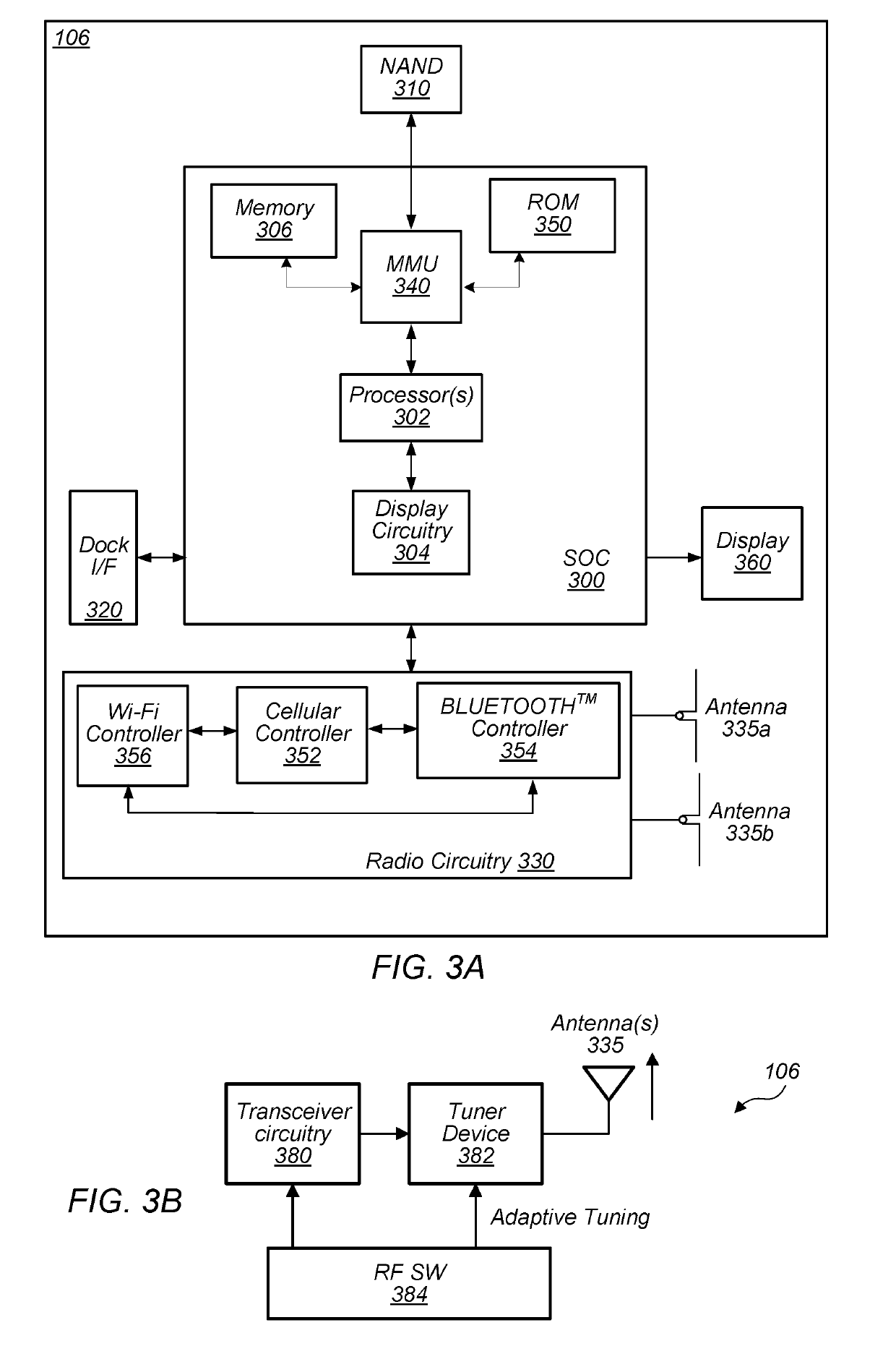
  • Figure 3
    Figure 3
Patent Text Reader

Abstract

A wireless communication device (UE) may conduct wireless communications using one or more antennas according to multiple radio access technologies (RAT) associated with corresponding operating frequency bands. The UE may perform adaptive antenna tuning, for example, application-based antenna tuning for increasing the operating efficiency of the UE, which may improve user experience. The UE may periodically identify one or more applications running on the UE, the respective RATs that support the (running) applications, and which of the corresponding frequency bands are used by the (running) applications. The UE may determine the tuner device settings for tuning the one or more antenna(s) based on the (running) applications or the type and / or priority of the (running) applications, which RATs support the running applications, which of the corresponding frequency bands are used by the (running) applications, and operating conditions associated with the frequency bands used by the (running) applications.
Need to check novelty before this filing date? Find Prior Art

Description

PRIORITY CLAIM

[0001] This application claims benefit of priority of U.S. Provisional Patent Application Ser. No. 62 / 646,246 titled “Adaptive Antenna Tuning System for Improving Cellular Call Reception in Mobile Devices”, filed on Mar. 21, 2018, which is hereby incorporated by reference as though fully and completely set forth herein.FIELD OF THE INVENTION

[0002] The present application relates to wireless communications, and more particularly to antenna tuning during wireless communications, for example during 3GPP LTE and / or 5G-NR communications.DESCRIPTION OF THE RELATED ART

[0003] Wireless communication systems are rapidly growing in usage. In recent years, wireless devices such as smart phones and tablet computers have become increasingly sophisticated. In addition to supporting telephone calls, many mobile devices now provide access to the internet, email, text messaging, and navigation using the global positioning system (GPS), and are capable of operating sophisticated application...

Examples

Embodiment Construction

Acronyms

[0037]Various acronyms are used throughout the present application. Definitions of the most prominently used acronyms that may appear throughout the present application are provided below:[0038]ACK: Acknowledgement[0039]APR: Applications Processor[0040]BLER: Block Error Rate[0041]BS: Base Station[0042]BT: BLUETOOTH™[0043]BSR: Buffer Size Report[0044]CC: Component Carrier[0045]CMR: Change Mode Request[0046]CQI: Channel Quality Indicator[0047]DL: Downlink (from BS to UE)[0048]DYN: Dynamic[0049]FDD: Frequency Division Duplexing[0050]FT: Frame Type[0051]GNSS: Global Navigation Satellite System[0052]GPRS: General Packet Radio Service[0053]GPS: Global Positioning System[0054]GSM: Global System for Mobile Communication[0055]HARQ: Hybrid Automatic Repeat Request[0056]IE: Information Element[0057]LAN: Local Area Network[0058]LBT: Listen Before Talk[0059]LTE: Long Term Evolution[0060]LTE-U: LTE in Unlicensed Spectrum[0061]LAA: License Assisted Access[0062]MAC: Media Access Control (la...