
Sound absorbing material and speaker using same
a technology of sound absorption and material, applied in the field of sound absorption material, can solve the problems of poor sound quality, difficult to provide a better sound quality with a small posterior cavity, and no low-frequency improvement effect is achieved
- Summary
- Abstract
- Description
- Claims
- Application Information
AI Technical Summary
Benefits of technology
Problems solved by technology
Method used
Image

Examples
example 1
[0035]A sound absorbing material in this embodiment includes MEL and MEI-mixed-phase structural-type molecular sieves. A preparation method of the sound absorbing material is as follows:
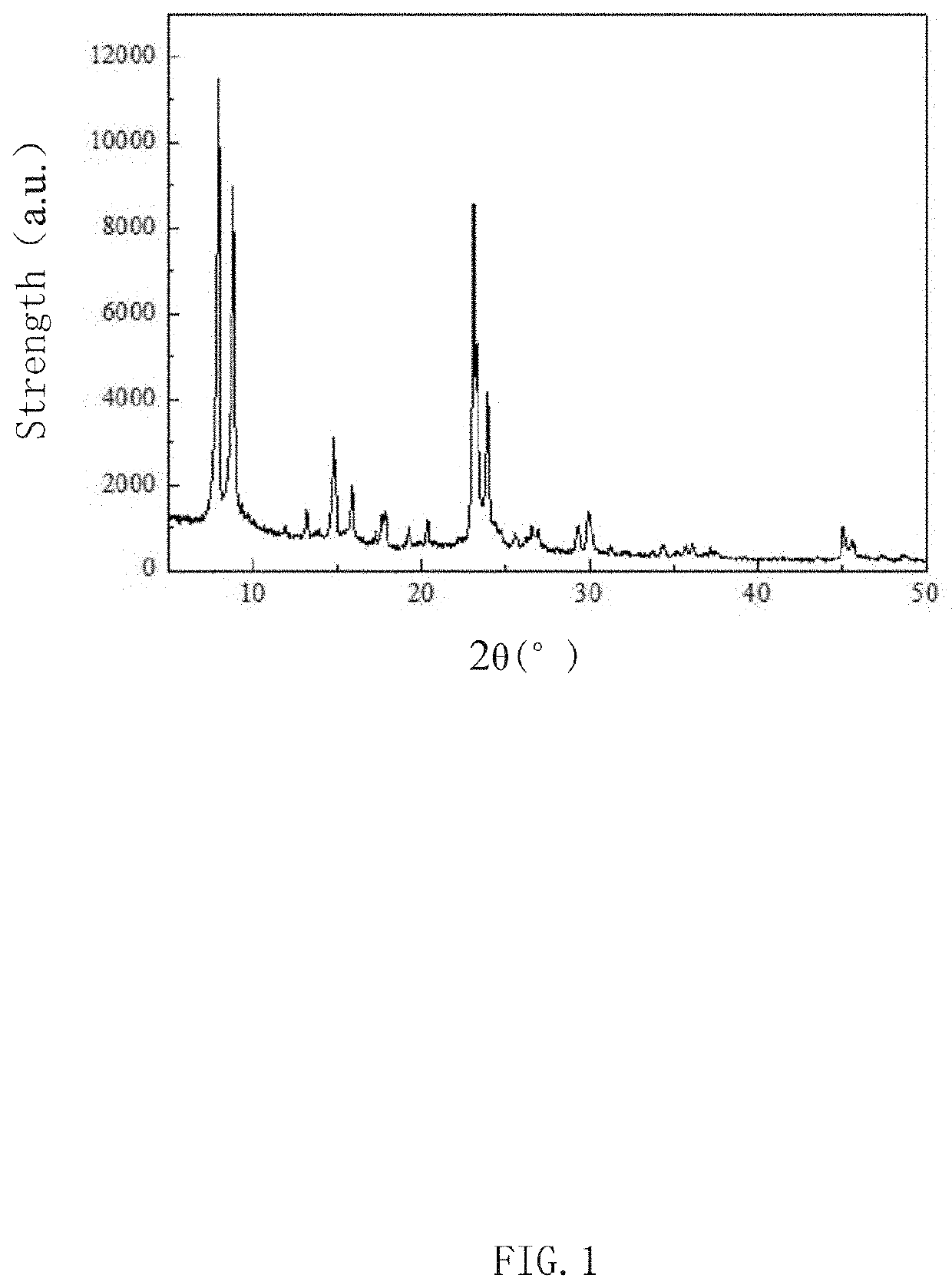
[0036]MEL and MFL-mixed-phase structural-type molecular sieves with a mass ratio of Si to Al being 250 were synthesized using a silicon source (including tetraethylorthosilicate, silica sol, sodium silicate or the like), an aluminum source (aluminum nitrate, sodium bicarbonate, aluminum isopropoxide or the like), an alkali source (sodium hydroxide, potassium hydroxide or lithium hydroxide), a tetrabutyl quaternary ammonium salt (at least one of tetrabutylammonium bromide, tetrabutylammonium hydroxide, tetrabutylammonium chloride, tetrabutylammonium iodide or tetrabutylammonium fluoride) as a template and water. FIG. 1 illustrates an XRD pattern thereof. FIG. 4 illustrates low-temperature nitrogen absorption characterization thereof, and FIG. 6 illustrates room-temperature nitrogen absorption and deso...
embodiment 2
[0037]A sound absorbing material in this embodiment includes MEL and MEI-mixed-phase structural-type molecular sieves. A preparation method thereof is as follows:
[0038]MEL and MFL-mixed-phase structural-type molecular sieves with a mass ratio of Si to Fe being 300 were synthesized using a silicon source (including tetraethylorthosilicate, silica sol, sodium silicate or the like), an iron source (iron nitrate, iron sulfate or iron chloride), an alkali source (sodium hydroxide, potassium hydroxide or lithium hydroxide), a tetrabutyl quaternary ammonium salt (at least one of tetrabutylammonium bromide, tetrabutylammonium hydroxide, tetrabutylammonium chloride, tetrabutylammonium iodide or tetrabutylammonium fluoride) as a template and water. Table 1 illustrates acoustic performance thereof. FIG. 4 illustrates low-temperature nitrogen absorption characterization thereof.
embodiment 3
[0039]The sound absorbing material in this embodiment includes pure-phase MEL-structural-type molecular sieves.
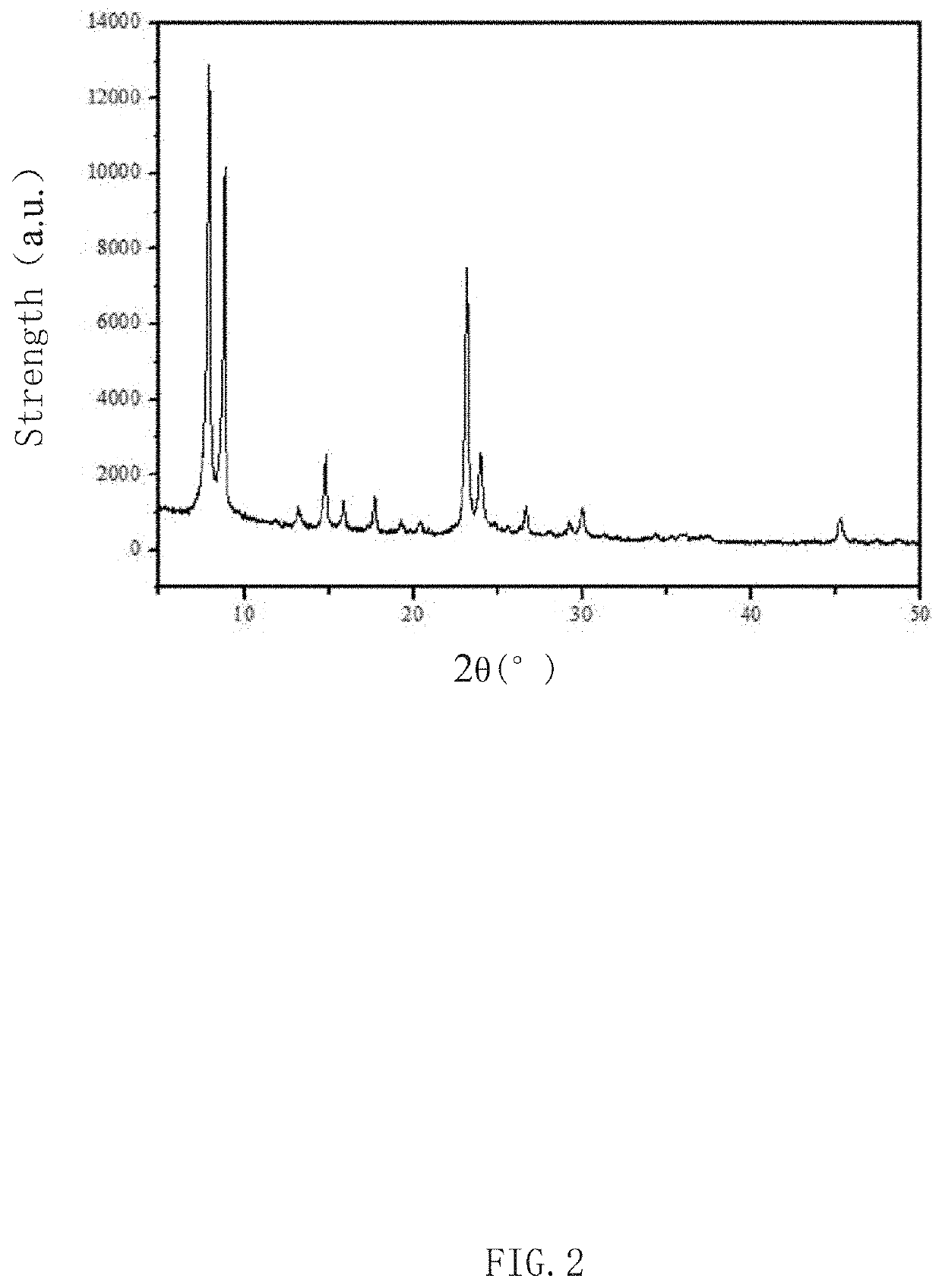
[0040]A preparation method thereof is as described in Embodiment 1. The template was a composite template formed by a tetrabutyl quaternary ammonium salt and a benzyltrimethyl quaternary ammonium salt (the categories of the quaternary ammonium salts are as described in Embodiment 1), and pure-phase MEL-structural-type molecular sieves with a mass ratio of Si to Al being 250 were synthesized. FIG. 2 illustrates an XRD pattern thereof. Table 1 illustrates acoustic performance of the pure-phase MEL-structural-type molecular sieves obtained in this embodiment.
PUM
| Property | Measurement | Unit |
|---|---|---|
| mass ratio | aaaaa | aaaaa |
| particle size | aaaaa | aaaaa |
| particle size | aaaaa | aaaaa |
Abstract
Description
Claims
Application Information
 Login to View More