
Quantification, isolation, and characterization of exosomes using droplet-based and well-based microfluidic systems
a microfluidic system and exosome technology, applied in material analysis, biological material analysis, instruments, etc., can solve the problems of inability to accurately measure the biomarker for monitoring the progress of cancer, lack of specificity of methods to differentiate tumorigenic and non-tumorigenic exosomes, and mechanical isolation methods. based on time-consuming and other issues
- Summary
- Abstract
- Description
- Claims
- Application Information
AI Technical Summary
Benefits of technology
Problems solved by technology
Method used
Image

Examples
example 1
ion of Exosome Immunocomplex on Beads
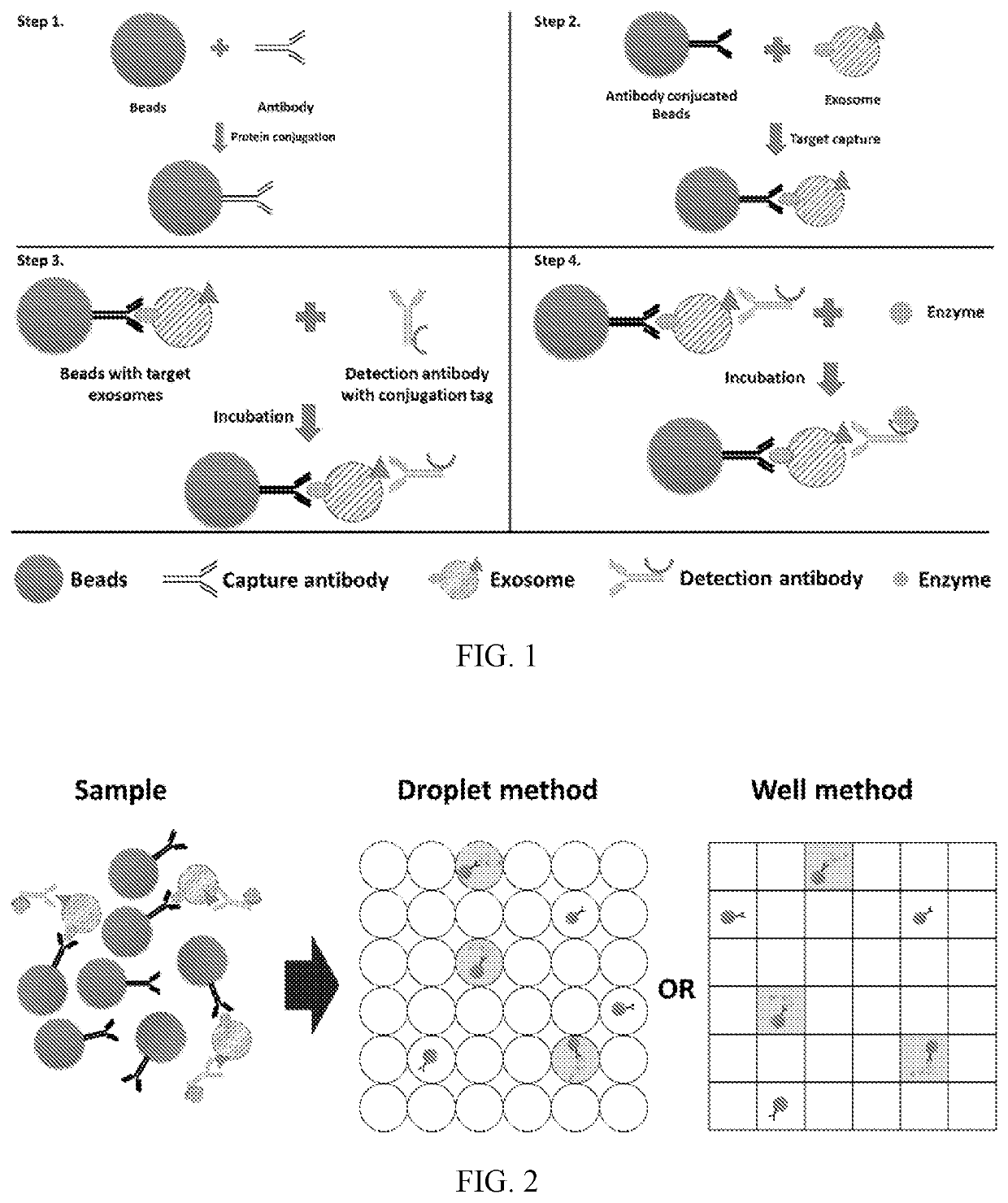
[0111]Digital enzyme-linked immunosorbent assays in various microfluidic platforms are demonstrated. Exosome solutions are obtained from biofluids and prepared through ultracentrifugation, ultrafiltration, density-gradient separation, and immunoaffinity capture methods. Since antigens exist on the surface of exosome, they can be recognized by the specific antibodies. One pair of antibodies which identify the exosome is constructed onto the bead in the form of an immunocomplex. The construction of immunocomplex onto the beads is shown in FIG. 1. The antibodies which can recognize the biomarkers (e.g. CD63) on the surface of exosomes are conjugated to the beads (e.g., Dynabeads™ or agarose beads). The beads are then incubated with an exosome solution. After incubation, the beads are collected by magnetic force or centrifugation. After thorough washing, the target exosomes conjugated on the beads are purified from the sample solution. Next, a second...
example 2
uantification of the Target Exosomes
[0112]Digital quantification is carried out of the immunocomplex beads bound to the target exosomes via specific protein biomarkers. The immunocomplex constructed beads solution is flown into the channel to mix the solution with another channel of a substrate (e.g., FDG) flow and to form droplets of the mixtures. Instead of using droplets as the compartments, microwells fabricated on a flat chip can also be utilized to compartmentalize the sample solution. The sample with beads can be first dropped on the chip and be scraped into the wells. The substrate (e.g., FDG) solution is added into each compartment subsequently. The microwell chip is then sealed on the top to isolate each individual space for reaction. The microfluidic workflow is schematically shown in FIG. 2. After incubation, the droplets / wells with beads constructed immunocomplex emit color or fluorescent or electrochemical signal for detection. The signal can be detected by fluorescenc...
example 3
solation
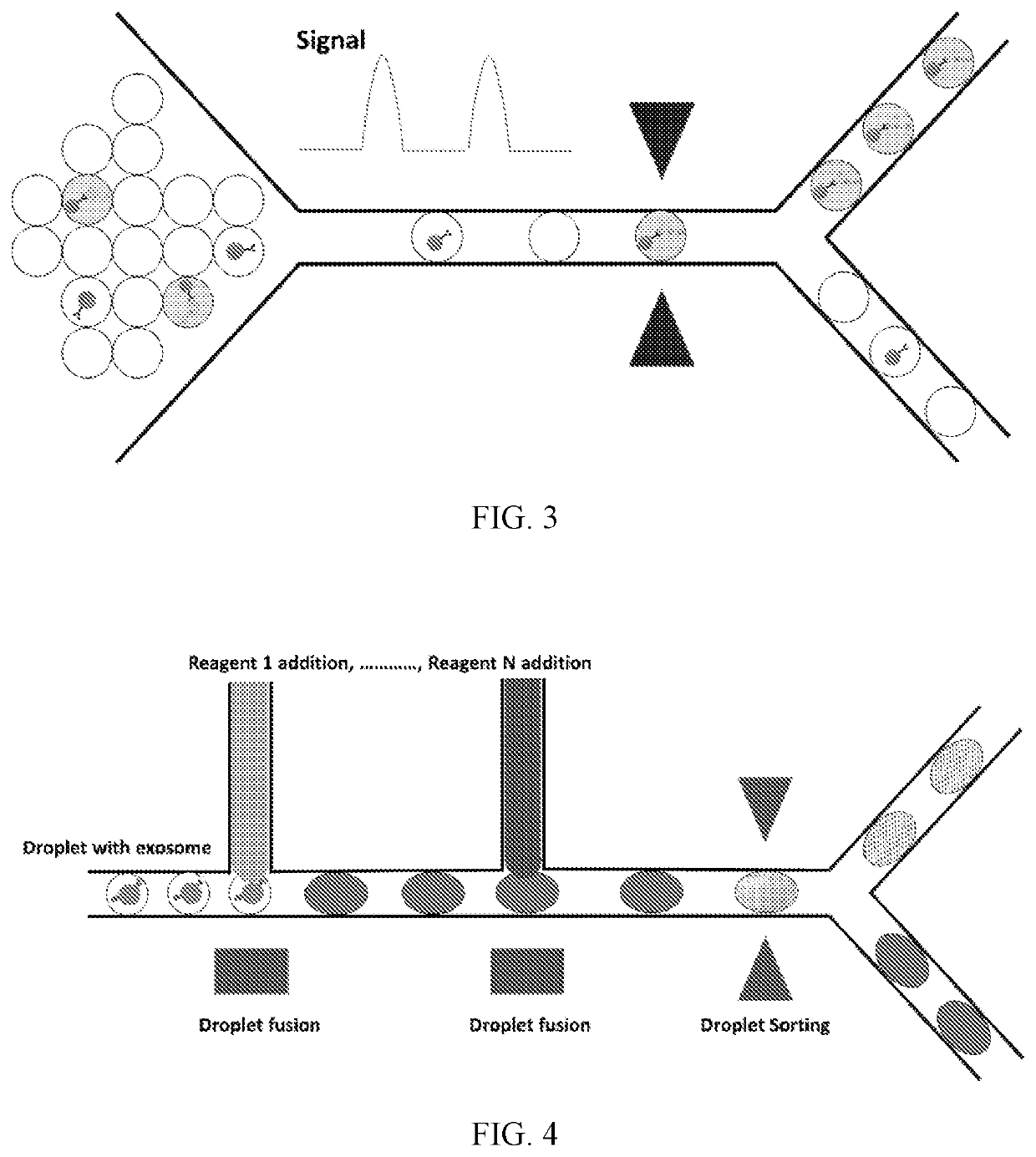
[0114]By constructing the immunocomplex on the beads and encapsulating them into droplets, the signal from labelled fluorescein or chemiluminescence can be used as a trigger for droplet sorting. The droplets that contain target exosomes can be separated through droplet sorting technology including electric sorting, mechanical sorting or acoustic sorting. FIG. 3 shows a schematic of the isolation of the fluorescent exosomes with desired information.
PUM
 Login to View More
 Abstract
Description
Claims
Application Information
 Login to View More