
Novel polypeptide and therapeutic uses thereof
a polypeptide and polypeptide technology, applied in the field of peptide compounds, can solve the problems of destroying blood glucose regulation, serious complications and high mortality, and causing the greatest harm of diabetes, and destroying the effect of health and life expectancy
- Summary
- Abstract
- Description
- Claims
- Application Information
AI Technical Summary
Benefits of technology
Problems solved by technology
Method used
Image

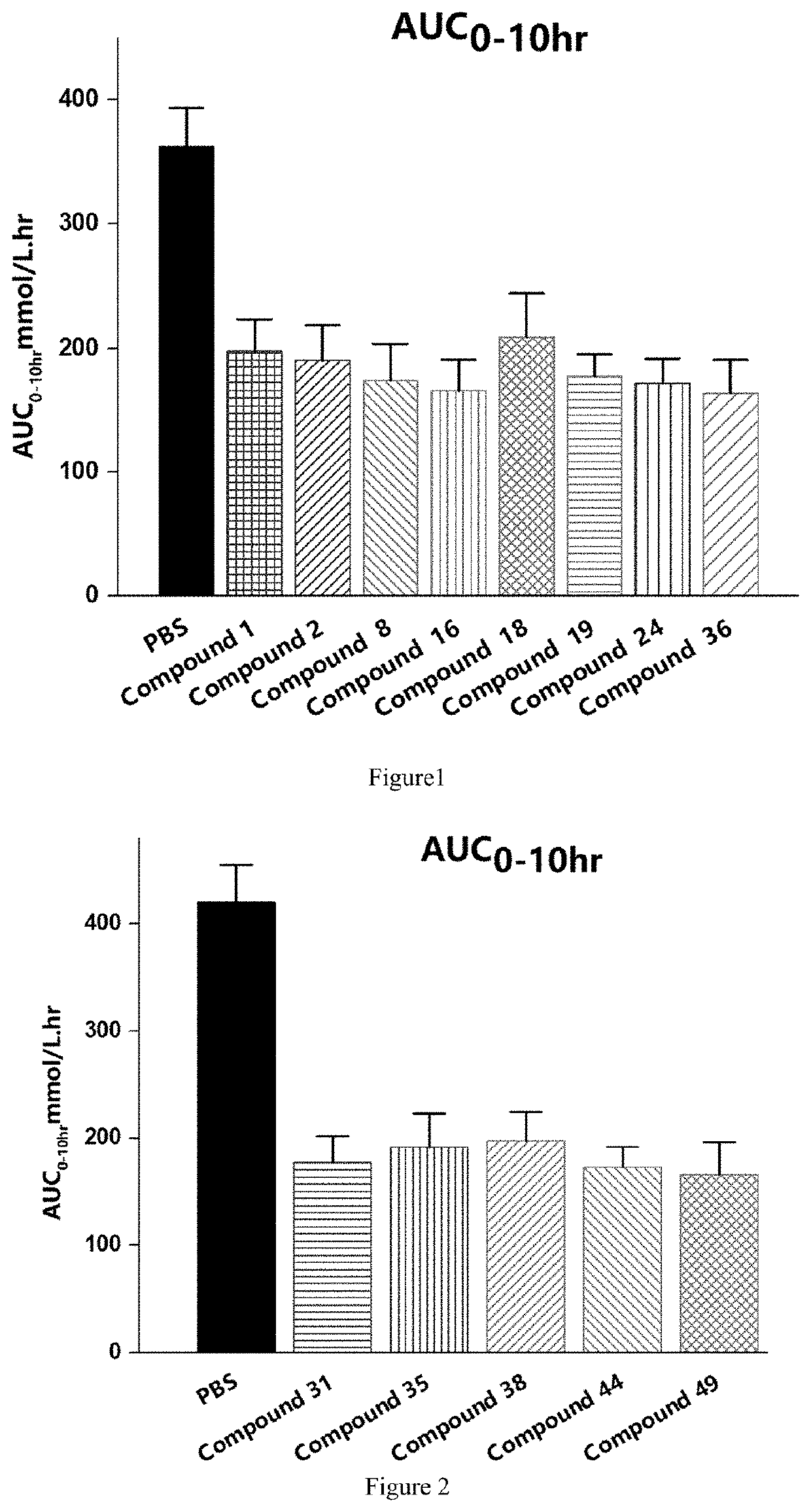
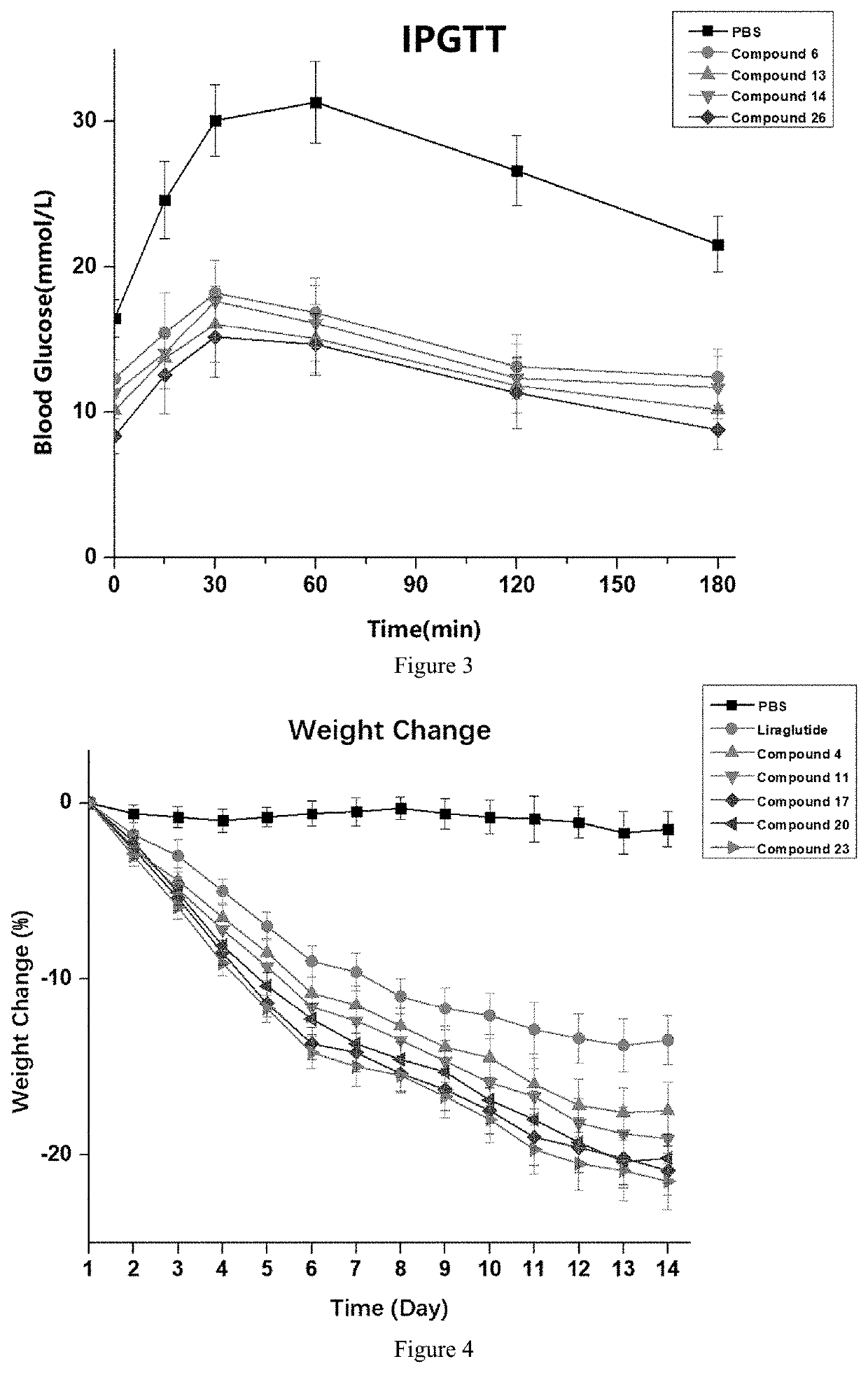
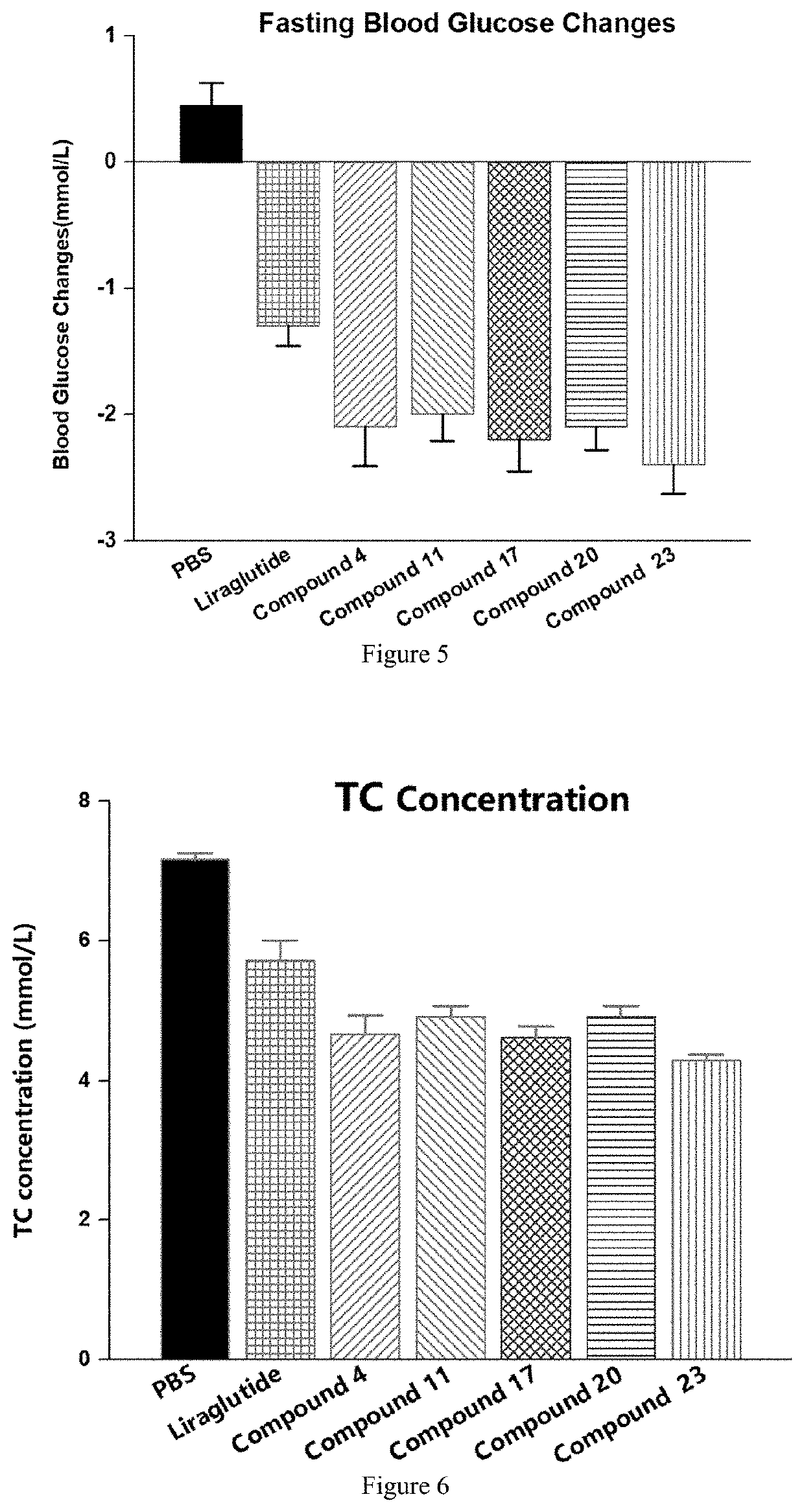
Examples
example 1
Synthesis of Compound 2
[0237]A pre-loaded low or medium loading Fmoc-Ser(tBu)-Rink Amide resin (e.g. 0.4 mmole / g) was used. The Fmoc protecting group was removed with 30% piperidine / DMF (2×10 minutes), and the resin was washed 3 times with DMF. Fmoc solid phase peptide synthesis method was used. The amino acid (10 times the molar amount of the preloaded amino acid on the resin) was dissolved in D1VIF to make a 0.3M solution. HOBT and DIC (10 times the molar amount of the amino acid on the resin respectively) were added to the solution. The mixed solution was shaken and mixed before added to the resin. The coupling was performed at room temperature for 60 minutes. The solution in the solid phase reaction tube was evacuated, and the resin was washed 3 times with DMF. The coupling of a synthetic unit was complete. The same coupling method was used for each synthetic unit from the C-terminus to the N-terminus of the peptide. Amino acid residues were protected by protective groups common...
example 2
Synthesis of Compound 7
[0239]A pre-loaded Fmoc-Gly-Rink Amide resin was used. The synthesis methods and steps were similar to those described in Example 1. In the present invention, all compounds with a C-terminal glycine can be synthesized according to the methods of Example 2.
example 3
Synthesis of Compound 23
[0240]A preloaded low loading Fmoc-Lys(Aloc)-Rink Amide resin (e.g. 0.29 mmole / g) was selected. The coupling method described in Example 1 was used for each synthesis unit from the C-terminus to the N-terminus of the peptide. Amino acid residues other than C-terminal lysine were protected by protective groups commonly used in Fmoc solid phase synthesis and listed in the “Peptide Chemical Synthesis Methods” section. After the main peptide chain was synthesized the allyloxycarbonyl group of the C-terminal lysine side chain was removed by using tetrakis(triphenylphosphine)palladium(0) and 37:2:1 ratio of DCM, glacial acetic acid and NMM (15 mL / g resin). The reaction was stirred for 2 hours under argon atmosphere at room temperature. Tetrakis(triphenylphosphine)palladium(0) could be used in a catalytic amount to 1 equivalent. After the reaction, each gram of resin was washed with 0.5% DIPEA / DMF (10 mL), 0.5% sodium diethyldithiocarbamate / DMF (3×10 mL), 1:1 DCM:DM...
PUM
| Property | Measurement | Unit |
|---|---|---|
| structure | aaaaa | aaaaa |
| weight | aaaaa | aaaaa |
| weight loss | aaaaa | aaaaa |
Abstract
Description
Claims
Application Information
 Login to View More