HTO (high temperature oxide) deposition for capacitor dielectrics

US6218315B1Inactive Publication Date: 2001-04-17IBM CORP
9 Cites 18 Cited by

Patent Information

Authority / Receiving Office
US · United States
Current Assignee / Owner
Publication Date
2001-04-17
Estimated Expiration
Not applicable · inactive patent

Smart Images

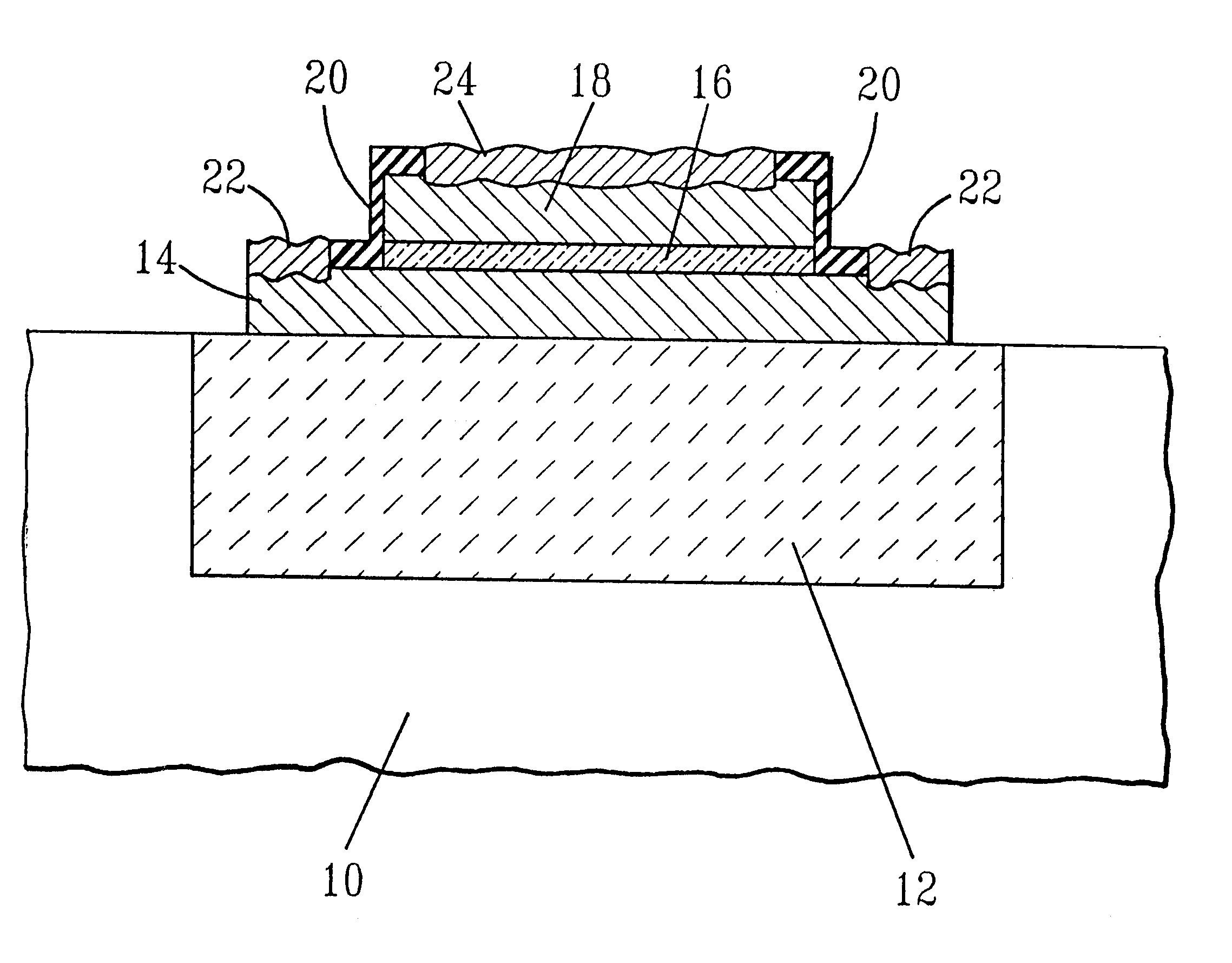
  • Figure 1
    Figure 1
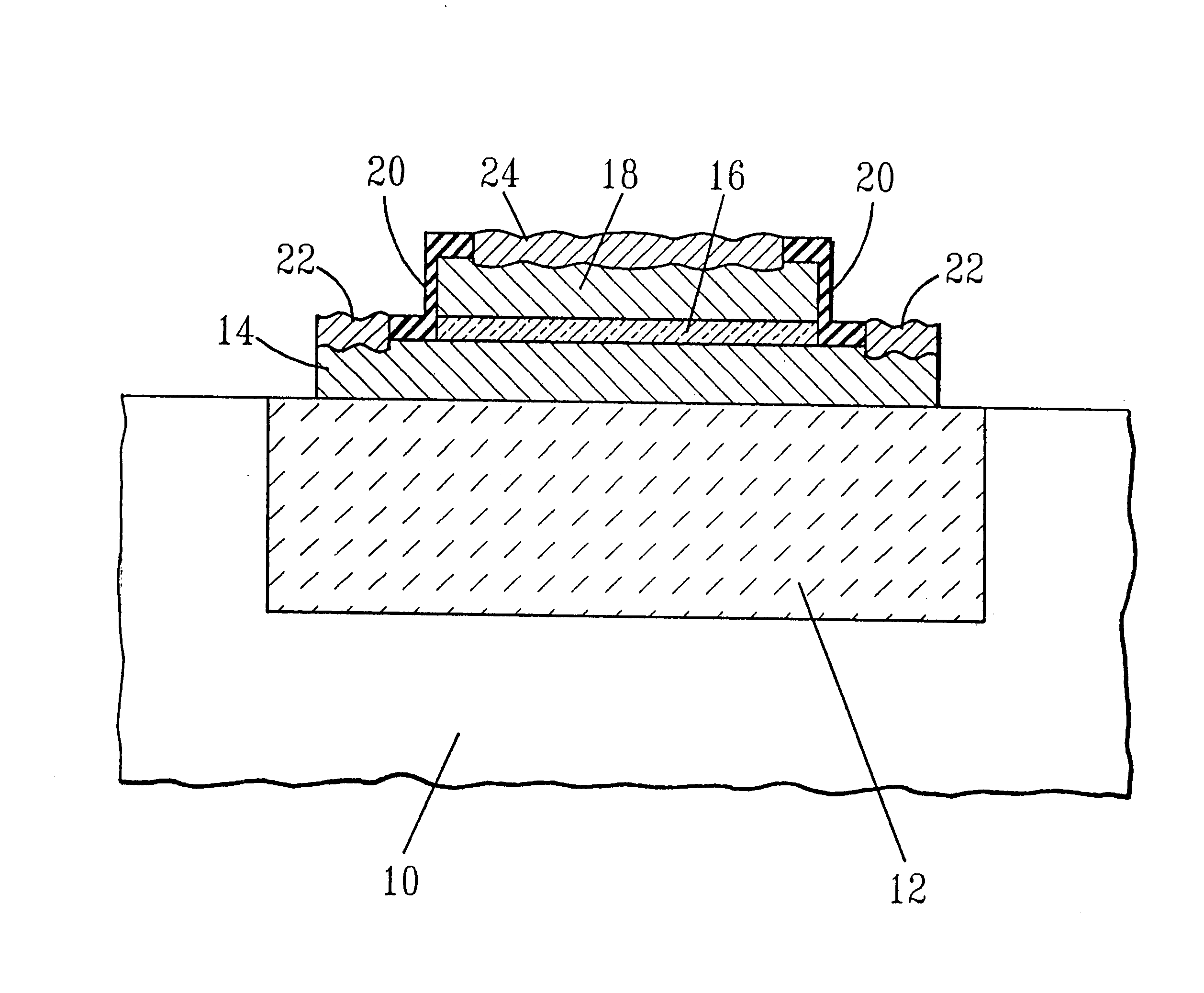
  • Figure 2
    Figure 2
Patent Text Reader

Abstract

Reliable HTO (High Temperature Oxide) dielectrics are provide by a rapid thermal chemical vapor deposition (RTCVD) process in which a low pressure and a high ratio of reactants, e.g., oxygen-containing gas to silane-containing gas, is employed. Specifically, the reliable HTO is formed by a rapid thermal chemical vapor deposition at temperatures of from about 500° C. or above, said rapid thermal chemical vapor deposition process being carried out at a pressure of less than 80 Torr and in the presence of at least one oxygen-containing reactant and at least one silane-containing reactant, said reactants having a ratio of oxygen-containing to silane-containing of about 25:1 or greater. Semiconductor devices such as capacitors and transistors that include at least a layer of the high temperature oxide of the present invention used as a dielectric material are also provided.
Need to check novelty before this filing date? Find Prior Art

Description

DESCRIPTION1. Field of the InventionThe present invention is directed to a method for forming a reliable high temperature oxide (HTO) which is useful as a dielectric material in various semiconductor devices such as capacitors, transistors and other like devices which require at least one dielectric material therein. The present invention also relates to various semiconductor devices such as capacitors and transistors which include at least the high temperature oxide of the present invention as a dielectric material.2. Background of the InventionDielectric materials in high density circuits appear as capacitors in dynamic random access memory (DRAM) applications, gate dielectrics in transistors and as decoupling capacitors. The dielectric material in these structures is typically silicon dioxide (SiO.sub.2) which is formed by ozone deposition of tetraethylorthosilicate (TEOS).Several problems however exist with dielectrics that are formed by ozone TEOS deposition. For instance, diel...

Examples

Embodiment Construction

In this example, a capacitor device like the one illustrated in FIG. 1 containing a HTO dielectric of the present invention was prepared and a comparative device containing ozone TEOS was also fabricated. The ozone TEOS containing device was prepared in accordance with prior art methods that are well known to those skilled in the art.

A third device containing a stack of TEOS and the HTO oxide of the present invention was also prepared utilizing prior art processes and the process of the present invention.

In regard to the devices containing the HTO dielectric of the present invention, the devices were fabricated utilizing standard capacitor fabrication processing steps with the exception of the HTO dielectric which was prepared in accordance with the RTCVD process of the present invention. Specifically, the HTO dielectric was formed as follows:

Chamber susceptor temperature: 775.degree. C.

Deposition temperature: 775.degree. C.

Pressure: 75 Torr

Carrier gas conditions:

Main N.sub.2 flow: ...