
Method for detecting beta-lactamase in dairy produce
A technology for lactamase and dairy products, applied in the field of immunodetection, can solve the problems of inaccurate quantitative detection, poor sensitivity, low sensitivity, etc., and achieve the effects of broadening the scope of application, reducing detection costs, and improving sensitivity
- Summary
- Abstract
- Description
- Claims
- Application Information
AI Technical Summary
Problems solved by technology
Method used
Image

Examples
Embodiment 1
[0054] In this example, a fluorescent substrate probe is used to detect penicillinase in milk.
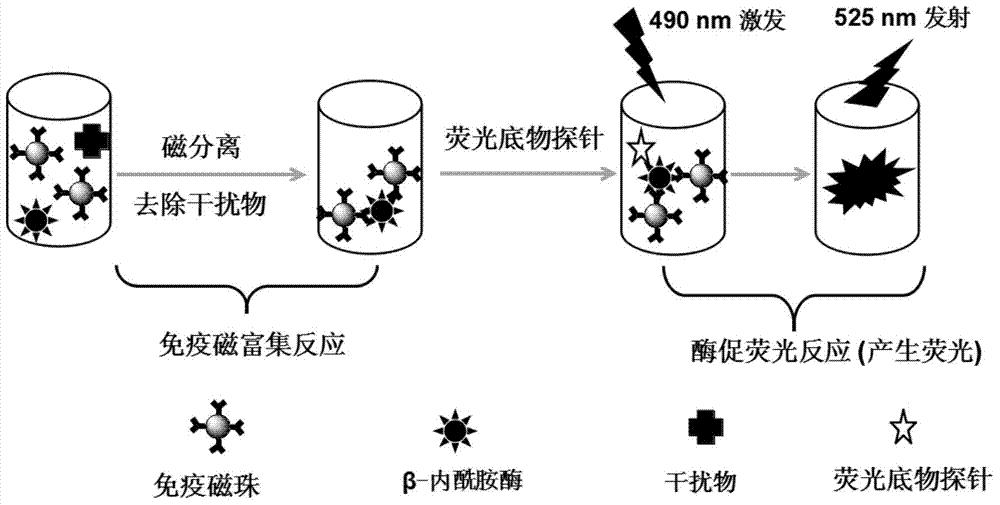
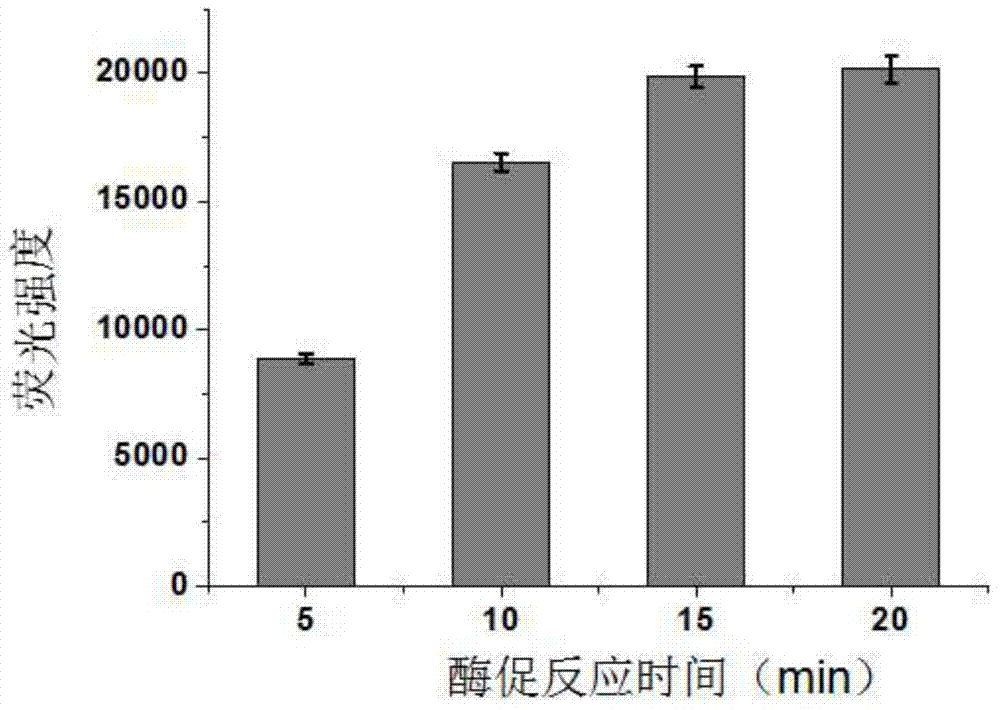
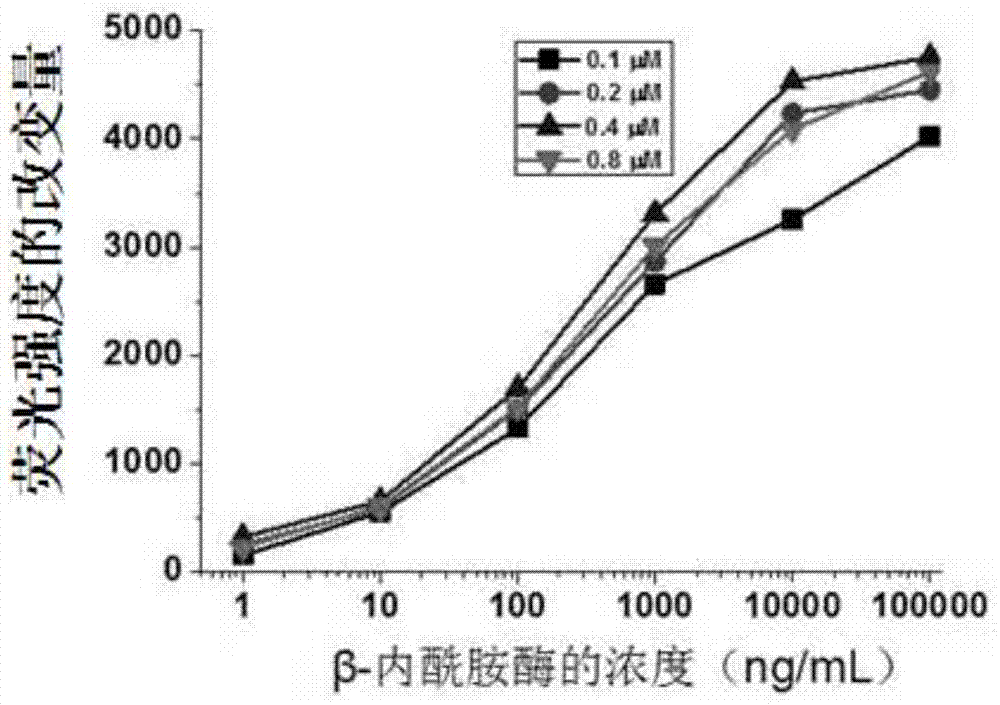
[0055] Add 100μL of 1μM fluorescent substrate probe to milk spiked with a series of different concentrations of penicillinase (the volume of milk sample is 1000μL, and the concentration of penicillinase is 1000ng / mL, 100ng / mL, 10ng / mL, 1ng, respectively) / mL, and 0ng / mL), shake the reaction at room temperature for 15 minutes, and then measure the fluorescence value of each sample. Through the linear relationship between the fluorescence value and the concentration of added penicillinase, the content of penicillinase in milk can be obtained.
Embodiment 2
[0057] In this example, a fluorescent substrate probe is used to detect cephalosporinase in milk.
[0058] Add 100μL of 1μM fluorescent substrate probe to milk spiked with a series of different concentrations of cephalosporinase (the volume of milk sample is 1000μL, and the concentration of cephalosporinase is 1000ng / mL, 100ng / mL, 10ng / mL, respectively). mL, 1ng / mL, and 0ng / mL), shake the reaction at room temperature for 15 minutes, and then measure the fluorescence value of each sample. Through the linear relationship between the fluorescence value and the concentration of added cephalosporinase, the content of cephalosporinase in milk can be obtained.
Embodiment 3
[0060] In this example, a fluorescent substrate probe is used to detect cephanomycinase in milk.
[0061] Add 100μL of 1μM fluorescent substrate probe to milk spiked with a series of different concentrations of cephalosporinase (the volume of milk sample is 1000μL, and the concentration of cephalosporinase is 1000ng / mL, 100ng / mL, 10ng / mL, respectively). mL, 1ng / mL, and 0ng / mL), shake the reaction at room temperature for 15 minutes, and then measure the fluorescence value of each sample. Through the linear relationship between the fluorescence value and the concentration of added cephanomycinase, the content of cephanomycinase in milk can be obtained.
PUM
| Property | Measurement | Unit |
|---|---|---|
| particle diameter | aaaaa | aaaaa |
Abstract
Description
Claims
Application Information
 Login to View More