Electromagnetic heat energy generation metal material applied to electric water dispenser
A technology of metal materials and water dispensers, which is applied in the direction of induction heating, energy efficiency improvement, process efficiency improvement, etc., can solve the problems of heating efficiency and magnetization efficiency attenuation, and achieve good electrothermal performance and electromagnetic performance.
- Summary
- Abstract
- Description
- Claims
- Application Information
AI Technical Summary
Problems solved by technology
Method used
Image

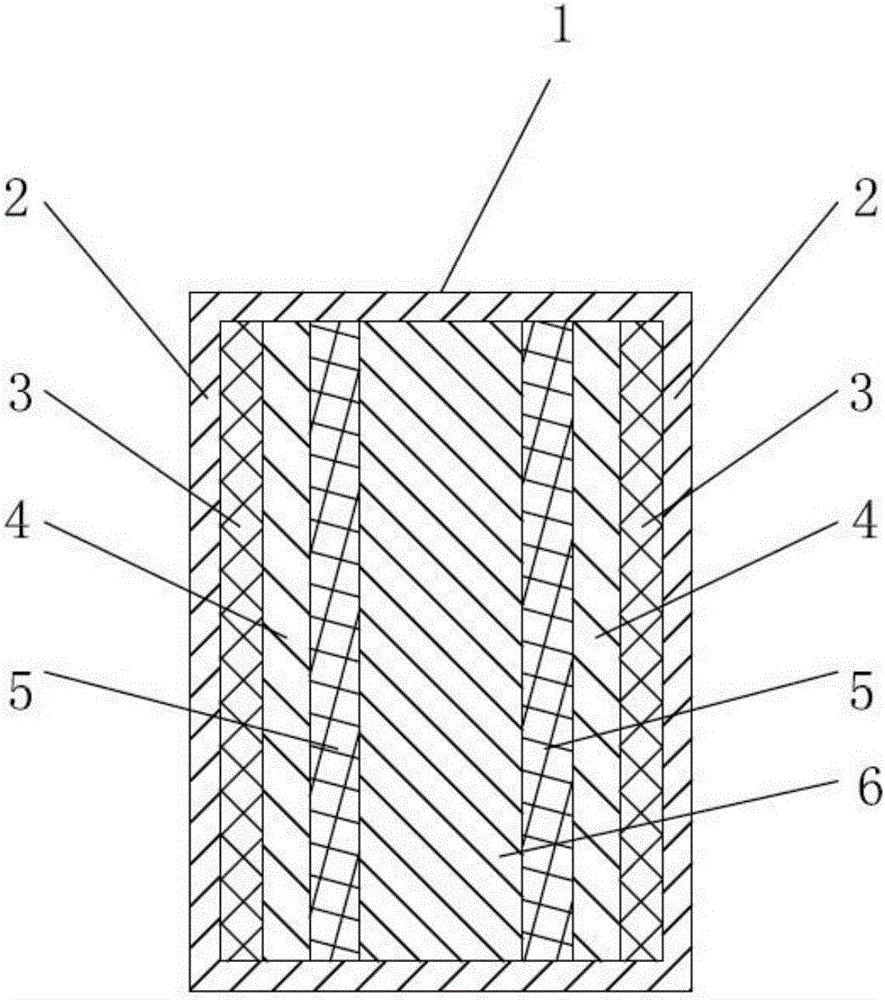
Examples
Embodiment 1
[0029] A metal material used for generating electromagnetic heat energy of an electric water dispenser, comprising the following components by weight percentage: 1.8% carbon, 0.8-0.9% silicon, 8.0% manganese, 1.2% nickel, 0.13% copper oxide, trioxide 1% iron, 12.0% chromium, 0.02% gold, 0.1% boron, 0.31% tantalum, 0.25% titanium, 0.05% ruthenium, and the balance is iron and unavoidable impurities.
Embodiment 2
[0031] A metal material used for generating electromagnetic heat energy of an electric water dispenser, comprising the following components by weight percentage: 2.1% carbon, 0.8-0.9% silicon, 5.0% manganese, 1.5% nickel, 0.08% copper oxide, trioxide 3% iron, 8.0% chromium, 0.05% gold, 0.05% boron, 0.34% tantalum, 0.15% titanium, 0.07% ruthenium, and the balance is iron and unavoidable impurities.
Embodiment 3
[0033] A metal material used for generating electromagnetic heat in an electric water dispenser, comprising the following components by weight percentage: 2.1% carbon, 0.8-0.9% silicon, 6.0% manganese, 1.2-1.5% nickel, 0.09% copper oxide, four Ferric oxide 3%, chromium 11.0%, gold 0.04%, boron 0.08%, tantalum 0.33%, titanium 0.15-0.25%, ruthenium 0.06%, and the balance is iron and unavoidable impurities.
PUM
 Login to View More
 Abstract
Description
Claims
Application Information
 Login to View More