

A kind of Escherichia coli engineering bacteria producing 5-aminolevulinic acid
A technology of aminolevulinic acid and Escherichia coli, applied in the fields of metabolic engineering and microbial fermentation, can solve the problems of high cost and unsuitable for large-scale industrial production, and achieve the effects of reducing production cost and shortening fermentation cycle.
- Summary
- Abstract
- Description
- Claims
- Application Information
AI Technical Summary
Problems solved by technology
Method used
Image

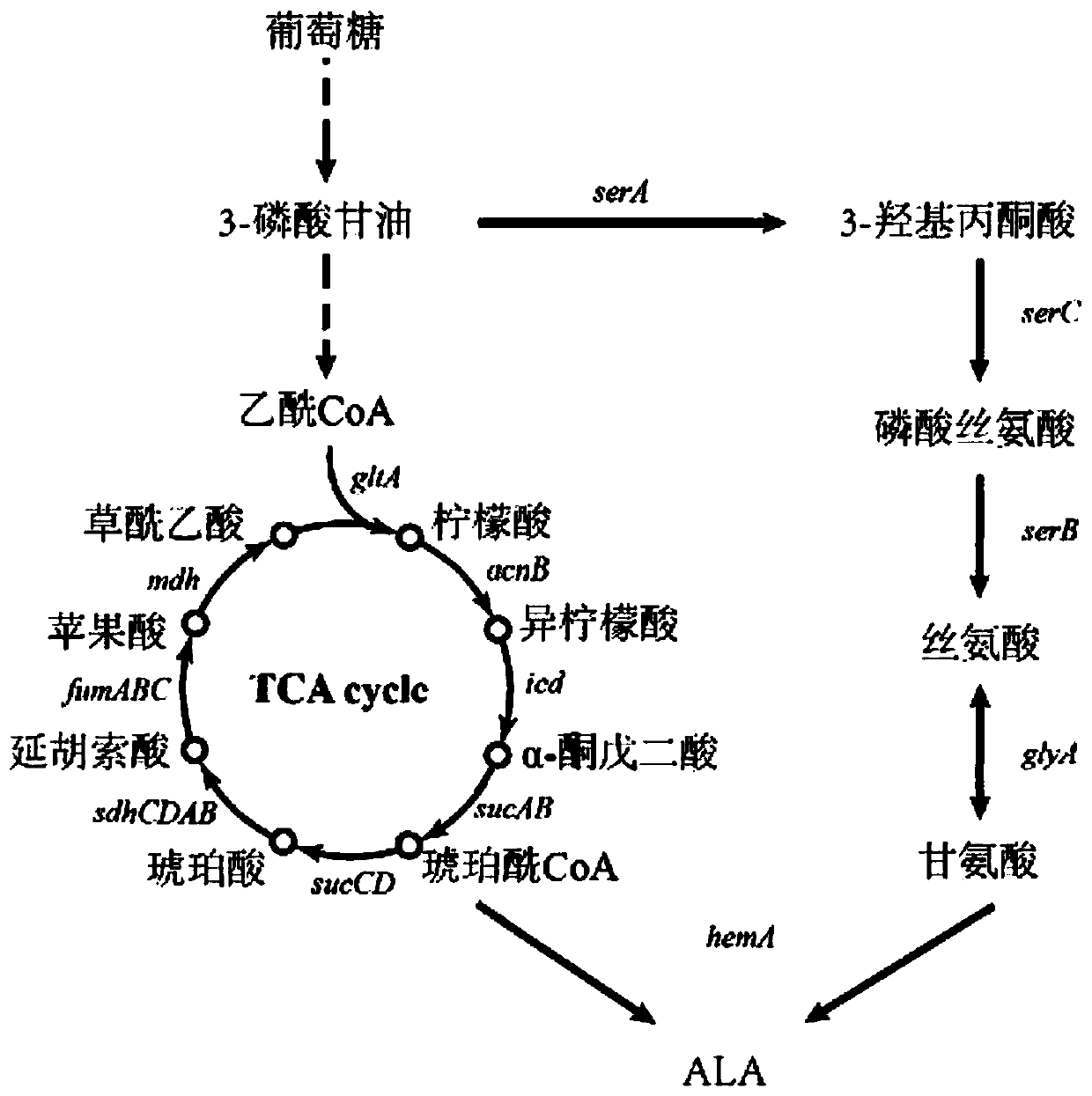
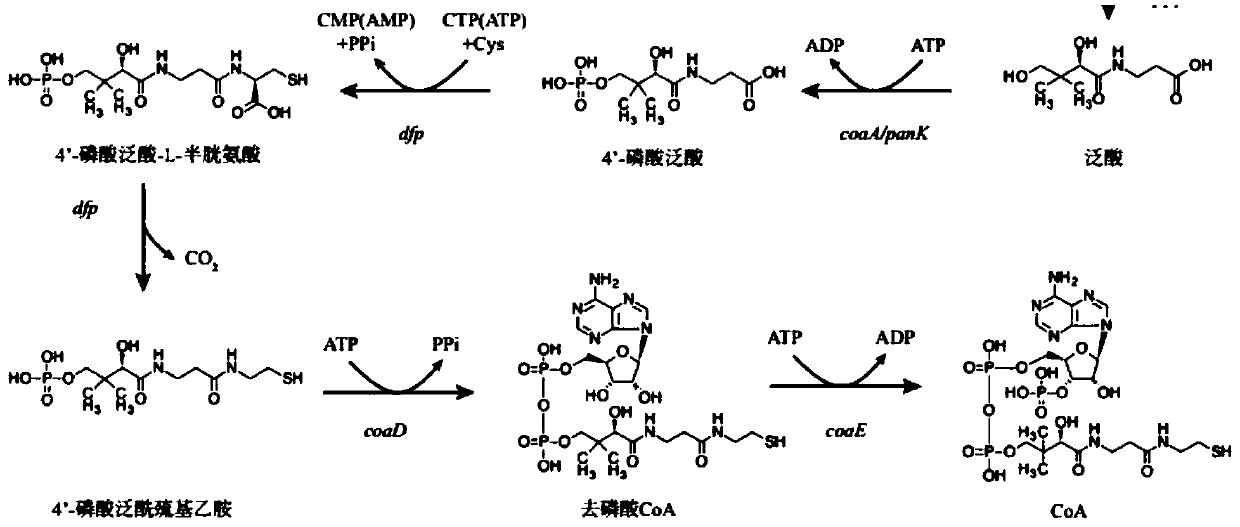
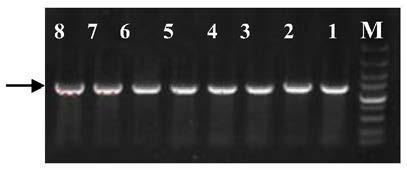
Examples
Embodiment 1
[0036] Construction and identification of embodiment 1 recombinant plasmid
[0037] (1) Construction of recombinant plasmids pRSFDuet-1-hemA, pUC19-coaA-dfp-coaD, pETDuet-1-coaA-dfp-coaD.
[0038] Primers are as follows:
[0039] RSF-F:TGTTTAACTTTAATAAGGAGGAAAATATATGGACTACAATCTCGCGCTCGAC
[0040] RSF-R: CTCCTTATTAAAGTTAAACAAAATTATTTCTACAG
[0041] hemA-F:TGTTTAACTTTAATAAGGAGGAAAATATATGGACTACAATCTGGCACTCG
[0042] hemA-R:CGAGCTCGGCCACGAAGTGCTCAGGCAGAGGCCTCGGCGCGA
[0043] pUC19-F:TGATGGCGAAGTTAGCGTAGGTCATAGCTGTTTCCT
[0044] pUC19-R:CTCTTTTATACTCATTACGAGCCGGAAGCATAAAG
[0045] pET-F:GATGGCGAAGTTAGCGTAGGGCGCGCCTGCAGGTCGACAAGCTTG
[0046] pET-R:GTTTGCTCTTTTATACTCATGAATTCGGATCCTGGCTGTGGTG
[0047] coaA-19F:TGCTTCCGGCTCGTAATGAGTATAAAAGAGCAAACGTTAAT
[0048] coaA-ETF:CACAGCCAGGATCCGAATTCATGAGTATAAAAAGAGCAAAC
[0049] coaA-R:ACCGGCCAGGCTCATTTATTTGCGTAGTCTGACCTCTTCT
[0050] dfp-F:AGACTACGCAAATAAATGAGCCTGGCCGGTAAAAAAATCG
[0051] dfp-R:CGCCCGTTTTTGCATTTAACGTCGATTTTTTTCATCAT...
Embodiment 2
[0061] Embodiment 2 Recombinant bacteria shaking flask fermentation verification
[0062] Strains:
[0063] A1: E.coli BL21(DE3)pRSFDuet-1-hemA
[0064] A2:E.coli BL21(DE3)pRSFDuet-1-hemA pUC19-coaA-dfp-coaD
[0065] A3:E.coli BL21(DE3)pRSFDuet-1-hemA pETDuet-1-coaA-dfp-coaD
[0066] The recombinant strains A2 and A3 were cultured and fermented respectively, and the strain A1 which did not co-express CoA-related genes was used as a control, and fermented at 37°C and 220r / min for 24-32h, and the ALA production was measured. The results show( Figure 5 ), coaA, dfp, and coaD were expressed through the combination of high-copy plasmid and medium-copy plasmid, and compared with the control strain A1, the ALA production was all increased. The ALA output of recombinant strain A2 using pUC19 to express CoA-related genes was 654mg / L, which was about 37% higher than that of the control strain A1; The control strain A1 increased by about 46%.
PUM
| Property | Measurement | Unit |
|---|---|---|
| melting point | aaaaa | aaaaa |
Abstract
Description
Claims
Application Information
 Login to View More