
Transition metal oxide composite CNB photocatalyst and preparation method thereof
A transition metal, photocatalyst technology, applied in physical/chemical process catalysts, chemical instruments and methods, water pollutants, etc., can solve problems such as the absence of metal oxides
- Summary
- Abstract
- Description
- Claims
- Application Information
AI Technical Summary
Problems solved by technology
Method used
Image

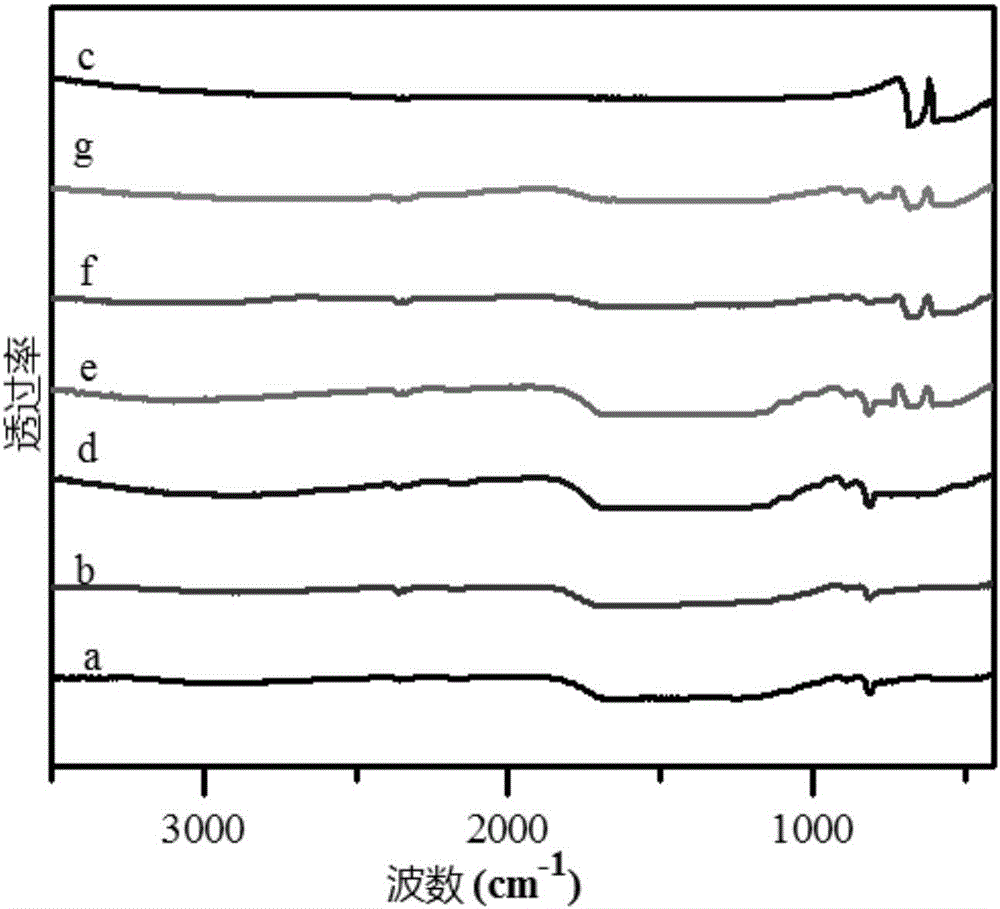
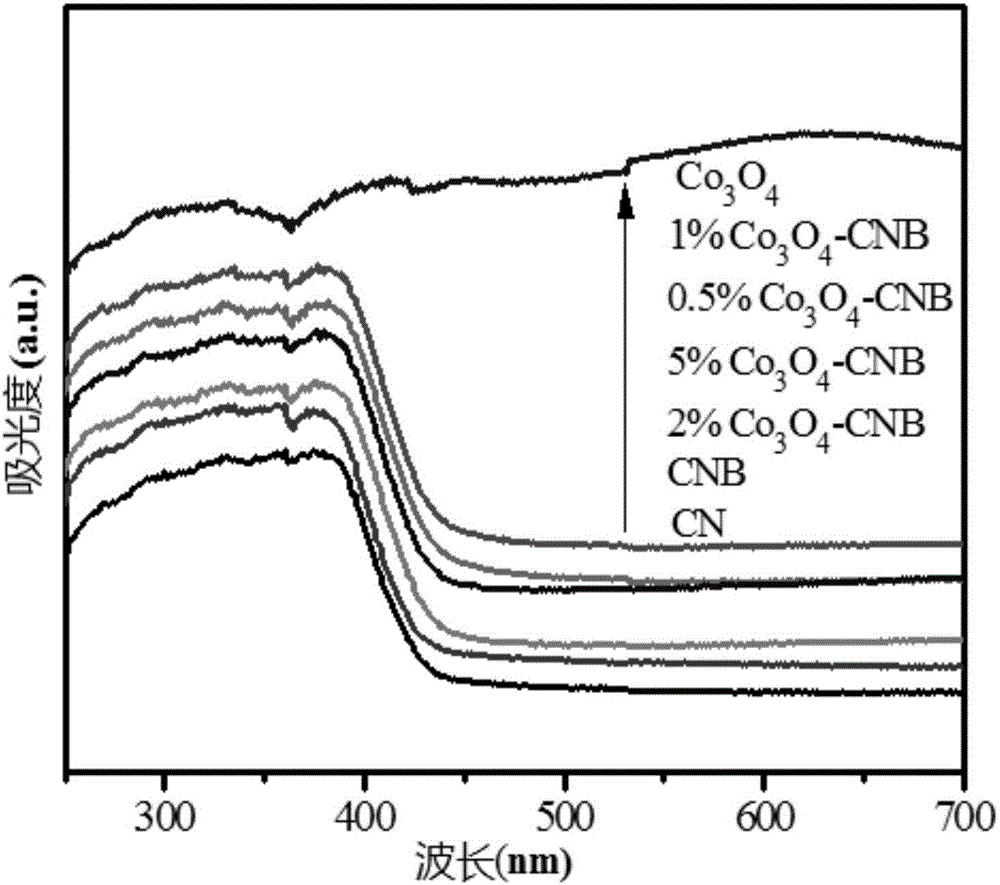
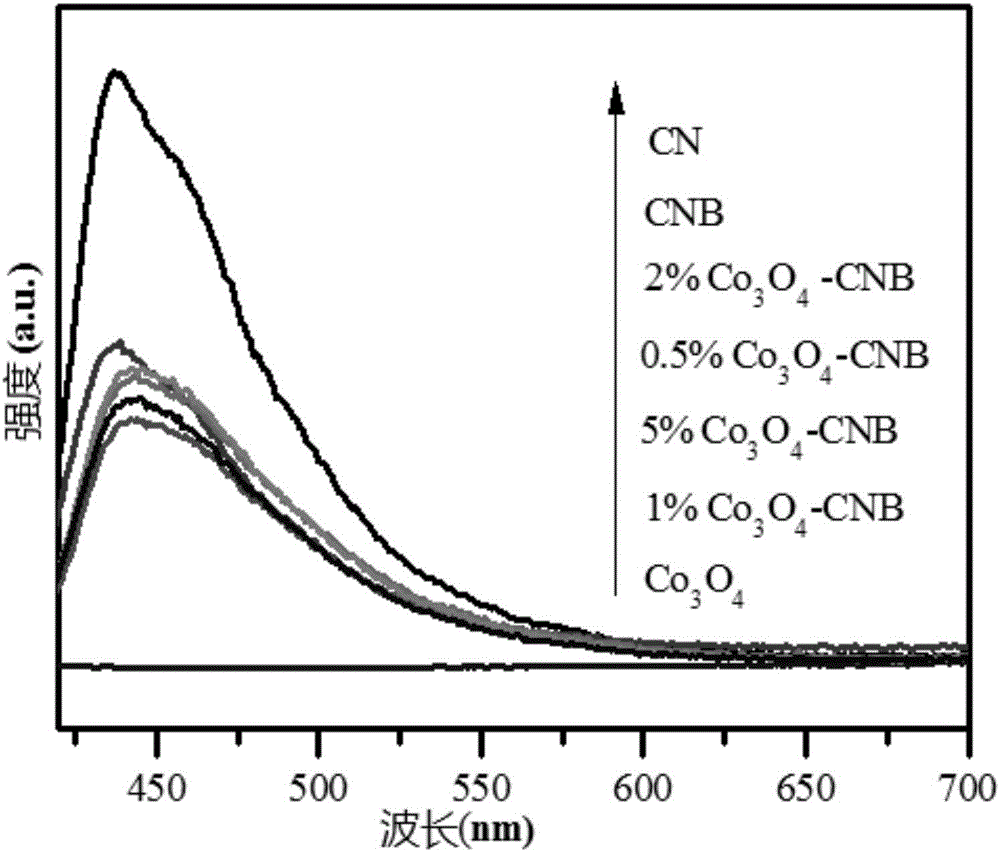
Examples
preparation example Construction
[0069] (3) The preparation method provided by the invention is simple, easy to operate, and the yield of the photocatalyst product is high;
[0070] (4) The method is environmentally friendly and has no environmental pollution.
Embodiment 1
[0073] Weigh 10.0000g of urea and 0.0060g of sodium tetraphenylborate with an electronic balance, dissolve the weighed medicine in 15mL of distilled water, put the resulting solution in a water bath, and evaporate to dryness in a water bath at 80°C. Put it in a crucible, and then put it into a muffle furnace for calcination at 550°C for 2h. After cooling, take the crucible out of the muffle furnace, and grind the CNB sample in the crucible.
[0074] Accurately weigh 1.000g of CNB and put it in a dry and clean small beaker, then accurately weigh 0.0050g of Co 3 o 4 Put it into a small beaker, add 25mL of distilled water into the beaker, stir it with a magnetic stirrer for 1h, then remove the water in a water bath at 80°C, evaporate to dryness, and then put it into a muffle furnace at 300°C for calcination for 1h, then Cool naturally to prepare a catalyst sample, recorded as 0.5% Co3O4-CNB.
Embodiment 2
[0076] The method used in embodiment 2~4 is similar to embodiment, the difference is that the Co 3 o 4 The weights are 0.0100g, 0.0200g, 0.0500g respectively, and the prepared catalyst samples are recorded as 1% Co 3 o 4 -CNB (Example 2), 2% Co 3 o 4 -CNB (Example 3), 5% Co 3 o 4 - CNB (Example 4).
PUM
| Property | Measurement | Unit |
|---|---|---|
| Wavelength | aaaaa | aaaaa |
Abstract
Description
Claims
Application Information
 Login to View More