Cloning and Application of a Glutamic Acid Decarboxylase Gene

A technology of glutamic acid decarboxylase and glutamic acid, applied in application, genetic engineering, plant genetic improvement, etc., can solve the problems of pH dropping to 4.5 or below, large equipment loss, low activity, etc.

A technology of glutamic acid decarboxylase and glutamic acid, applied in application, genetic engineering, plant genetic improvement, etc., can solve the problems of pH dropping to 4.5 or below, large equipment loss, low activity, etc.

CN106566823BActive Publication Date: 2021-04-30TIANJIN INST OF IND BIOTECH CHINESE ACADEMY OF SCI

Image

Smart Image Click on the blue labels to locate them in the text.
Viewing Examples
Smart Image
  • Cloning and Application of a Glutamic Acid Decarboxylase Gene
  • Cloning and Application of a Glutamic Acid Decarboxylase Gene
  • Cloning and Application of a Glutamic Acid Decarboxylase Gene

Examples

Experimental program
Comparison scheme
Effect test

Embodiment Construction

[0021] The specific implementation method of the present invention is illustrated below through specific examples, but these examples do not constitute a limitation to the mode, scope and effect of the present invention.

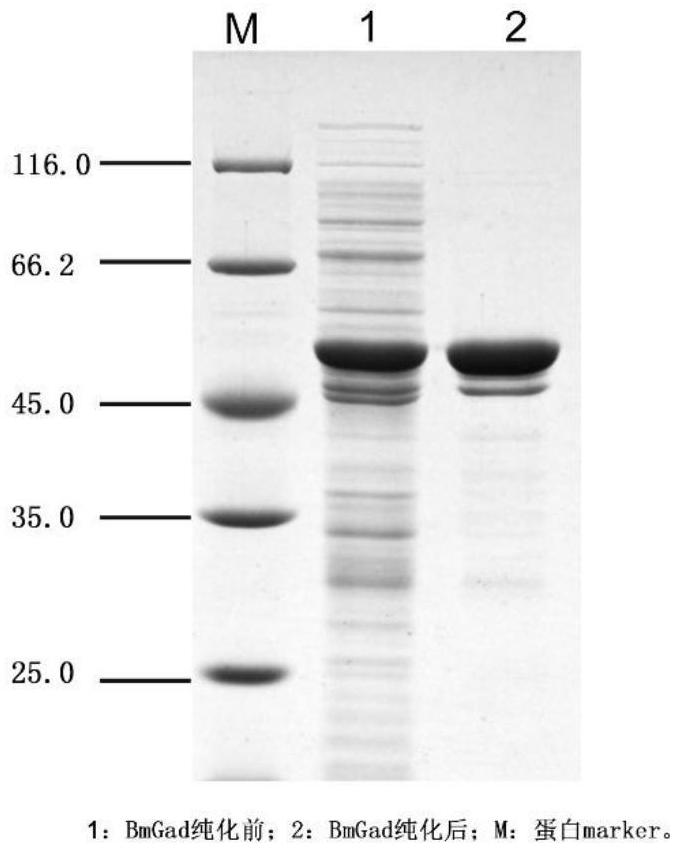
[0022] The glutamic acid decarboxylase gene was obtained from the China Microorganism Culture Collection and Management Center, and the strain number was 10055. There are 1404 nucleotide sequences, and the encoded protein size is 53kDa. Through sequence alignment, it was found that the similarities between the glutamic acid decarboxylase gene of Bacillus megaterium and those of Escherichia coli and lactic acid bacteria were about 50% and 30%, respectively.

[0023] Construction of recombinant strains

[0024] PCR primers were designed based on the glutamic acid decarboxylase gene sequence of the Bacillus megaterium model strain, and the BmGAD gene fragment was obtained by PCR using the genome of Bacillus megaterium as a template, and pET21b was used as the ...

the structure of the environmentally friendly knitted fabric provided by the present invention; figure 2 Flow chart of the yarn wrapping machine for environmentally friendly knitted fabrics and storage devices; image 3 Is the parameter map of the yarn covering machine
Login to View More

PUM

No PUM Login to View More

Abstract

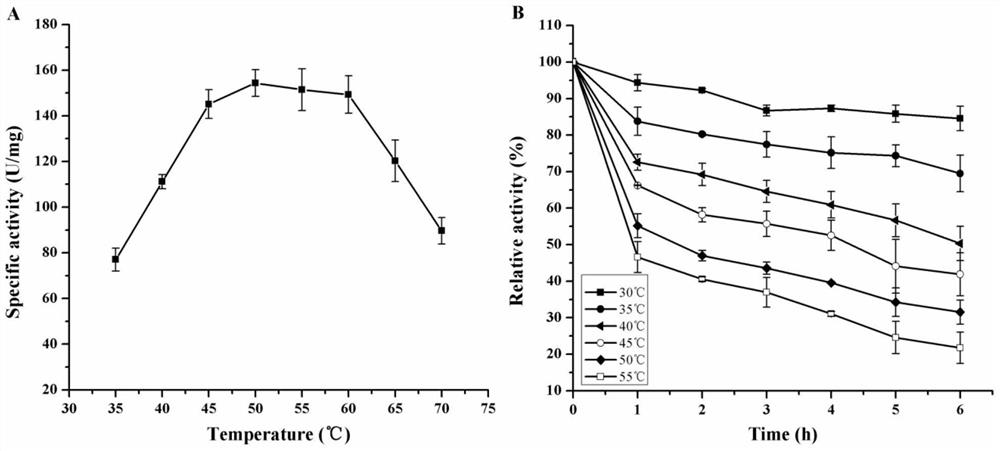
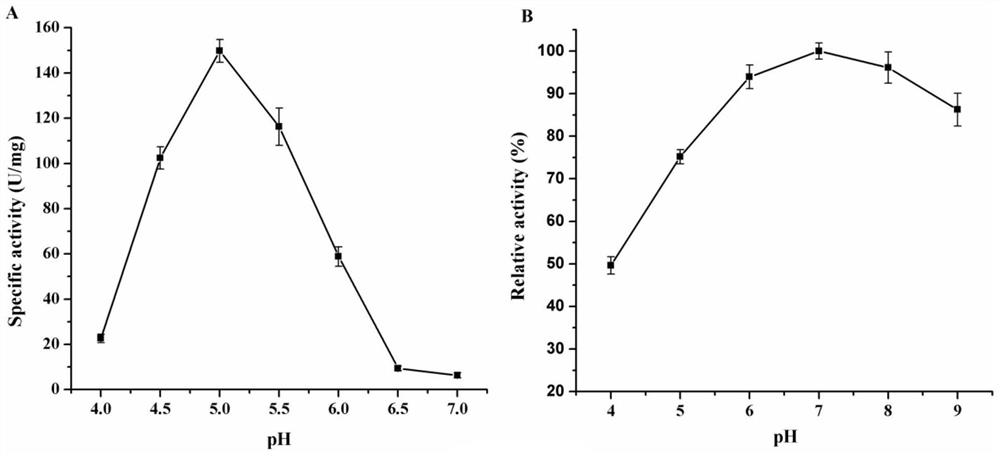
The present invention relates to the cloning and application of a novel glutamic acid decarboxylase gene. The glutamic acid decarboxylase obtained from Bacillus is induced and expressed in Escherichia coli and its properties are studied. It is found that the enzyme has a pH of 4.0 It has higher activity at ~pH6.0, the optimum temperature is between 45℃~60℃, Vmax is 150~200 U / mg, and Km is 7~9 mmol / L. The recombinant Escherichia coli containing the enzyme was transformed into whole cells, and 500 g / L L-glutamic acid was added by fed-batch feeding, at 37°C, in disodium hydrogen phosphate-sodium dihydrogen phosphate buffer, pH 7.0 After 12 h of conversion, 347.8 g / L of γ-aminobutyric acid was finally produced, and the molar conversion rate was 99.4%. Compared with the existing glutamic acid decarboxylase, the novel glutamic acid decarboxylase has higher catalytic efficiency and wider pH range, and is more suitable for industrial application.

Description

technical field [0001] The invention relates to a glutamic acid decarboxylase and its application in the production of gamma-aminobutyric acid, belonging to the field of biocatalysis. Background technique [0002] Glutamate decarboxylase is a 5'-pyridoxal phosphate (PLP)-dependent enzyme that can catalyze the decarboxylation of L-glutamate to γ-aminobutyric acid (GABA) and carbon dioxide. The product γ-aminobutyric acid is an important inhibitory neurotransmitter, which has various physiological functions such as anti-anxiety, regulating blood pressure, and treating epilepsy, and has important application value in food, medicine and other industries. At present, the main methods of producing GABA include chemical synthesis, plant enrichment and microbial fermentation. The microbial fermentation method refers to the use of GAD contained in the organism to biocatalyze the decarboxylation of L-glutamic acid or L-glutamate to generate GABA. Due to its mild reaction conditions,...

Claims

the structure of the environmentally friendly knitted fabric provided by the present invention; figure 2 Flow chart of the yarn wrapping machine for environmentally friendly knitted fabrics and storage devices; image 3 Is the parameter map of the yarn covering machine
Login to View More

Application Information

Patent Timeline
30 Apr 2021
Publication
CN106566823B
IPC
C12N9/88; C12N15/60; C12N15/70; C12N1/21; C12P13/00; C12R1/19
CPC
C12N9/88; C12P13/00; C12Y401/01015
Inventors
刘君; 程海娇