
Cytochrome p450 reductase 1 of Amaryllidaceae and its coding gene and application
A cytochrome, reductase technology used in biotechnology and plant biology
- Summary
- Abstract
- Description
- Claims
- Application Information
AI Technical Summary
Problems solved by technology
Method used
Image

Examples
Embodiment 1
[0052] Example 1, Cloning of the gene encoding cytochrome P450 reductase LaCPR1
[0053] The two primers synthesized respectively have the nucleotide sequences of SEQ ID NO: 3 and SEQ ID NO: 4 in the sequence listing.
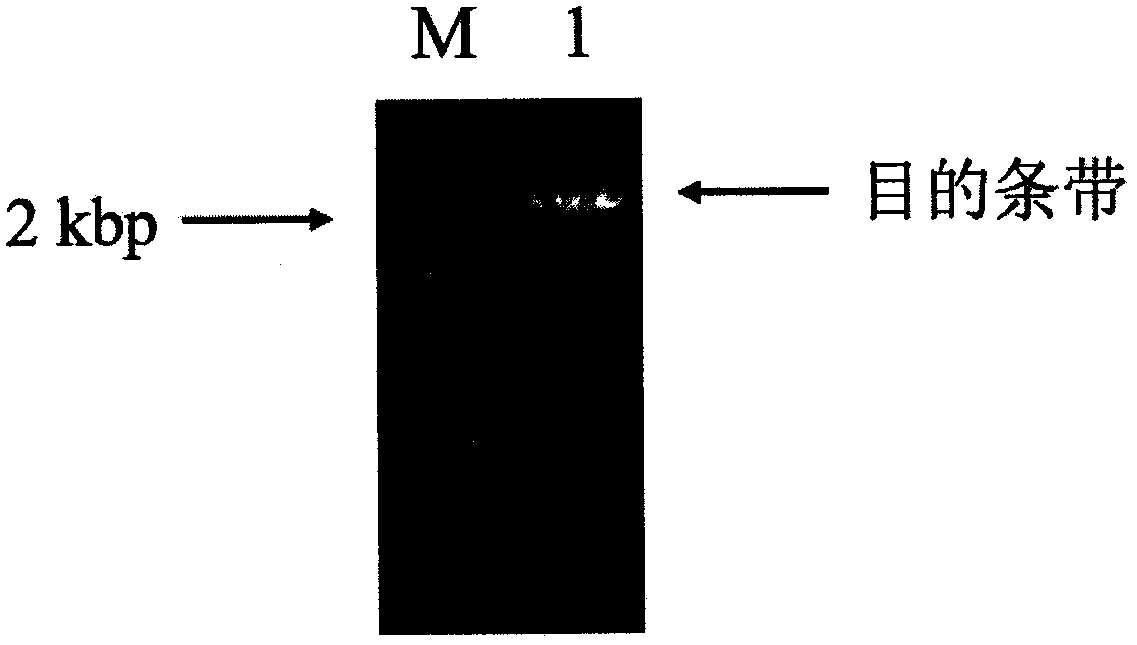
[0054] Using the cDNA obtained by reverse transcription of RNA extracted from Hudixiao as a template, PCR was performed using the above two primers SEQ ID NO: 3 and SEQ ID NO: 4. DNA polymerase was selected from Nanjing Nuoweizan Biotechnology Co., Ltd. Super-Fidelity DNA polymerase. The PCR amplification program was: 95°C for 5 min; 94°C for 45 s, 56°C for 45 s, 72°C for 2 min, a total of 30 cycles; 72°C for 10 min, then lowered to 10°C. The PCR products were detected by agarose gel electrophoresis, and the results were as follows: figure 1 .
[0055] Under the irradiation of ultraviolet light, cut out the target DNA band. Then, the DNA was recovered from the agarose gel using a multifunctional DNA purification kit (spin column type) (Beijing Biotech Bio...
Embodiment 2
[0057] Embodiment 2, the construction of the recombinant expression vector of LaCPR1 gene
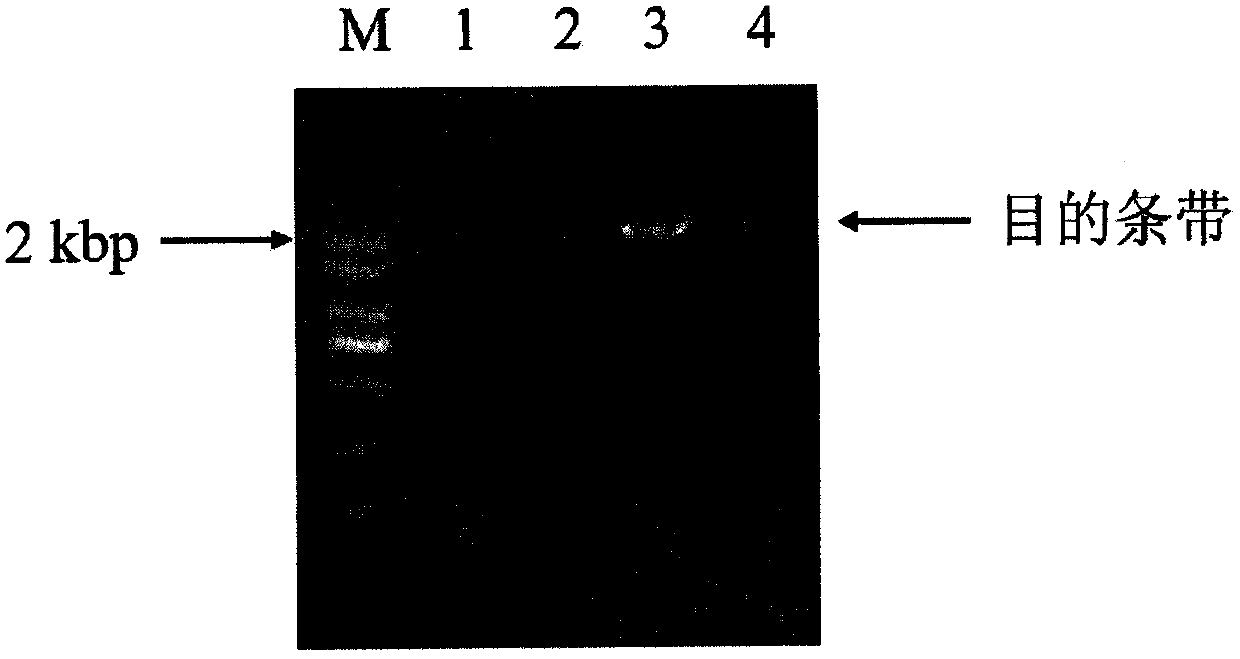
[0058] (1) Synthesize two primers respectively having the nucleotide sequences of SEQ ID NO: 5 and SEQ ID NO: 7 in the sequence listing. Two restriction sites, NdeI and XhoI, and their protected base sequences were respectively set at the 5'-ends of the synthesized primers SEQ ID NO: 5 and SEQ ID NO: 7, and PCR amplification was performed using the cDNA of Hudixiao as a template. The PCR amplification procedure is the same as in Example 1. The PCR amplified product was detected by agarose gel electrophoresis, separated, gel-cut and recovered, and then digested with NdeI and XhoI, and then ligated with T4 DNA ligase from Takara Bioengineering (Dalian) Co., Ltd. (TaKaRa) and also passed NdeI and XhoI double enzymes. cut pET28a vector (Novagen). The ligation product was transformed into Escherichia coli (E.coli) DH5α (purchased from Nanjing Novizan Biotechnology Co., Ltd.) competent cell...
Embodiment 3
[0060] Example 3, Expression, Purification and Enzyme Activity Determination of LaCPR1 and LaCPR1(ΔN58)
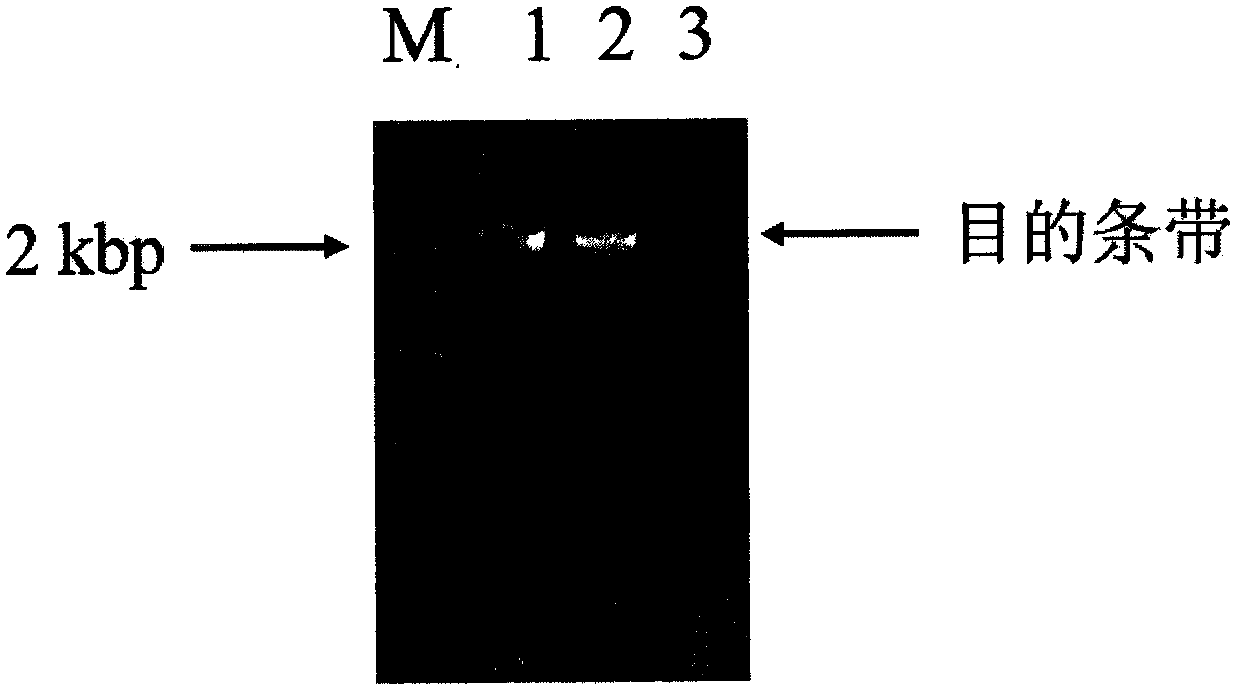
[0061] (1) The recombinant plasmid pET28a-LaCPR1 was transformed into Escherichia coli Rosseta(DE3) competent cells by heat shock method (42°C, 90s) to obtain recombinant Escherichia coli Rosseta(DE3) / pET28a-LaCPR1. Single clones were picked and cultured overnight, and then the bacterial solution was diluted 100 times in LB medium containing kanamycin (final concentration 25 μg / mL). When the bacterial solution grows to an absorbance of 0.6-0.8 at a wavelength of 600 nm, the inducer isopropyl-β-D-thiogalactopyranoside (IPTG) (final concentration is 0.1 mmol / L) is added for induction culture, and the culture temperature is 25°C. Take 40ml of the induced bacteria solution, collect the bacteria by centrifugation (4000rpm, 10min, 4°C), discard the supernatant, wash the bacteria twice with ice-cold 1×PBS buffer, and resuspend in 30ml of 1×PBS buffer. Take 1ml of the resuspende...
PUM
| Property | Measurement | Unit |
|---|---|---|
| molecular weight | aaaaa | aaaaa |
| molecular weight | aaaaa | aaaaa |
| molecular weight | aaaaa | aaaaa |
Abstract
Description
Claims
Application Information
 Login to View More