
Cobaltosic oxide hierarchical structure nano array materials and preparation method thereof, and application of cobaltosic oxide hierarchical structure nano array materials
A technology of tricobalt tetroxide and hierarchical structure, applied in nanotechnology, nanotechnology, nanotechnology for materials and surface science, etc., can solve problems such as unsatisfactory supercapacitor performance, achieve low production cost, good dispersion, and reproducible good sex effect
- Summary
- Abstract
- Description
- Claims
- Application Information
AI Technical Summary
Problems solved by technology
Method used
Image

Examples
Embodiment 1
[0033] A preparation method of tricobalt tetroxide hierarchical structure nano-array material, comprising the following steps:
[0034] S1: Calcining the carbon cloth at 450°C for 2 hours in 0.2MKMnO 4 Soak in the solution for 1 hour. ;
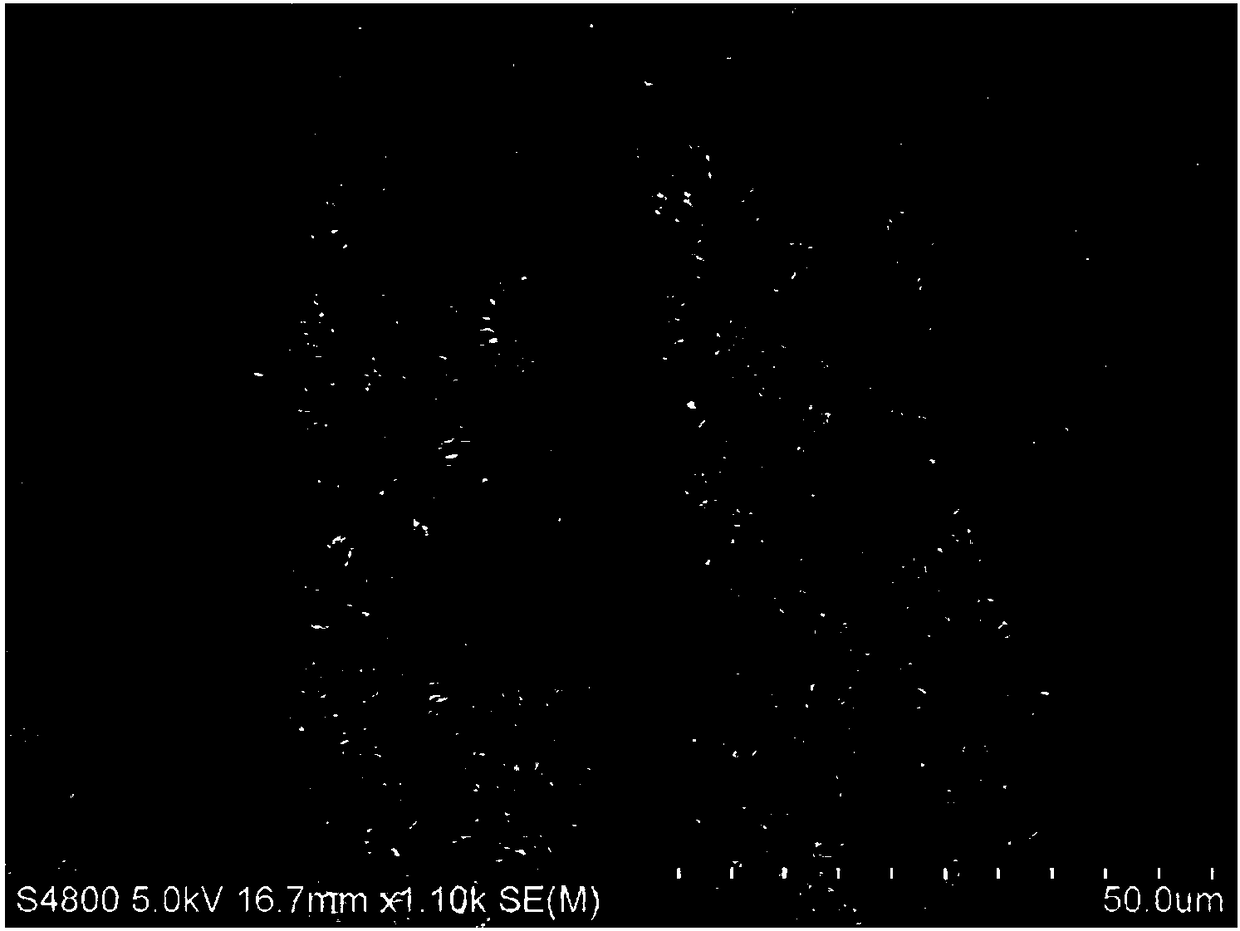
[0035] S2: Mix 40mL double-distilled water, 1mmol cobalt nitrate hexahydrate, 2mmol ammonium fluoride and 5mmol urea evenly, then add it into a 50mL reaction kettle, soak the treated carbon cloth in the mixture, pour it into the reaction kettle, and tighten the lid of the kettle , reacted at 120°C for 6 hours, took out the reactor and cooled it to room temperature naturally, washed it with ethanol and double distilled water in turn, cleaned it, and dried it at room temperature to obtain the cobalt hydroxide precursor loaded on the carbon cloth. The SEM image is as follows figure 1 As shown, it can be seen from the figure that the material is a nanowire array material uniformly grown on the carbon cloth;
[0036] S3: Dissolve 3g of 2-methyl...
Embodiment 2
[0042] A preparation method of tricobalt tetroxide hierarchical structure nano-array material, comprising the following steps:
[0043] S1: Calcining the carbon cloth at 450°C for 2 hours in 0.2MKMnO 4 Soak in the solution for 1 hour. ;
[0044] S2: Mix 40mL double-distilled water, 1mmol cobalt nitrate hexahydrate, 2mmol ammonium fluoride and 5mmol urea evenly, then add it into a 50mL reaction kettle, soak the treated carbon cloth in the mixture, pour it into the reaction kettle, and tighten the lid of the kettle , reacted at 120°C for 6h, took out the reactor and cooled it down to room temperature naturally, rinsed it with ethanol and double distilled water in sequence, and dried it at room temperature to obtain the cobalt hydroxide precursor supported on the carbon cloth.
[0045] S3: Dissolve 5g of 2-methylimidazole in 20ml of deionized water, then add the cobalt hydroxide precursor supported on the carbon cloth, then transfer to a 50ml autoclave, and then heat the autocl...
Embodiment 3
[0049] A preparation method of tricobalt tetroxide hierarchical structure nano-array material, comprising the following steps:
[0050] S1: Calcining the carbon cloth at 450°C for 2 hours in 0.2MKMnO 4 Soak in the solution for 1 hour. ;
[0051] S2: Mix 40mL double-distilled water, 1mmol cobalt nitrate hexahydrate, 2mmol ammonium fluoride and 5mmol urea evenly, then add it into a 50mL reaction kettle, soak the treated carbon cloth in the mixture, pour it into the reaction kettle, and tighten the lid of the kettle , reacted at 90°C for 6h, took out the reactor and cooled it down to room temperature naturally, rinsed it with ethanol and double distilled water in sequence, and dried it at room temperature to obtain a cobalt hydroxide precursor supported on carbon cloth.
[0052] S3: Dissolve 5g of 2-methylimidazole in 20ml of deionized water, then add the cobalt hydroxide precursor supported on the carbon cloth, then transfer to a 50ml autoclave, and then heat the autoclave at ...
PUM
 Login to View More
 Abstract
Description
Claims
Application Information
 Login to View More