*derivatives, materials containing the same and organic electroluminescent devices
What is AI technical title?
AI technical title is built by Patsnap AI team. It summarizes the technical point description of the patent document.
A derivative, electromechanical technology, applied in the field of organic electroluminescent devices, can solve problems such as unstable thin films, accelerated device degradation, and poor device life
Active Publication Date: 2018-09-28
SHIJIAZHUANG CHENGZHI YONGHUA DISPLAY MATERIALS CO LTD
View PDF6 Cites 11 Cited by
Summary
Abstract
Description
Claims
Application Information
AI Technical Summary
This helps you quickly interpret patents by identifying the three key elements:
Problems solved by technology
Method used
Benefits of technology
Problems solved by technology
[0005] So far, many blue-light materials have been reported in the literature, and the structures of these materials can be roughly classified into anthracene derivatives, stilbene aromatic derivatives, pyrene derivatives, fluorene and spirofluorene, among which anthracene Derivatives such as 9,10-diphenylanthracene (DPA) and 9,10-bis(2-naphthyl)anthracene (ADN) are the progenitor materials used in organic electroluminescent components, although they have high fluorescencequantum efficiency and Good stability and other advantages, but its unstable film is one of the important reasons for accelerating device degradation and causing poor device life
Method used
the structure of the environmentally friendly knitted fabric provided by the present invention; figure 2 Flow chart of the yarn wrapping machine for environmentally friendly knitted fabrics and storage devices; image 3 Is the parameter map of the yarn covering machine
View more
Image
Smart Image Click on the blue labels to locate them in the text.
Viewing Examples
Smart Image
Click on the blue label to locate the original text in one second.
Reading with bidirectional positioning of images and text.
Smart Image
Examples
Experimental program
Comparison scheme
Effect test
Embodiment 1
[0088] Embodiment 1, the preparation of compound formula A-1
[0089] The first step, 11-(4-bromophenyl)-3-chloro The preparation, preparation route is as follows:
[0090]
[0091] The specific operation process of preparation:
[0092] 20.0g (0.07mol) of raw material SM-0 was dissolved in 360ml of anhydrousdichloromethane, cooled to 0°C in an ice-salt bath, 13.5g (46.8mmol) of raw material SM-1 was added, and 11.2g (74.9mmol) of SM-1 was slowly added dropwise. ) of trifluoromethanesulfonic acid dissolved in dichloromethane, stirred for 1 hour, heated to 30 ° C, stirred for 18 hours, concentrated under reduced pressure to dryness, separated and purified with silica gel column, concentrated under reduced pressure to dryness, and obtained 13.2 g of white Solid, yield 45%.
[0093] The second step, the preparation of 2-bromo-4,4'-dibromomethylene biphenyl, the preparation route is as follows:
[0094]
[0095] The specific operation process of preparation:
[0096] ...
Embodiment 2
[0100] Embodiment 2, the preparation of compound formula A-17
[0101] The first step, intermediate 2,9-dichloro-5-(1-naphthyl) The preparation, preparation route is as follows:
[0102]
[0103] The specific operation process of preparation:
[0104] Referring to the preparation method in the first step of Example 1, SM-1 in the first step of Example 1 was replaced with SM-4 to obtain the intermediate Int.-2, a white solid, with a yield of 38%.
[0105] The second step, the preparation of compound formula A-17, the preparation route is as follows:
[0106]
[0107] The specific operation process of preparation:
[0112] Embodiment 3, the preparation of compound formula A-33
[0113] The first step, intermediate 11-([1,1'-biphenyl]-2-yl)-2-chloro The preparation, preparation route is as follows:
[0114]
[0115] The specific operation process of preparation:
[0116] Referring to the preparation method of the first step of Example 1, SM-0 in the first step of Example 1 was replaced by SM-5, and SM-1 was replaced by SM-6 to obtain the intermediate Int.-3, a white solid, obtained as rate 47%.
[0117] The second step, the preparation of compound formula A-33, the preparation route is as follows:
[0118]
[0119] The specific operation process of preparation:
[0120] Referring to the preparation method of the second step of Example 2, replace Int.-2 in the second step of Example 2 with Int.-3, and replace phenylboronic acid with 2-phenylphenylboronic acid to obtain product A-33, a white solid , yield 88%.
[0121] Experimental data:
[0122] (1) 1 HNMR (δ, CDCl3): 9.06(d,...
the structure of the environmentally friendly knitted fabric provided by the present invention; figure 2 Flow chart of the yarn wrapping machine for environmentally friendly knitted fabrics and storage devices; image 3 Is the parameter map of the yarn covering machine
Login to View More
PUM
Property
Measurement
Unit
Film thickness
aaaaa
aaaaa
Login to View More
Abstract
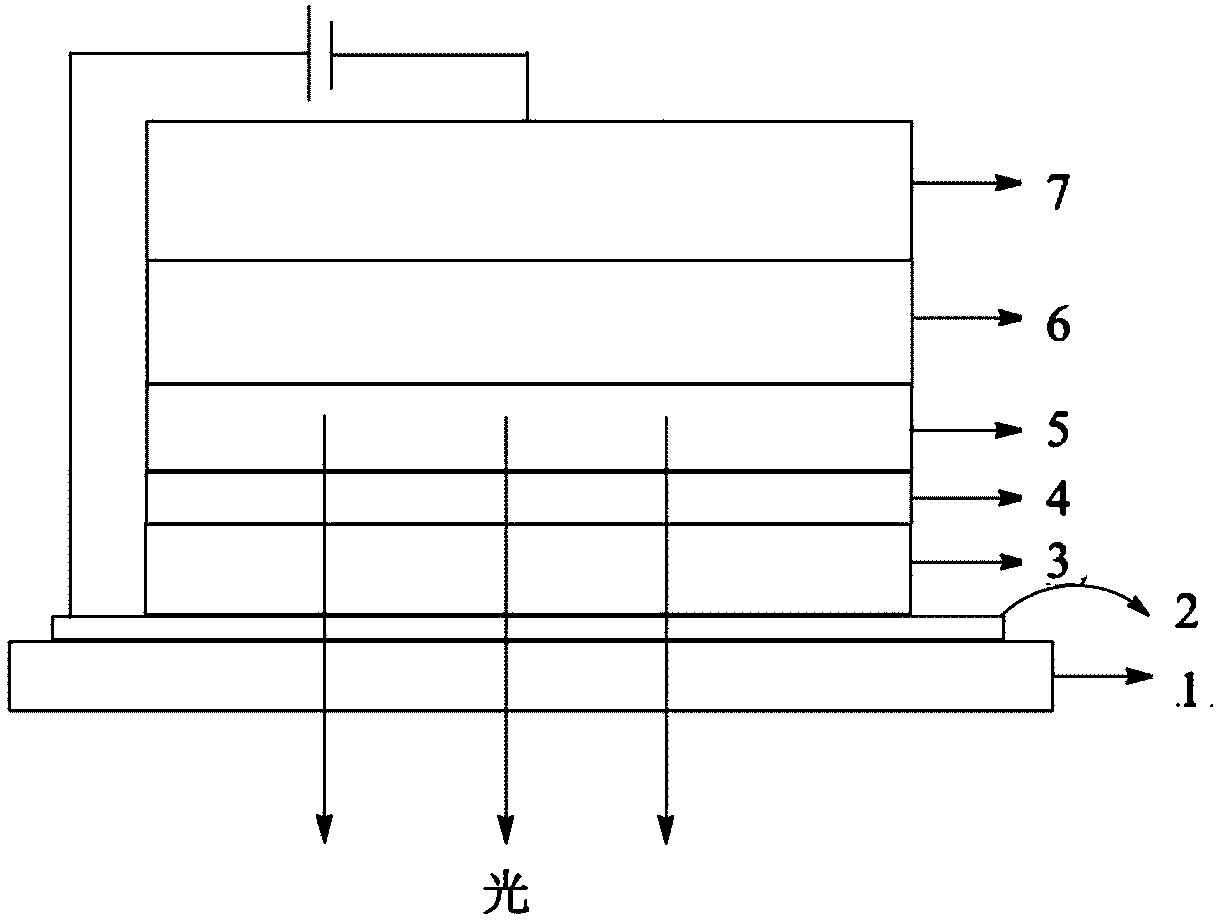
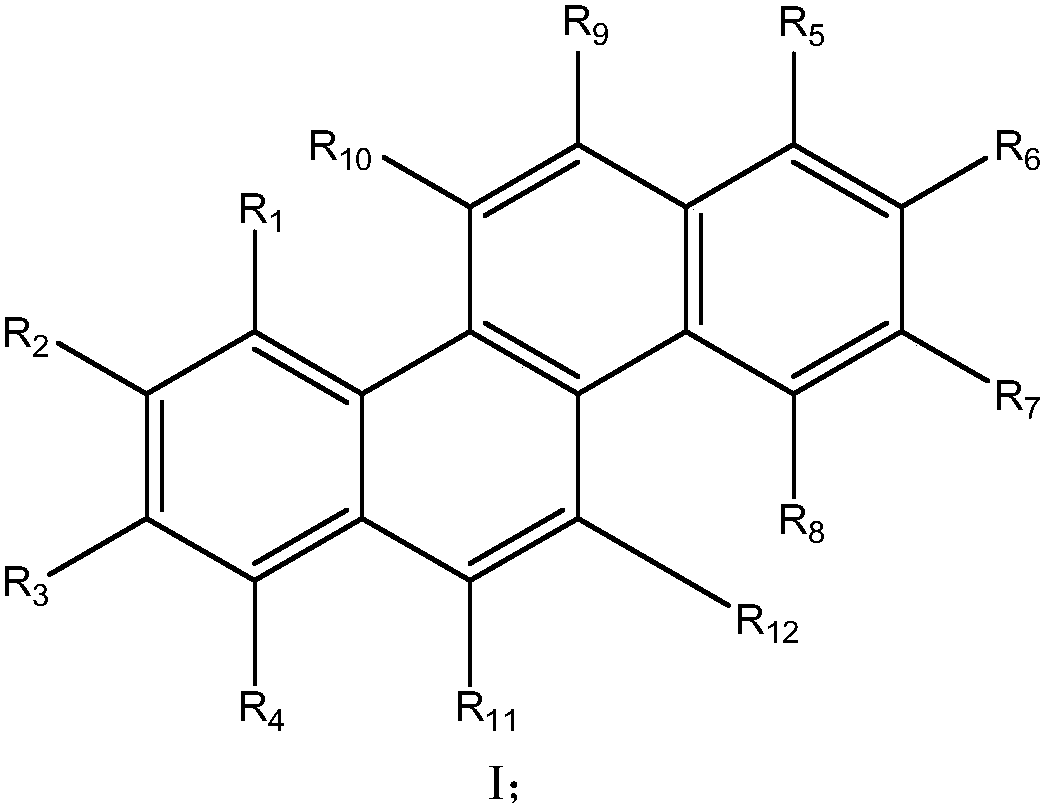
The invention discloses a type of (the formula is shown in the formula) derivative, material comprising this (the formula is shown in the formula) derivative and organic electroluminescent device. The(the formula is shown in the formula) structural formula of the derivative is shown in the following formula I: (the formula is shown in the formula) The derivative (the formula is shown in the formula) provided by the derivatives, materials containing the same and organic electroluminescent devices as shown by the formula I, has the deep blue fluorescent property, which overcomes the fluorescentaggregation quenching effect of the fluorescent material, and has higher glass transition temperature, high thermal stability and excellent luminescence performance. The properties such as simple synthesis process, simple purification method suitable for large-scale production, and the properties such as product luminescence performance and thermal stability adjustable by connecting different groups, make the derivative an ideal choice for the organic light-emitting layer material of the organic electroluminescent device. The light-emitting layer of the OLED device using the fluorescent material has high fluorescence efficiency and good stability, so that the light-emitting efficiency and the service life of the device can reach the practical requirements.
Description
technical field [0001] The invention relates to the technical field of organic electroluminescence. More specifically, it involves derivatives, including the Derivative materials and organic electroluminescent devices. Background technique [0002] Organic electroluminescence (referred to as OLED) and related research As early as 1963, pope et al. first discovered the electroluminescence phenomenon of organic compoundsingle crystalanthracene. In 1987, Kodak Corporation of the United States made an amorphous film device by evaporating organic small molecules, which reduced the driving voltage to less than 20V. This type of device is ultra-thin, fully cured, self-illuminating, high brightness, wide viewing angle, fast response, low driving voltage, low power consumption, bright color, high contrast, simple process, good temperature characteristics, and can realize flexible display And other advantages, can be widely used in flat panel displays and surface light sources...
Claims
the structure of the environmentally friendly knitted fabric provided by the present invention; figure 2 Flow chart of the yarn wrapping machine for environmentally friendly knitted fabrics and storage devices; image 3 Is the parameter map of the yarn covering machine
Login to View More
Application Information
Patent Timeline
Application Date:The date an application was filed.
Publication Date:The date a patent or application was officially published.
First Publication Date:The earliest publication date of a patent with the same application number.
Issue Date:Publication date of the patent grant document.
PCT Entry Date:The Entry date of PCT National Phase.
Estimated Expiry Date:The statutory expiry date of a patent right according to the Patent Law, and it is the longest term of protection that the patent right can achieve without the termination of the patent right due to other reasons(Term extension factor has been taken into account ).
Invalid Date:Actual expiry date is based on effective date or publication date of legal transaction data of invalid patent.




 Login to View More