Check patentability & draft patents in minutes with Patsnap Eureka AI!

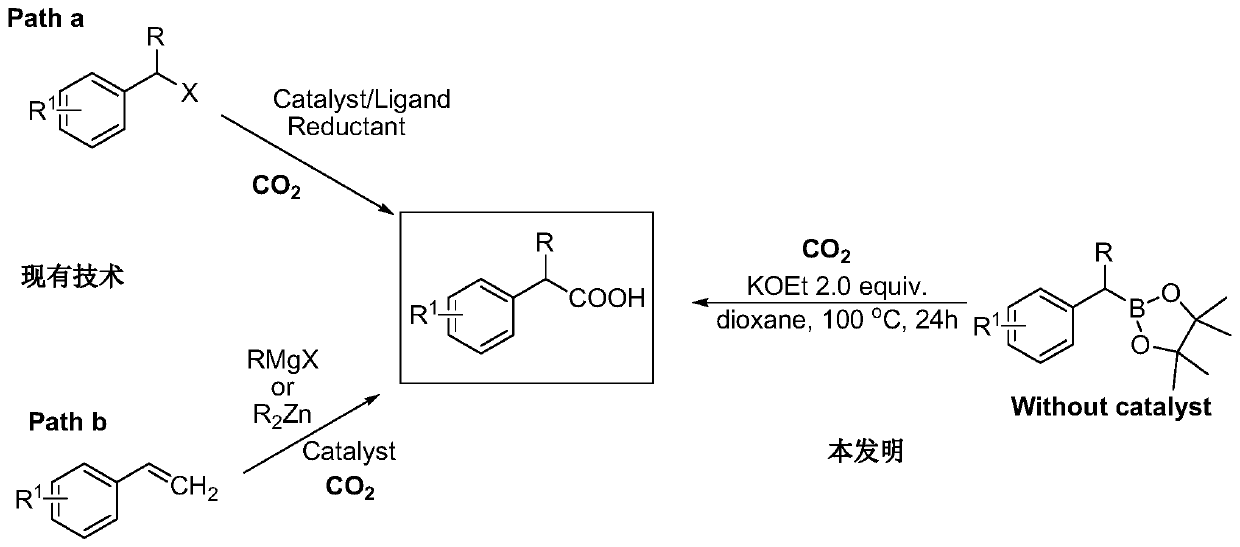
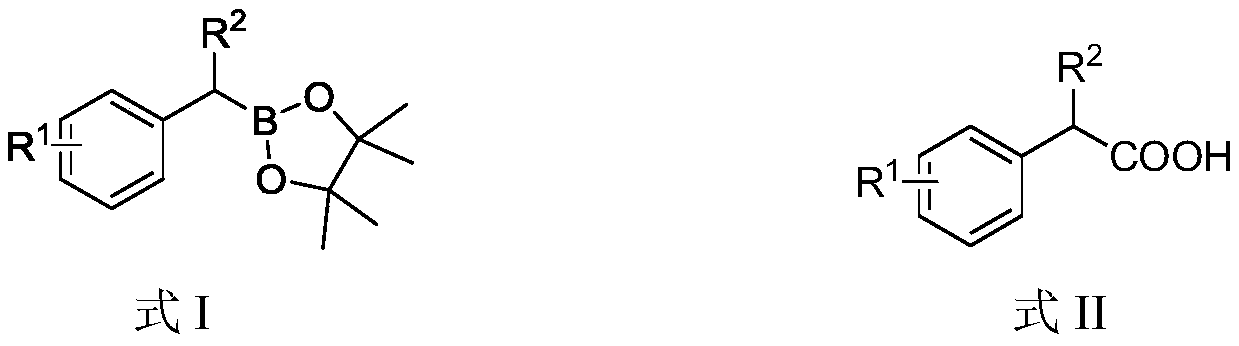
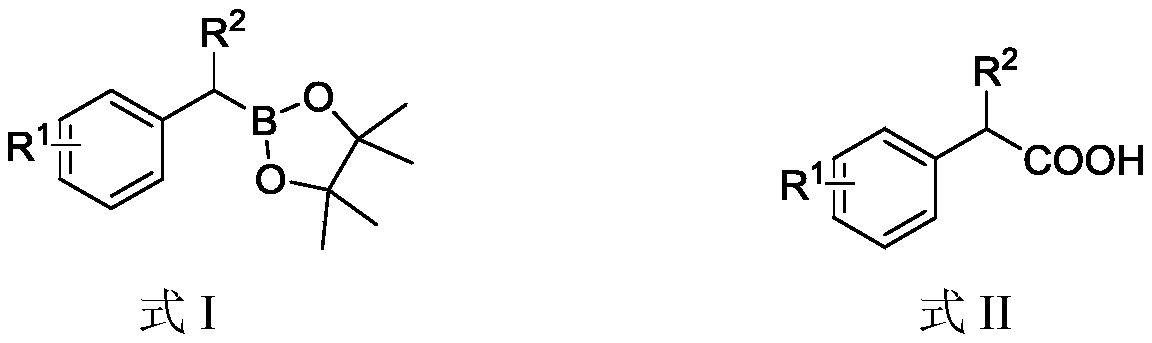
Method for converting benzyl borate compounds into phenylacetic acid and derivatives thereof by carbon dioxide

A technology of benzyl borate and carbon dioxide, which is applied in the field of synthesis of phenylacetic acid and its derivatives, can solve the problems of expensive metal reducing agents and air sensitivity

Inactive Publication Date: 2020-02-14
PEKING UNIV +2
View PDF0 Cites 0 Cited by
  • Summary
  • Abstract
  • Description
  • Claims
  • Application Information

AI Technical Summary

Problems solved by technology

The above-mentioned metal reducing agents are often expensive, sensitive to air, and highly dangerous, which makes this type of method have great disadvantages

Method used

the structure of the environmentally friendly knitted fabric provided by the present invention; figure 2 Flow chart of the yarn wrapping machine for environmentally friendly knitted fabrics and storage devices; image 3 Is the parameter map of the yarn covering machine
View more

Image

Smart Image Click on the blue labels to locate them in the text.
Viewing Examples
Smart Image
  • Method for converting benzyl borate compounds into phenylacetic acid and derivatives thereof by carbon dioxide
  • Method for converting benzyl borate compounds into phenylacetic acid and derivatives thereof by carbon dioxide
  • Method for converting benzyl borate compounds into phenylacetic acid and derivatives thereof by carbon dioxide

Examples

Experimental program
Comparison scheme
Effect test

Embodiment 1

[0027] Add benzylboronic acid pinacol ester (0.3mmol, 1 equivalent, 65.4mg), potassium ethoxide (0.6mmol, 50.5mg), 5mL dioxane to the 100mL reaction flask equipped with a stirring bar successively, in a liquid nitrogen bath The solvent was lyophilized, gas exchanged three times with carbon dioxide, and the reaction bottle was sealed, heated to 100°C and stirred for 24 hours. After the reaction was over, the reaction mixture was removed from the solvent under reduced pressure, the mixture was transferred to a 125mL separatory funnel through ethyl acetate, 5mL dilute hydrochloric acid (1mol / L) was added, 40mL ethyl acetate and 30mL water were added to extract three times, and the combined The organic phase, the solvent was removed under reduced pressure, and purified by column chromatography to obtain the desired product, phenylacetic acid, with a yield of 80%.

Embodiment 2

[0029] Add 2-naphthylmethylboronic acid pinacol ester (0.3mmol, 1 equivalent, 80.5mg), potassium ethoxide (0.6mmol, 50.5mg), 5mL dioxane to a 100mL reaction flask equipped with a stirring bar successively, The solvent was freeze-dried in a liquid nitrogen bath, gas exchanged three times with carbon dioxide, and the reaction bottle was sealed, heated to 100° C. and stirred for 24 hours. After the reaction was over, the reaction mixture was removed from the solvent under reduced pressure, the mixture was transferred to a 125mL separatory funnel through ethyl acetate, 5mL dilute hydrochloric acid (1mol / L) was added, 40mL ethyl acetate and 30mL water were added to extract three times, and the combined The organic phase, the solvent was removed under reduced pressure, and purified by column chromatography to obtain the desired product 2-naphthylacetic acid with a yield of 60%.

Embodiment 3

[0031] Add 4-phenylbenzylboronic acid pinacol ester (0.3mmol, 1 equivalent, 88.3mg), potassium ethoxide (0.6mmol, 50.5mg), 5mL dioxane to a 100mL reaction flask equipped with a stirring bar successively , freeze-dried the solvent in a liquid nitrogen bath, gas exchanged three times with carbon dioxide, sealed the reaction bottle, heated to 100 ° C and stirred for 24 hours. After the reaction was over, the reaction mixture was removed from the solvent under reduced pressure, the mixture was transferred to a 125mL separatory funnel through ethyl acetate, 5mL dilute hydrochloric acid (1mol / L) was added, 40mL ethyl acetate and 30mL water were added to extract three times, and the combined The organic phase, the solvent was removed under reduced pressure, and purified by column chromatography to obtain the desired product 4-phenylphenylacetic acid with a yield of 70%.

the structure of the environmentally friendly knitted fabric provided by the present invention; figure 2 Flow chart of the yarn wrapping machine for environmentally friendly knitted fabrics and storage devices; image 3 Is the parameter map of the yarn covering machine
Login to View More

PUM

No PUM Login to View More

Abstract

The invention discloses a method for converting benzyl borate compounds into phenylacetic acid and derivatives thereof by carbon dioxide. The method comprises the steps: dissolving the benzyl borate compounds and an alkali in an organic solvent in the absence of a metal catalyst, introducing carbon dioxide into the reaction system, carrying out a reaction at the temperature of 50-150 DEG C for 3-72 hours, and acidifying to obtain phenylacetic acid or the derivatives thereof. The method is a green, simple and efficient method for synthesizing phenylacetic acid and the derivatives thereof, greenhouse gas carbon dioxide is used as a carbon source in the reaction, no transition metal catalyst is used, and the method is environmentally friendly, economical and high in efficiency.

Description

technical field [0001] The invention relates to the field of organic synthesis, in particular to a synthesis method of phenylacetic acid and its derivatives, in particular to a method for converting benzyl borate into phenylacetic acid and its derivatives by using carbon dioxide. Background technique [0002] carbon dioxide (carbon dioxide), a carbon oxide, the chemical formula is CO 2 , is a colorless and odorless gas at normal temperature and pressure, and is also a common greenhouse gas. Because of its high abundance, good reproducibility, inertness, and nontoxicity, CO2 is one of the most attractive C1 sources for the synthesis of various chemical raw materials and bioactive molecules. Today, we have developed many transition metal-catalyzed carboxylation methods to synthesize carboxyl-containing chemical starting materials and biologically active compounds. Due to the importance of the phenylacetic acid backbone in various bioactive molecules, the construction of the ...

Claims

the structure of the environmentally friendly knitted fabric provided by the present invention; figure 2 Flow chart of the yarn wrapping machine for environmentally friendly knitted fabrics and storage devices; image 3 Is the parameter map of the yarn covering machine
Login to View More

Application Information

Patent Timeline
no application Login to View More
IPC IPC(8): C07C51/15C07C57/32C07C57/40C07C57/38C07C57/30C07C57/58C07C67/313C07C69/78C07C253/30C07C255/57C07C59/64
CPCC07C51/15C07C67/313C07C253/30C07C57/32C07C57/40C07C57/38C07C57/30C07C57/58C07C69/78C07C255/57C07C59/64
Inventor 孙北奇昂卡尔·思·尼亚拉赵玉孙洋莫凡洋
Owner PEKING UNIV
Features
  • R&D
  • Intellectual Property
  • Life Sciences
  • Materials
  • Tech Scout
Why Patsnap Eureka
  • Unparalleled Data Quality
  • Higher Quality Content
  • 60% Fewer Hallucinations
Social media
Patsnap Eureka Blog
Learn More