
ZnO/In2O3 heterogeneous II-type photocatalytic material with hollow core-shell structure and preparation method thereof
A technology of photocatalytic materials and core-shell structure, which is applied in the field of photocatalytic material preparation, can solve the problems of complex experimental process and easy collapse of spheres, and achieve the effects of simple operation, environmental friendliness, and cheap and easy-to-obtain raw materials
- Summary
- Abstract
- Description
- Claims
- Application Information
AI Technical Summary
Problems solved by technology
Method used
Image

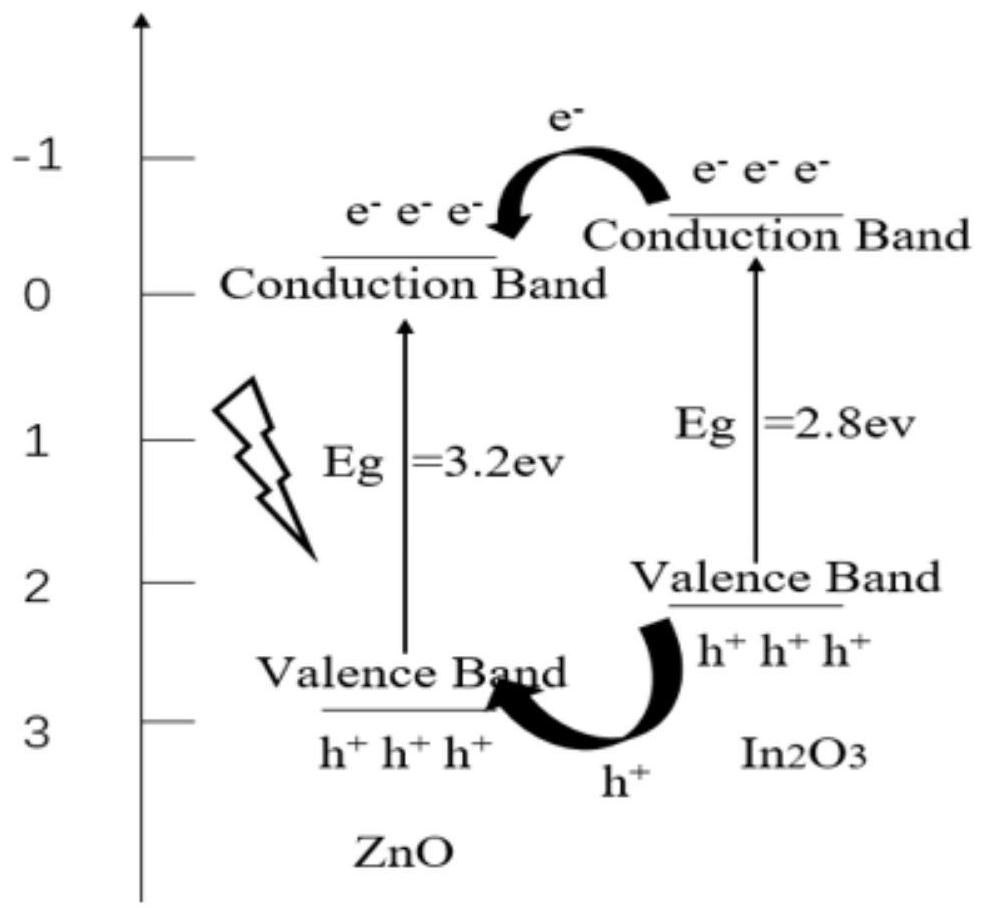
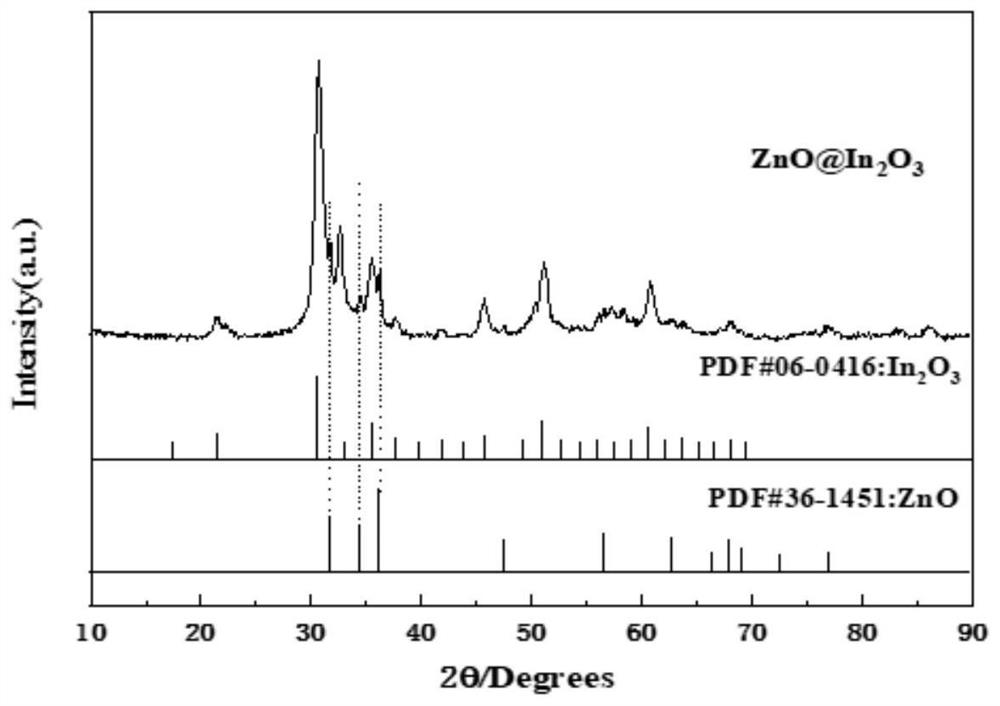
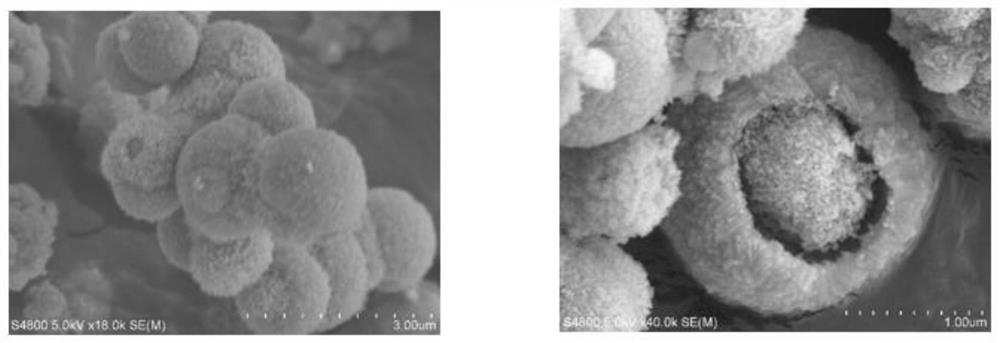
Examples
Embodiment example 1
[0039] Implementation Case 1: A Hollow Core-Shell Structure ZnO / In 2 o 3 Preparation method of heterogeneous type Ⅱ photocatalytic material
[0040] Weigh 0.59g of zinc nitrate, 0.38g of indium nitrate and stir to dissolve in a mixed solution containing 20mL of ethylene glycol, 20mL of polyethylene glycol and 10mL of distilled water, add 0.8g of sodium citrate, 1.5g of Stir the urea for 3 hours, transfer the stirred mixed solution to a high-pressure reactor, heat it at 200°C for 12 hours, take the product after the hydrothermal reaction and centrifuge it at 8,000 rpm for 8 minutes, wash the centrifugate three times with distilled water, wash it twice with ethanol, and then dry it at 60°C After 600 min, the dried sample was calcined in a tube furnace at 500°C for 180 min.
Embodiment example 2
[0042] Weigh 0.59g of zinc nitrate, 0.38g of indium nitrate and stir to dissolve in a mixed solution containing 20mL of ethylene glycol, 20mL of polyethylene glycol and 10mL of distilled water, add 0.9g of sodium citrate, 1.5g Stir the urea for 3 hours, transfer the stirred mixed solution to a high-pressure reactor, heat it at 200°C for 12 hours, take the product after the hydrothermal reaction and centrifuge it at 8,000 rpm for 8 minutes, wash the centrifugate three times with distilled water, wash it twice with ethanol, and then dry it at 60°C After 600 min, the dried sample was calcined in a tube furnace at 500°C for 180 min.
Embodiment example 3
[0044]Weigh 0.59g of zinc nitrate and 0.38g of indium nitrate and stir and dissolve them in a mixed solution containing 20mL of ethylene glycol, 20mL of polyethylene glycol and 10mL of distilled water. Add 1.0g of sodium citrate, 1.5g of Stir the urea for 3 hours, transfer the stirred mixed solution to a high-pressure reactor, heat it at 200°C for 12 hours, take the product after the hydrothermal reaction and centrifuge it at 8,000 rpm for 8 minutes, wash the centrifugate three times with distilled water, wash it twice with ethanol, and then dry it at 60°C After 600 min, the dried sample was calcined in a tube furnace at 500°C for 180 min.
PUM
 Login to View More
 Abstract
Description
Claims
Application Information
 Login to View More