Preparation method of radioisotope carbon-14 labeled phenol alkali metal salt
A technology of phenol alkali metal salt and radioactive isotope, which is applied in the field of organic radiation chemical synthesis, and can solve problems such as optimization and high-efficiency conversion of synthesis process
- Summary
- Abstract
- Description
- Claims
- Application Information
AI Technical Summary
Problems solved by technology
Method used
Image

Examples
Embodiment 1
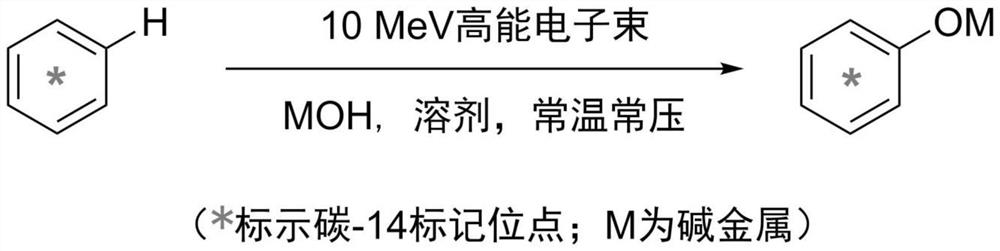
[0024] Under the argon atmosphere of the glove box, the pre-cooled (-10°C, the same below) carbon-14 homolabeled benzene (10 μCi) in ethanol (0.1 mL) was transferred to a pre-cooled ampoule (1.5 mL), Then add pre-cooled aqueous sodium hydroxide solution (0.01M, 2.00mL) into the ampoule, and then heat the top opening of the ampoule with a heat gun to melt and seal it tightly to obtain a sealed reaction system. Gently shake the sealed ampoule to mix the contents of the bottle evenly.
[0025] The sealed ampoules obtained above are fixed on a support, and sent into a 10 MeV electron accelerator together with a conveyor belt for electron beam irradiation. The control irradiation dose is 30kGr. After the irradiation, the carbon-14 labeled phenol sodium salt solution sealed in the ampoule was obtained. The radiochemical yield of the reaction was 18% as analyzed by HPLC-FSA (online radioactive high performance liquid chromatography) and LSC (liquid scintillation measurement).
Embodiment 2
[0027] Under the argon atmosphere of the glove box, the pre-cooled (-10°C, the same below) carbon-14 homolabeled benzene (10 μCi) in ethanol (0.1 mL) was transferred to a pre-cooled ampoule (1.5 mL), Then add pre-cooled aqueous sodium hydroxide solution (0.01M, 2.00mL) into the ampoule, and then heat the top opening of the ampoule with a heat gun to melt and seal it tightly to obtain a sealed reaction system.
[0028] The sealed ampoules obtained above are fixed on a support, and sent into a 10 MeV electron accelerator together with a conveyor belt for electron beam irradiation. The control irradiation dose is 100kGr. After the irradiation, the carbon-14 labeled phenol sodium salt solution sealed in the ampoule was obtained. According to HPLC-FSA and LSC analysis, the radiochemical yield of the reaction was 49%.
Embodiment 3
[0030] Under the argon atmosphere of the glove box, the pre-cooled (-10°C, the same below) carbon-14 homolabeled benzene (10 μCi) in ethanol (0.1 mL) was transferred to a pre-cooled ampoule (1.5 mL), Then add pre-cooled aqueous sodium hydroxide solution (0.01M, 2.00mL) into the ampoule, and then heat the top opening of the ampoule with a heat gun to melt and seal it tightly to obtain a sealed reaction system. Gently shake the sealed ampoule to mix the contents of the bottle evenly.
[0031] The sealed ampoules obtained above are fixed on a support, and sent into a 10 MeV electron accelerator together with a conveyor belt for electron beam irradiation. The control irradiation dose is 150kGr. After the irradiation, the carbon-14 labeled phenol sodium salt solution sealed in the ampoule was obtained. According to HPLC-FSA and LSC analysis, the radiochemical yield of the reaction was 28%.
PUM
 Login to View More
 Abstract
Description
Claims
Application Information
 Login to View More
 - R&D
- Intellectual Property
- Life Sciences
- Materials
- Tech Scout
- Unparalleled Data Quality
- Higher Quality Content
- 60% Fewer Hallucinations
Browse by: Latest US Patents, China's latest patents, Technical Efficacy Thesaurus, Application Domain, Technology Topic, Popular Technical Reports.
© 2025 PatSnap. All rights reserved.Legal|Privacy policy|Modern Slavery Act Transparency Statement|Sitemap|About US| Contact US: help@patsnap.com