[0020] The present invention is a dry
powder coating material and application process that can reliably deliver an abradable, durable, lubricious, oil retaining, sound damping piston assembly component coating in high volumes and at lower cost than the prior art. The properties and thickness range of the cured coatings allow reduced piston-to-bore clearances without the risks of
oil film breakdown, increased friction, higher temperatures, scuffing or seizure.
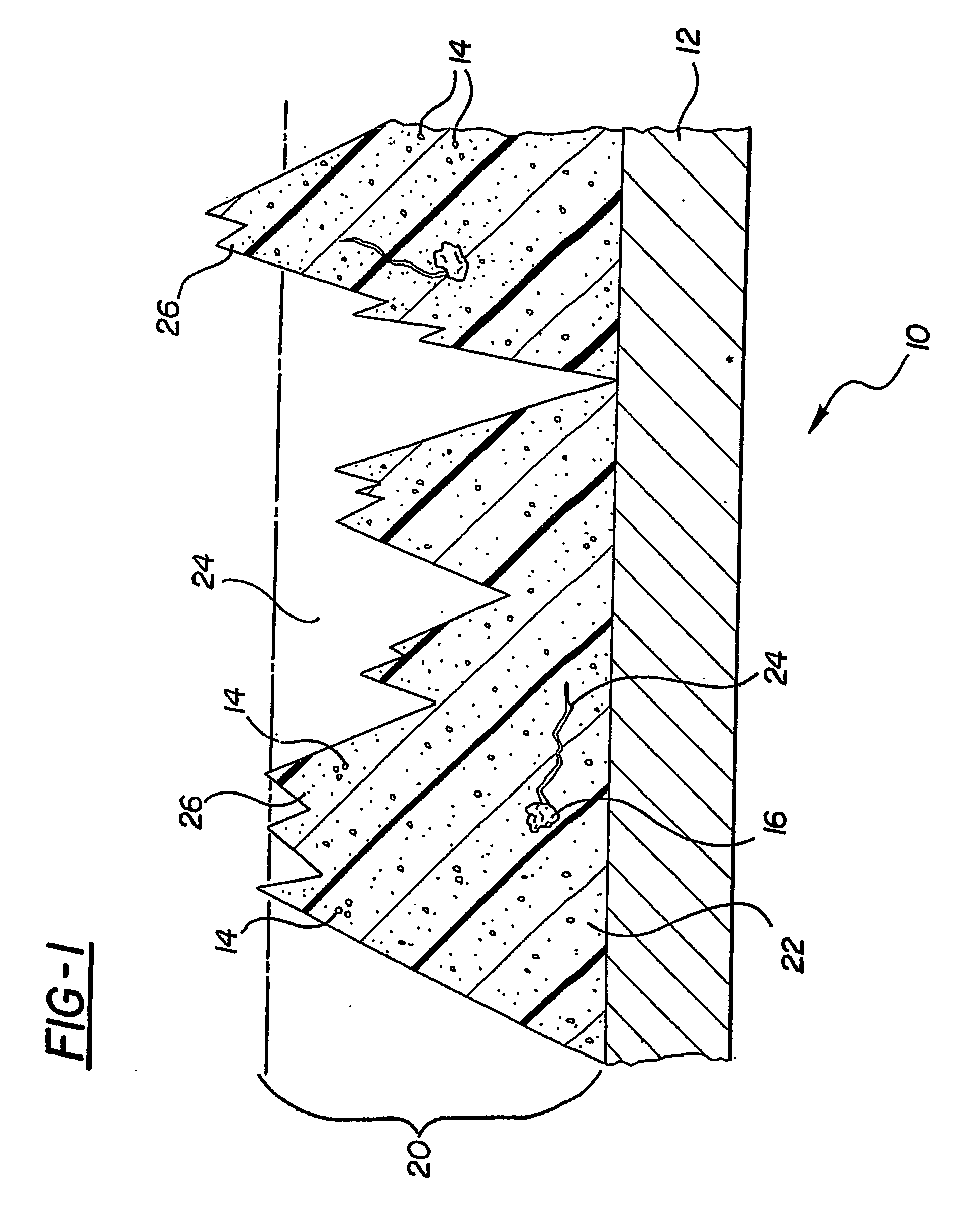
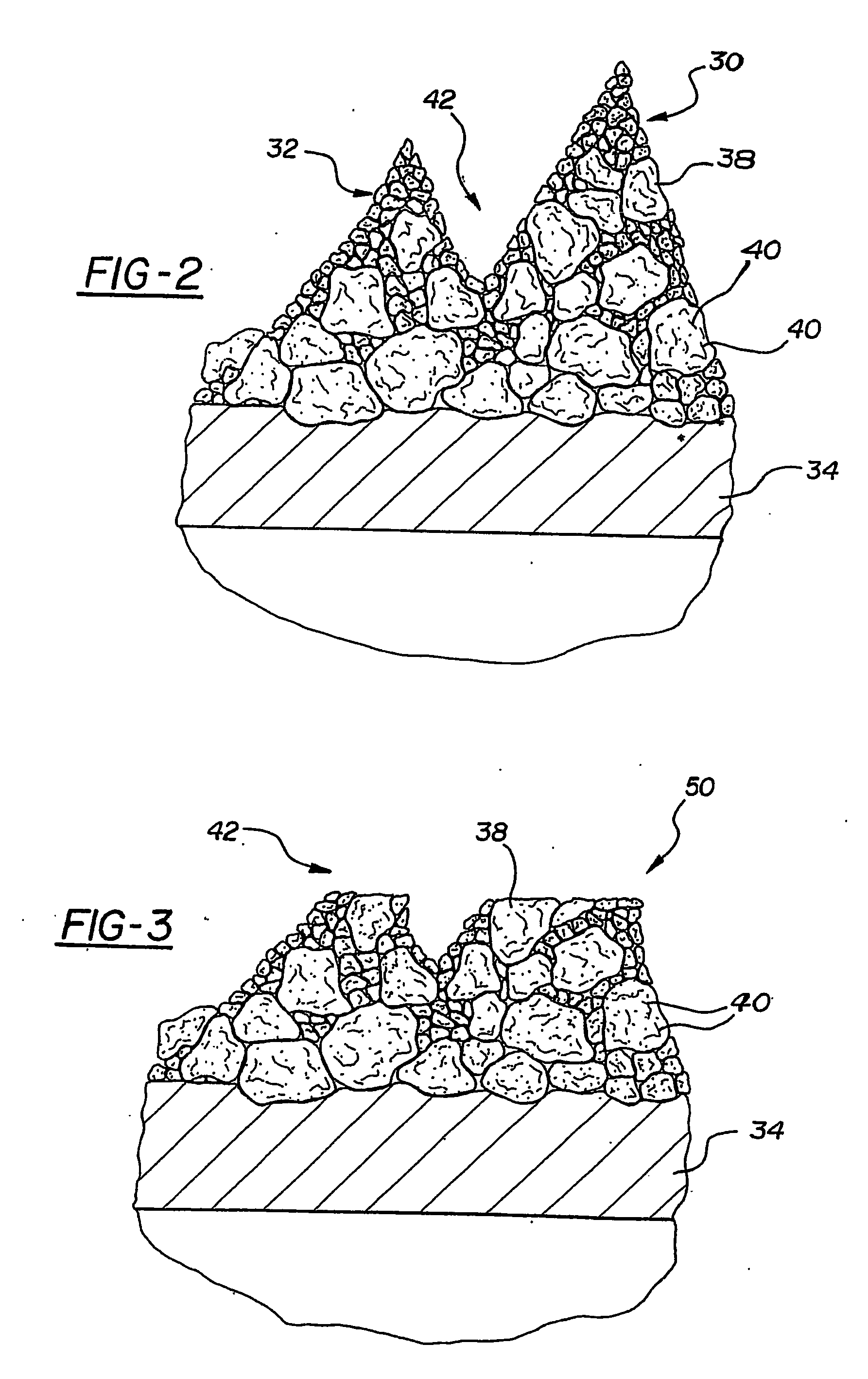
[0023] The abradable powder coatings in the present invention use compositional and structural mechanisms to achieve quick break-in and long-term durability, especially in oiled applications. The roughness and
porosity of the coating surface provides an easy run-in at
high stress areas. Once the
interference fit is worn away, the contact stress drops and allows
long term durability with an improved fit. The remaining crevices and fissures in the pores of the coating surface hold oil and help maintain a hydrodynamic film. If persistent oil starvation occurs, the material may wear, releasing
solid lubricant into the interface. These
lubrication mechanisms enable designs to benefit from tighter piston-to-bore clearances while preventing scuffing and other destructive
modes.
[0024] Abradable powder coatings can be achieved with formulations comprising 5 to 45
volume percent fillers, which substantially do not melt at the cure temperature of the resin binder
system, thereby being able to achieve cross-linking of the resin while maintaining the integrity of the filler. The resin binder
system makes up the remaining 55 to 95 volume percent of the
solid portion of the coating.
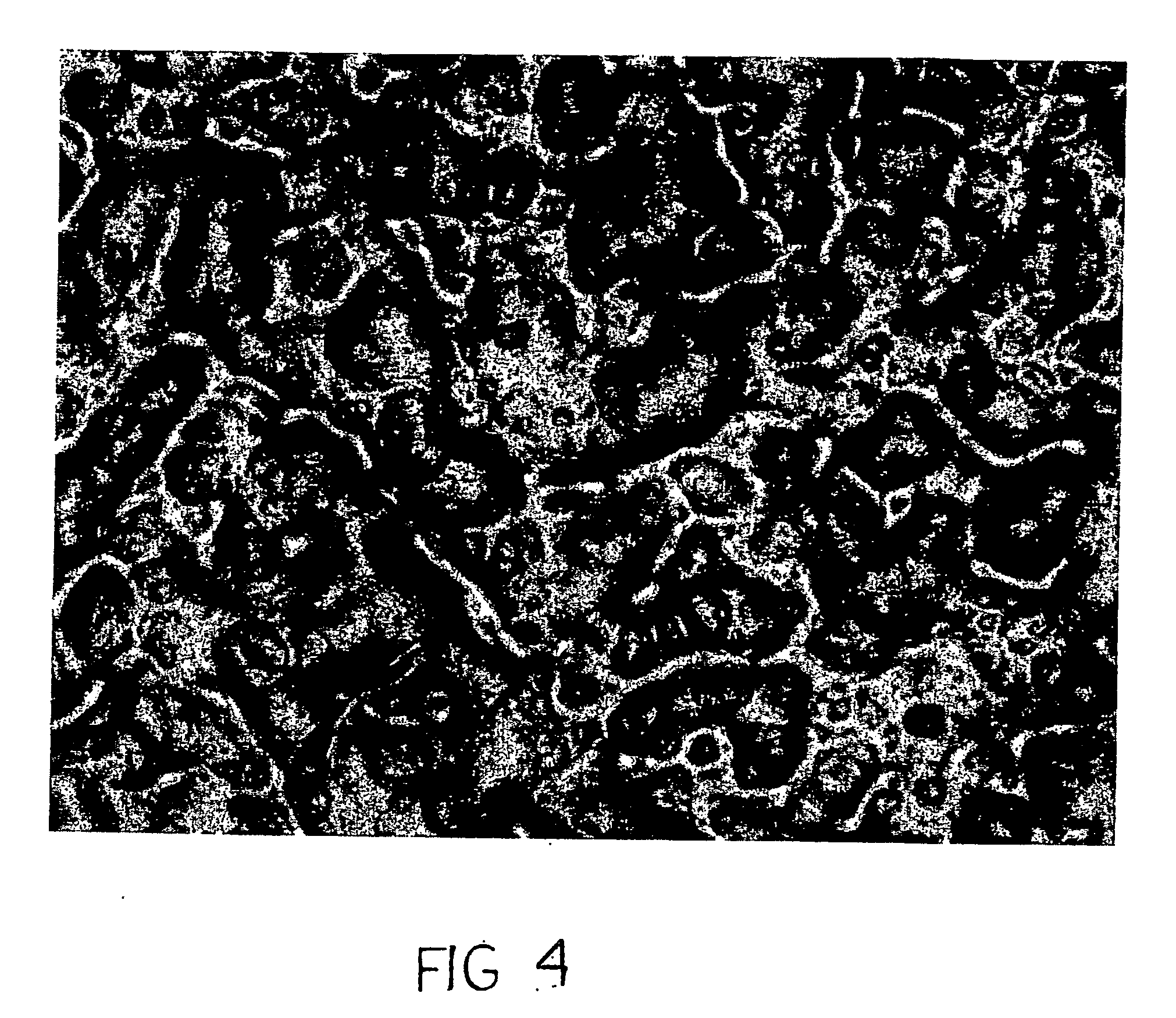
Porosity content plays an important role in achieving the desired coating structure and performance, as the oil of the engine is caught in, and rides in, the
ligament walls of the pores that are not abraded away, as it actually provides a ready supply of
lubricant oil film at the piston-bore surface.
[0025] The resin
system of abradable composite
powder coating materials can include other additives which add
lubricity to the coating, and / or affect the final structure of the cured coating. Some categories of additives are classified as lubricants, waxes, film-formers, plasticizers and foaming agents. These additives can be used individually or in combination to create a wide variety of effects.
[0027] When one of two
mating surfaces has the abradable coating thereon, such as a piston in an
internal combustion engine, the coating on the piston will wear to fit the bore during initial
cycling up and down. The presence of the coating provides benefits in
engine power through efficiency and piston / bore durability through reduced scuffing potential, among other benefits. An abradable powder coating could also be applied to the ring lands and / or the piston rings to help seal the ring to the piston and allow free motion of the
piston ring in the ring groove so that good contact is maintained between ring and bore.
Coating the ring outer
diameter could also help with engine or compressor break-in and performance.
[0029] Yet another aspect of the present invention is the practice of a method for coating a piston assembly component, such as a piston,
piston ring, land or cylinder bore, either totally or intermittently, with an abradable coating made in accordance with the present invention by applying the dry composite filler-containing powder coating composition onto the piston assembly component and curing the dry powder composition.
Electrostatic coating is the preferred application method. Although any suitable method for applying dry powder coating composition to a substrate may be utilized, the least waste is experienced when utilizing the electrostatic dry powder coating method. The present invention also includes a process and tooling for washing, masking, and coating piston assembly components, either in their entirety or on portions only, such as pistons, piston rings, and lands, which virtually eliminates waste during application and allows cost effective
automation of high quality
electrostatic coating processes.


 Login to View More