the structure of the environmentally friendly knitted fabric provided by the present invention; figure 2 Flow chart of the yarn wrapping machine for environmentally friendly knitted fabrics and storage devices; image 3 Is the parameter map of the yarn covering machine
View more
Image
Smart Image Click on the blue labels to locate them in the text.
Viewing Examples
Smart Image
Click on the blue label to locate the original text in one second.
Reading with bidirectional positioning of images and text.
Smart Image
Examples
Experimental program
Comparison scheme
Effect test
example 1
[0043]A genome-wide view of ET signaling was assessed using gene expression microarrays.
[0045]Mouse MC3T3 pre-osteoblastic cells (subclone 4) were purchased from ATCC (Manassis, Va.) and propagated in αMEM media without ascorbic acid (Invitrogen, Carlsbad, Calif.) supplemented with 10% FBS (Invitrogen). Human Mesenchymal Stem Cells (MSCs) were purchased from Cambrex (Walkersville, Md.) and propagated according in MSCGM™ media (Cambrex). To initiate differentiation of the MSC into human osteoblasts, the growth media was replaced by osteogenic differentiation medium (OGM, Cambrex).
[0047]Mouse preosteoblastic MC3T3 cells as well as primary human osteoblasts were treated with ET, from Sigma (St. Louis, Mo.), for 2, 4, and 6 hours in the absence or presence of the ETa receptor antagonist ABT-627, from Abbott Laboratories (Abbott Park, Ill.). The drug was added 1 hour prior to the addition of ET.
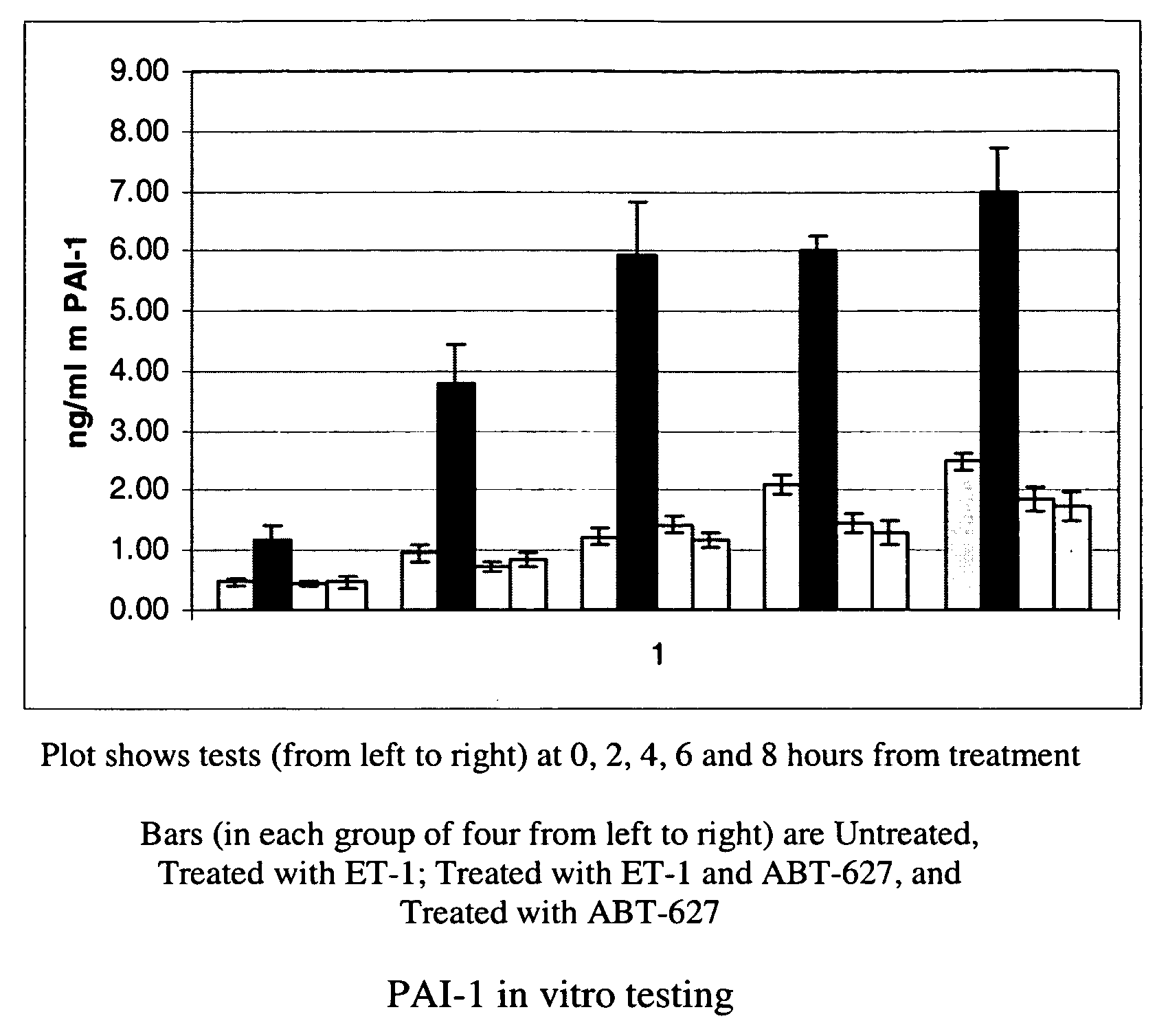
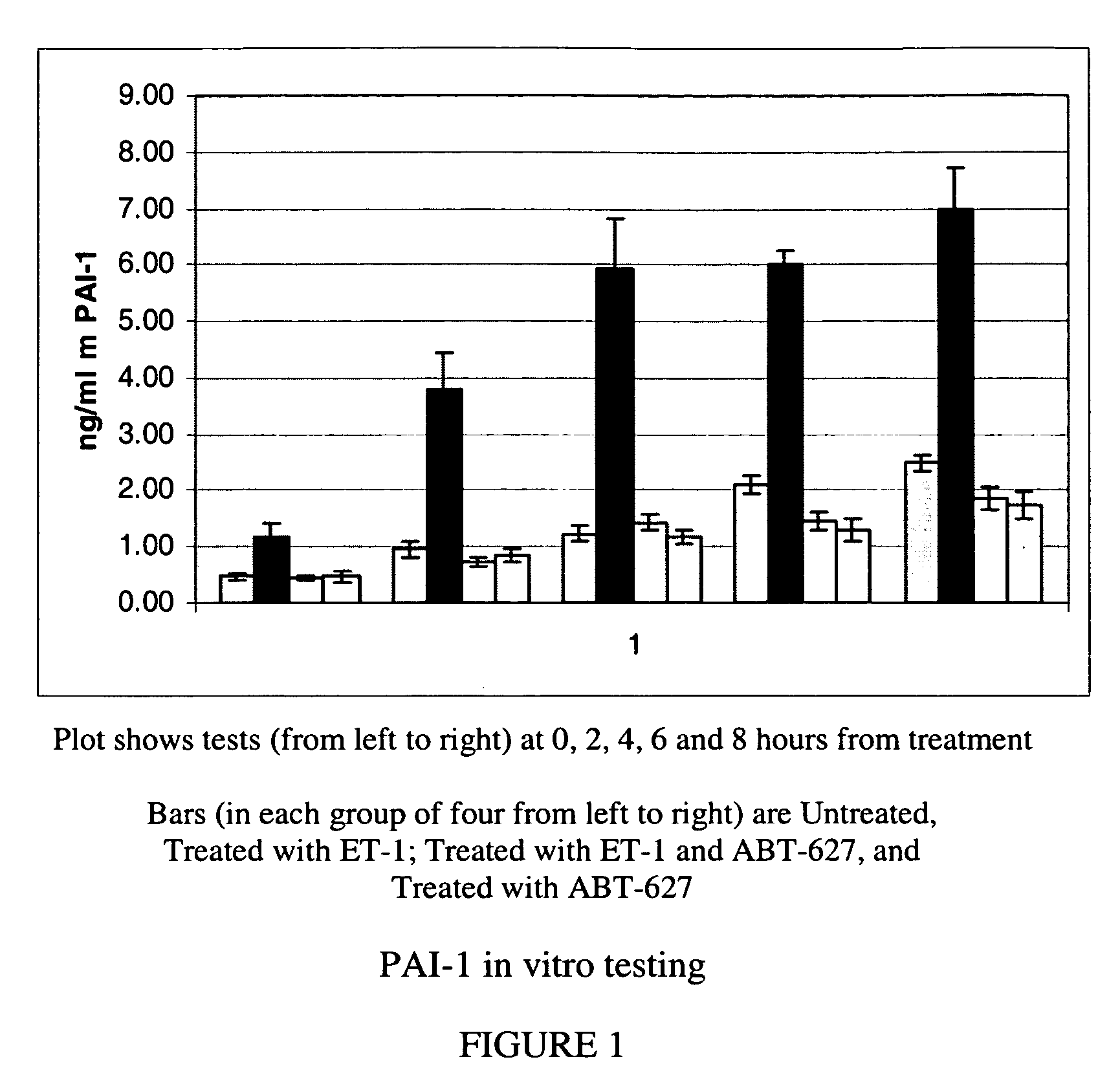
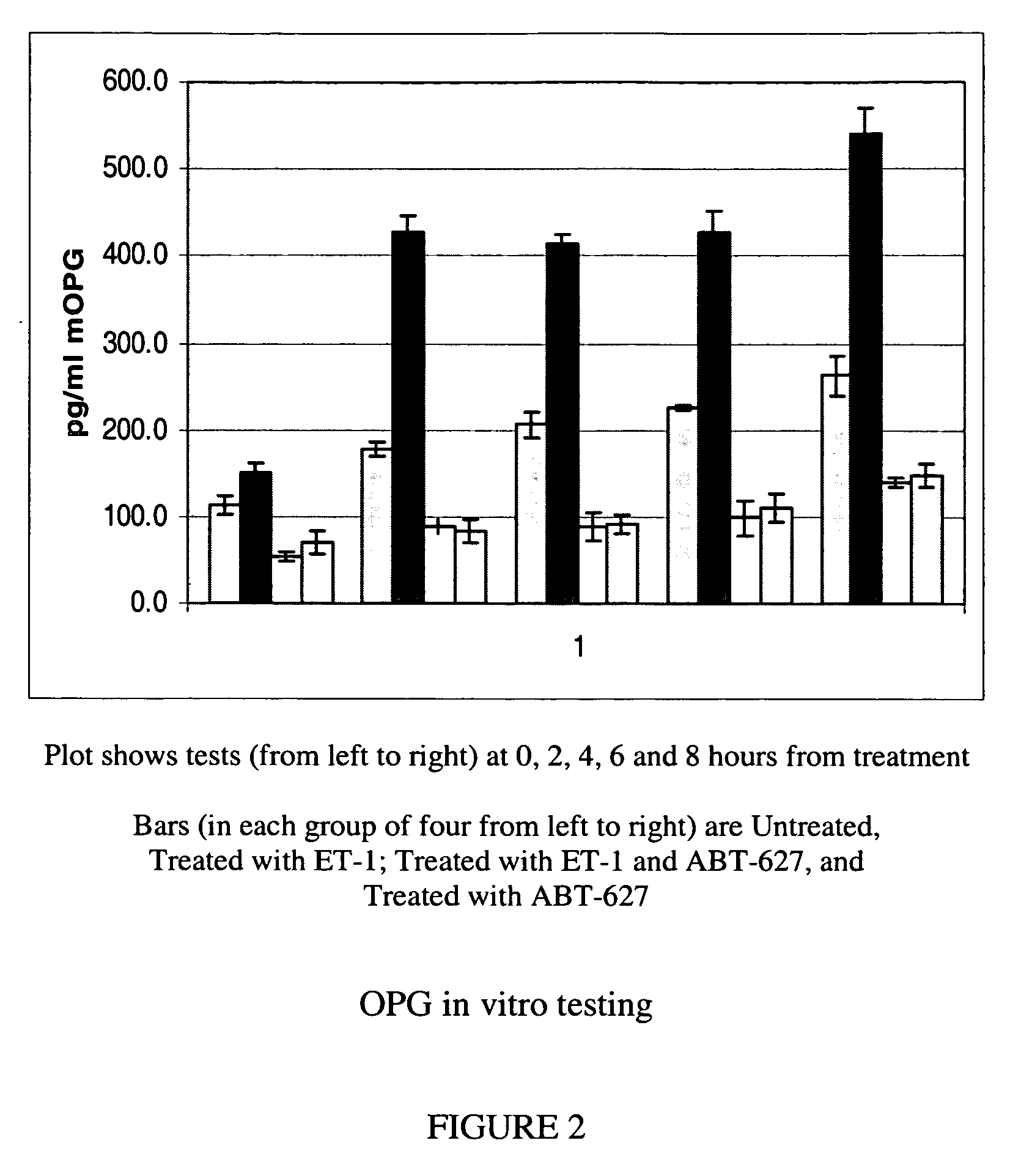
[0052]Several of the genes identified in Example 1 as strongly upregulated by ET-1 in both mouse and human osteoblasts code for secreted proteins. Specifically, two members of the plasminogen system (PAI-1 and uPA), TGFbeta2, and two interleukins (IL-6, and IL-8) were induced. In this Example 2, ELISA-based assays were used to demonstrate secretion by osteoblasts of PAI-1, OPG and IL-6.
[0053]Mouse MC3T3 osteoblast cells were propagated as set out above, and at times indicated were harvested and spun at 250×g for 10 minutes at room temperature. The clarified supernatants were aliquoted and frozen until analyzed. 200 microliters of each sample was tested in quadruplicate by commercially available ELISA assay kits for PAI-1 (Molecular Innovations, Southfield, Mich.), OPG (Biomedica, San Diego, Calif.) and IL-6 (Ray Biotech, Norcross, Ga.). The ELISA tests were performed according to the manufacturer's instructions. Data from these tests are shown in FIG. 1 (PAI-1), FIG. 2 (OPG) and FIG...
the structure of the environmentally friendly knitted fabric provided by the present invention; figure 2 Flow chart of the yarn wrapping machine for environmentally friendly knitted fabrics and storage devices; image 3 Is the parameter map of the yarn covering machine
FIELD OF THE INVENTION[0001]This invention relates to diagnostic assays useful with endothelin receptorantagonist therapy, and in particular relates to measurement of certain biomarkers that allow identification of patients eligible to receive endothelin receptorantagonist therapy and that permit monitoring of patient response to such therapy.BACKGROUND OF THE INVENTION[0002]Endothelin (ET-1) is a 21 amino acidpeptide that is produced by endothelial cells. ET is produced by enzymatic cleavage of a Trp-Val bond in the precursor peptide big endothelin (Big ET-1). This cleavage is caused by an endothelin converting enzyme (ECE). Endothelin has been shown to constrict arteries and veins, increase mean arterial blood pressure, decrease cardiac output, increase cardiac contractilityin vitro, stimulate mitogenesis in vascular smooth muscle cells in vitro, contract non-vascular smooth muscle including guinea pig trachea, human urinary bladder strips and rat uterusin vitro, increase air...
Claims
the structure of the environmentally friendly knitted fabric provided by the present invention; figure 2 Flow chart of the yarn wrapping machine for environmentally friendly knitted fabrics and storage devices; image 3 Is the parameter map of the yarn covering machine
Login to View More
Application Information
Patent Timeline
Application Date:The date an application was filed.
Publication Date:The date a patent or application was officially published.
First Publication Date:The earliest publication date of a patent with the same application number.
Issue Date:Publication date of the patent grant document.
PCT Entry Date:The Entry date of PCT National Phase.
Estimated Expiry Date:The statutory expiry date of a patent right according to the Patent Law, and it is the longest term of protection that the patent right can achieve without the termination of the patent right due to other reasons(Term extension factor has been taken into account ).
Invalid Date:Actual expiry date is based on effective date or publication date of legal transaction data of invalid patent.



 Login to View More