
Method for producing silicon-containing complex oxide sol, method for producing silicon-containing hologram recording material, and hologram recording medium
a technology of complex oxide sol and hologram recording medium, which is applied in the direction of instruments, photomechanical treatment, optics, etc., can solve the problems of deteriorating separability between adjacent diffraction peaks, and achieve the effect of reducing coloration and light scattering, and slight absorption of light having a wavelength in the blue region
- Summary
- Abstract
- Description
- Claims
- Application Information
AI Technical Summary
Benefits of technology
Problems solved by technology
Method used
Image

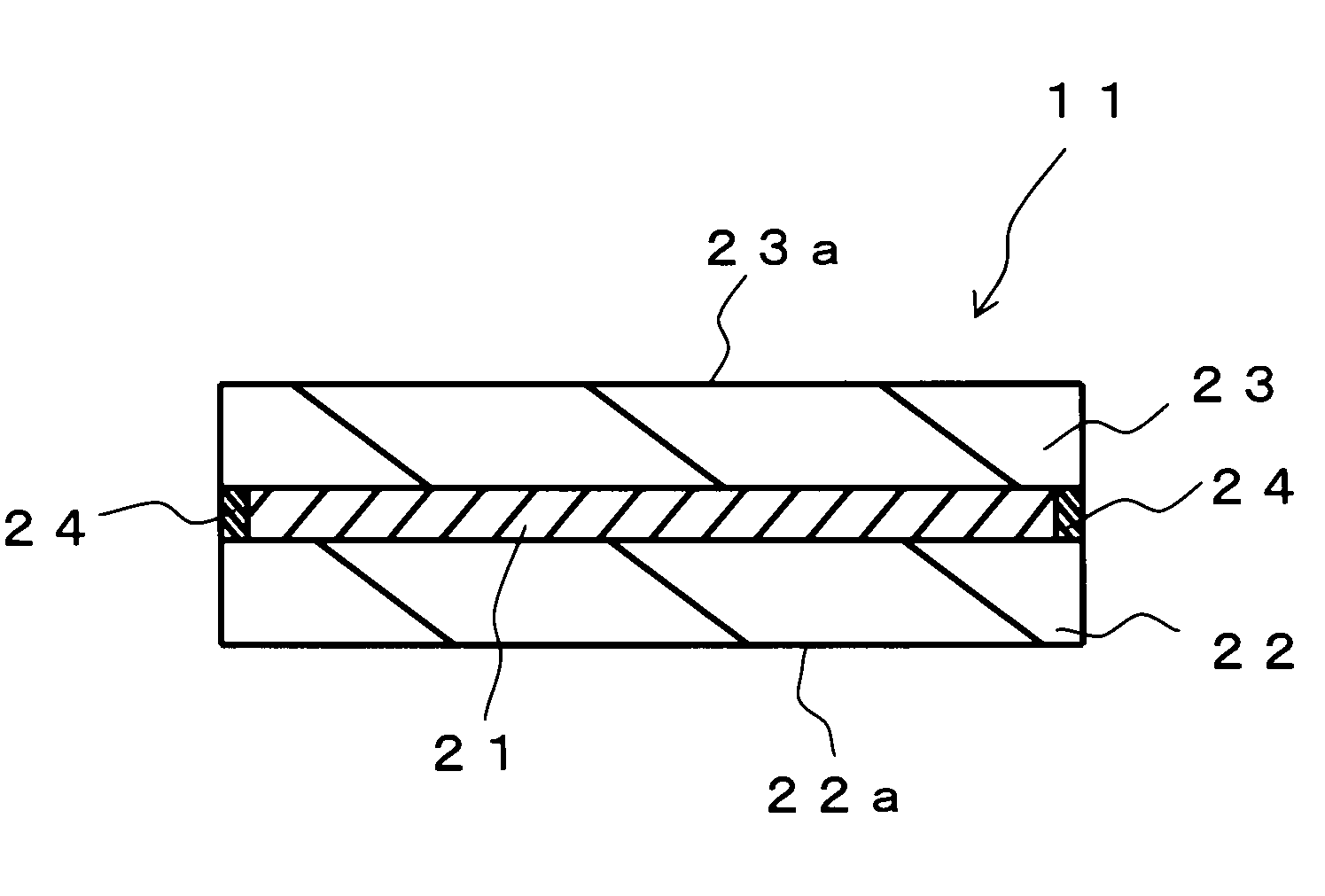
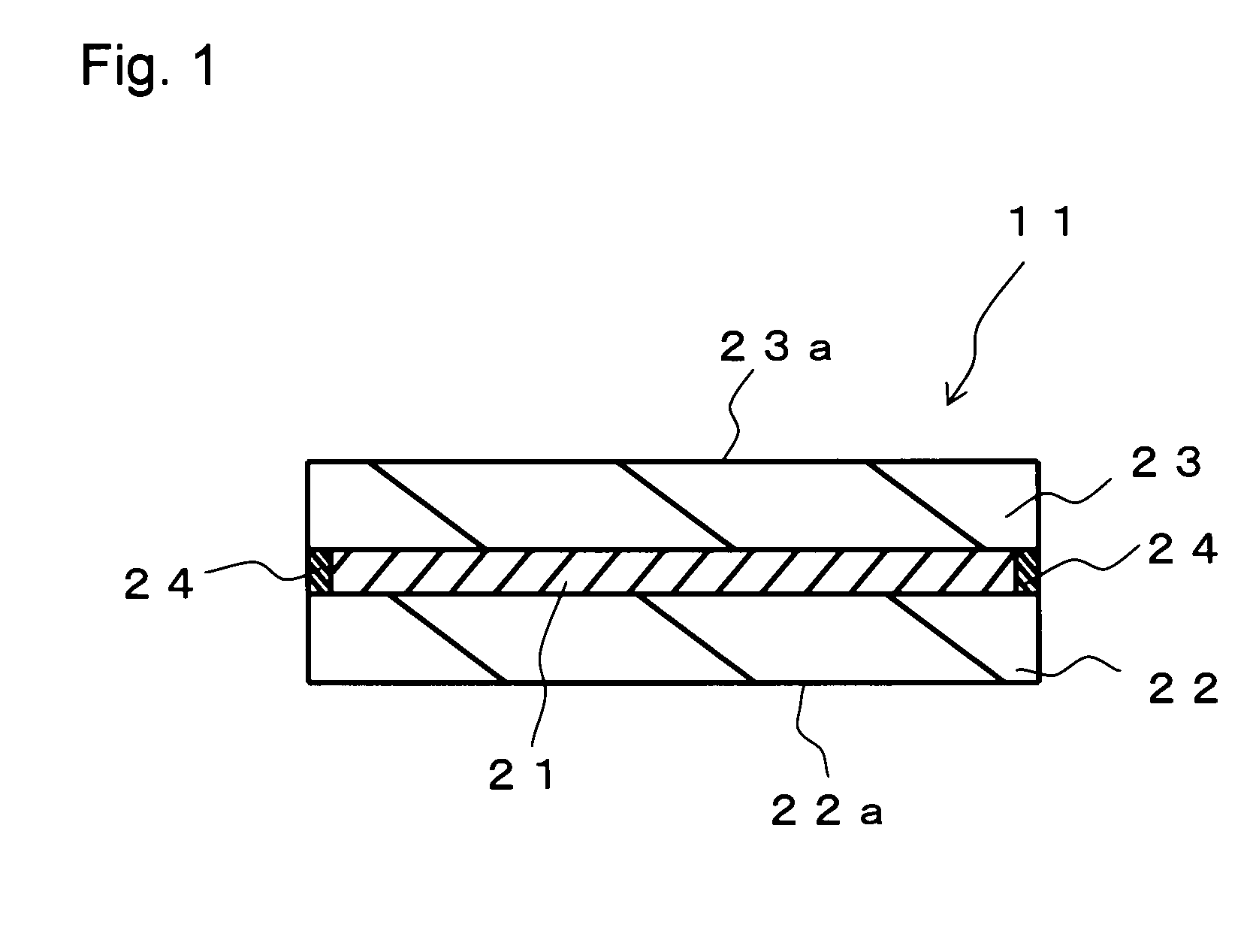
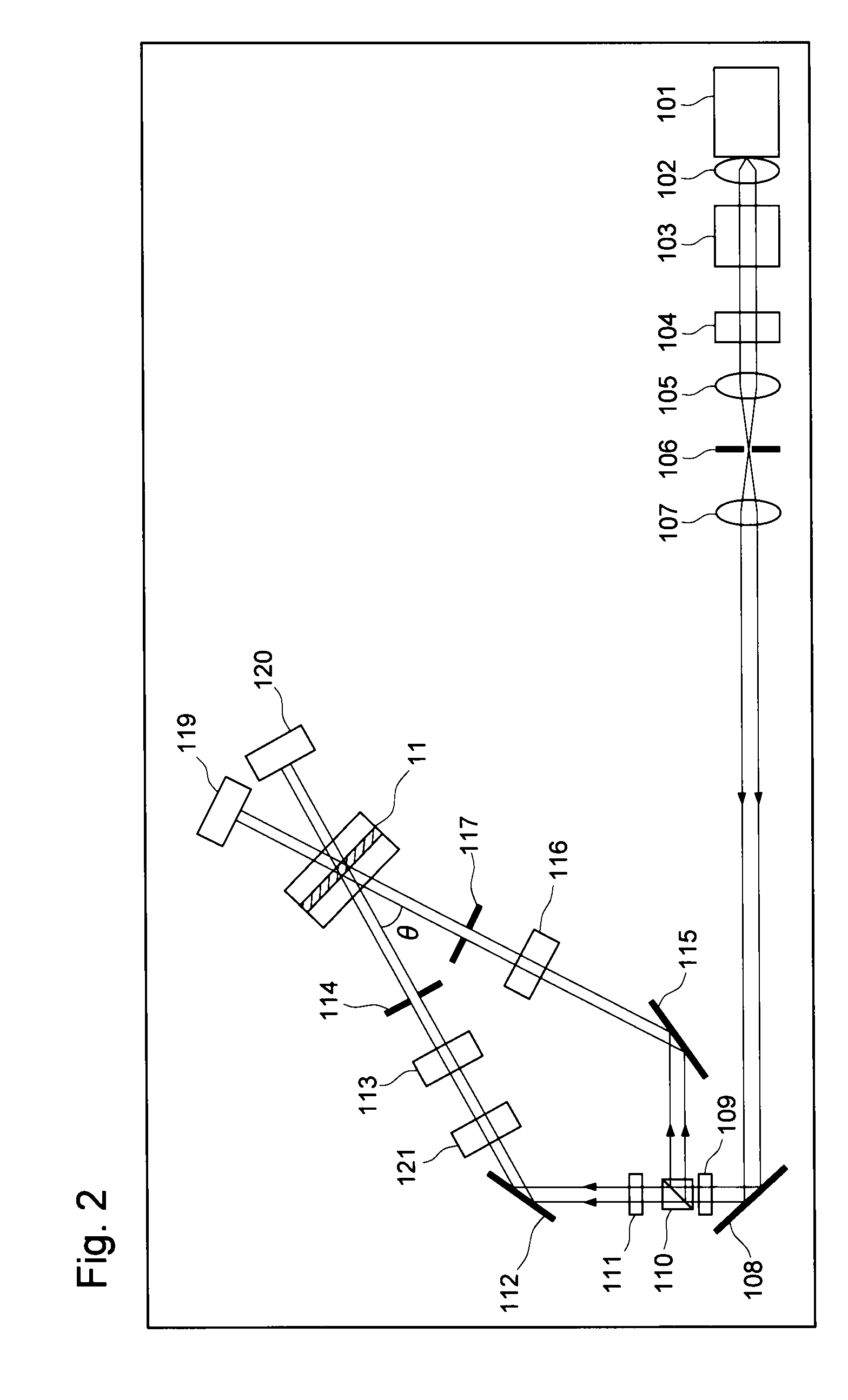
Examples
example 1
Preparation of Complex Oxide Sol
[0127]In 6 mL of 1-methoxy-2-propanol solvent, 5.815 g of titanium tetraisopropoxide (Ti(OiPr)4, manufactured by AZmax Co., Ltd.) and 4.32 g of diphenyldisilanol (Ph2Si(OH)2, manufactured by Shin-Etsu Chemical Co., Ltd.) were mixed at room temperature. Then, the mixture was stirred at 80° C. for 1 hour to give a mixed liquid. Ti / Si=1 / 1 (molar ratio). The mixed liquid was cooled to room temperature.
[0128]To the mixed liquid, 0.74 mL of water and 1.5 mL of 1-methoxy-2-propanol were added with stirring at room temperature and continued to be stirred for 3 hours, thereby being subjected to a hydrolysis reaction and a condensation reaction. Thus, a sol solution was obtained.
[0129]About the resultant sol solution, a particle diameter was measured by a dynamic light scattering method. As a result, the mode value in the particle size distribution was about 4 nm. The measurement was made with a device (trade name: ZETASIZER Nano-ZS) manufactured by Sysmex.
example 2
Production of Hologram Recording Medium
(Synthesis of Matrix Material)
[0133]In 6 mL of methoxypropanol solvent, 5.815 g of titanium tetraisopropoxide (Ti(OiPr)4, manufactured by AZmax Co., Ltd.) and 4.32 g of diphenyldisilanol (Ph2Si(OH)2, manufactured by Shin-Etsu Chemical Co., Ltd.) were mixed at room temperature. Then, the mixture was stirred at 80° C. for 1 hour to give a mixed liquid. Ti / Si=1 / 1 (molar ratio). The mixed liquid was cooled to room temperature.
[0134]To the mixed liquid, 0.74 mL of water and 1.5 mL of 1-methoxy-2-propanol were added with stirring at room temperature and continued to be stirred for 1 hour, thereby being subjected to a hydrolysis reaction and a condensation reaction. Thus, a sol solution was obtained.
(Photopolymerizable Compound)
[0135]To 100 parts by weight of polyethylene glycol monoacrylate (130A, manufactured by KYOEISHA CHEMICAL Co., LTD) as a photopolymerizable compound were added 3 parts by weight of a photopolymerization initiator (IRG-907, manu...
example 3
Production of Hologram Recording Medium
[0149](Synthesis of matrix material) In 1 mL of n-butanol solvent, 3.65 g of titanium tetra-n-butoxide (Ti (OBu)4, manufactured by Kojundo Chemical Laboratory Co., Ltd.) and 2.52 g of 2-methylpentane-2,4-diol (manufactured by Tokyo Chemical Industry Co., Ltd.) were mixed at room temperature and stirred for 10 minutes. Ti(OBu)4 / 2-methylpentane-2,4-diol=1 / 2 (molar ratio). 1.16 g of diphenyldisilanol (Ph2Si(OH)2, manufactured by Shin-Etsu Chemical Co., Ltd.) was mixed to this reaction liquid at room temperature and then stirred at 80° C. for 1 hour to give a mixed liquid. Ti / Si=2 / 1 (molar ratio). The mixed liquid was cooled to room temperature.
[0150]To the mixed liquid, 0.15 mL of water and 1 mL of ethanol were added with stirring at room temperature and continued to be stirred for 1 hour, thereby being subjected to a hydrolysis reaction and a condensation reaction. Thus, a sol solution was obtained.
[0151]In the same manner as in Example 2, the re...
PUM
 Login to View More
 Abstract
Description
Claims
Application Information
 Login to View More