
Preparation of Specimen Arrays on an EM Grid
a specimen array and em grid technology, applied in the direction of material analysis using wave/particle radiation, material analysis by optical means, instruments, etc., can solve the problems of large number of grid trials, large volume of often very precious sample material, cumbersome procedures, etc., and achieve high throughput screening
- Summary
- Abstract
- Description
- Claims
- Application Information
AI Technical Summary
Benefits of technology
Problems solved by technology
Method used
Image

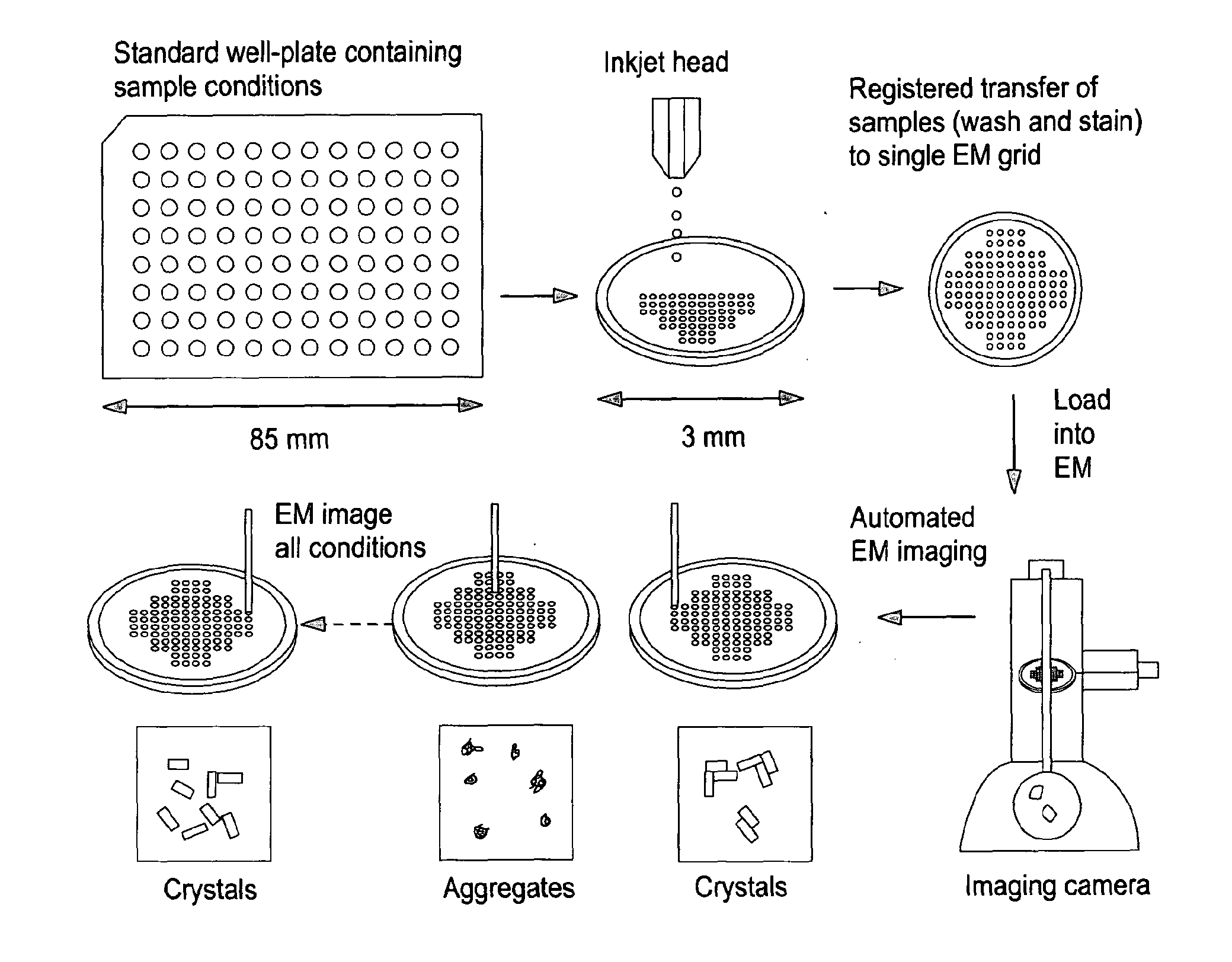
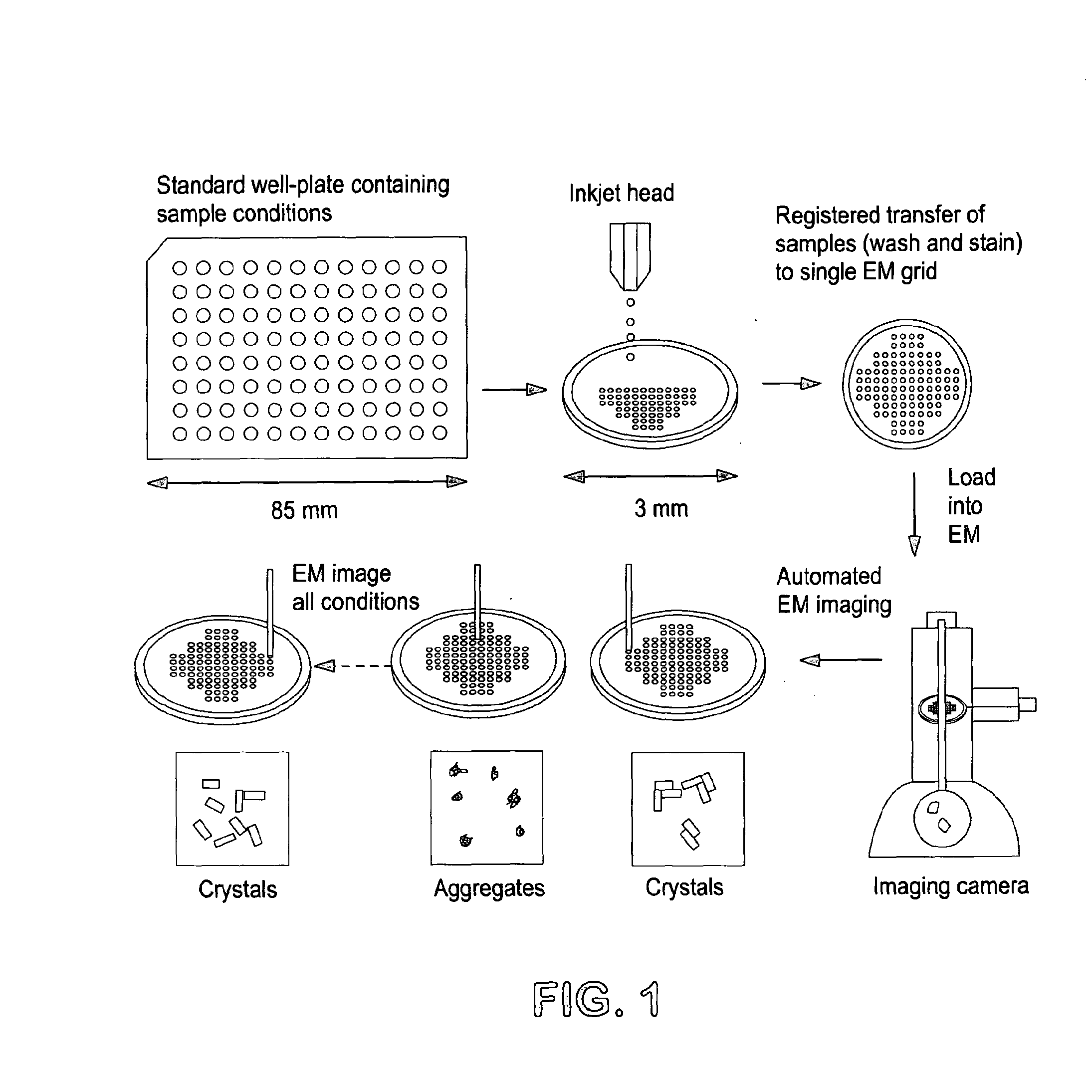
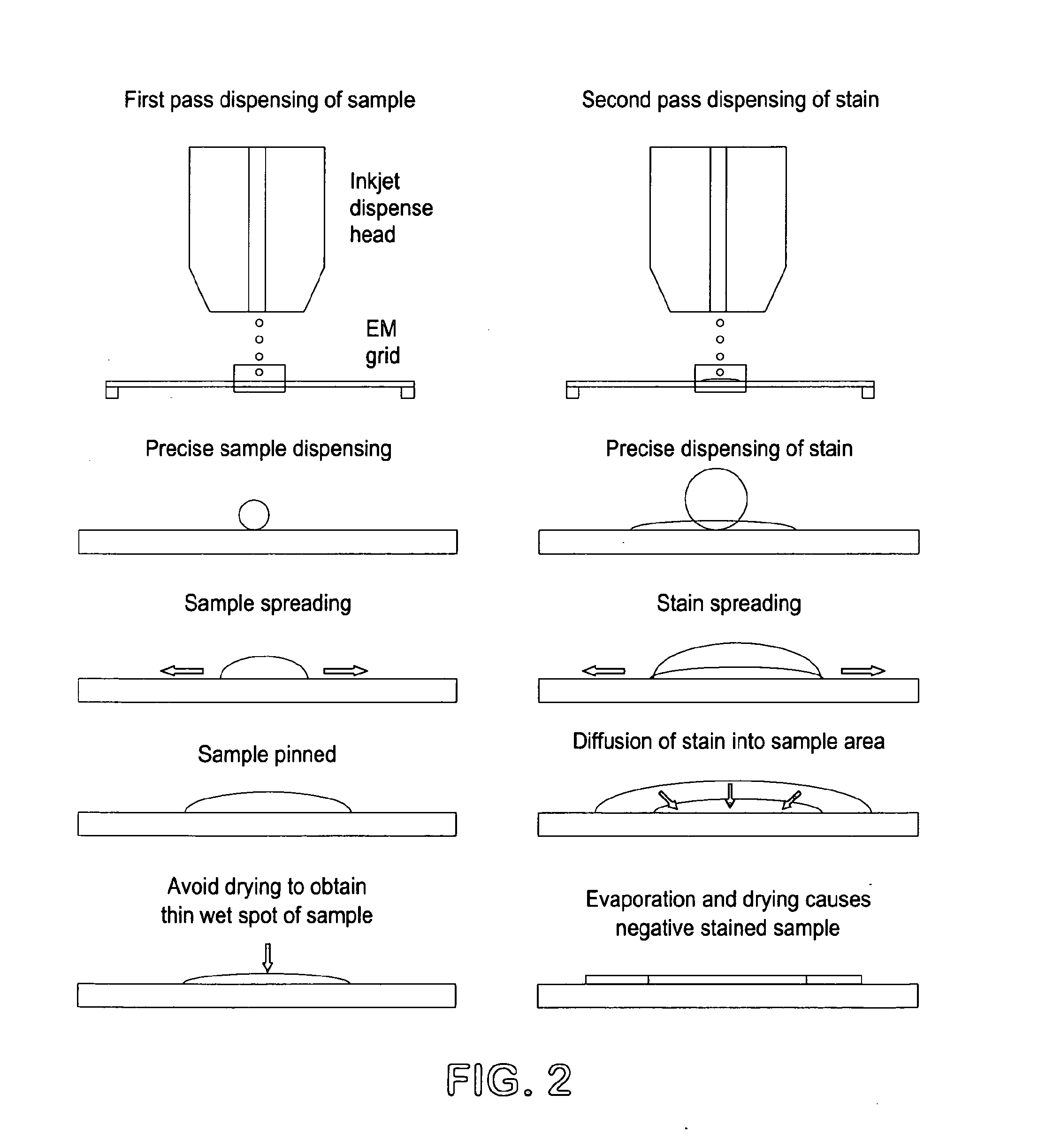
Examples
Embodiment Construction
[0024]Molecular microscopy is a non-invasive molecular imaging technology that uses advanced specimen preparation and imaging methods designed specifically to visualize complex biological samples, under conditions close to their native state. For well-ordered samples such as viruses, and virus-antibody complexes, the achievable resolution can be <0.4 nm. High-throughput molecular microscopy combines robotic instruments, automated data collection and processing software, and a relational database into a pipeline to prepare, image, and analyze samples in a reproducible manner and with throughputs capable of addressing biopharmaceutical characterization needs in a statistically significant manner. Samples are preserved in solution by vitrification (using an automated cryogenic robot) or by negative stain, and then imaged using a transmission electron microscope (TEM) controlled by automated software that enables sampling of a significant portion of the specimen. Data is analyzed and st...
PUM
| Property | Measurement | Unit |
|---|---|---|
| area | aaaaa | aaaaa |
| diameter | aaaaa | aaaaa |
| diameter | aaaaa | aaaaa |
Abstract
Description
Claims
Application Information
 Login to View More