The
nucleic acid sequences encoding CJPDZ may be extended utilizing a partial
nucleotide sequence and employing various PCR-based methods known in the art to detect upstream sequences, such as promoters and regulatory elements. For example, one method which may be employed, restriction-site PCR, uses universal and nested primers to amplify unknown sequence from
genomic DNA within a
cloning vector. (See, e.g., Sarkar, G. (1993) PCR Methods Applic. 2:318-322.) Another method, inverse PCR, uses primers that extend in divergent directions to amplify unknown sequence from a circularized template. The template is derived from restriction fragments comprising a known genomic locus and surrounding sequences. (See, e.g., Triglia, T. et al. (1988) Nucleic Acids Res. 16:8186.) A third method, capture PCR, involves PCR amplification of
DNA fragments adjacent to known sequences in human and
yeast artificial
chromosome DNA. (See, e.g., Lagerstrom, M. et al. (1991) PCR Methods Applic. 1:111-119.) In this method, multiple
restriction enzyme digestions and ligations may be used to insert an engineered double-stranded sequence into a region of unknown sequence before performing PCR. Other methods which may be used to retrieve unknown sequences are known in the art. (See, e.g., Parker, J. D. et al. (1991) Nucleic Acids Res. 19:3055-306). Additionally, one may use PCR, nested primers, and PROMOTERFINDER libraries (Clontech, Palo Alto Calif.) to walk
genomic DNA. This procedure avoids the need to screen libraries and is useful in finding
intron /
exon junctions. For all PCR-based methods, primers may be designed using commercially available
software, such as OLIGO 4.06 Primer
Analysis software (National Biosciences, Plymouth Minn.) or another appropriate program, to be about 22 to 30 nucleotides in length, to have a
GC content of about 50% or more, and to anneal to the template at temperatures of about 68.degree. C. to 72.degree. C.
The full length
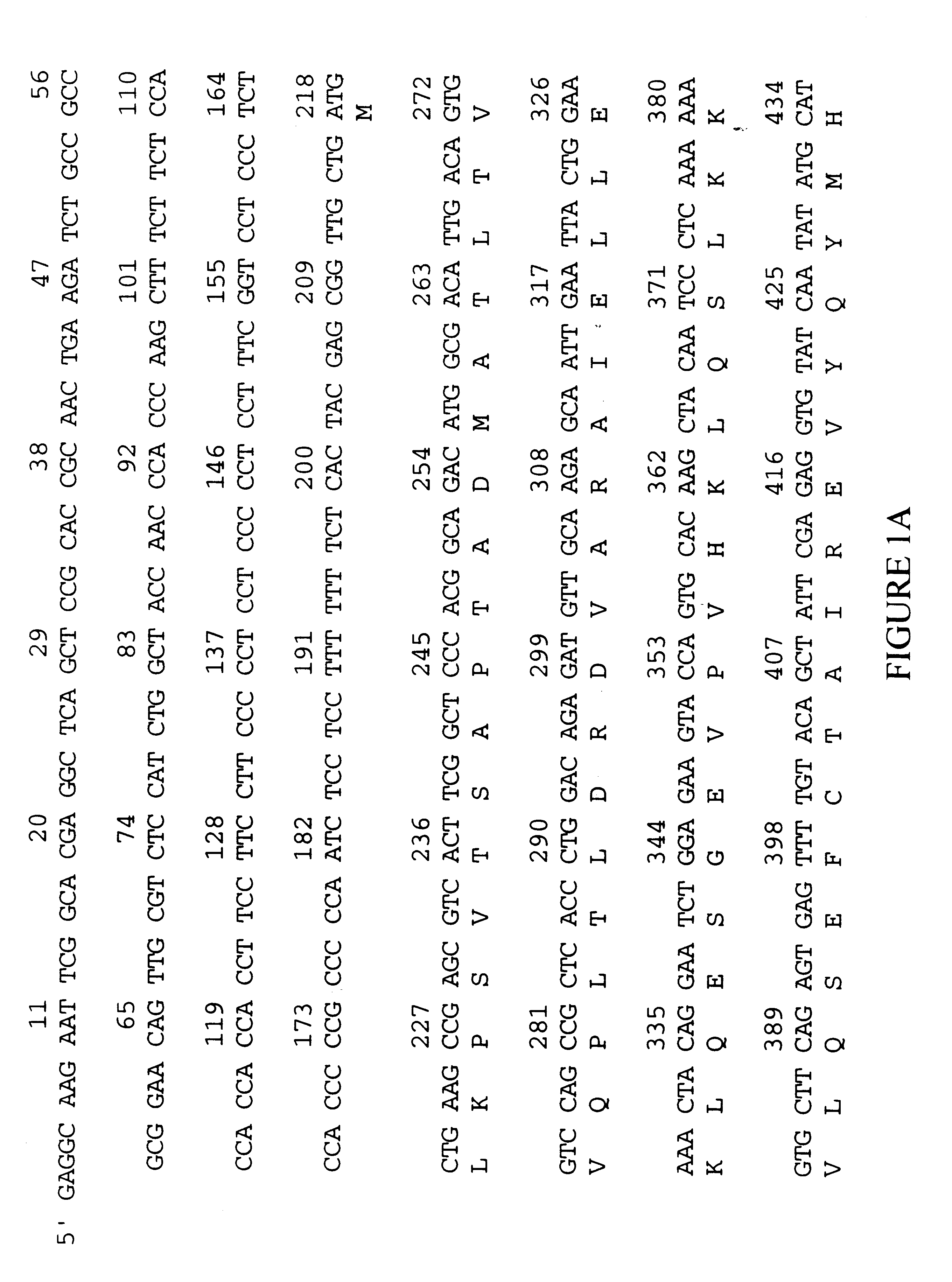
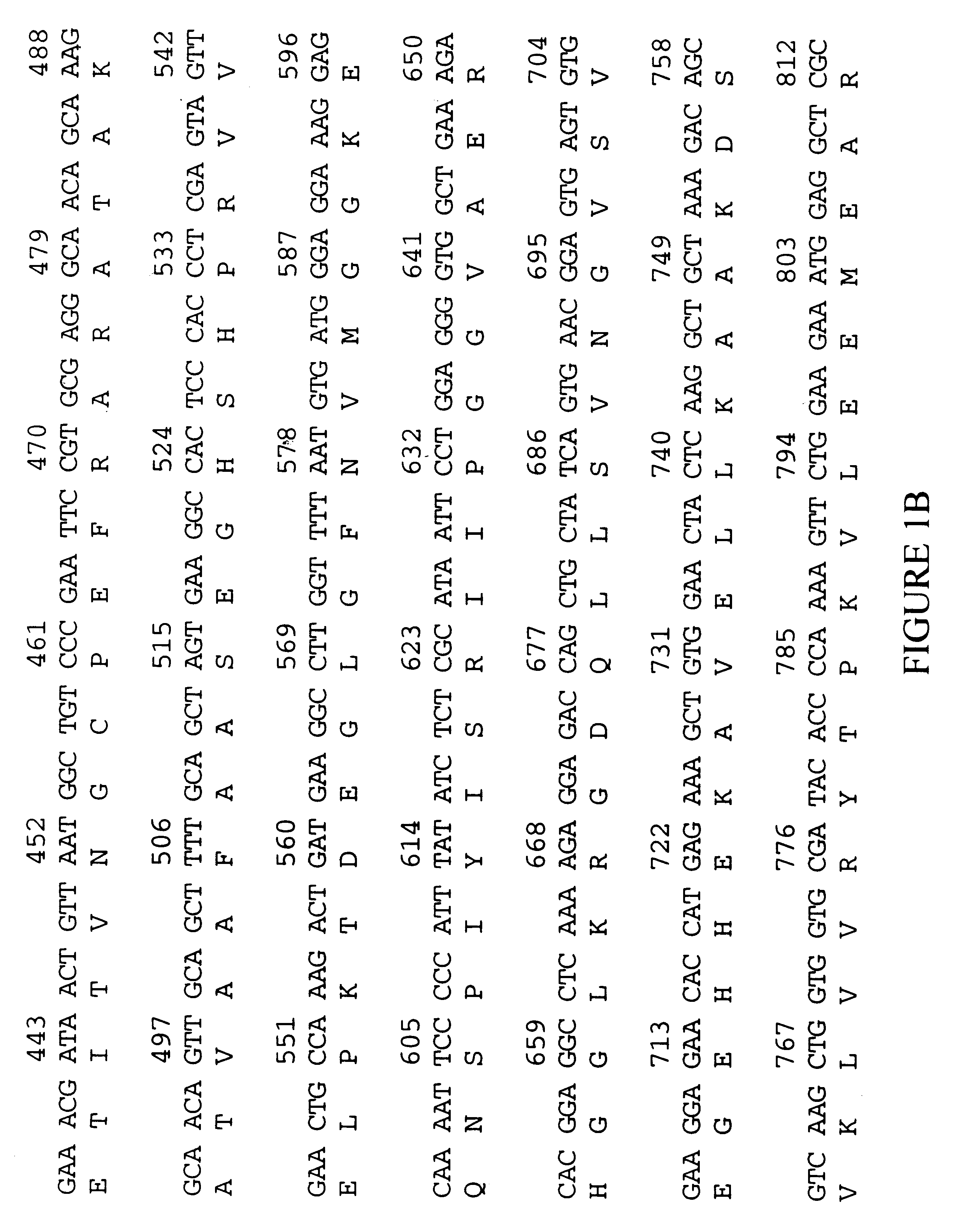
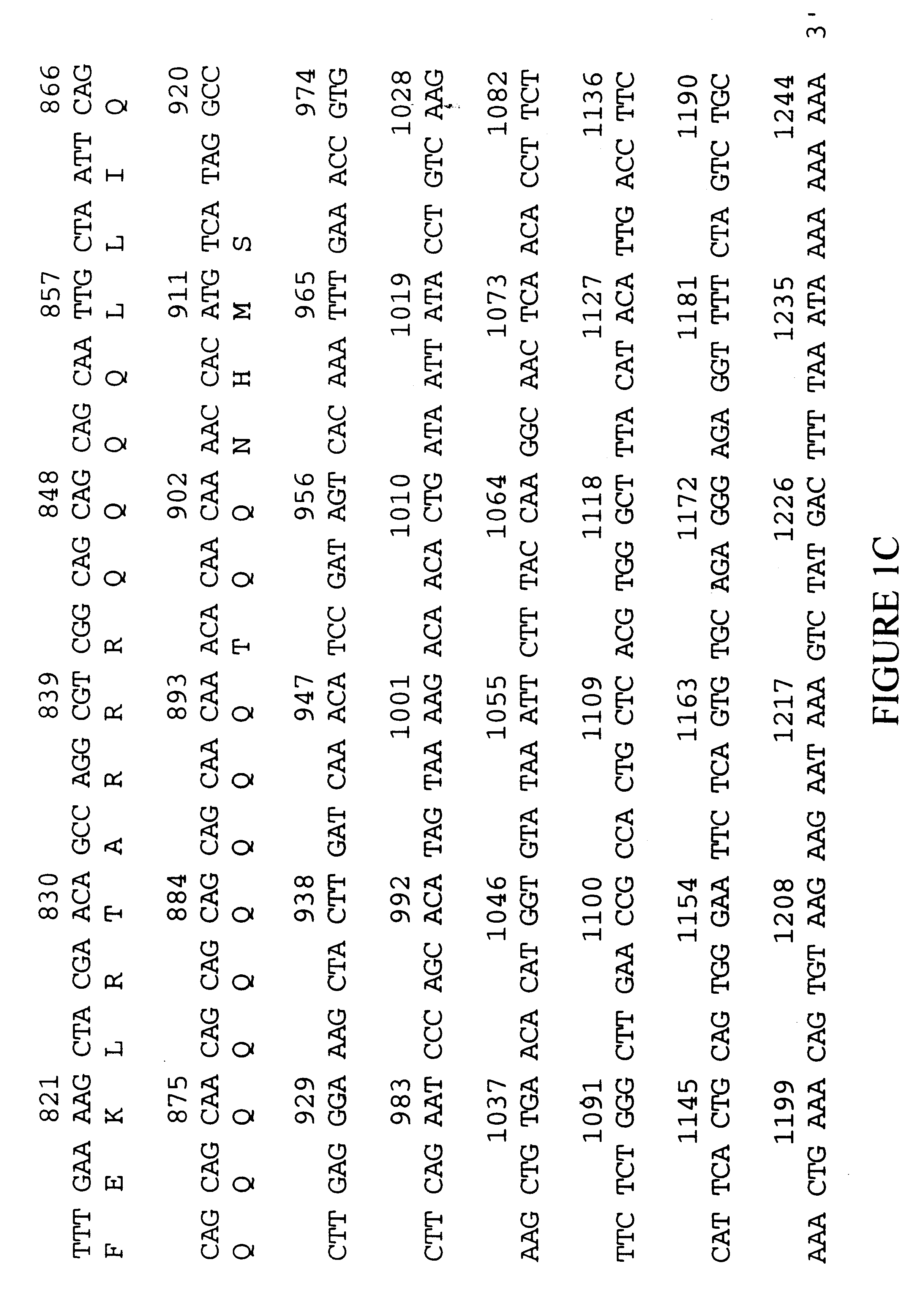
nucleic acid sequence of SEQ ID NO:2 was produced by extension of an appropriate fragment of the full length molecule using
oligonucleotide primers designed from this fragment. One primer was synthesized to initiate 5' extension of the known fragment, and the other primer, to initiate 3' extension of the known fragment. The initial primers were designed using OLIGO 4.06
software (National Biosciences), or another appropriate program, to be about 22 to 30 nucleotides in length, to have a
GC content of about 50% or more, and to anneal to the target sequence at temperatures of about 68.degree. C. to about 72.degree. C. Any stretch of nucleotides which would result in hairpin structures and primer-primer dimerizations was avoided.



 Login to View More
  Login to View More