[0007]This invention relates to the development of devices that permit the application of micro-mechanical forces (MicMFs) to promote tissue growth and wound healing in mammals. The same technology may be used to promote the growth and development of artificial tissues or
tissue explants in vitro. Given an aging
population and the increasing
prevalence of diabetes (a major cause of chronic wounds) this invention will find broad usage in health care for wound repair,
tissue reconstruction, and potentially organ replacement. Accelerating wound healing reduces complications including infection, limb loss and pain. Secondary economic gains will result from reduced hospital stays, wound treatments, and
medical care for chronically ill patients.
[0009]This disclosure will focus on the development of methods to locally concentrate and focus these mechanical forces on the micron to
millimeter scale. The use of MicMFs will not only more efficiently deform cells and alter
cell behaviors, such as growth, that are necessary for optimal tissue growth and repair, but also do so without altering the macroscopic
anatomy of the wound. Analysis of how forces are distributed within tissues using finite
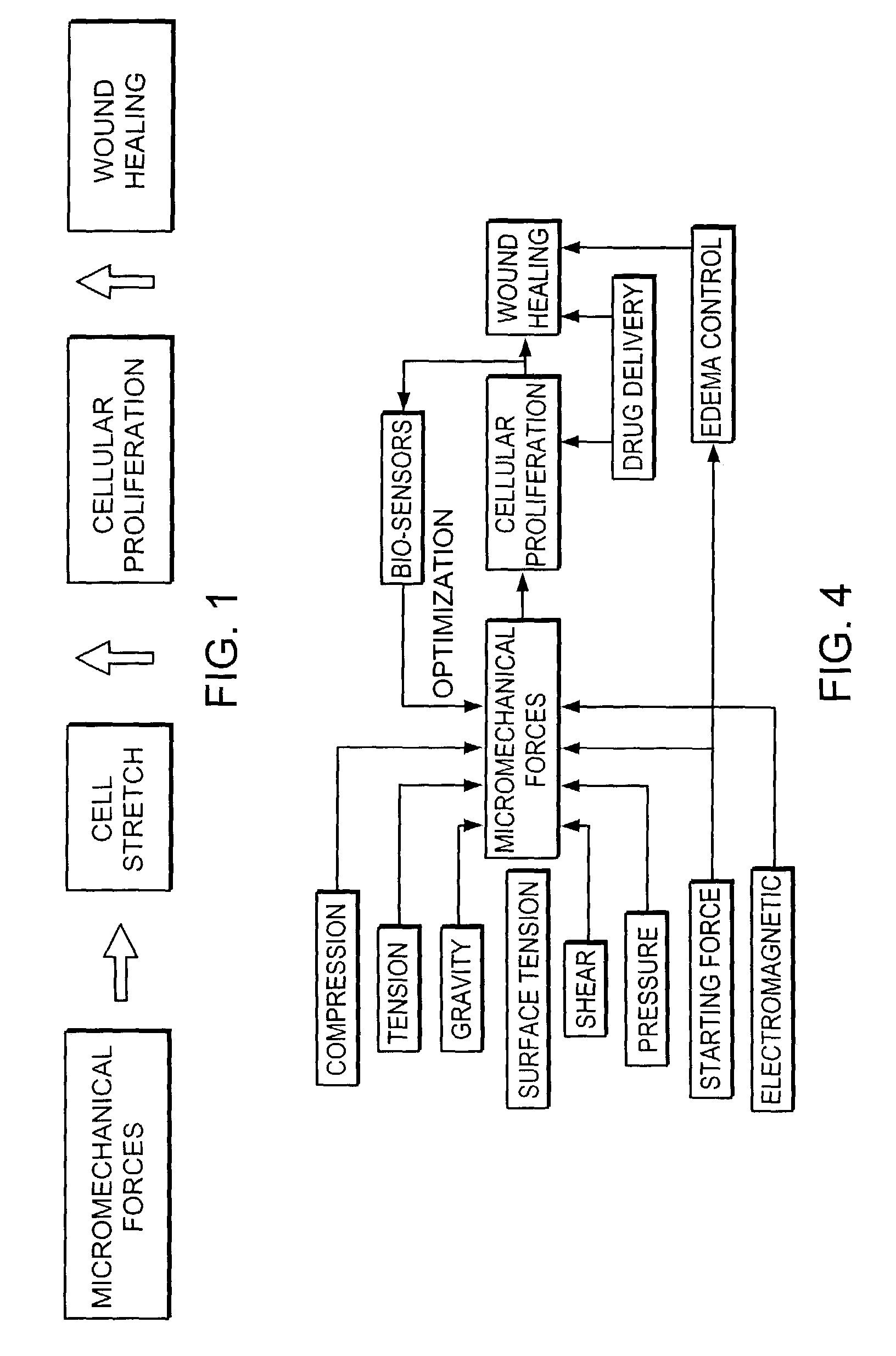
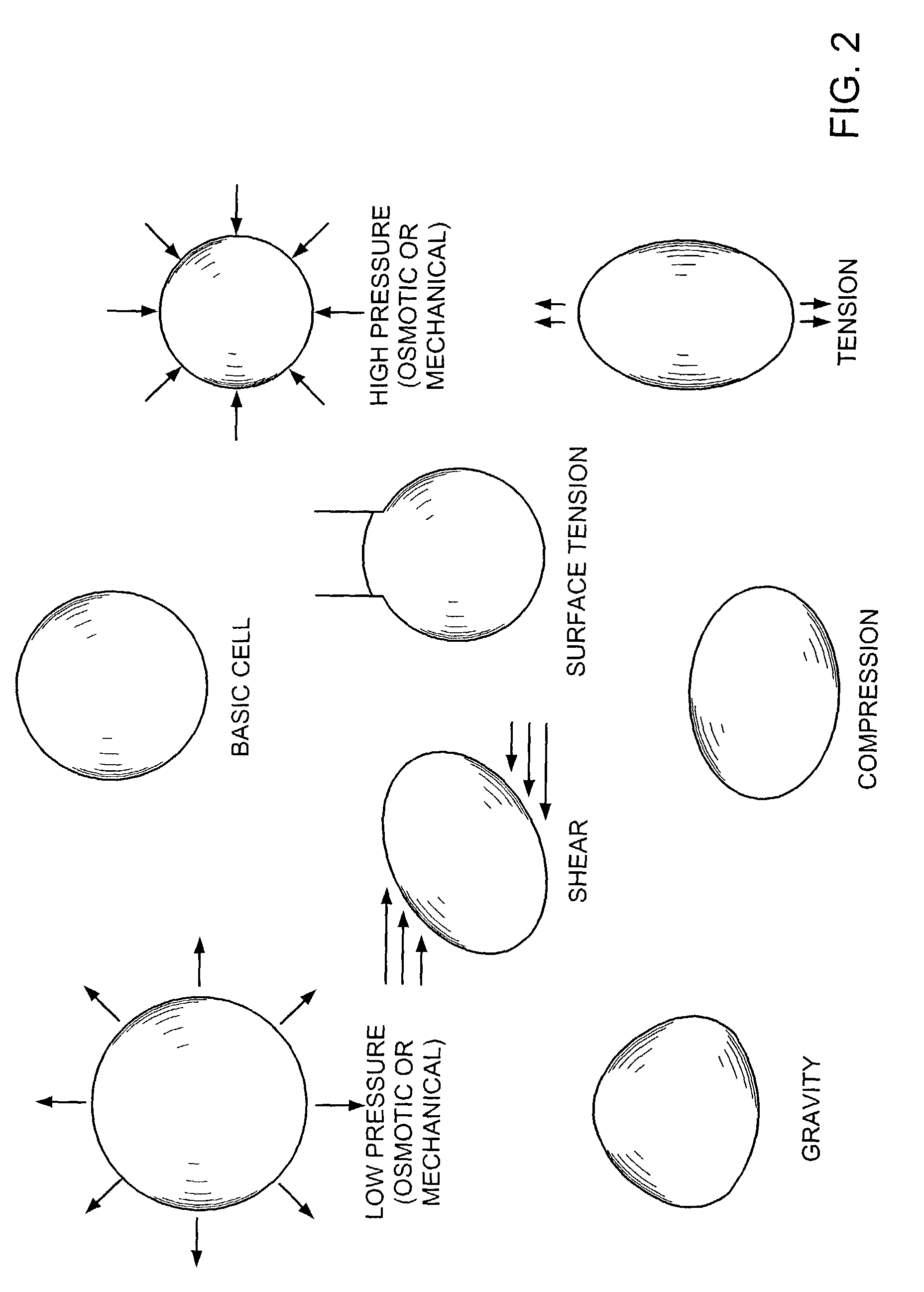
element analysis or advanced sensing technologies provides new data for
precision engineering of devices that can be used in conjunction with conventional methods of macroscale force application (e.g., referring to FIG. 2 use of tension, compression, shear, electromagnetic forces, pressure, osmotic,
surface tension, gravity, etc.) to concentrate MicMFs locally and thus, to
exploit this new mitogenic pathway for improved wound healing. These devices are capable of concentrating stresses locally to induce precise cellular strains while applying forces over large tissue areas and may be adapted to apply forces on a continuous or cyclical basis. This methodology is especially useful for promoting wound healing, however, it also may be useful for stimulating growth or pre-conditioning of tissues in vitro, for example, to increase the wall strength of artificial blood vessels created using
tissue engineering approaches.
[0010]This invention relates to devices and related methods for concentrating mechanical stresses locally on the
millimeter to
micron scale and methods to apply these stresses to cells within living tissues. This may be accomplished by
engineering materials that induce local convolutions in the
wound surface, topographic changes in the
extracellular matrix that secondarily stretch cells, or direct deformation of cells that adhere to the device. These micro-mechanical strains stimulate wound healing by promoting cellular proliferation and migration, elaborating of natural soluble growth factors, and stimulating
angiogenesis. The invention may comprise one or more of the following steps:
coating micro-
mechanical devices with
extracellular matrix (ECM) factors,
peptide fragments, synthetic molecules and growth factors to enhance
cell proliferation,
cell adhesion, and wound healing, combining MicMFs with
exogenous growth factors and cytokines, optimization of MicMF application and
drug delivery with mathematical modeling and
feedback control, simultaneous localized and
controlled delivery of drugs, proteins, and other factors to control
edema, minimize infection and
inflammation, and facilitate wound healing, employing the design of biodegradable, “smart-material” based devices that allow transmission of optimal MicMFs as they degrade, and fabrication of materials with micron to millimeter sized features, such as pores, which locally concentrate stress on adherent cells when forces are applied over large areas of the material.
[0014]The invention also relates to a method of applying this above referenced materials to wounds or tissue grafts and exerting local mechanical distending forces at the micron to millimeter scale. These forces distend large regions (over 1 cm2) of the material in order to accelerate
tissue ingrowth and enhance
tissue repair throughout the depth of the tissue without increasing the overall size or expanding the boundaries of the tissue (i.e., without causing wound opening or dehiscence). The invention also relates to a method of applying this device to promote growth and expansion of tissues in vitro by applying distending micromechanical forces throughout the depth of the tissue.



 Login to View More