
Quinolyl-containing hydroxamic acid compound and preparation method thereof, and pharmaceutical composition containing this compound and use thereof
- Summary
- Abstract
- Description
- Claims
- Application Information
AI Technical Summary
Benefits of technology
Problems solved by technology
Method used
Image

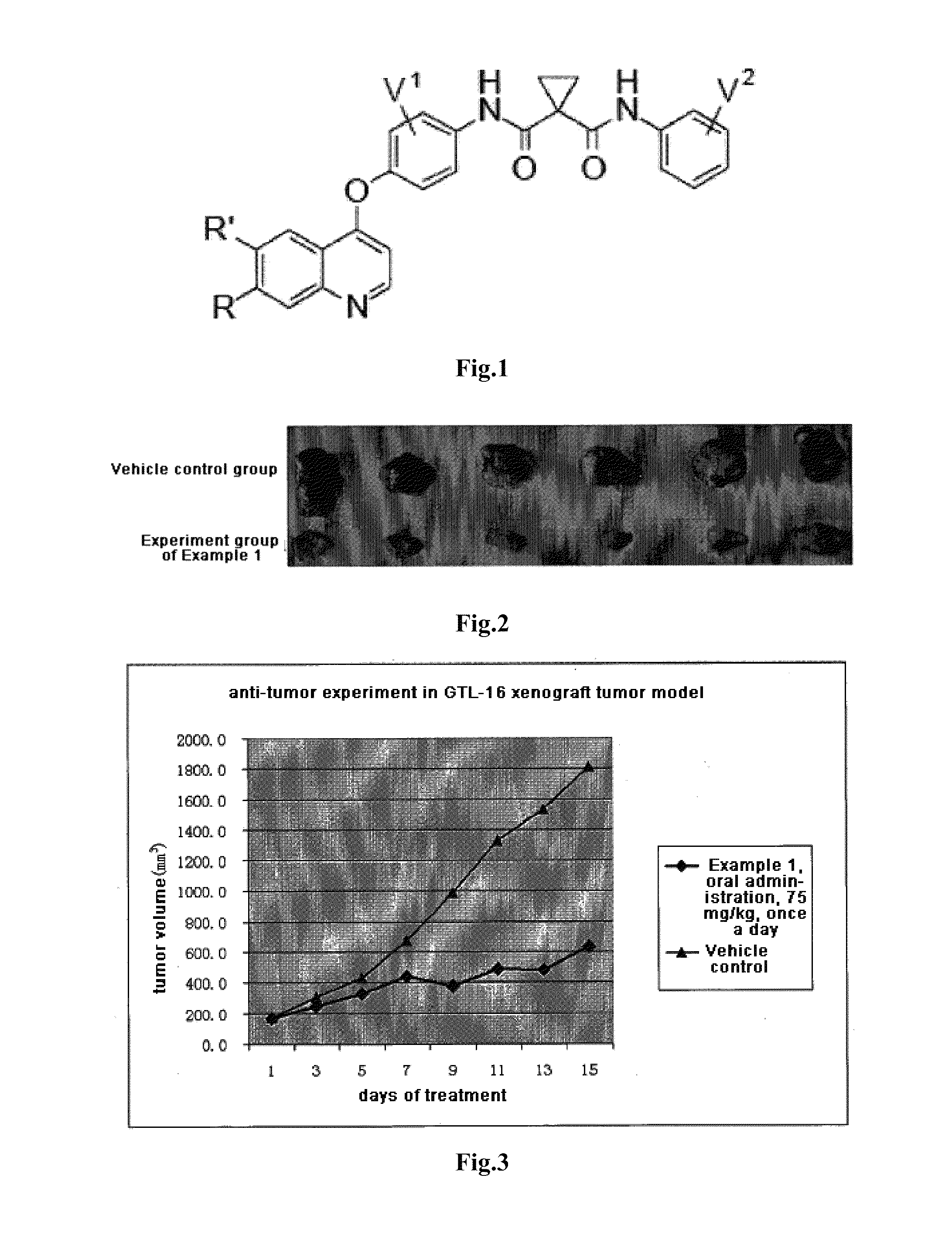
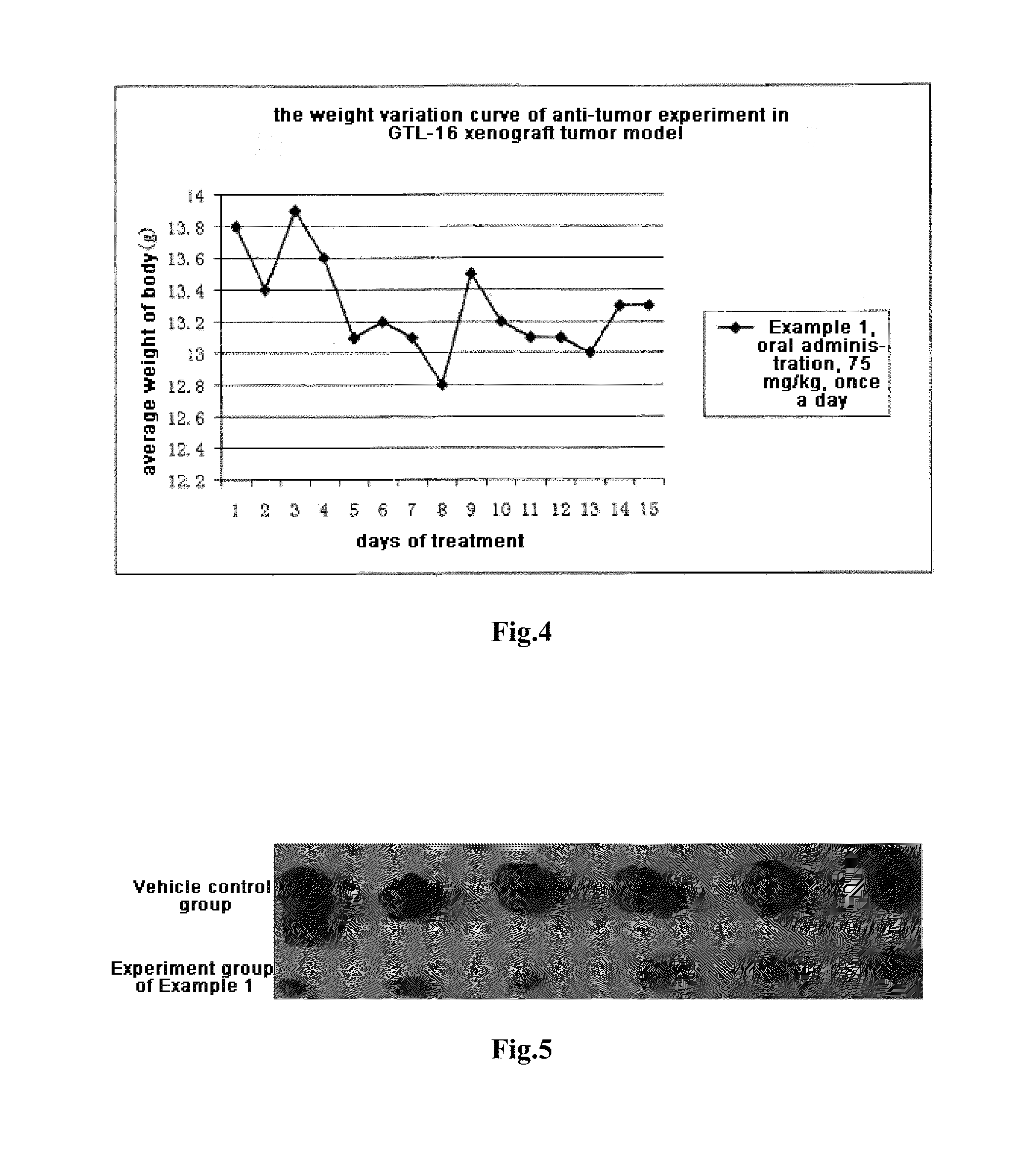
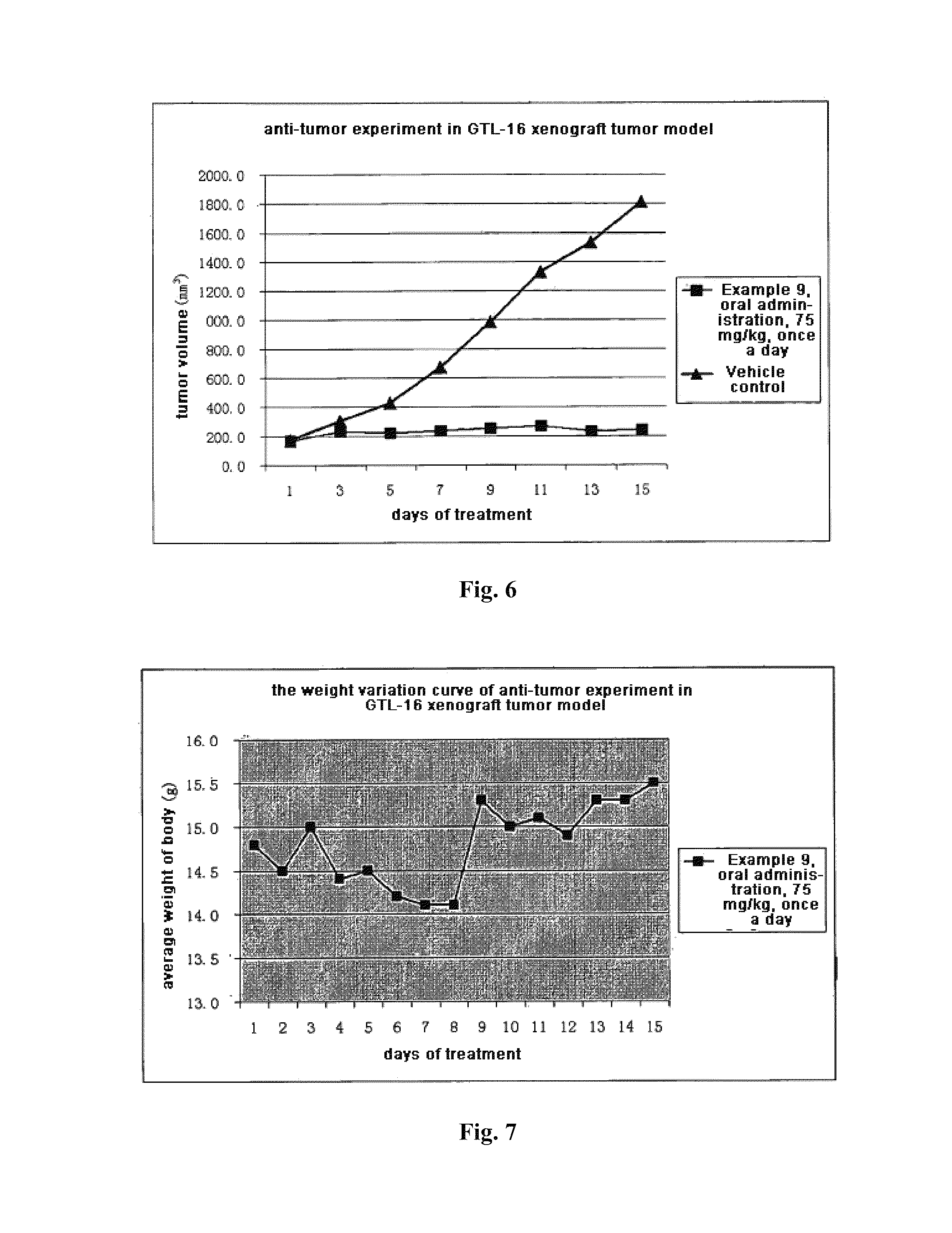
Examples
example 1
[0312]Preparation of N1′-[3-fluoro-4-[[7-[[1-[2-(hydroxyamino)-2-oxoethyl]-4-piperidyl]methoxy]-6-methoxy-4-quinolyl]oxy]phenyl]-N1-(4-fluorophenyl)cyclopropane-1,1-dicarboxamide, which is one of the quinolyl-containing hydroxamic acid compounds of the present invention.
[0313]
[0314]Step I: To a solution of N1′-[3-fluoro-4-[[6-methoxy-7-(4-piperidylmethoxy)-4-quinolyl]oxy]phenyl]-N1-(4-fluorophenyl)cyclopropane-1,1-dicarboxamide hydrochloride (Intermediate I, 3 g, 9.4 mmol) and methyl bromoacetate (1.44 g, 9.4 mmol) in 20 mL DMF was added cesium carbonate (3.1 g, 9.4 mmol). The resulting mixture was stirred at room temperature overnight, poured into 200 mL of water and extracted with ethyl acetate for 3 times (50 mL for each time). The organic phases were combined, washed with saline, dried over sodium sulfate, filtered and concentrated under reduced pressure to give 1.8 g of the crude product methyl 2-[4-[[4-[2-fluoro-4-[[1-[(4-fluorophenyl)amino carbonyl]cyclopropane carbonyl]amino...
example 2
[0316]Preparation of N1′-[3-fluoro-4-[[6-[[1-[2-(hydroxyamino)-2-oxoethyl]-4-piperidyl]methoxy]-7-methoxy-4-quinolyl]oxy]phenyl]-N1-(4-fluorophenyl)cyclopropane-1,1-dicarboxamide, which is one of the quinolyl-containing hydroxamic acid compounds of the present invention.
[0317]
[0318]The preparation was performed according to the same method as Example 1 using Intermediate J. The characterization of the resulting product was as follows: Mass spectrum m / z: 676.1 [M+H].
example 3
[0319]Preparation of N1′-[3-fluoro-4-[[7-[3-[[2-(hydroxyamino)-2-oxoethyl]amino]propoxy]-6-methoxy-4-quinolyl]oxy]phenyl]-N1-(4-fluorophenyl)cyclopropane-1,1-dicarboxamide, which is one of the quinolyl-containing hydroxamic acid compounds of the present invention.
[0320]
[0321](a) Step I: To a solution of N1′-[4-[[7-(3-aminopropoxy)-6-methoxy-4-quinolyl]oxy]-3-fluorophenyl]-N1-(4-fluorophenyl)cyclopropane-1,1-dicarboxamide hydrochloride (Intermediate K, 2 g, 3.56 mmol) and methyl bromoacetate (0.55 g, 3.56 mmol) in 30 mL acetonitrile was added cesium carbonate (3.48 g, 10.68 mmol). The resulting mixture was stirred overnight at 20° C., then poured into water and extracted with ethyl acetate for 3 times (50 mL for each time). The organic phases were combined, dried over sodium sulfate, filtered and concentrated to give the crude product. The crude product was purified by silica gel column chromatography (eluted with a solution of 0%-10% methanol in dichloromethane) to give the desired ...
PUM
| Property | Measurement | Unit |
|---|---|---|
| temperatures | aaaaa | aaaaa |
| pressure | aaaaa | aaaaa |
| time | aaaaa | aaaaa |
Abstract
Description
Claims
Application Information
 Login to View More