Treatment method for decontaminating chromic slag by utilizing eutrophicated algal residue
A technology of eutrophication and treatment method, which is applied in the treatment field of using eutrophic algae residues to make harmless chromium residues, can solve problems such as high cost, and achieve the effects of reducing raw material costs, reducing investment costs, and simple equipment
- Summary
- Abstract
- Description
- Claims
- Application Information
AI Technical Summary
Problems solved by technology
Method used
Image

Examples
Embodiment 1
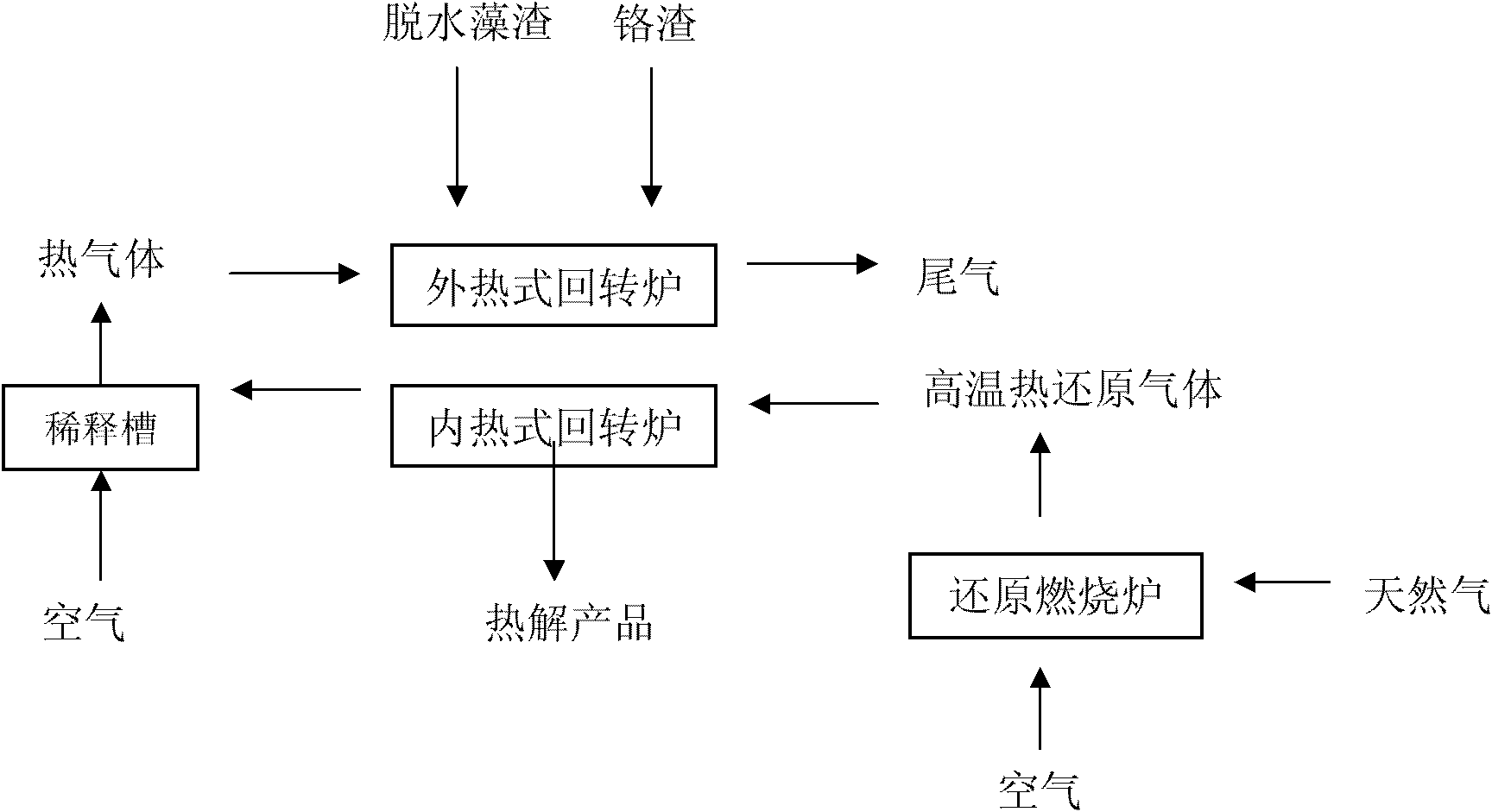
[0026] Add ferric chloride or lime plus polyaluminium and other agents to the algae dregs to dehydrate it to 75%, grind the chromium dregs to a 2mm screen, mix with the algae dregs at a mass ratio of 1:10, and stabilize for 5 hours. The mixture is fed into the inner cylinder of the externally heated rotary kiln through a screw feeder for preheating and drying, and the residence time of the mixture in the inner cylinder of the externally heated rotary kiln is 0.5 hour, so that the moisture content of the dried mixture is lower than 5%.
[0027] The reduction combustion furnace uses natural gas as fuel, and the air excess coefficient in the reduction combustion furnace is controlled to be 0.9. The temperature of the generated hot gas is about 500°C, and the oxygen content is less than 0.5%. The generated high-temperature hot gas is introduced into the internal heating type pyrolysis furnace.
[0028] Send the mixture preheated by the external heating rotary furnace into the inter...
Embodiment 2
[0033] Add ferric chloride or lime plus polyaluminum to the algae dregs to dehydrate it to 80%, grind the chromium dregs to a 2mm sieve, mix with the algal dregs at a mass ratio of 1:10, and stabilize for 1 hour. The residence time in the inner drum of the externally heated rotary kiln is 0.5 hour, so that the moisture content of the dried mixture is lower than 5%.
[0034] The reduction combustion furnace uses natural gas as fuel, and the Uno air excess coefficient in the reduction combustion furnace is controlled to be 0.8. The temperature of the generated hot gas is about 500°C, and the oxygen content is less than 0.5%. The generated high-temperature hot gas is introduced into the internal heating type pyrolysis furnace.
[0035]Send the mixture preheated by the external heating rotary furnace into the internal heating pyrolysis furnace, and directly contact the high-temperature hot gas with a temperature of about 500°C under the condition of anaerobic or hypoxic conditions ...
Embodiment 3
[0040] Add ferric chloride or lime plus polyaluminum and other agents to the algae dregs to dehydrate it to 80%, grind the chromium dregs to a 2mm screen, mix with the algal dregs at a mass ratio of 1:10, and stabilize for 2.5 hours. After the chromium slag is ground to a 2mm sieve, it is mixed with the algae slag at a mass ratio of 1:10, and the mixture is sent into the inner cylinder of the externally heated rotary furnace through a screw feeder for preheating and drying. The residence time is 0.5 hour, so that the moisture content of the dried mixture is lower than 5%.
[0041] The reduction combustion furnace uses natural gas as fuel, and the air excess coefficient in the reduction combustion furnace is controlled to be 0.8. The temperature of the generated hot gas is about 450°C, and the oxygen content is less than 0.5%. The generated high-temperature hot gas is introduced into the internal heating type pyrolysis furnace.
[0042] Send the mixture preheated by the externa...
PUM
 Login to View More
 Abstract
Description
Claims
Application Information
 Login to View More
 - R&D
- Intellectual Property
- Life Sciences
- Materials
- Tech Scout
- Unparalleled Data Quality
- Higher Quality Content
- 60% Fewer Hallucinations
Browse by: Latest US Patents, China's latest patents, Technical Efficacy Thesaurus, Application Domain, Technology Topic, Popular Technical Reports.
© 2025 PatSnap. All rights reserved.Legal|Privacy policy|Modern Slavery Act Transparency Statement|Sitemap|About US| Contact US: help@patsnap.com