Since the propellers are all installed at the
stern of the boat, its speed will be limited by the low pressure generated by the propellers absorbing water, which is lower than the saturation pressure of
seawater, and will cause
cavitation effects, making it unable to increase the speed again.
This kind of cavitation effect will not only distort the
water flow, but also cause the blades to idling, vibrate and
impact, reduce the propulsion efficiency of the blades, and also have problems such as strong shock
waves and
corrosion on the surface of the blades; looking at the current status of ship technology, even It is a
supercavitation torpedo successfully developed by adopting the supercavitation principle of the
pump jet propeller. The maximum theoretical speed of the submarine of the conventional submarine with
water jet magnetohydrodynamic power is only 150 knots, and the actual speed is only 100 knots)
For conventional submarines, what is more serious is the cavitation phenomenon of the propeller during navigation. When the
partial pressure at the inlet of the blade drops to the saturation pressure corresponding to the
water temperature, the water begins to vaporize and produce many bubbles. When the bubble is brought into the high-pressure area of the
paddle wheel, the steam in the bubble is pressurized and condenses sharply, so the surrounding liquid rushes to the space originally occupied by the bubble at a very high speed, resulting in a strong shock thousands of times per second. Every time there is a gigapa-level water
impact, the blades of any material cannot withstand the damage of the blades-if the problem of air bubbles between the blades cannot be completely eliminated, there will be no possibility of further speeding up the ship... ...and of course the resulting wake and
noise give away the sub's position even more
On the other hand, the efficiency is low, that is, in the process of the propeller generating thrust with the
pressure difference between the front and rear of the propeller, the negative pressure of the
stern cabin must be partially offset by the negative pressure of the
stern cabin in the ultra-low pressure
water area between the stern and the front of the propeller. power (if the flatness of the stern bulkhead is sufficient), the power cancellation rate will be inversely proportional to the distance between the propeller and the plane of the stern bulkhead and the value of the
radius of rotation of the blade; To overcome the huge tangential resistance at the front of the ship and the
viscous resistance at the rear of the
hull that doubles greatly with the increase of speed... It is this "triple resistance" that makes the "Nimi" propelled by a propeller with nearly 300,000
horsepower The Zeus-class aircraft carrier has a maximum speed of less than 40 knots", "The 'Trafalgar' class is the
third generation of British
attack nuclear submarines, with a total power of 1.5
horsepower jet propulsion, and the maximum
underwater speed is only 32 knots", "Russia's With the birth of the 'Alpha' class nuclear-powered
attack submarine, the world's largest
underwater speed is only 45 knots. The reason for the
low speed is largely related to the rear propeller and the "triple resistance" that increases with the
design speed. The trend of geometric multiplication is due to the
speed limit. It can be said that the waste rate of more than 50% of the energy consumed by the world's nautical ships and 80-90% of the energy consumed by sailing at the limit speed become ineffective and the reason why it is impossible to further break through the limit speed , are all caused by the problems of "rear propeller" and "triple resistance" and can no longer find an
optimal design space!


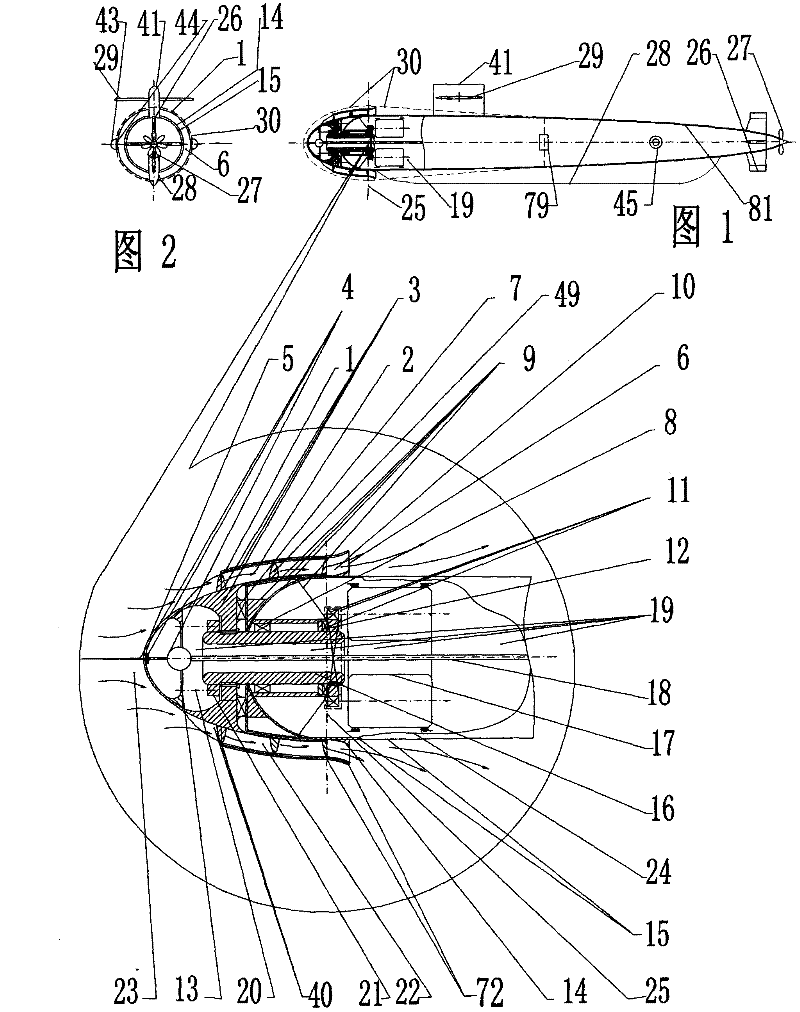
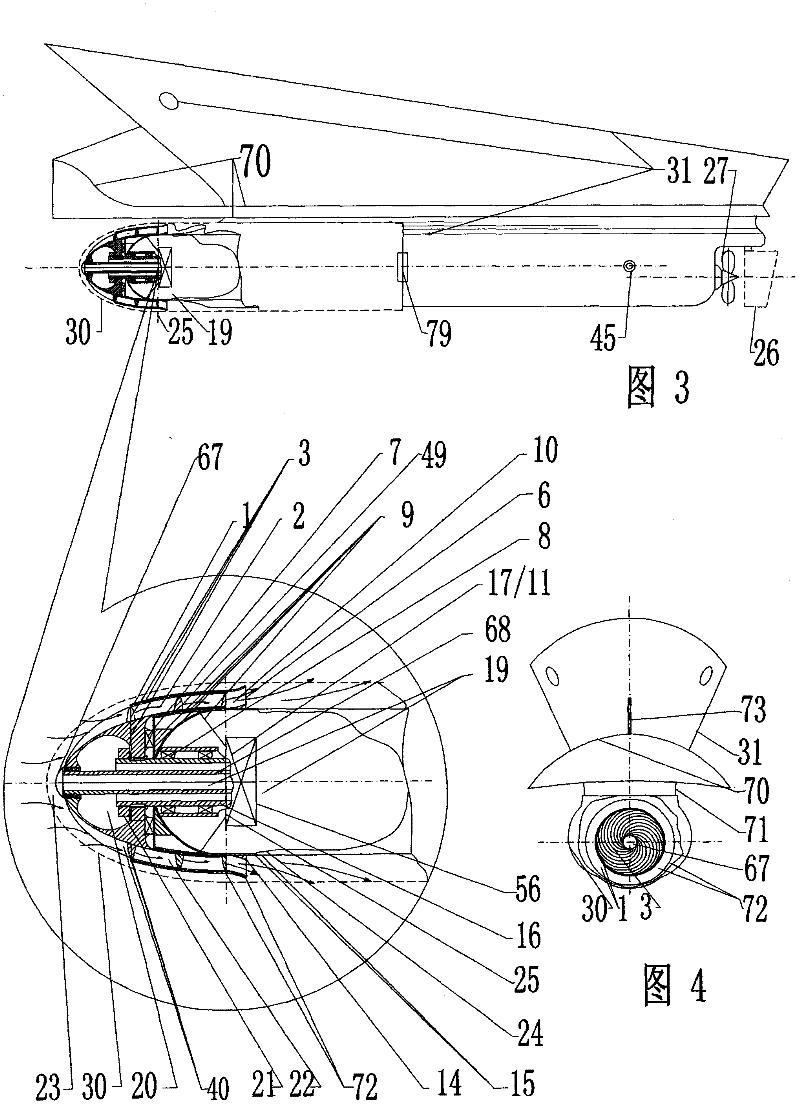
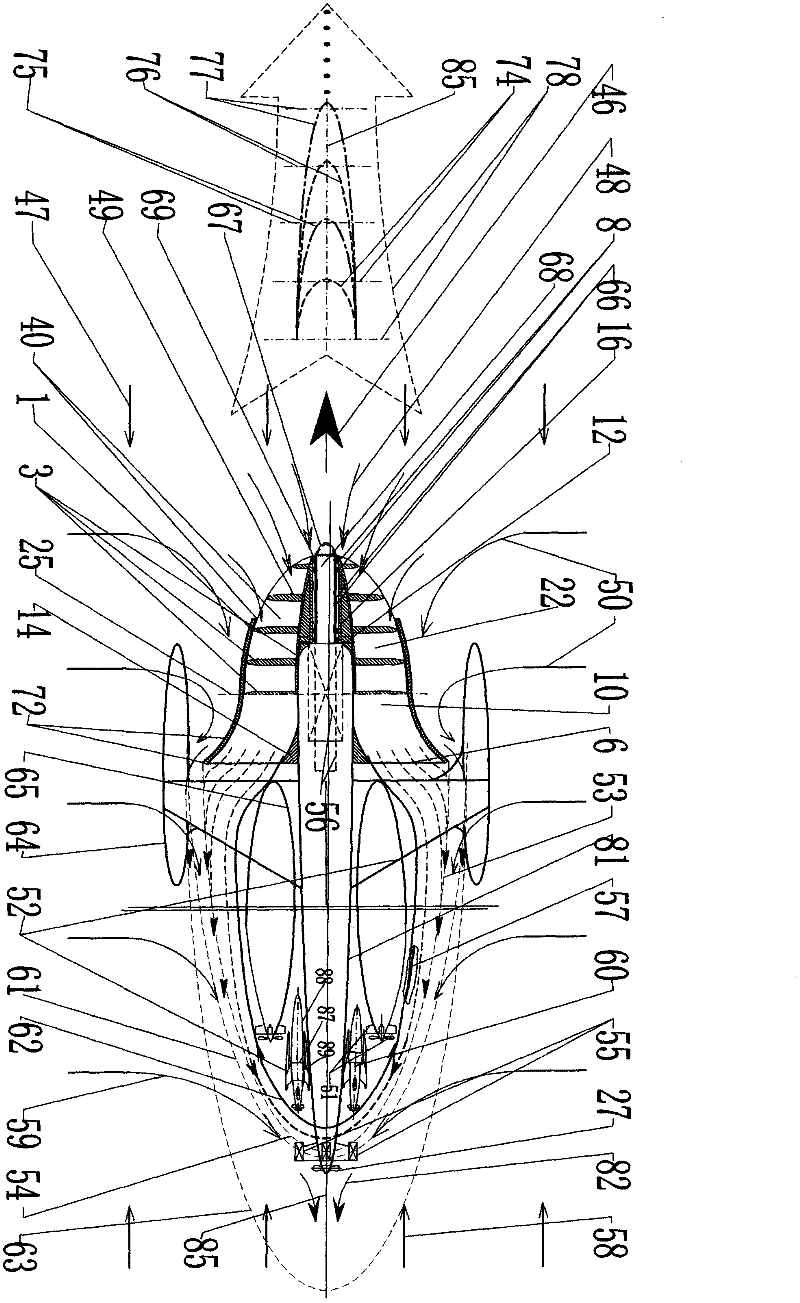
 Login to View More
  Login to View More