
Super capacitor capable of changing colors and being stretched and manufacturing method thereof
A supercapacitor, color-changing technology, applied in the manufacture of hybrid/electric double-layer capacitors, hybrid capacitor electrodes, hybrid capacitor electrolytes, etc., to achieve good stretchability
- Summary
- Abstract
- Description
- Claims
- Application Information
AI Technical Summary
Problems solved by technology
Method used
Image

Examples
Embodiment Construction
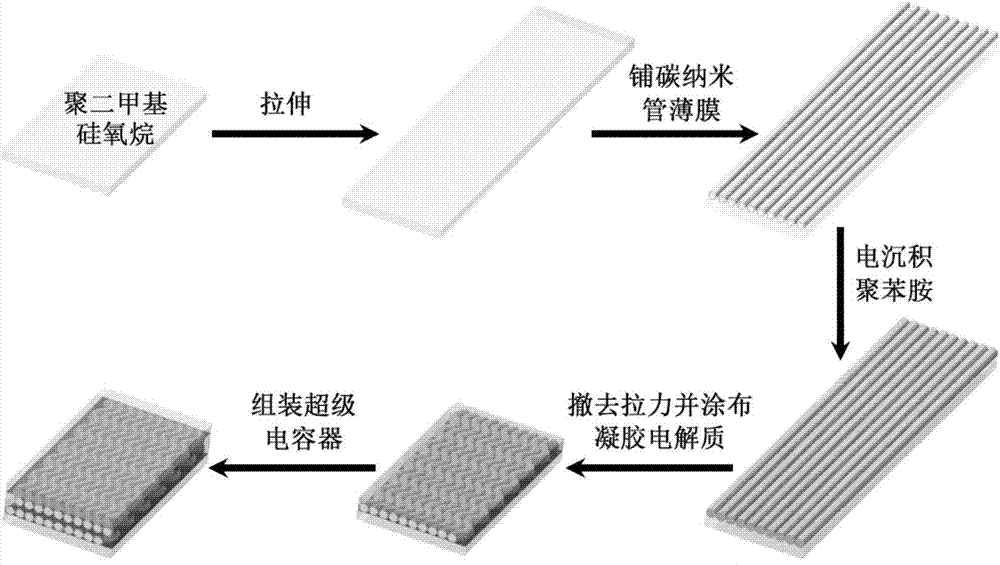
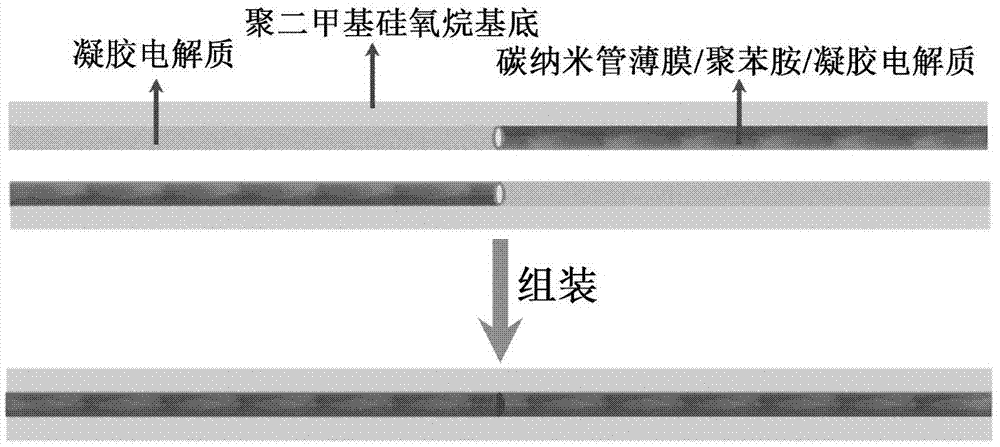
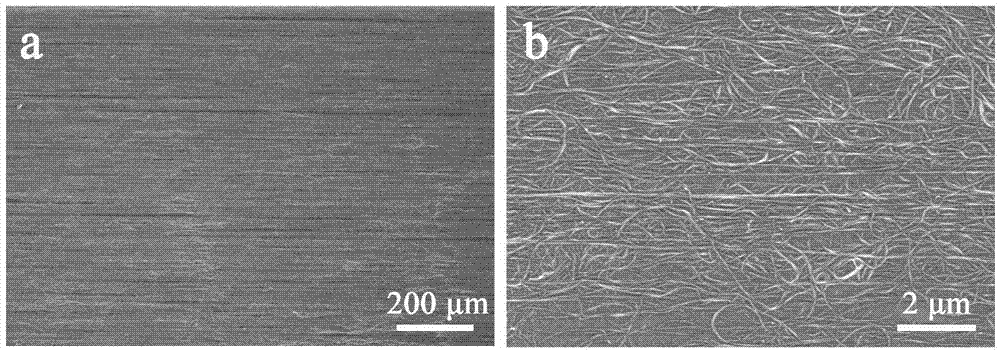
[0047] Prepare polydimethylsiloxane elastic matrix according to the prior art, that is, by mixing polydimethylsiloxane precursor and curing agent (Sylgard 184, both from Dow) with a mass ratio of 10 / 1, and Spin-coating at 930 rpm for 10 s, followed by curing at 60-100 °C for 0.5-2 h to obtain a stretchable film with a thickness of 150 μm. The carbon nanotube film used in the electrode material is first prepared by the so-called chemical vapor deposition method to prepare the carbon nanotube array, and then the corresponding fiber and film are prepared by dry spinning. The conventional practice is to first coat Fe (1.2 nm) / Al in a quartz tube furnace 2 o 3 (3 nm) silicon wafer as catalyst, ethylene gas as carbon source, Ar and H 2 The mixed gas was used as the carrier gas, and the temperature was raised to 740 °C, and the carbon nanotubes began to grow, and the growth time was controlled at 10-20 min. After obtaining the super-aligned carbon nanotube array, a blade is used ...
PUM
 Login to View More
 Abstract
Description
Claims
Application Information
 Login to View More