
Preparation method of three-dimensional photocatalytic materials supported by graphene nanobelts
A technology of graphene nanobelts and photocatalytic materials is applied in the field of preparation of three-dimensional photocatalytic materials to achieve the effects of improving activity and photocatalytic performance and simple preparation process
- Summary
- Abstract
- Description
- Claims
- Application Information
AI Technical Summary
Problems solved by technology
Method used
Image

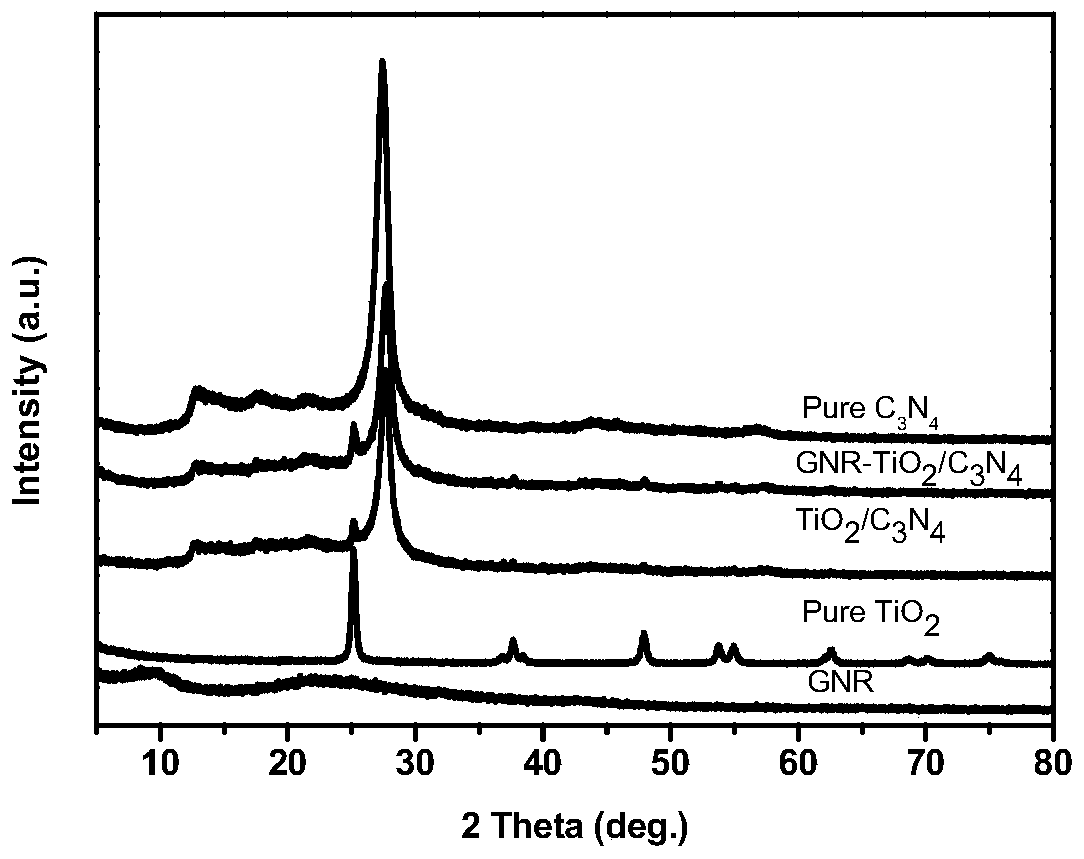
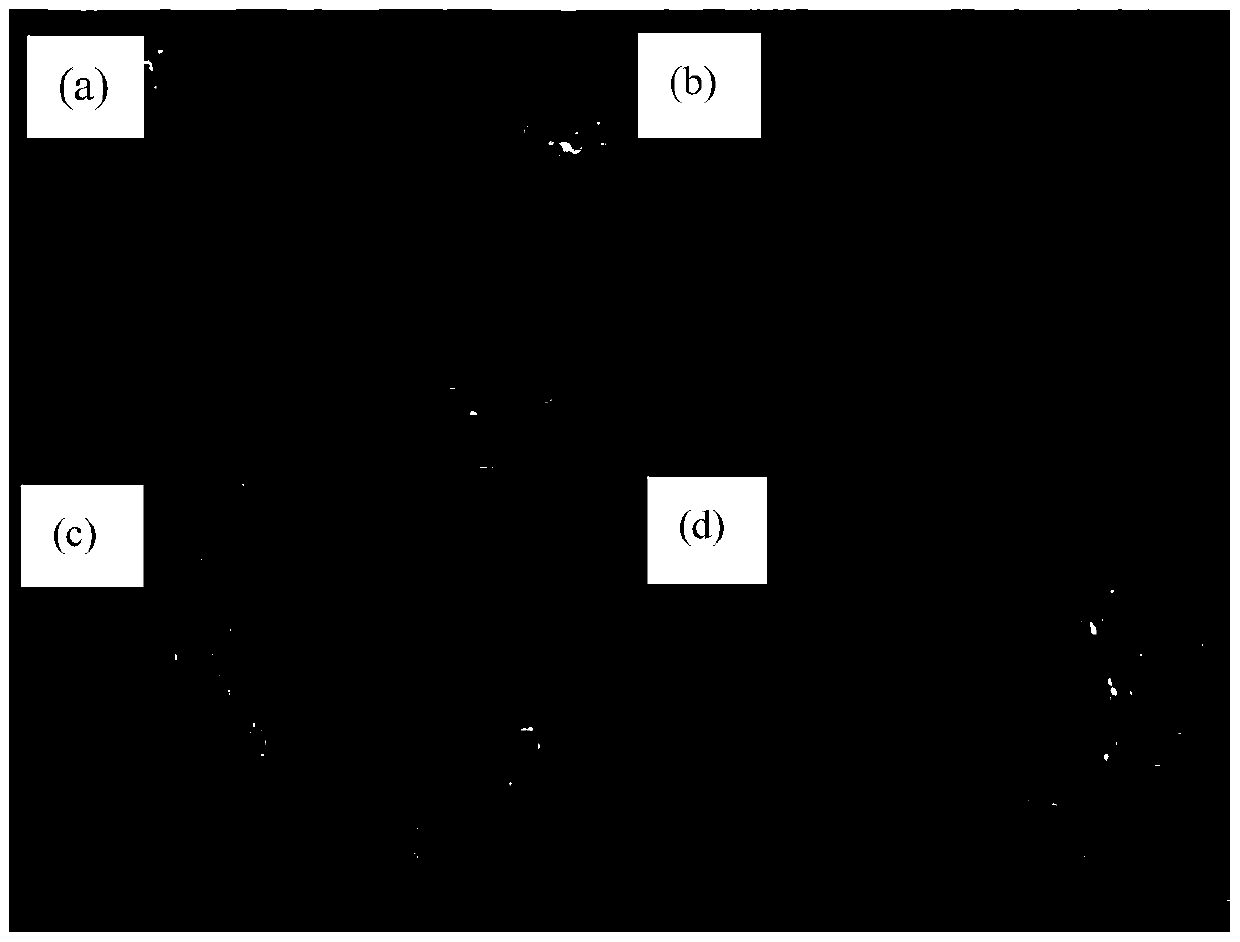
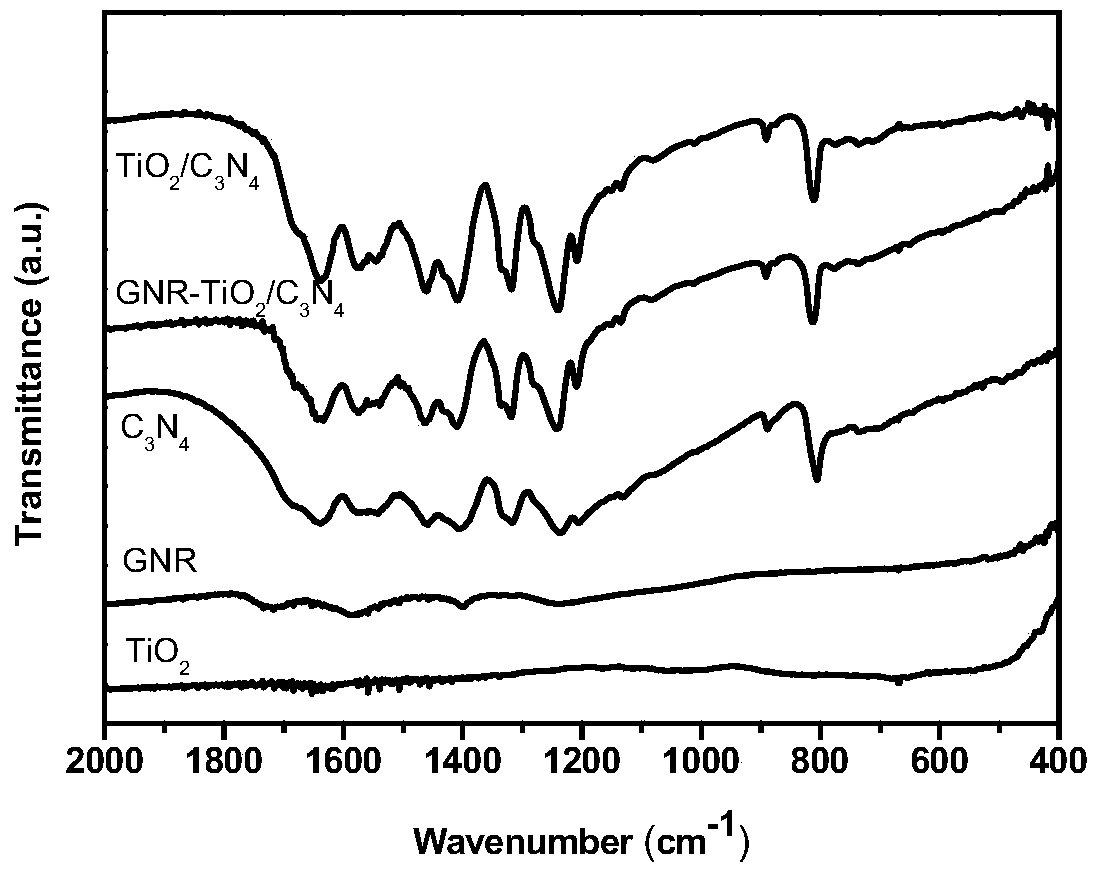
Examples
Embodiment 1
[0027] Graphene nanoribbon loaded semiconductor material GNR-TiO 2 / C 3 N 4 , containing C, H, Ti, O and H elements.
[0028] The above-mentioned graphene nanobelt loaded semiconductor material specifically includes the following steps:
[0029] (1) Preparation of graphene nanobelts
[0030] Graphene nanoribbons (GNR) were prepared by the following method: weigh 1.5 g of multi-walled carbon nanotubes, add 150 mL of concentrated sulfuric acid, and stir for 1 h. Under ice-bath conditions, slowly add 9 g of potassium permanganate, and stir for 2 h at 25° C. Then in an oil bath at 75 °C for 80 min. Under ice bath conditions, add 25mL of distilled water, then pour the above solution into a large beaker filled with 300-400mL of distilled water, and then add 5mL of hydrogen peroxide. The product GNR was obtained by centrifugation.
[0031] (2) Preparation of graphene nanobelt-supported semiconductor materials carbon nitride and titanium dioxide
[0032] Weigh 0.3g of titanium d...
Embodiment 2
[0044] A three-dimensional photocatalytic material GNR-TiO supported by graphene nanoribbons 2 / Bi 2 WO 6 . Contains C, Ti, O, H, Bi, W elements.
[0045] (1) Preparation of graphene nanobelts
[0046] Graphene nanoribbons (GNR) were prepared by the following method: weigh 1.5 g of multi-walled carbon nanotubes, add 150 mL of concentrated sulfuric acid, and stir for 1 h. Under ice-bath conditions, slowly add 9 g of potassium permanganate, and stir for 2 h at 25° C. Then in an oil bath at 75 °C for 80 min. Under ice bath conditions, add 25mL of distilled water, then pour the above solution into a large beaker filled with 300-400mL of distilled water, and then add 5mL of hydrogen peroxide. The product GNR was obtained by centrifugation.
[0047] (2) Preparation of graphene nanobelt-supported semiconductor titanium dioxide and bismuth tungstate.
[0048] Weigh 0.3g of titanium dioxide precursor, add 24mL of hydrogen peroxide solution and 5mL of ammonia water, and stir unt...
Embodiment 3
[0051] A three-dimensional photocatalytic material GNR-TiO supported by graphene nanoribbons 2 / C 3 N 4 . Contains C, N, Ti, O, H elements.
[0052] (1) Preparation of graphene nanobelts
[0053]Graphene nanoribbons (GNR) were prepared by the following method: weigh 1.5 g of multi-walled carbon nanotubes, add 150 mL of concentrated sulfuric acid, and stir for 1 h. Under ice-bath conditions, slowly add 9 g of potassium permanganate, and stir for 2 h at 25° C. Then in an oil bath at 75 °C for 80 min. Under ice bath conditions, add 25mL of distilled water, then pour the above solution into a large beaker filled with 300-400mL of distilled water, and then add 5mL of hydrogen peroxide. The product GNR was obtained by centrifugation.
[0054] (2) Preparation of graphene nanobelt-supported semiconductor titanium dioxide and carbon nitride
[0055] Weigh 0.3g of titanium dioxide precursor, add 24mL of hydrogen peroxide solution and 5mL of ammonia water, and stir until the solu...
PUM
 Login to View More
 Abstract
Description
Claims
Application Information
 Login to View More