
Near infrared fluorescent dye THX-Ba for mitochondrial localization and preparation method and application thereof
A technology of fluorescent dyes and mitochondria, which is applied in the field of dye molecular fluorescent probes, can solve the problems of small Stokes shift and low anti-interference ability, and achieve simple preparation methods, good photostability, and good cell membrane permeability Effect
- Summary
- Abstract
- Description
- Claims
- Application Information
AI Technical Summary
Problems solved by technology
Method used
Image

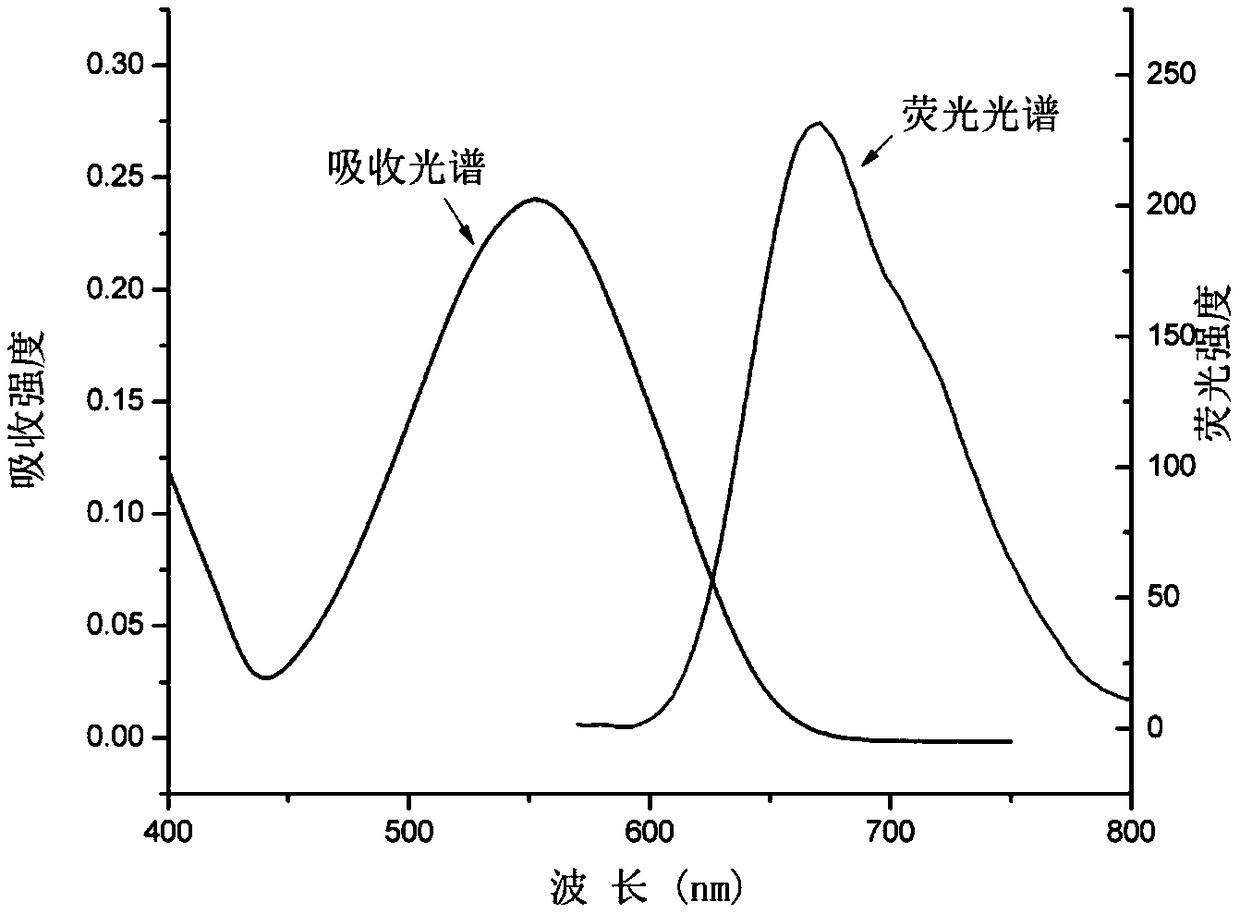
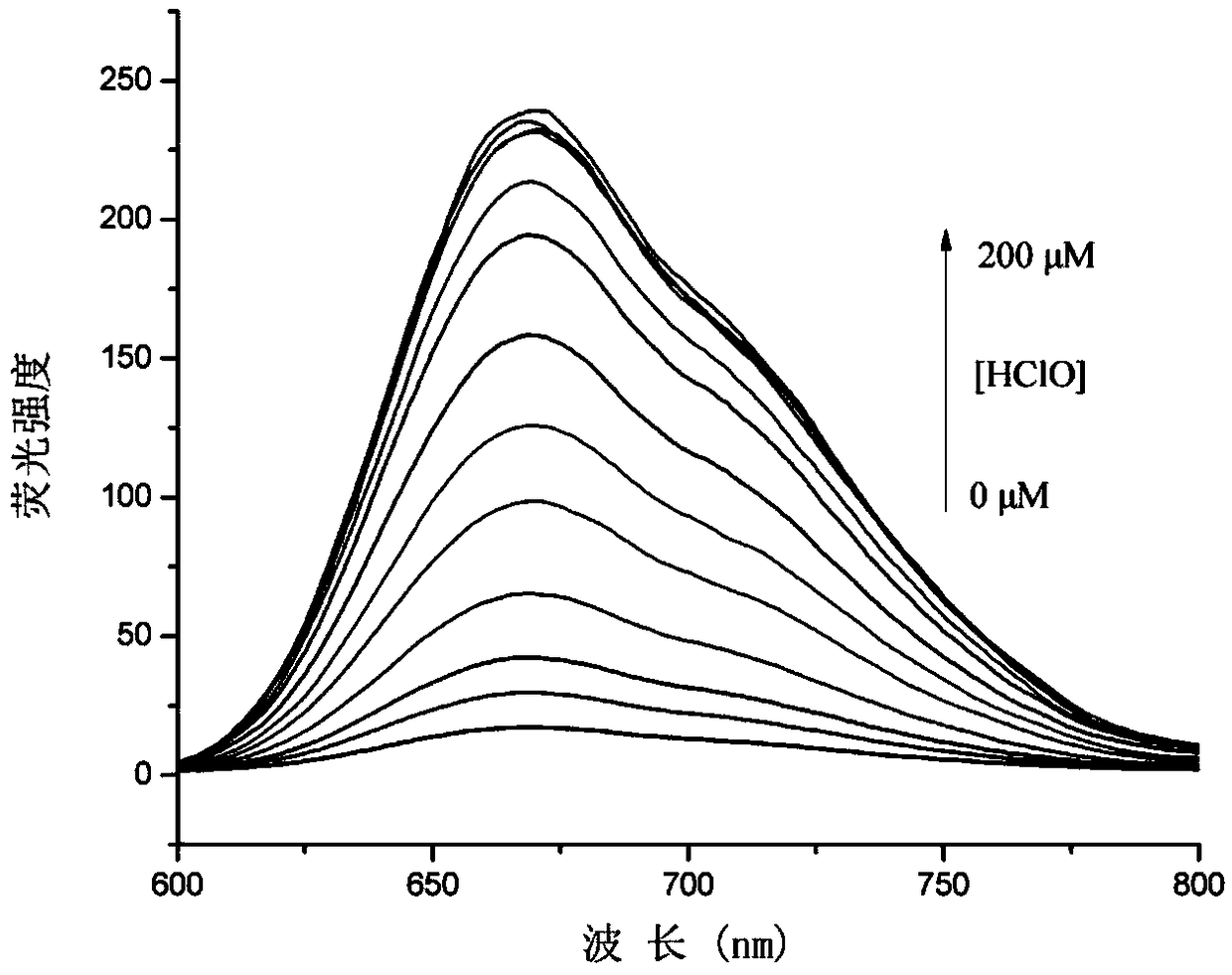
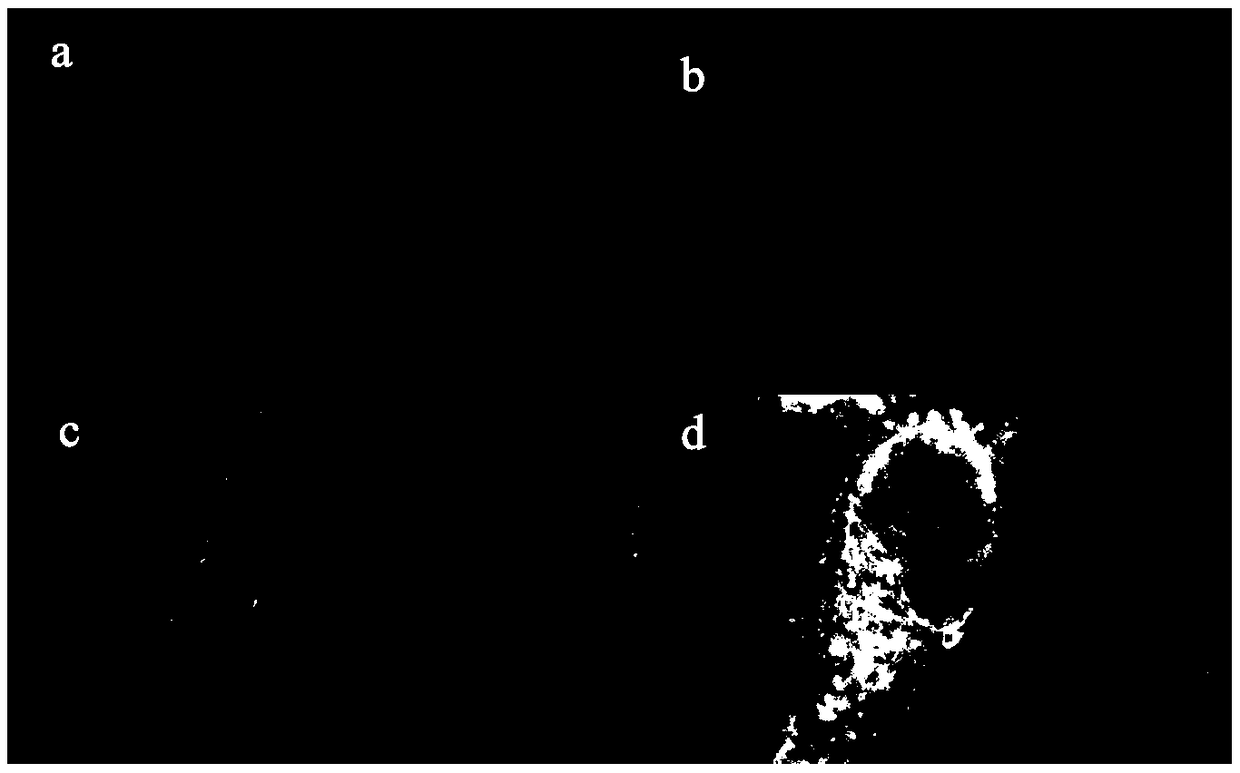
Examples
Embodiment 1
[0049] Preparation of Compound 1
[0050] Add 2-(4-diethylamino-2-hydroxybenzoyl)benzoic acid (5.0g, 16mmol) to 35mL of 98wt% concentrated sulfuric acid containing 3.3mL (31.8mmol) cyclohexanone at 0°C, The reaction was stirred, TLC followed the reaction to the end point, about 1.5h, the reaction solution was cooled to room temperature and poured into 150mL of ice water, 3.5mL of 70wt% perchloric acid was added dropwise, filtered and washed with 100mL of ice water, and the solid was dried to obtain compound 1.
[0051] The synthetic route is as follows:
[0052]
Embodiment 2
[0054] Preparation of fluorescent dye THX-Ba
[0055] Compound 1 (3.76g, 10mmol) prepared in Example 1 and terephthalaldehyde (1.72g, 10mmol) were dissolved in 50ml of glacial acetic acid, stirred at 95°C for reaction, followed by TLC to the end of the reaction, about 1h, and removed by rotary distillation Glacial acetic acid, the solid was separated and purified by dichloromethane / methanol (v / v 20:1) column chromatography to obtain the target product as a purple solid (2.23 g, yield: 45%). 1 HNMR(400MHz,DMSO)δ10.02(s,1H),7.95(d,J=8.1Hz,3H),7.80(t,J=7.8Hz,1H),7.68(t,J=7.5Hz,3H) ,7.47(s,1H),7.33(d,J=7.7Hz,1H),6.55(d,J=2.2Hz,1H),6.43(dt,J=21.1,5.6Hz,2H),3.39–3.33( m,4H),2.79(d,J=15.5Hz,1H),2.65(d,J=14.5Hz,1H),1.93–1.83(m,1H),1.58(d,J=11.1Hz,3H), 1.10(t,J=6.9Hz,6H). 13 C NMR(125MHz,DMSO)δ193.03,169.48,152.02,149.52,146.33,143.19,135.81,135.05,133.07,130.46,129.92,128.66,127.08,125.09,124.45,124.06,109.70,109.48,104.48,97.31,85.98,44.16 ,27.21,23.05,22.36,12.86.MS(ESI):m / z:[M]...
Embodiment 3
[0059] Preparation of hypochlorous acid fluorescent probe
[0060] The near-infrared fluorescent dye (0.98g, 2.0mmol) prepared in Example 1 and diaminomaleonitrile (0.22g, 2.0mmol) were dissolved in 50mL of methanol, then a drop of 98wt% concentrated sulfuric acid (about 0.04mmol) was added, and the The reaction was stirred, TLC tracked the reaction to the end point, about 2h, the color of the solution changed from black purple to light brown, and the methanol was removed by rotary evaporation, and the solid was separated and purified by dichloromethane / methanol (v / v 20:1) column chromatography to obtain the target product As a brown solid (0.79 g, yield: 68%). 1 H NMR (400MHz, DMSO) δ8.29 (s, 1H), 8.08 (d, J = 7.8Hz, 2H), 8.04–7.90 (m, 3H), 7.80 (t, J = 7.2Hz, 1H), 7.68 (t,J=7.3Hz,1H),7.55(d,J=7.8Hz,2H),7.45(s,1H),7.33(d,J=7.4Hz,1H),6.56(s,1H),6.43 (dd,J=22.9,8.4Hz,2H),3.35(s,4H),2.81(d,J=14.5Hz,1H),2.68(s,1H),1.89(d,J=12.5Hz,1H) ,1.58(d,J=11.6Hz,3H),1.10(t,J=6.5Hz,6H). 1...
PUM
 Login to View More
 Abstract
Description
Claims
Application Information
 Login to View More