Unlock instant, AI-driven research and patent intelligence for your innovation.

Aflatoxin capture and removal method of oil based on ultraviolet reinforced DNA (deoxyribonucleic acid) and aflatoxin chelation

A kind of aflatoxin and ultraviolet technology, applied in the direction of oil/fat refining, fat production, etc., can solve the problems of tumor suppressor gene inactivation, proto-oncogene activation, gene mutation, etc.

Inactive Publication Date: 2019-02-15
GUANGXI UNIVERSITY OF TECHNOLOGY
View PDF6 Cites 0 Cited by
  • Summary
  • Abstract
  • Description
  • Claims
  • Application Information

AI Technical Summary

Problems solved by technology

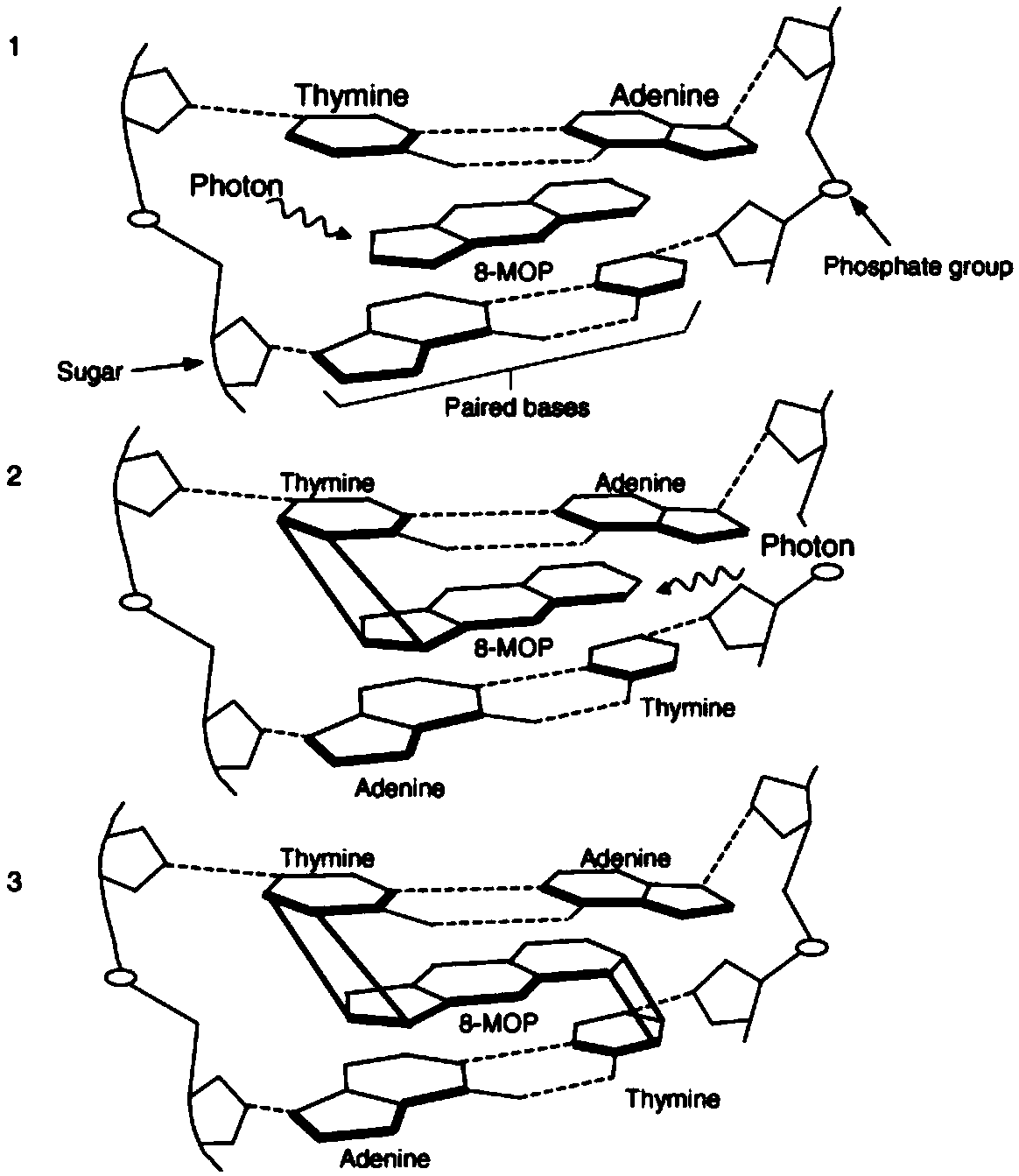
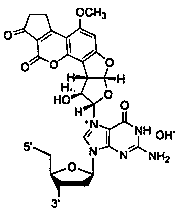
Aflatoxin B 1 -Exo-8,9-epoxide intercalates into DNA and forms aflatoxin-DNA adducts with DNA, causing DNA cross-linking, base pair substitution, or frameshift mutation, thereby affecting the normal replication and transcription of DNA, Even cause base conversion or loss, eventually lead to gene mutation, lead to inactivation of tumor suppressor gene and / or activation of proto-oncogene, and finally lead to the occurrence of cancer (see literature Wang M L, Yu Y Y, Liang C, Lu A P, Zhang G. Recent advances in developing small molecules targeting nucleic acid. Int. J. Mol. Sci., 2016, 17: 779-802)

Method used

the structure of the environmentally friendly knitted fabric provided by the present invention; figure 2 Flow chart of the yarn wrapping machine for environmentally friendly knitted fabrics and storage devices; image 3 Is the parameter map of the yarn covering machine
View more

Image

Smart Image Click on the blue labels to locate them in the text.
Viewing Examples
Smart Image
  • Aflatoxin capture and removal method of oil based on ultraviolet reinforced DNA (deoxyribonucleic acid) and aflatoxin chelation
  • Aflatoxin capture and removal method of oil based on ultraviolet reinforced DNA (deoxyribonucleic acid) and aflatoxin chelation
  • Aflatoxin capture and removal method of oil based on ultraviolet reinforced DNA (deoxyribonucleic acid) and aflatoxin chelation

Examples

Experimental program
Comparison scheme
Effect test

Embodiment 1

[0029] Embodiment 1: the removal of aflatoxin in peanut oil.

[0030] (1) Select commercially available calf thymus DNA as the reagent in this example, and fully dissolve the calf thymus DNA with 50 mM glycine-sodium hydroxide buffer solution with a pH value of 9.00 to prepare a calf thymus DNA buffer solution with a concentration of 1%. spare.

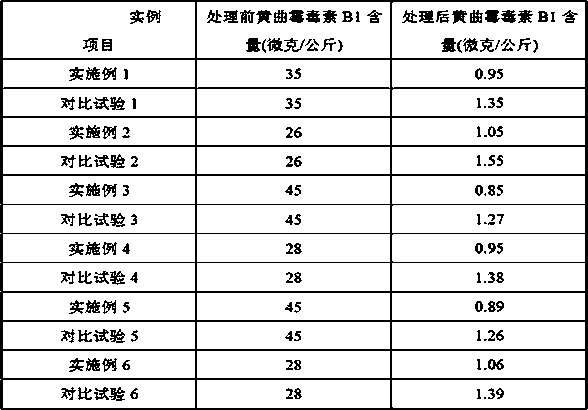
[0031] (2) Weigh 50ml of peanut oil and detect aflatoxin B in it before processing 1 The content is 35 micrograms / kg.

[0032] (3) Add peanut oil to be treated into a flask with magnetic stirring that can control the temperature, according to 1000 micrograms of aflatoxin B 1 Add the DNA buffer solution prepared in step (1) at a ratio of / 1 gram of DNA, and add the glycine-sodium hydroxide buffer solution as a washing solution to the peanut oil, so that the total amount of the buffer solution in the peanut oil is 5-10% of the total weight of the peanut oil.

[0033] (4) After fully mixing, start the heating device and magnetic stirr...

Embodiment 2

[0046] Example 2: Removal of corn oil aflatoxin.

[0047] (1) Select commercially available calf thymus DNA as the reagent in this example, and fully dissolve the calf thymus DNA with 50 mM glycine-sodium hydroxide buffer solution with a pH value of 9.00 to prepare a calf thymus DNA buffer solution with a concentration of 1%. spare.

[0048] (2) Weigh 50 ml of corn oil and detect aflatoxin B in it before processing 1 The content is 26 micrograms / kg.

[0049] (3) Add corn oil to be treated into a flask with adjustable temperature and magnetic stirring, according to 1000 micrograms of aflatoxin B 1 Add the DNA buffer solution prepared in step (1) at a ratio of 1 gram of DNA, and add the glycine-sodium hydroxide buffer solution to the corn oil as a washing solution, so that the total amount of the buffer solution in the corn oil is 5-5% of the total weight of the corn oil. 10%.

[0050] (4) After fully mixing, start the heating device and magnetic stirring device, stir thorou...

Embodiment 3

[0063] Embodiment 3: the removal of aflatoxin in peanut oil.

[0064] (1) Commercially available salmon sperm DNA was selected as the reagent in this example, and salmon sperm DNA was fully dissolved in 100 mM sodium carbonate-sodium bicarbonate buffer solution with a pH value of 9.50 to prepare a salmon sperm DNA buffer solution with a concentration of 1% for later use.

[0065] (2) Weigh 100ml of peanut oil and detect aflatoxin B in it before processing 1 The content is 45 micrograms / kg.

[0066] (3) Add peanut oil to be treated into a flask with magnetic stirring that can control the temperature, according to 1000 micrograms of aflatoxin B 1 Add the DNA buffer solution prepared in step (1) at a ratio of / 1 gram of DNA, and add the sodium carbonate-sodium bicarbonate buffer solution to the peanut oil as a washing solution, so that the total amount of the buffer solution in the peanut oil is 5-10% of the total weight of the peanut oil .

[0067] (4) After fully mixing, sta...

the structure of the environmentally friendly knitted fabric provided by the present invention; figure 2 Flow chart of the yarn wrapping machine for environmentally friendly knitted fabrics and storage devices; image 3 Is the parameter map of the yarn covering machine
Login to View More

PUM

No PUM Login to View More

Abstract

The invention relates to an aflatoxin capture and removal of oil based on ultraviolet reinforced DNA (deoxyribonucleic acid) and aflatoxin chelation. According to the method, on the premise of ensuring that DNA keeps a double-chain structure, according to the traditional oil refining and water washing technology, a DNA solution is directly added into oil polluted by aflatoxin for intensive mixing;a covalent cross-linking action of aflatoxin and a DNA basic group is initiated by rising a temperature, and regulating ionic strength and a pH (potential of hydrogen) value, and particularly throughultraviolet irradiation; the DNA and aflatoxin chelation is improved; aflatoxin and DNA are promoted to be combined into a stable aflatoxin-DNA affixture; and residual aflatoxin is removed by removing DNA through an oil and water separation technology. The efficiency of capture and removal of aflatoxin from the oil by DNA is obviously improved; and the method is completely different from the traditional aflatoxin removal method of edible oil, and is especially suitable for refining and detoxification of the oil with residual trace aflatoxin.

Description

technical field [0001] The invention relates to a method for trapping and eliminating the aflatoxin in oil based on the chimerization of UV-enhanced DNA and aflatoxin. Background technique [0002] Aflatoxin, mainly secreted by Aspergillus flavus or Aspergillus arasiticus, is currently recognized as the most carcinogenic natural substance, and is classified as Class I by the International Agency for Research on Cancer (IARC) of the World Health Organization Carcinogenic substance with very high hepatotoxicity, tumorigenicity, teratogenicity and mutagenicity. Almost all agricultural products that humans depend on for survival, including grains, peanuts, corn, soybeans, etc., may be caused by the growth of Aspergillus flavus (Aspergillus flavus) or Aspergillus arasiticus (Aspergillus arasiticus), among which peanut and corn are most likely to breed corresponding molds, and peanut oil and corn oil are most likely to be contaminated by aflatoxin. It is urgent to eliminate the ...

Claims

the structure of the environmentally friendly knitted fabric provided by the present invention; figure 2 Flow chart of the yarn wrapping machine for environmentally friendly knitted fabrics and storage devices; image 3 Is the parameter map of the yarn covering machine
Login to View More

Application Information

Patent Timeline
no application Login to View More
IPC IPC(8): C11B3/02C11B3/00
CPCC11B3/001C11B3/02
Inventor 李军生阎柳娟黄国霞
Owner GUANGXI UNIVERSITY OF TECHNOLOGY