
Organic Small Molecule Luminescent Materials and Organic Electroluminescent Devices
A technology of light-emitting materials and small molecules, applied in the fields of light-emitting materials, electro-solid devices, organic chemistry, etc., can solve the problems of limited organic small-molecule optoelectronic materials, and achieve the effect of improving external quantum efficiency, excellent device performance, and high decomposition temperature.
Patent Information
- Authority / Receiving Office
- CN · China
- Patent Type
- Patents(China)
- Current Assignee / Owner
- Publication Date
- 2020-08-04
Smart Images
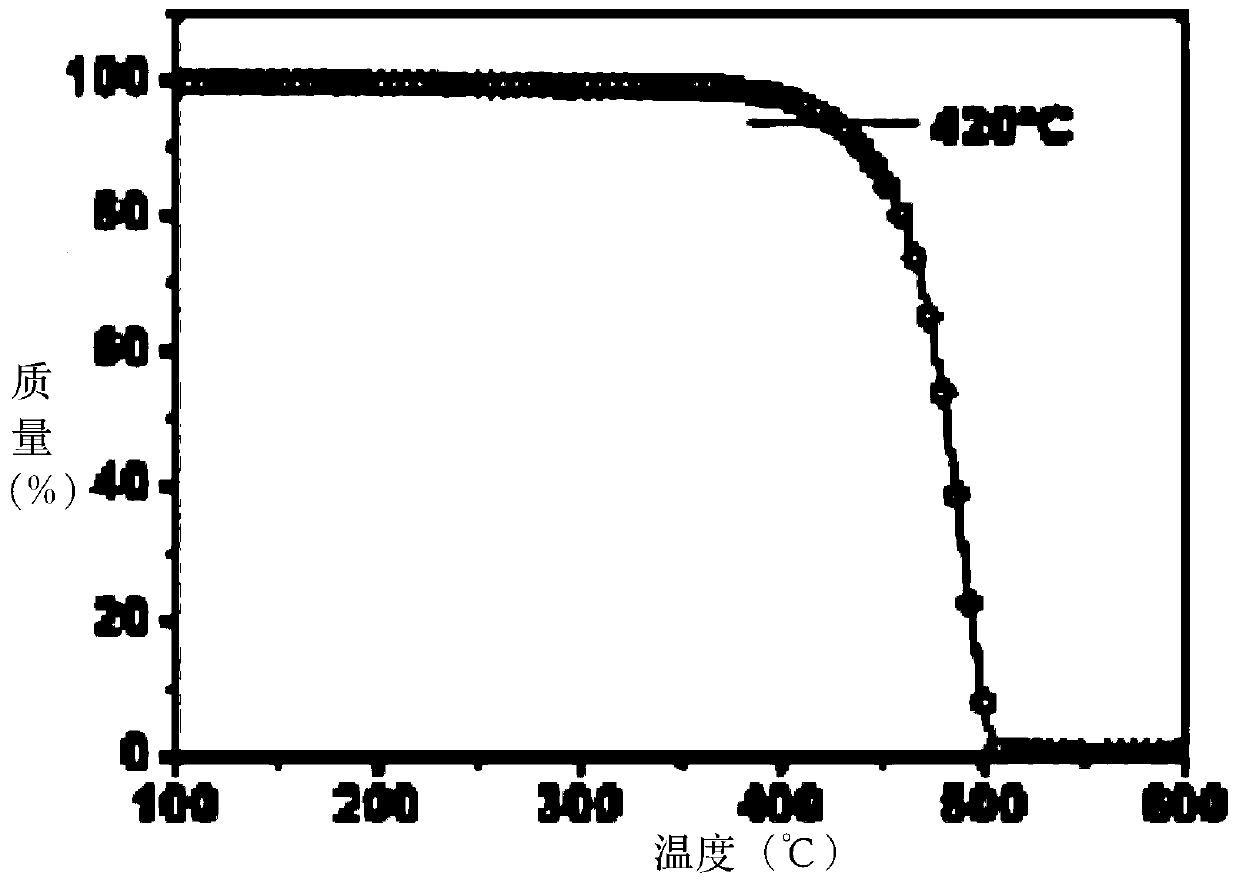
Figure 1 
Figure 2 
Figure 3
Abstract
Description
technical field
[0001] The invention relates to the field of organic electroluminescence, in particular to an organic small molecule luminescent material and an organic electroluminescent device using the organic small molecule luminescent material. Background technique
[0002] Organic electroluminescence (OLED) device is a self-luminous device, which has the advantages of low voltage, wide viewing angle, fast response speed, and good temperature adaptability. It is a new generation of display technology. At present, a few manufacturers have mass-produced OLED panels, and more companies have also entered the stage of R&D and mass production.
[0003] The principle of an organic electroluminescent device is that, under the action of an electric field, holes and electrons are injected from the anode and cathode respectively, pass through the hole injection layer, the hole transport layer, the electron injection layer, and the electron transport layer respectively, and then re...
Examples
Embodiment 1
[0058] The synthetic method 1 of 2-bromo-N-phenylaniline, chemical reaction formula is as follows:
[0059]
[0060] In a 250mL three-necked flask, add aniline (0.2mol, 18.6g), o-bromoiodobenzene (0.2mol, 56.58g), palladium acetate (0.6mmol, 134.4mg), sodium tert-butoxide (0.4 mol) into the flask in turn, then add 150mL of toluene, pass N 2 20 minutes, then add tert-butylphosphine (1.2mmol, 1.2ml), continue to pass through N 2 20 minutes, heat to reflux and stir for 12 hours. The temperature was lowered to room temperature, sodium tert-butoxide was removed by suction filtration, the solvent was distilled off under pressure, and the solvent was separated and purified by silica gel chromatography to obtain a colorless oily liquid (27.8 g, yield 56%).
Embodiment 2
[0062] The synthetic method 2 of 2-bromo-N-phenylaniline, chemical reaction formula is as follows:
[0063]
[0064] In a 250mL three-necked flask, add aniline (0.2mol, 18.6g), o-bromoiodobenzene (0.2mol, 56.58g), palladium acetate (0.6mmol, 134.4mg), sodium tert-butoxide (0.4 mol) was added in the flask successively, o-bis(2-phenyl)bis(diphenylphosphine) (0.6mmol, 340mg), then added the toluene of 150mL, logical N 2 20 minutes, heat to reflux and stir for 12 hours. The temperature was lowered to room temperature, sodium tert-butoxide was removed by suction filtration, the solvent was distilled off under pressure, and the solvent was separated and purified by silica gel chromatography to obtain a colorless oily liquid (44.2 g, yield 89%).
[0065] After comparing the above Example 1 and Example 2, it can be found that by changing the catalyst ligand from t-butylphosphine to o-bis(2-phenyl)bis(diphenylphosphine), 2-bromo-N-benzene Aniline yield increased from 56% to 89%. ...
Embodiment 3
[0067] The preparation method 1 of (4-bromophenyl)-phenyl-carbamic acid tert-butyl ester, chemical reaction formula is as follows:
[0068]
[0069] In a 500 ml one-necked flask, di-tert-butyl dicarbonate (BOC) (0.2mol, 43.6g) was added to 400 ml of tetrahydrofuran at room temperature, and then p-N-(dibromophenyl)aniline (0.1mol , 24.8g), heated to reflux and stirred for 24 hours. The mixture was then poured into 1 L of water, and the product was extracted with dichloromethane. Dry the organic phase with anhydrous magnesium sulfate, remove the solvent after separation, and separate and purify with silica gel chromatography to obtain a colorless oily liquid (32.0 g, yield 92%).