
Preparation method of vildagliptin intermediate
An intermediate, proline amide technology, applied in the field of preparation of vildagliptin intermediate -1-pyrrolidine-2-amide, can solve the problems of high solubility, low solubility, large loss, etc., and achieve excellent product quality and easy operation Simple, Gentle Effects
Patent Information
- Authority / Receiving Office
- CN · China
- Current Assignee / Owner
- Publication Date
- 2019-12-20
- Estimated Expiration
- Not applicable · inactive patent
Smart Images
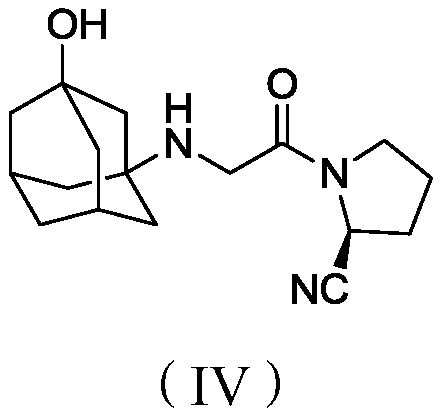
Figure 1 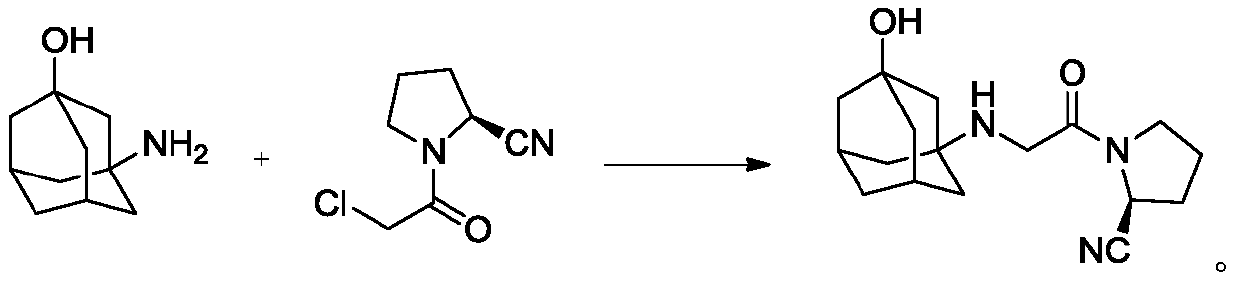
Figure 2 
Figure 3
Abstract
Description
technical field
[0001] The application relates to a preparation method of vildagliptin intermediate (S)-1-(2-chloroacetyl)pyrrolidine-2-amide, which belongs to the technical field of heterocyclic compounds. Background technique
[0002] Diabetes mellitus (DM) is one of the most important non-communicable diseases currently threatening human health. In 2015, the number of patients worldwide reached 415 million. As a big country with diabetes, the prevalence of diabetes in my country continues to rise and has reached 11.6% of the total population, of which more than 90% are type 2 diabetes mellitus (T2DM). Diabetes and its complications seriously affect the quality of life of patients, and bring a heavy burden to patients, the national economy, and medical insurance. Current interventions for T2DM mainly include diet control and the use of oral and / or injectable hypoglycemic agents on the basis of exercise therapy. Dipeptidyl peptidase-4 (dipeptidyl peptidase-4, DPP-4) inhib...
Examples
Embodiment 1
[0026] Weigh 20.0g of L-prolineamide in a 250mL four-neck flask, add 200mLTHF, heat up to 40°C under stirring to dissolve L-prolineamide, cool down to 0°C after dissolving, add 20.2g of propylene oxide (2.00eq ), dropwise added 35.4g of chloroacetyl chloride (1.79eq), and gradually produced a white suspension. After 3 hours of dropwise addition, the heat preservation reaction was carried out for 2 hours, and suction filtration gave a white solid, washed with a small amount of THF, and dried in vacuo at 40°C to obtain 24.8 grams of the product. The yield was 74.4%, and the content detected by HPLC was 99.52%.
Embodiment 2
[0028] Weigh 20.0g of L-prolineamide into a 250mL four-neck flask, add 150mL of dichloromethane, heat up to 40°C under stirring to dissolve L-prolineamide, cool down to 0°C after dissolving, add 20.2g of propylene oxide (2.00eq), 35.4g chloroacetyl chloride (1.79eq) was added dropwise, and the solid produced during the dropwise addition formed a spherical shape. After the dropwise addition was completed, the heat preservation reaction was carried out for 2 hours, and the viscous solid was filtered by HPLC detection and contained a large amount of unreacted prophylamine Aminoamide, experiment failed.
Embodiment 3
[0030] Weigh 20.0g of L-prolinamide in a 250mL four-neck flask, add 150mL of acetonitrile, heat up to 40°C under stirring to dissolve L-prolineamide, cool down to 0°C after dissolving, add 20.2g of propylene oxide (2.00 eq), 35.4g chloroacetyl chloride (1.79eq) was added dropwise, and the solid produced during the dropwise addition formed a spherical shape. After the dropwise addition, the insulation reaction was carried out for 2h, and the viscous solid HPLC detected by filtration contained a large amount of unreacted prolineamide , the experiment failed.