
Electrochemical upgrading method for bio-oil
An electrochemical and bio-oil technology, which is applied in the petroleum industry, liquid carbon-containing fuels, fuels, etc., can solve the problems of poor thermal stability of bio-oil, difficult reactions, and reduced upgrading efficiency, and achieves no coking, carbon deposits, acid The effect of content reduction, suitability for transportation and storage
- Summary
- Abstract
- Description
- Claims
- Application Information
AI Technical Summary
Problems solved by technology
Method used
Image

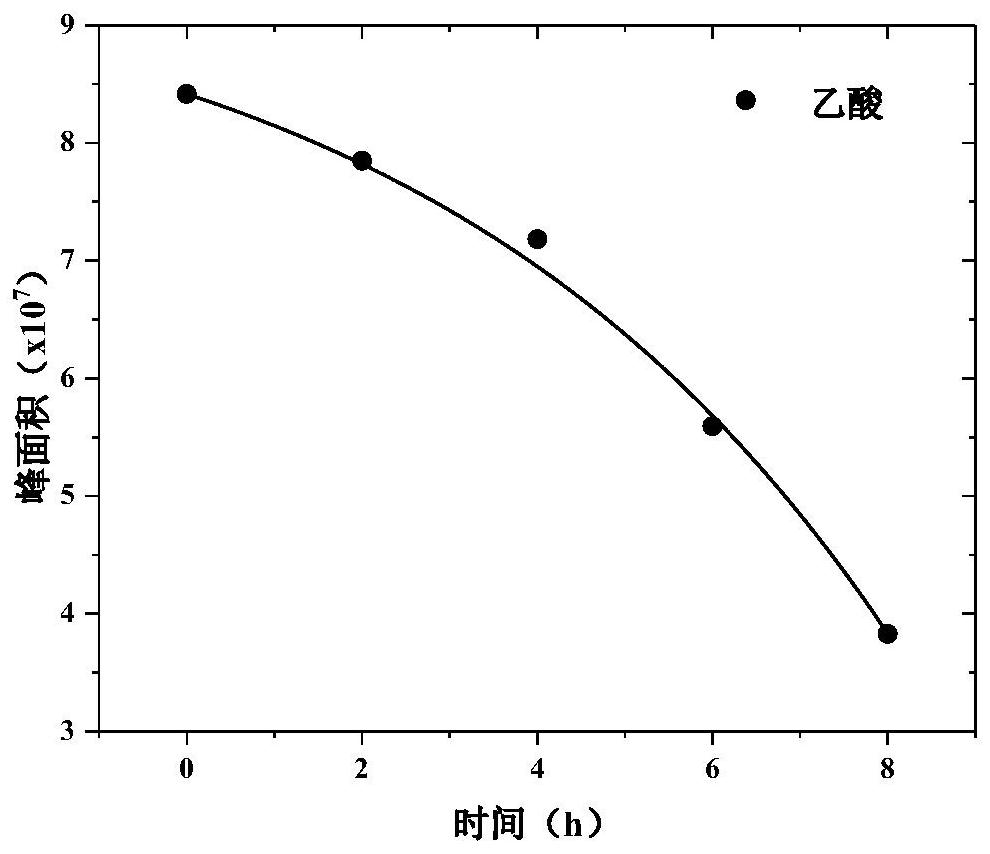
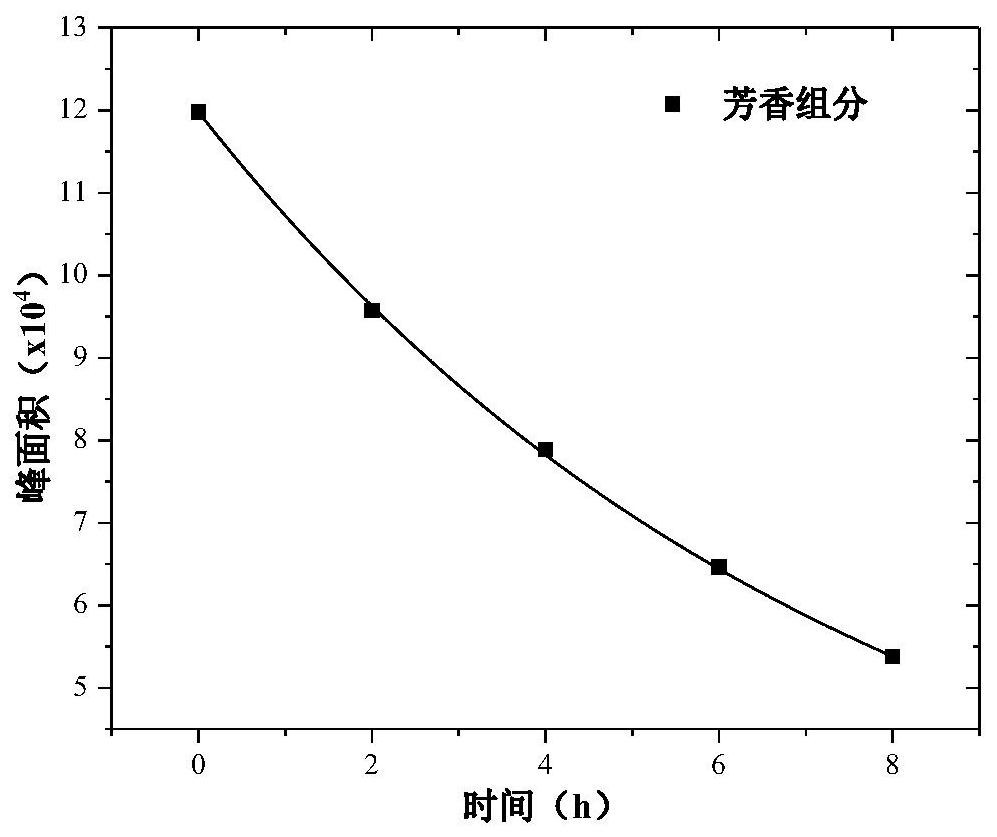
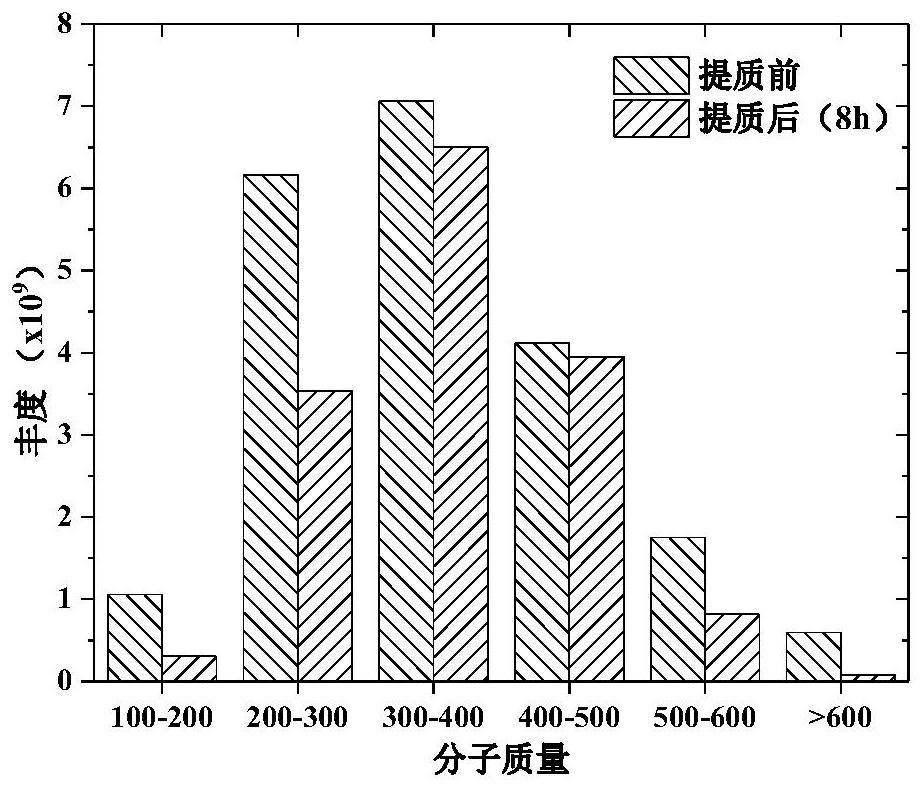
Examples
Embodiment 1
[0043] This embodiment specifically includes the following steps:
[0044] (a) first add 0.1mol / L LiCl supporting electrolyte to methanol, then mix bio-oil and methanol at a mass ratio of 4:1, and the mixed liquid is used as catholyte for standby;
[0045] (b) configuration concentration is the dilute sulfuric acid solution of 0.5mol / L as anolyte standby;
[0046] (c) Assembly of electrochemical reactor: prepare H-type electrolytic cell, separate it with Nafion-117 cation exchange membrane in the middle, put catholyte and anolyte into both sides of H-type electrolytic cell respectively, and insert platinum in catholyte A sheet electrode, a platinum sheet electrode is inserted in the anolyte, and the electrode is connected with a constant current meter;
[0047] (d) After 15 minutes of passing nitrogen gas into the catholyte side, turn on the power supply, set a constant current of 50 mA, a reaction temperature of 20° C., and a reaction time of 8 hours to realize bio-oil upgra...
Embodiment 2
[0052] The concentration of dilute sulfuric acid in the anolyte used in this embodiment is 0.2 mol / L, and other conditions are the same as those in Embodiment 1. After upgrading for 8 hours, the content of acetic acid in bio-oil decreased by 26.7%, the content of aromatic components decreased by 34.1%, and the molecular weight of bio-oil decreased.
Embodiment 3
[0054] This embodiment specifically includes the following steps:
[0055] (a) First add 0.1mol / L Bu to methanol 4 NBF 4 supporting electrolyte, and then mix bio-oil and methanol at a mass ratio of 6:1, and the mixed liquid is used as catholyte for standby;
[0056] (b) configuration concentration is the dilute sulfuric acid solution of 0.5mol / L as anolyte standby;
[0057] (c) Assembly of electrochemical reactor: prepare H-type electrolytic cell, separate it with Nafion-117 cation exchange membrane in the middle, put catholyte and anolyte into both sides of H-type electrolytic cell respectively, insert carbon into catholyte For the ruthenium-based electrode, a platinum sheet electrode is inserted into the anolyte, and the electrodes are connected by a galvanostat; the carbon-based ruthenium electrode is prepared by electroplating (the specific process of the electroplating method can directly refer to relevant prior art).
[0058] (d) After feeding nitrogen into the cathol...
PUM
 Login to View More
 Abstract
Description
Claims
Application Information
 Login to View More