
Preparation method of nano-cellulose-based oxygen isolation composite film
A technology of nanocellulose and composite film, which is applied in the field of preparation of nanocellulose-based oxygen-barrier composite film, which can solve the problems of poor water resistance, easy shrinkage of TOCN film, decline in mechanical properties and oxygen barrier performance, and achieve excellent water resistance and The effect of mechanical properties and excellent oxygen barrier performance
Patent Information
- Authority / Receiving Office
- CN · China
- Current Assignee / Owner
- Publication Date
- 2021-01-12
Smart Images
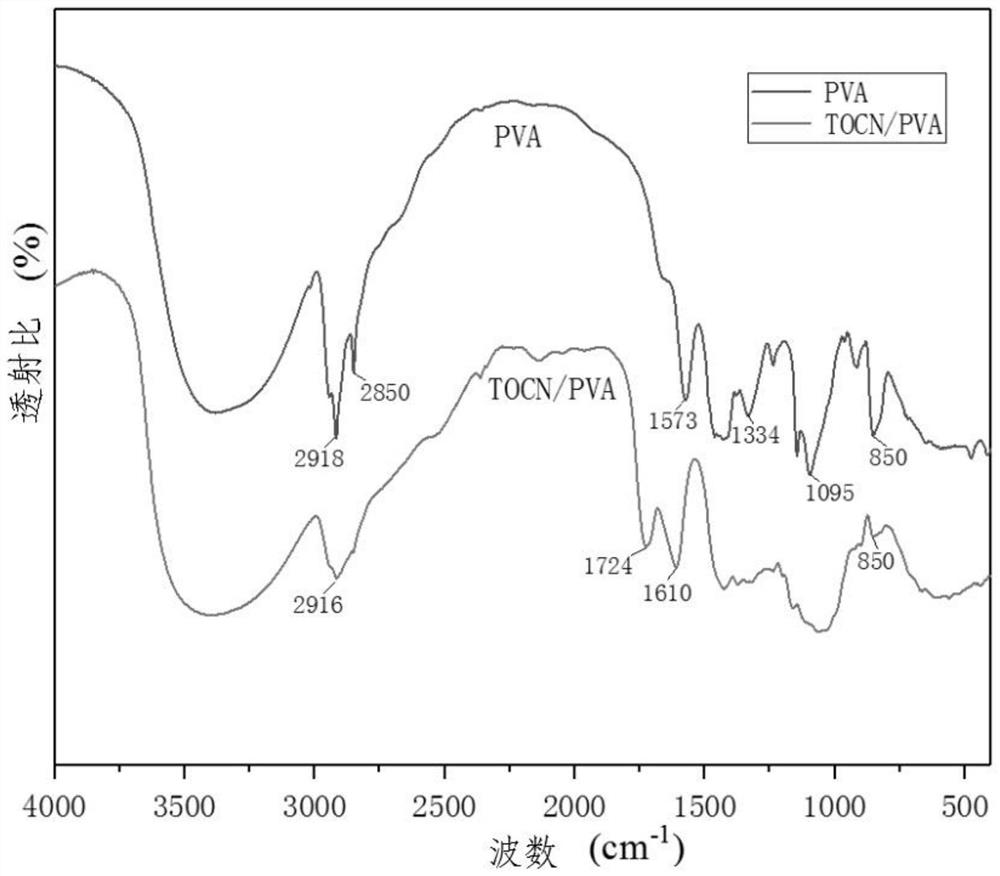
Figure 1 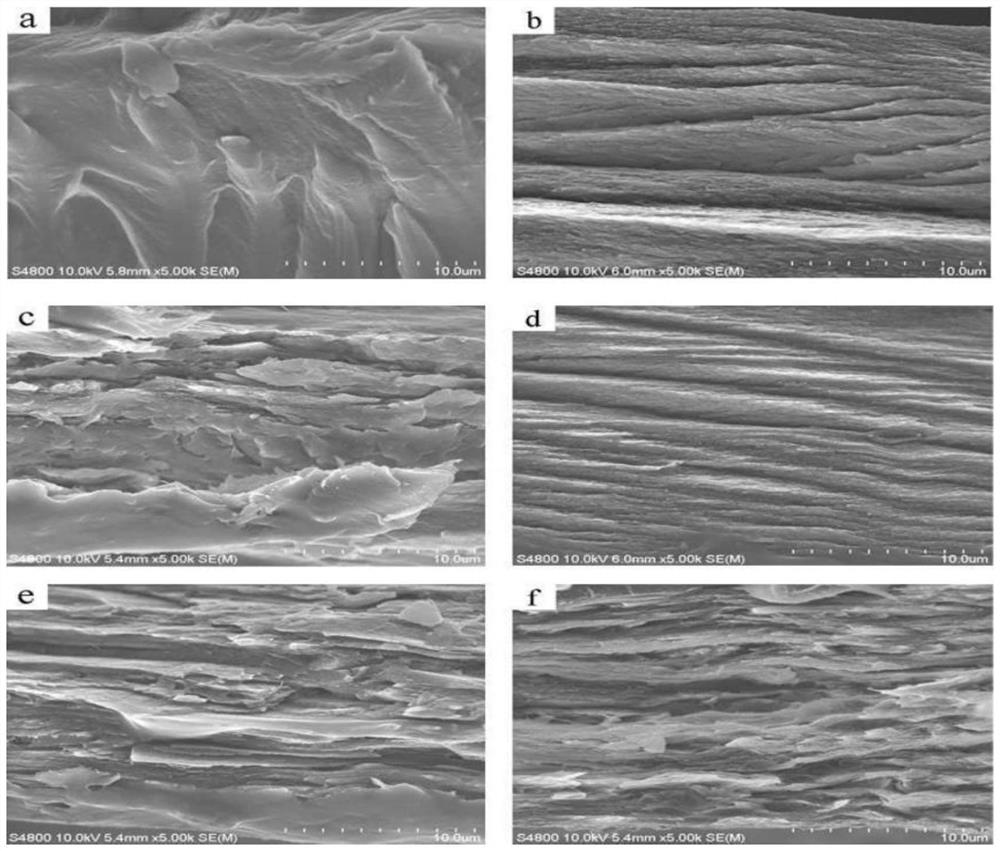
Figure 2 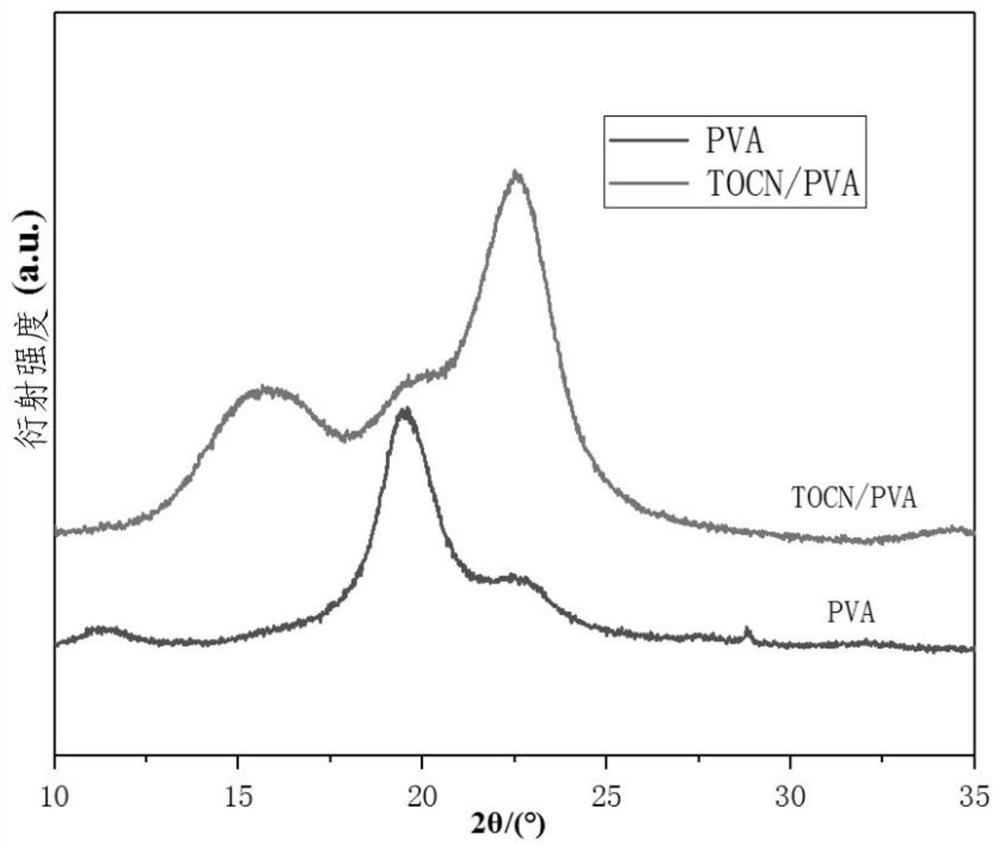
Figure 3
Abstract
Description
technical field
[0001] The invention belongs to the technical field of oxygen-insulating composite films, and in particular relates to a preparation method of nano-cellulose-based oxygen-insulating composite films. Background technique
[0002] In recent years, nanomaterials have attracted much attention in the field of high-performance products. As an environmentally friendly natural nanomaterial, nanocellulose has attracted more attention. Cellulose nanofibrils (TOCN) prepared by oxidation of tetramethylpiperidine oxide (TEMPO) have a large aspect ratio. , uniform width and individualized nano-dispersion characteristics, so it is easy to form a film. In addition, TOCN also has many unique properties, such as excellent mechanical properties and oxygen barrier properties, and has a good application prospect in the packaging field. However, due to the large amount of hydroxyl and carboxyl groups on the surface of TOCN, the TOCN film is easy to shrink after drying. In additi...
Examples
Embodiment 1
[0027] The preparation method of the nanocellulose-based oxygen-barrier composite film of the present embodiment, the method is:
[0028] S1. Add sodium chlorite a, glacial acetic acid a and distilled water to the larch pulp powder to obtain a pre-extraction solution, perform delignification treatment in a water bath at a temperature of 75°C, and add sodium chlorite b every 1 hour and glacial acetic acid b, add a total of 2 times, carry out delignification treatment for 4 hours, and obtain the initial lignocellulose extract, and then vacuum filter, wash with deionized water until neutral, wash with acetone, and store at a temperature of 30°C dry under the condition of dry, obtain the lignocellulose of water content≤10%; The addition amount of described sodium chlorite b every time is the same as the addition amount of sodium chlorite a in the described pre-extract; The glacial acetic acid b The supplementary amount each time is the same as the addition amount of glacial acetic...
Embodiment 2
[0055] The preparation method of the nanocellulose-based oxygen-barrier composite film of the present embodiment, the method is:
[0056] S1. Add sodium chlorite a, glacial acetic acid a and distilled water to the larch pulp powder to obtain a pre-extraction solution, perform delignification treatment in a water bath at a temperature of 75°C, and add sodium chlorite b every 1 hour And glacial acetic acid b, add 2 times in total, carry out delignification treatment for 4 hours, obtain the lignocellulose primary extract, then vacuum filter, wash with deionized water until neutral, wash with acetone, at a temperature of 25 ℃ dry under the condition of dry, obtain the lignocellulose of water content≤10%; The addition amount of described sodium chlorite b every time is the same as the addition amount of sodium chlorite a in the described pre-extract; The glacial acetic acid b The supplementary amount each time is the same as the addition amount of glacial acetic acid a in the pre-e...