
Micromolecular heavy oil viscosity reduction polymer and preparation method thereof
A technology of small molecules and polymers, applied in the direction of drilling compositions, chemical instruments and methods, etc., to achieve the effects of improving dissolution rate and injection performance, rapid dissolution performance, and good injection performance
- Summary
- Abstract
- Description
- Claims
- Application Information
AI Technical Summary
Problems solved by technology
Method used
Image

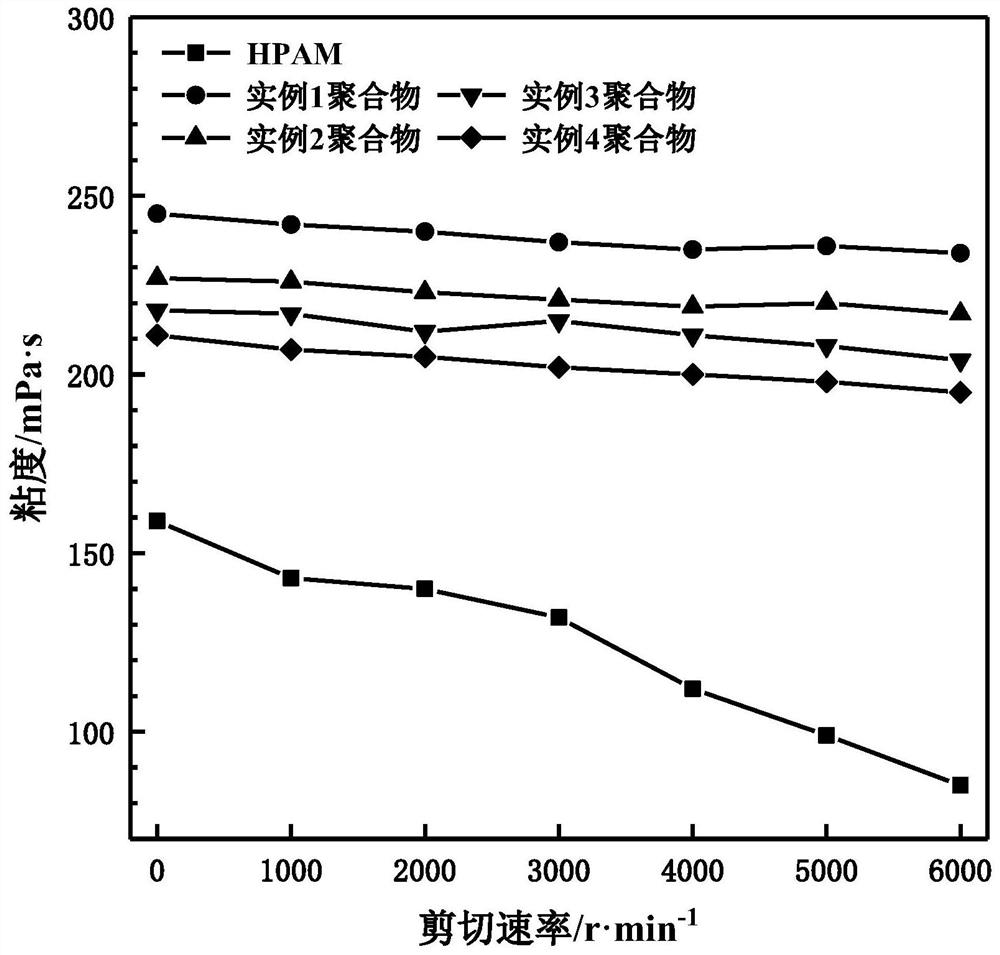
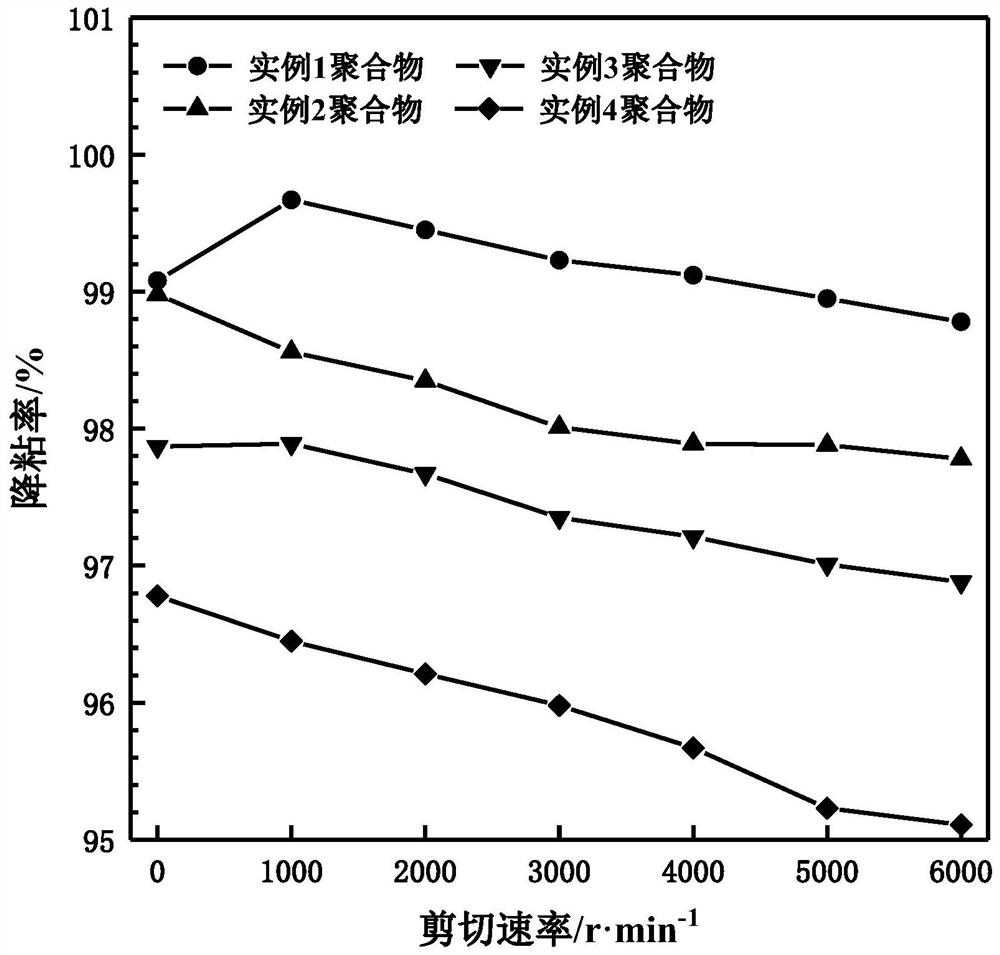
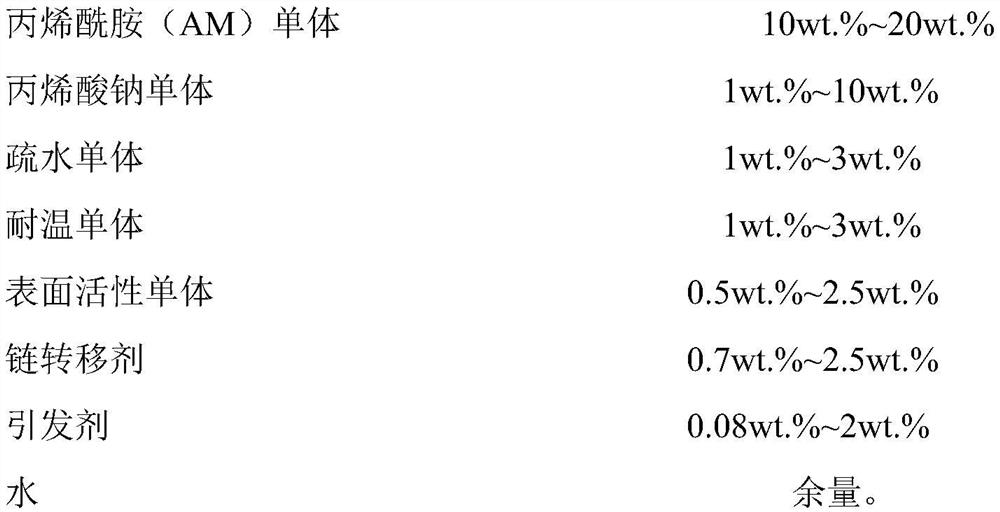
Examples
Embodiment 1
[0044] This embodiment synthesizes a kind of small molecule heavy oil viscosity reducing polymer, and its raw material comprises by mass:
[0045] Acrylamide monomer 8.672g; sodium acrylate monomer 3.845g; hydrophobic monomer 0.898g; temperature-resistant monomer 0.722g; surface active monomer 0.375g; initiator 0.06g; chain transfer agent 0.788g;
[0046] The hydrophobic monomer used was cetyldimethylallyl ammonium chloride.
[0047] The temperature-resistant monomer used is sodium 4-styrenesulfonate.
[0048] The surface-active monomer used is vinyl polyoxyethylene ether.
[0049] The initiator used is potassium persulfate / sodium bisulfite mixed system (molar ratio 1:1).
[0050] The chain transfer agent used is a RAFT chain transfer agent of formula I.
[0051] The preparation process includes the following steps:
[0052] (1) Weigh respectively 8.672g of acrylamide, 3.845g of sodium acrylate, 0.898g of hydrophobic monomer, 0.722g of temperature-resistant monomer, and 0.37...
Embodiment 2
[0058] This embodiment synthesizes a kind of small molecule heavy oil viscosity reducing polymer, and its raw material comprises by mass:
[0059] 6.899g of acrylamide; 2.344g of sodium acrylate; 1.021g of hydrophobic monomer; 0.986g of temperature-resistant monomer; 0.675g of surface active monomer; 0.078g of initiator;
[0060] The hydrophobic monomer used was cetyldimethylallyl ammonium chloride.
[0061] The temperature-resistant monomer used is sodium 4-styrenesulfonate.
[0062] The surface-active monomer used is vinyl polyoxyethylene ether.
[0063] The initiator used is potassium persulfate / sodium bisulfite mixed system (molar ratio 1:1).
[0064] The chain transfer agent used is a RAFT chain transfer agent of formula I.
[0065] The preparation process includes the following steps:
[0066] (1) Weigh respectively 6.899g of acrylamide, 2.344g of sodium acrylate, 1.021g of hydrophobic monomer, 0.986g of temperature-resistant monomer, and 0.675g of surface-active mon...
Embodiment 3
[0072] This embodiment synthesizes a kind of small molecule heavy oil viscosity reducing polymer, and its raw material comprises by mass:
[0073] Acrylamide monomer 8.672g; sodium acrylate monomer 3.845g; hydrophobic monomer 0.898g; temperature-resistant monomer 0.722g; surface active monomer 0.375g; initiator 0.06g; chain transfer agent 0.788g;
[0074] The hydrophobic monomer used was cetyldimethylallyl ammonium chloride.
[0075] The temperature-resistant monomer used is 2-acrylamide-2-methylpropanesulfonic acid (AMPS).
[0076] The surface-active monomer used is vinyl polyoxyethylene ether.
[0077] The initiator used is potassium persulfate / sodium bisulfite mixed system (molar ratio 1:1).
[0078] The chain transfer agent used is a RAFT chain transfer agent of formula I.
[0079] The preparation process includes the following steps:
[0080] (1) Weigh respectively 8.672g of acrylamide, 3.845g of sodium acrylate, 0.898g of hydrophobic monomer, 0.722g of temperature-re...
PUM
 Login to View More
 Abstract
Description
Claims
Application Information
 Login to View More