
Preparation method and application of conductive polysiloxane-polyaniline anticorrosive coating
A polysiloxane, anti-corrosion coating technology, applied in anti-corrosion coatings, conductive coatings, coatings and other directions, can solve the problem of insignificant electrochemical corrosion effect, improve anti-corrosion performance and practicability, good anti-corrosion performance, reduce The effect of resource consumption
- Summary
- Abstract
- Description
- Claims
- Application Information
AI Technical Summary
Problems solved by technology
Method used
Image

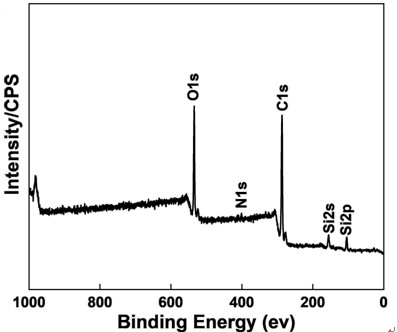
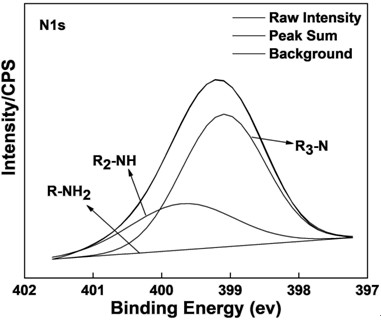
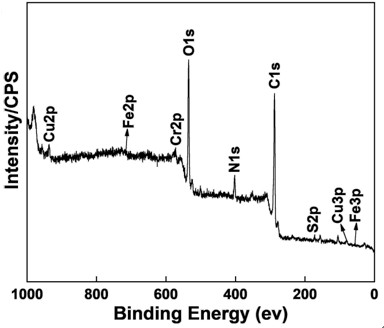
Examples
Embodiment 1
[0040] (1) Preparation of PANIC film: Shanghai CHI660E three-electrode electrochemical workstation was used, the reference electrode was SCE, the counter electrode was platinum wire, the working electrode was 304 stainless steel, polished with 800#~1000# water-phase sandpaper, and then in acetone and ethanol respectively After ultrasonic cleaning for 10 minutes, evaporate to dry naturally. At room temperature, the conductive PANIC film was prepared by cyclic voltammetry, and the electrolyte was 0.2mol / L H 2 SO 4 The aqueous solution was added with 0.2mol / L An, 0.2mol / L DL-MA and 0.2mol / L CAM, and the electrochemical parameters were -0.2~1.0V, 20mV / s and 20 cycles. The obtained samples were heat-treated at 60°C for 12 h in a blast drying oven.
[0041] (2) Preparation of POS suspension: In 50mL absolute ethanol, add 0.1mL distilled water and 0.2g SiO2 , 0.03mol / L DTMS, 0.02mol / L TEOS, 0.05mol / L GPTS and 0.025mol / L OA, the dissolution of OA requires ultrasonic treatment for 10...
Embodiment 2
[0044] (1) Preparation of PANIC film: Shanghai CHI660E three-electrode electrochemical workstation was used, the reference electrode was SCE, the counter electrode was platinum wire, the working electrode was 304 stainless steel, polished with 800#~1000# water-phase sandpaper, and then in acetone and ethanol respectively After ultrasonic cleaning for 10 minutes, evaporate to dry naturally. At room temperature, the conductive PANIC film was prepared by cyclic voltammetry, and the electrolyte was 0.2mol / L H 2 SO 4 The aqueous solution was added with 0.2mol / L An, 0.2mol / L DL-MA and 0.2mol / L CAM, and the electrochemical parameters were -0.2~1.0V, 20mV / s and 20 cycles. The obtained samples were heat-treated at 60°C for 12 h in a blast drying oven.
[0045] (2) Preparation of POS suspension: In 50mL absolute ethanol, add 0.1mL distilled water and 0.3g SiO 2 , 0.03mol / L DTMS, 0.02mol / L TEOS, 0.05mol / L GPTS and 0.025mol / L OA, the dissolution of OA requires ultrasonic treatment for ...
Embodiment 3
[0048] (1) Preparation of PANIC thin film: Shanghai CHI660E three-electrode electrochemical workstation was used, the reference electrode was SCE, the counter electrode was platinum wire, the working electrode was 304 stainless steel, which was polished with 800#~1000# aqueous phase sandpaper, and then in acetone and ethanol respectively After ultrasonic cleaning for 10 minutes, evaporate to dry naturally. At room temperature, the conductive PANIC film was prepared by cyclic voltammetry, and the electrolyte was 0.2mol / L H 2 SO 4 The aqueous solution was added with 0.2mol / L An, 0.2mol / L DL-MA and 0.2mol / L CAM, and the electrochemical parameters were -0.2~1.0V, 20mV / s and 20 cycles. The obtained samples were heat-treated at 60°C for 12 h in a blast drying oven.
[0049] (2) Preparation of POS suspension: In 50mL absolute ethanol, add 0.1mL distilled water and 0.4g SiO 2 , 0.03mol / L DTMS, 0.02mol / L TEOS, 0.05mol / L GPTS and 0.025mol / L OA, the dissolution of OA requires ultrason...
PUM
| Property | Measurement | Unit |
|---|---|---|
| Water droplet contact angle | aaaaa | aaaaa |
Abstract
Description
Claims
Application Information
 Login to View More