Diesel engine waste heat recovery and utilization system based on steam reforming of methanol to produce hydrogen

A technology of reforming hydrogen production and waste heat recovery, which is applied in the direction of charging system, hydrogen/synthesis gas production, hydrogen, etc., which can solve the problem of inability to meet the recovery of waste heat and energy utilization of marine diesel engines, the difficulty of fully recovering waste heat, and optimizing in-cylinder combustion and other issues, to achieve the effect of improving comprehensive utilization efficiency, reducing ship energy consumption, and improving combustion performance

CN112901322BActive Publication Date: 2022-04-26厦门集美大学资产经营有限公司
13 Cites 0 Cited by

Patent Information

Authority / Receiving Office
CN · China
Patent Type
Patents(China)
Current Assignee / Owner
Publication Date
2022-04-26

Smart Images

  • Figure 1
    Figure 1
  • Figure 2
    Figure 2
  • Figure 3
    Figure 3
Patent Text Reader

Abstract

The present invention proposes a diesel exhaust waste heat recovery and utilization system based on methanol steam reforming to produce hydrogen, which is equipped with a reforming hydrogen production reactor that generates hydrogen-rich reformed gas with methanol steam, and also has a multiple hydrogen storage units. Adsorption hydrogen storage module; the system receives high-temperature waste gas through the heating gas circuit, and distributes the received high-temperature waste gas to the reforming hydrogen production reactor and multiple hydrogen storage units for heat supply according to the chemical reaction environment requirements through the waste gas distributor, and the hydrogen storage unit The working condition can be switched between the adsorption working condition and the desorption working condition; in the adsorption hydrogen storage module, the hydrogen storage unit in the adsorption working condition absorbs and stores the hydrogen component in the hydrogen-rich reformed gas, and the hydrogen storage unit in the desorption working condition The hydrogen unit releases the hydrogen stored in it and supplies hydrogen to external equipment; the invention can use methanol steam reforming to recover the waste heat of the exhaust gas according to the specific emission conditions of the marine diesel engine, and through the mixed combustion of the engine, the hydrogen storage of metal hydride and the The way of fuel cell is to comprehensively utilize this part of energy.
Need to check novelty before this filing date? Find Prior Art

Description

technical field

[0001] The invention relates to the technical field of waste heat recovery and utilization of marine diesel engine exhaust gas, in particular to a diesel engine exhaust gas waste heat recovery and utilization system based on methanol steam reforming to produce hydrogen. Background technique

[0002] About one-third of the energy of the fuel consumed by the internal combustion engine is wasted with the emission of the exhaust gas. The recovery and utilization technology of this part of the energy is called waste heat recovery. The waste heat recovery can greatly improve the overall efficiency of the internal combustion engine device. The main methods of waste heat recovery of marine diesel engines are turbochargers, exhaust gas boilers and thermochemical recovery. Thermochemical recovery is an effective and feasible waste heat recovery scheme for small and medium-sized ships without waste gas boilers along rivers and coastal areas. The purpose is to use the h...

Examples

Embodiment

[0066] In this example, the exhaust gas discharge temperature of the marine diesel engine is 500-700K, and the reaction temperature range of methanol steam reforming for hydrogen production is 450-600K. If magnesium-based hydrogen storage alloy is selected as the hydrogen storage material, the adsorption temperature of hydrogen The range is 400-500K, and the hydrogen desorption temperature range is 450-550K.

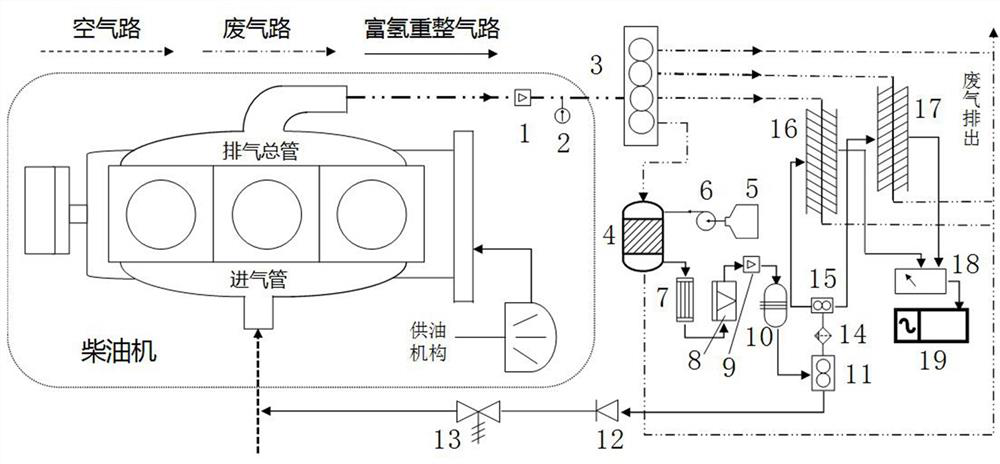
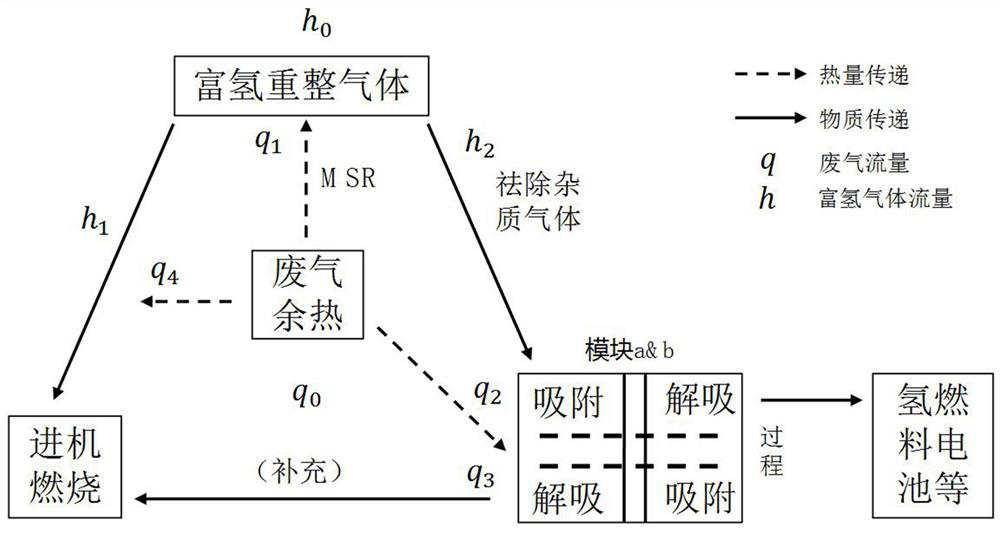
[0067] The exhaust gas discharged from the marine diesel engine is divided into four paths by the gas distribution device (controlled by the solenoid valve), and enters the reforming reactor, the adsorption hydrogen storage device a and b respectively to provide heat for the reaction and hydrogen adsorption and desorption, and the remaining exhaust gas is bypassed and discharged. atmosphere. At this time, the mixed vapor of methanol and water in the reforming reactor reacts to generate hydrogen-rich reformed gas, which is cooled (cooling device 7) and dried (drying devic...