Humidifying gas induction or supply system

a gas induction or supply system technology, applied in the field of humidification gas induction or supply system, can solve the problems of complex system, high implementation cost, and large implementation cost, and place a significant constraint on potential implementation

US20030025219A1Inactive Publication Date: 2003-02-06DESIGN TECH & INNOVATION
9 Cites 12 Cited by

Patent Information

Authority / Receiving Office
US · United States
Patent Type
Applications(United States)
Current Assignee / Owner
Publication Date
2003-02-06
Estimated Expiration
Not applicable · inactive patent

Smart Images

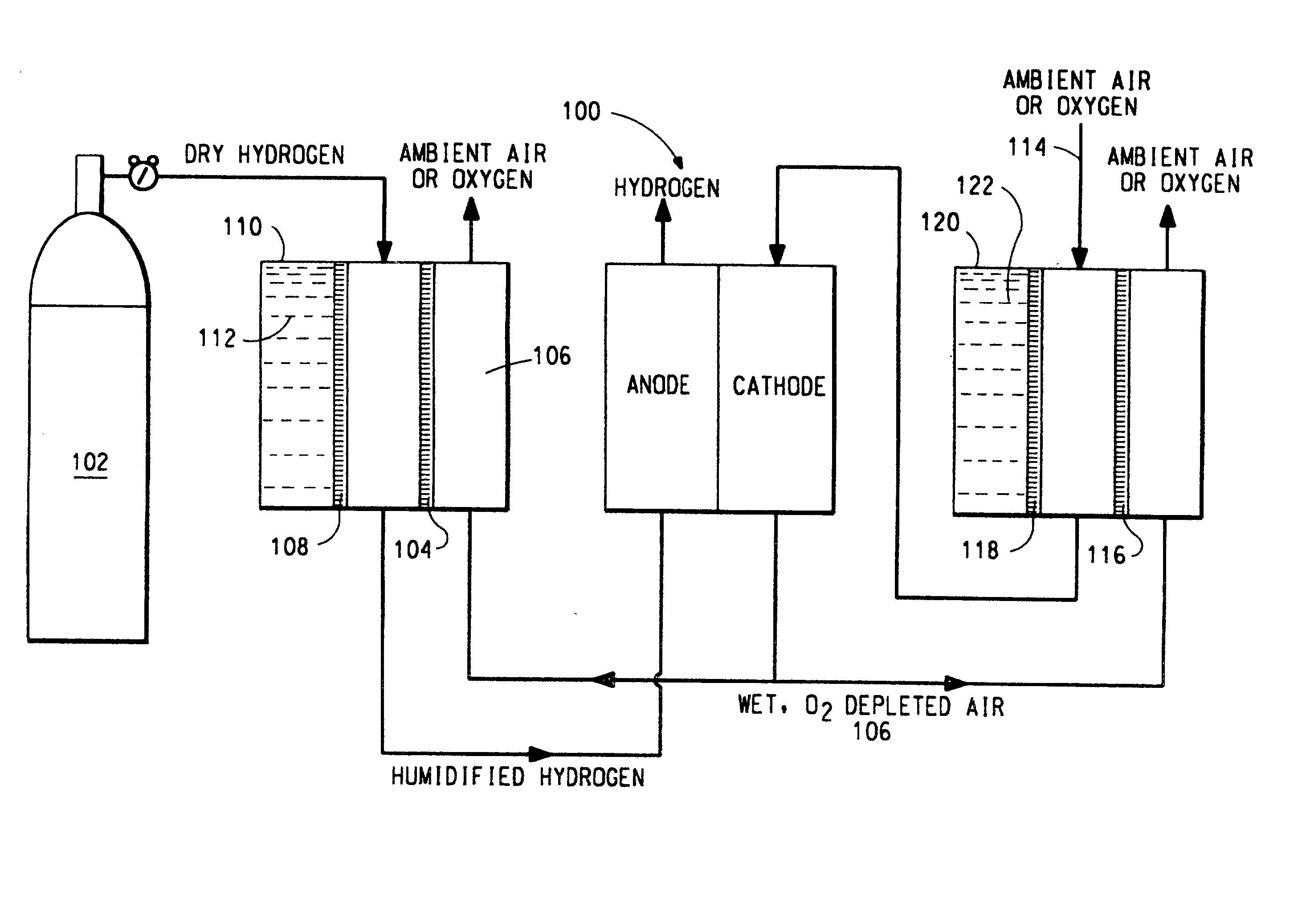
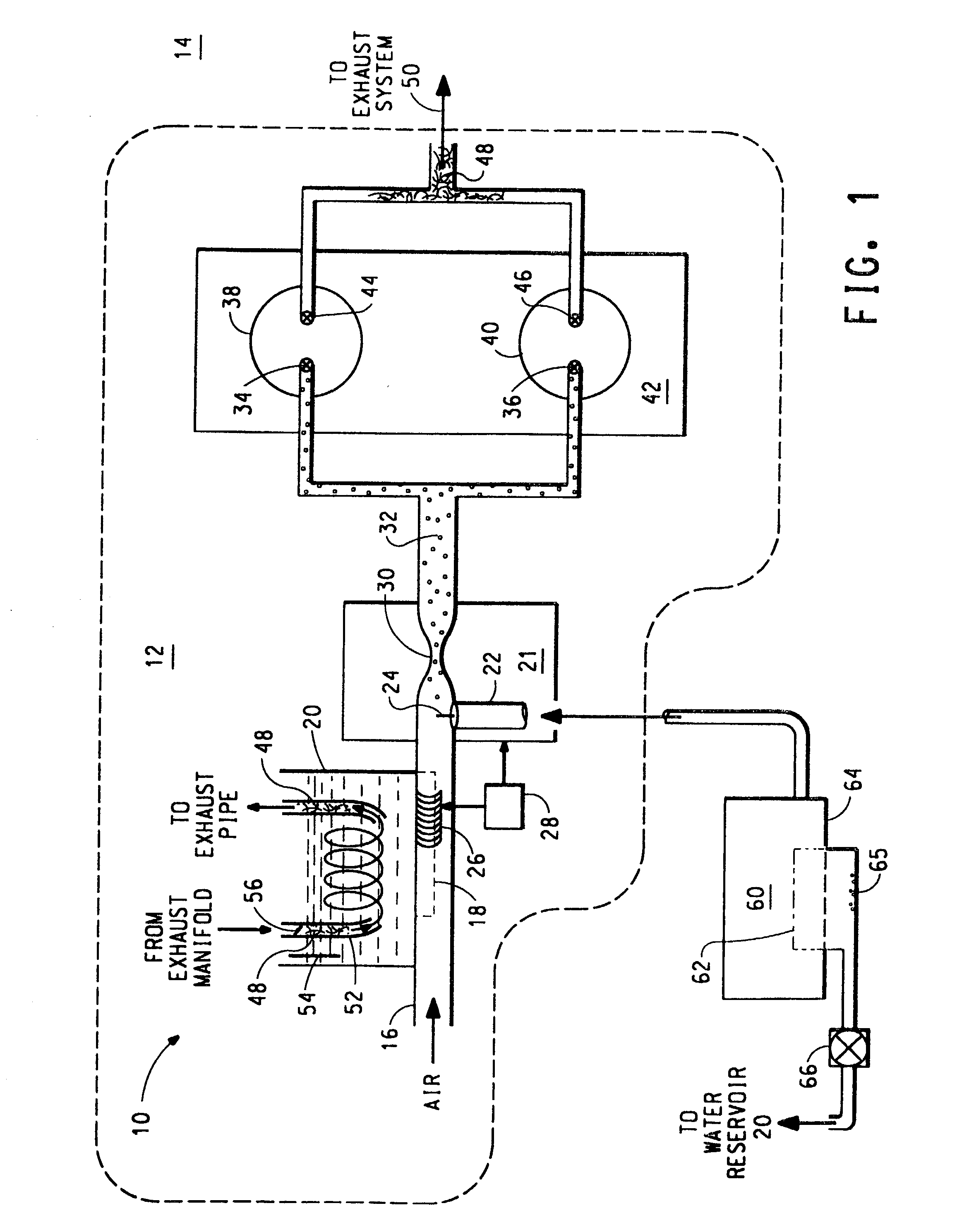
  • Figure 1
    Figure 1
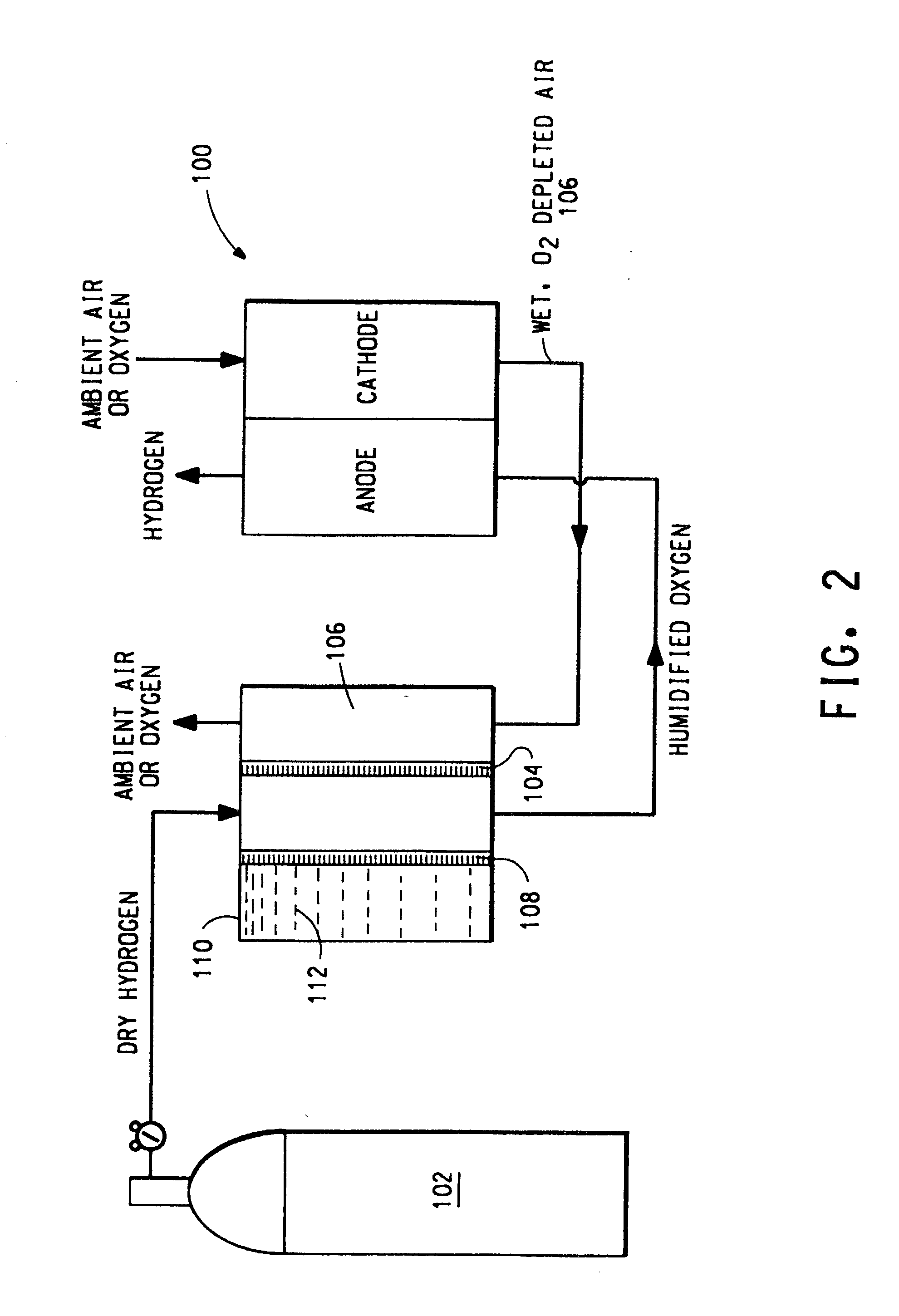
  • Figure 2
    Figure 2
  • Figure 3
    Figure 3
Patent Text Reader

Abstract

Water vapor is introduced into an inlet air stream (16) of an engine (12), for example, by a pervaporation process through a non-porous hydrophilic membrane (18). A water reservoir (20), which can contain contaminated water, provides a vapor pressure gradient across the hydrophilic membrane (18) into the inlet air stream (16), while the rate of delivery of the water vapor to a cylinder (38-40) is self-regulated by the rate of flow of air across the membrane. The hydrophilic membrane (18) therefore also filters the water from the water reservoir (20) to an extent that pure water vapor is provided to the air inlet stream (16). Delivery of water vapor can nevertheless be controlled using a hood (26) that slides over the hydrophilic membrane to limit its exposed surface area. Alternatively, water vapor is introduced into one or more of the gas streams of a fuel cell by separating the gas stream from the wet exhaust gas stream by a hydrophilic membrane such that moisture passes across the membrane to moisten the gas stream and thereby prevent drying out of the proton exchange membrane.
Need to check novelty before this filing date? Find Prior Art

Description

BACKGROUND TO THE INVENTION

[0001] This invention relates, in general, to humidifying gas induction or supply systems and particularly, but not exclusively, to a humidifying air induction or supply system of an internal combustion engine and a humidifying gas induction or supply system for a fuel cell.SUMMARY OF THE PRIOR ART

[0002] In energy conversion systems in general, a fuel and an oxidant are combined to provide energy. In this process, chemical energy is converted into kinetic energy or electricity, as well as heat.

[0003] In internal combustion engines, including two-stroke, four-stroke, rotary and diesel motors for example, fuel-air mixtures are burnt to provide this chemical energy. Prior to combustion, the fuel may be dispersed into the induction air stream by means of direct injectors or by a carburetor, and the combustion itself may be triggered by an electrical spark, a glow-wire or simply by the heat of compression of the fuel-air mixture. In all internal combustion engi...

Examples

Embodiment Construction

[0026] It has been recognized that engines of cars, for example, develop more power at a nominal revolution rate on damp mornings, with this increase arising as a consequence of dampness in the air. The present invention has identified that there are, in fact, significant advantages and benefits derived from injecting water (in the form of water vapor) into the cylinders of an engine, for example. For example, limited amounts of water vapor in the cylinder during compression and ignition produces an increased compression ratio without suffering the detrimental effects of "pinking" or "knocking". Furthermore, in relation to the overall combustion process within the cylinder, the water vapor cleans the combustion chamber and improves fuel burn (by changing the vapor density and heat capacity of the fuel-air mixture), thereby resulting in lower emissions. Additionally, the presence of water vapor in the combustion chamber has a cooling effect that cools the burn. In other words, the hi...